October nominations put a new wage review in motion
Bangladesh's Labour and Employment Ministry plans to seek factory owner and worker nominees for a new garment wage board on 15 October 2026, following a third consecutive day of road protests in Dhaka's Uttara area. Workers are demanding a monthly minimum wage of Tk30,000, compared with the current Tk12,500.
Contents
- October nominations put a new wage review in motion
- Road blockades bring the demand into public view
- The dates driving the negotiations
- Why the three year rule is disputed
- A wage increase measured against household bills
- Employers support a board but warn about costs
- Who speaks for workers on the board?
- The wage structure involves more than one total
- Why an October board leaves a tight schedule
- Key Points
Senior ministry officials decided at a meeting on 14 October to send the nomination letters. Labour Secretary Abdur Rahman Tarafder said the two sides would be asked to submit names as soon as possible, allowing the government to form the board quickly after receiving them. He gave no firm formation date when asked whether it could happen the following week.
The Tk30,000 demand would raise the minimum by Tk17,500, or 140%. It would make the wage 2.4 times its current level. Workers are also seeking increases in other wages and allowances, so the negotiations would extend beyond the lowest monthly pay figure.
The government had already agreed in principle to form a board before the latest blockade. An account dated 7 October described a meeting involving Labour Minister Ariful Haque Chowdhury, Tarafder, Bangladesh Garment Manufacturers and Exporters Association president Mahmud Hasan Khan, and Bangladesh Knitwear Manufacturers and Exporters Association president Mohammad Hatem. Tarafder indicated then that a board could be formed during October once nominations arrived.
The immediate task is choosing representatives. The larger dispute concerns how much wages should rise, when an amended legal review period begins, and whether a new structure can be completed in time for the three year anniversary of the December 2023 wage increase.
Road blockades bring the demand into public view
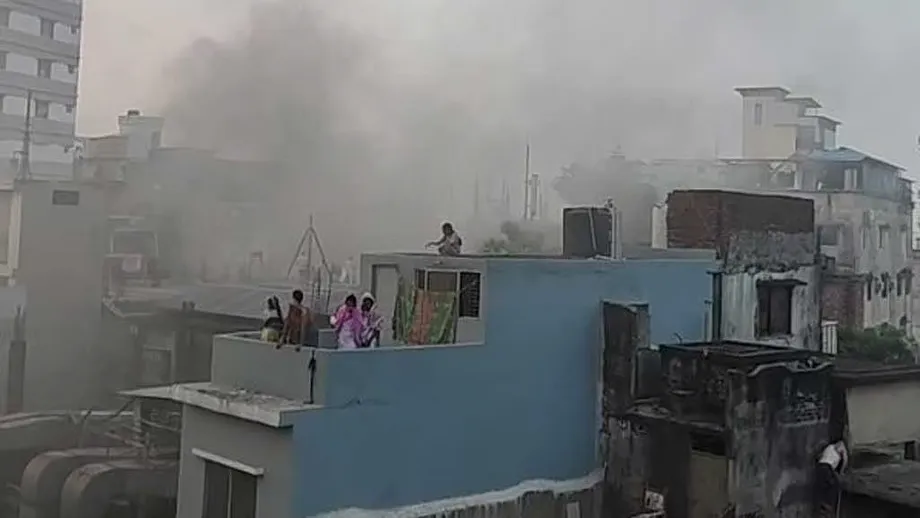
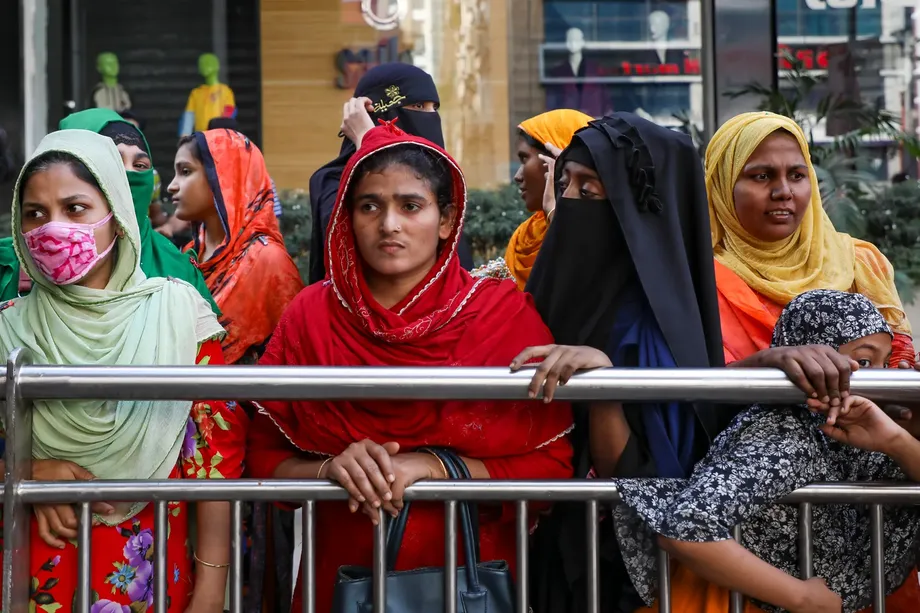
Workers from several garment factories blocked roads in Uttara on 14 October, disrupting traffic and causing lengthy congestion. Assistant Deputy Commissioner Shahjahan Hossain of the police's Uttara Traffic Division said protesters first blocked a road near Azampur that morning before moving toward the airport and blocking Airport Road.
Hossain described the movements at around 12:30 p.m. He said workers had been demonstrating since Monday, making Wednesday's blockade the third consecutive day of road protests over wages and allowances.
Towhidur Rahman, president of the Bangladesh Garment Labour Unity Council, welcomed the government's move to begin the nomination process. He also said it should have started earlier, with December approaching and the board still awaiting formation.
The demonstrations come amid growing wage demands in other sectors. The government announced a new pay scale for government employees in September, under which total monthly pay would exceed Tk33,000 once fully implemented. That announcement provides a political backdrop to the garment workers' Tk30,000 demand, although the two wage structures involve different jobs and payment arrangements.
The dates driving the negotiations
Bangladesh's current garment wage structure was announced in November 2023 and took effect on 1 December that year. The difference between announcement and implementation explains why November and December both feature in discussions about the next review.
The main events leading to the present dispute are:
- December 2018: The garment minimum wage was fixed at Tk8,000 a month.
- April 2023: A new wage board was formed to review that amount.
- November 2023: The government announced a Tk12,500 minimum and reduced the wage structure from seven grades to five.
- 1 December 2023: The revised wage took effect.
- Late 2025: A Labour Act amendment shortened the regular wage revision interval from five years to three.
- 7 October 2026: The government's decision in principle to form another board was described publicly.
- 12 to 14 October 2026: Workers held consecutive road protests in Uttara.
- 15 October 2026: The ministry planned to send letters seeking board nominees.
The 2023 increase added Tk4,500 to the minimum wage, a rise of 56.25%. The present demand is substantially larger, both in taka and as a percentage, while workers argue that rising living costs have absorbed much of the earlier gain.
Why the three year rule is disputed
The amended Bangladesh Labour Act shortened the interval for minimum wage revisions across sectors from five years to three. Labour leaders count the period from the garment wage increase that took effect in December 2023, putting the next revision in December 2026.
Factory owners argue that the shorter period should be counted from the passage of the amendment. Their position would give the industry more time before the next regular revision. The disagreement concerns whether the new rule applies to time that had already passed under the previous law.
Kalpona Akter, executive director of the Bangladesh Centre for Workers Solidarity, welcomed the proposed board but argued that the government had started too late:
We welcome the move, but it should have been taken much earlier, as the amended Labour Act requires a new wage to be set within three years. That deadline will expire next December.
Hatem, president of the Bangladesh Knitwear Manufacturers and Exporters Association, rejected that interpretation:
Some people are misinterpreting the amended Labour Act, as any amendment or change in the law cannot have retrospective effect.
Tarafder said a technical committee involving government, employers and workers would consider the issue. If it could not settle the matter, the question would go to the National Tripartite Consultative Council, which brings together those same three groups. Senior government officials would decide if disagreement persisted.
The timetable therefore depends on both administrative work and a decision about how to apply the amended law. Labour leaders want revised wages settled by December so workers can receive them from January 2027.
A wage increase measured against household bills
Shompa Akter, a garment worker at Armana Apparels Limited in Dhaka's Tejgaon area, described what Tk12,500 means for a household of four. Her factory does not offer overtime, leaving her dependent on the minimum monthly wage.
Akter, who has worked in the garment industry for 25 years, explained her family's situation:
As our garment factory does not offer overtime work, I earn the government-set minimum wage of Tk12,500. It is quite difficult to manage my family of four on this amount, as the prices of everything have increased.
Her rent rose by Tk1,000 alongside the Tk4,500 wage increase in 2023. Rent alone therefore consumed about 22% of that increase, before changes in food, transport or other expenses.
Akter said the higher wage had not enabled her to obtain better medical treatment, food or accommodation. Her experience shows how a larger pay packet can still leave a family struggling when the things it buys become more expensive.
The Garment Workers' Trade Union Center presented a broader estimate at a seminar at Dhaka's Jatiya Press Club. It said goods and services costing Tk8,000 in 2018 would now cost Tk14,500 to Tk15,000. That represents an increase of approximately 81% to 88%, compared with the 56.25% rise in the garment minimum wage over that period.
At Tk12,500, the current minimum falls Tk2,000 to Tk2,500 below the union's estimated present cost of that basket. The estimate concerns a particular set of goods and services, rather than a published national inflation calculation, but it gives a concrete account of the pressure behind the wage demand.
The union said workers struggle to cover food, rent, healthcare, education and transport, with many relying on excessive overtime. It called for wage decisions to consider living costs, inflation, productivity and how the wealth generated by the industry is shared.
Employers support a board but warn about costs
Factory owners have accepted the need for a wage board while raising objections to the timing of an increase. Tarafder said employer representatives did not disagree with forming the board during their discussions with the ministry.
Mahmud Hasan Khan, president of the Bangladesh Garment Manufacturers and Exporters Association, told the Dhaka seminar that employers supported a board and that its formation date was for the government to decide. He also said factories would need time to implement a new wage structure.
Hatem acknowledged that a wage increase demand was justified during high inflation, while arguing that factories' ability to pay must also be considered. He said many factories had already closed under the current wage structure.
In explaining his opposition to an immediate increase, Hatem described pressure from export buyers:
Export orders are currently declining, while production costs are also rising for various reasons. But we are not getting the corresponding prices from buyers. In such a situation, if wages are increased, the industry will not be able to bear the additional pressure.
His warning connects the domestic wage debate to the prices overseas buyers pay for garments. If factory expenses rise while buyer prices stay flat, manufacturers must meet the difference through their earnings, savings or changes in production.
Kalpona Akter called for exporters to improve their ability to negotiate better prices with buyers. She also urged the government to control essential goods prices, rents and other costs affecting workers.
Who speaks for workers on the board?
The garment wage board has six members: four permanent members and two temporary members representing employers and workers in the sector. Choosing the temporary worker representative is a central concern for labour organisations because that person participates directly in wage negotiations.
The April 2023 board appointed former BGMEA president Md Siddiqur Rahman as the owners' representative and Bangladesh National Garments Workers Employees League president Sirajul Islam Rony as the workers' representative. Senior district judge Liaquat Ali Molla headed the permanent board, whose other members represented employers, workers and an independent perspective.
Bangladesh Garment Workers Solidarity has demanded genuine worker representation on the new board. At a rally outside the National Press Club chaired by Taslim Akhter and moderated by general secretary Mizanur Rahim Chowdhury, speakers alleged that worker or neutral representatives on three boards under the former Awami League government had primarily served employers' interests.
At the GWTUC seminar, chaired by its president Montu Ghosh, Knowledge Hub Institute Trust president Khondaker Golam Moazzem urged workers to choose their own representatives and announce the names publicly. Khan said the current BGMEA leadership would not interfere in that selection.
The solidarity rally also called for democratic labour rules, easier trade union registration and an end to unfair labour practices. Speakers said a change this year replaced the requirement for consent from 20% of a workplace's workers with consent from 20 workers to register a union.
They said practical barriers continued, including checks on worker numbers, certification requirements, registrations taking longer than 55 days and an online server that did not work. Those complaints connect the wage negotiations to workers' ability to organise and select people to speak for them.
The wage structure involves more than one total
Bangladesh's garment minimum wage combines basic pay with allowances. The Tk8,000 structure introduced in 2018 consisted of Tk4,100 in basic pay, Tk2,050 for house rent, Tk600 for medical expenses, Tk350 for transport and Tk900 for food.
That breakdown helps explain why protesters are demanding changes to other wages and allowances alongside a Tk30,000 minimum. A new structure must decide how its total is divided and how different grades of workers are paid.
The 2023 revision reduced the number of grades from seven to five. At the Dhaka seminar, Moazzem also said some workers in a lower grade received Tk9,875, while citing Tk12,500 as the minimum for the lowest grade. He did not explain the classification behind the Tk9,875 figure.
Earlier demands were smaller than the current protest target. Before the 2023 revision, the Bangladesh Garments Workers Unity Council, a platform of seven associations, sought a Tk22,000 minimum. The present Tk30,000 demand is Tk8,000 higher than that earlier target.
Mujahidul Islam Selim, former president of the Communist Party of Bangladesh, argued at the seminar that workers' interests and the industry's interests were not contradictory. He pointed to fair wages, better conditions, skills development and investment in technology as ways to strengthen competitiveness over time.
Why an October board leaves a tight schedule
The wage setting process involves forming the board, holding meetings, preparing a proposal, obtaining government approval and issuing a formal gazette notification. The notification is the published legal notice that gives the new structure official effect.
Previous rounds took about six months to complete those stages. A board formed in October would have roughly two months before the December anniversary cited by labour leaders, making their requested schedule much shorter than the earlier process.
Tarafder had expressed hope that the board would be formed during October, while also saying a committee and other preparatory steps had to come first. The nomination letters scheduled for 15 October would move that work forward, but wage negotiations and approval would still follow.
The government's next concrete step is to obtain names from employers and workers. The board must then address competing concerns: workers' rising household expenses, factories' production costs, the division of pay into grades and allowances, and the disputed legal review date. Tk30,000 remains the workers' demand, with a final wage amount still to be negotiated.
Key Points
- The ministry planned to seek garment wage board nominees on 15 October 2026, after three consecutive days of Uttara road protests.
- Workers demand Tk30,000 a month, a 140% increase from the current Tk12,500 minimum.
- The current wage took effect on 1 December 2023 after a 56.25% increase from Tk8,000.
- Labour leaders and employers disagree about when the amended three year review period begins.
- Workers cite rising household costs; employers cite falling orders, higher production expenses and factory closures.
- Labour organisations want genuine worker representatives and revised wages payable from January 2027.
- The board's formation date and the final wage amount have not been fixed.