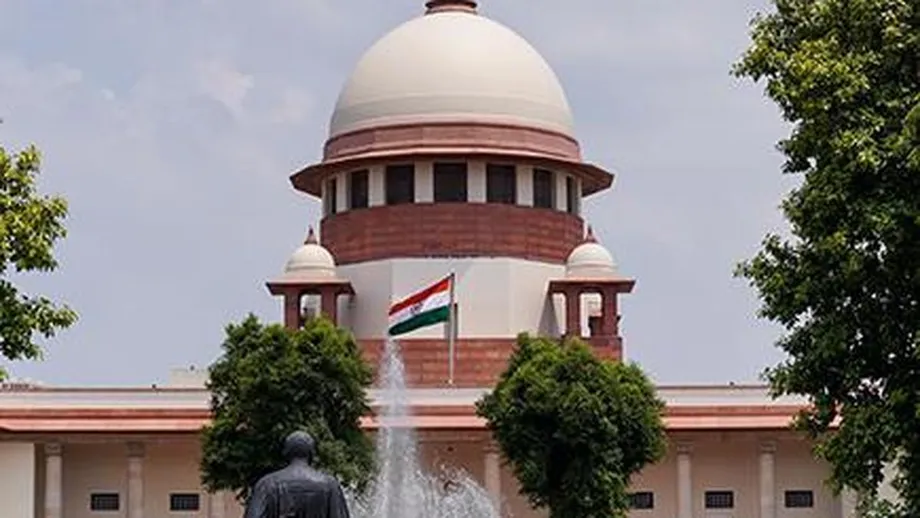
A restoration request with a disputed declaration
The Supreme Court of India has brought forward a hearing on Delhi's electoral roll revision to October 28, two days before the October 30 deadline for claims and objections, after petitioners challenged a requirement affecting previously registered voters whose names were removed. Their concern centres on Form 6: people seeking to restore their registration are being asked to sign a declaration that they are applying for inclusion in an electoral roll for the first time.
Contents
- A restoration request with a disputed declaration
- What the official Form 6 actually says
- Why the warning about punishment matters
- How many Delhi voters were excluded?
- The additional declaration under challenge
- A wider case about notices and data checks
- The dates driving the court's response
- What Delhi's application figures show
- What the October 28 hearing will address
- Key Points
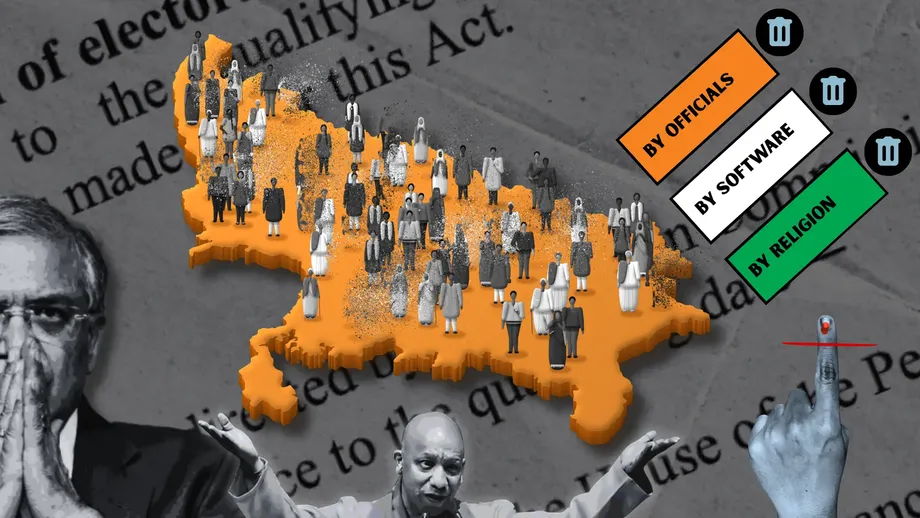
The application says 4,756,722 electors, representing 32.78% of Delhi's electorate before the Special Intensive Revision (SIR), were excluded from the draft roll under categories covering absent or shifted voters, deaths and duplicate entries. According to the petitioners, Form 6 is the only route offered to those seeking to have their names restored.
A Bench comprising Chief Justice of India Surya Kant and Justice Joymalya Bagchi advanced the hearing from October 30 after advocate Prashant Bhushan raised the approaching deadline. Bhushan and advocate Neha Rathi represent transparency activists Anjali Bhardwaj and Amrita Johri.
Chief Justice Surya Kant said the court was considering an order to address the situation:
We are thinking of passing an order that will take care of the situation.
The dispute brings together two practical problems: how a previously registered voter can accurately complete the required paperwork, and how quickly a restoration request can be considered before the claims period closes. The electoral roll is the official list of registered voters. A person seeking restoration needs a process that both records their circumstances accurately and allows officials to assess their eligibility.
What the official Form 6 actually says
The Election Commission of India's official Form 6 is headed "Application Form for New Voters" and refers to Rules 13(1) and 26 of the Registration of Electors Rules, 1960. Applicants submit it to the Electoral Registration Officer for the relevant constituency.
The form asks for a name, details of a relative, date of birth, gender, present address and supporting documents. Its declaration also covers Indian citizenship and the period for which the applicant has ordinarily lived at the stated address.
The Election Commission's form contains the following declaration:
I am applying for inclusion in Electoral Roll for the first time and my name is not included in any Assembly Constituency/Parliamentary Constituency.
For someone previously registered and then excluded during the revision, the difficulty lies in the first part of that sentence. The person is seeking registration again, while the form asks them to describe the application as their first.
Bhushan described the problem in court as requiring people to declare that they had never voted before. The printed form uses different wording: it asks about applying for inclusion for the first time. Earlier registration is therefore central to the petitioners' objection, whether or not the person actually cast a ballot in a past election.
Why the warning about punishment matters
Form 6 warns applicants about Section 31 of the Representation of the People Act, 1950. Its wording covers a statement or declaration that is false and that the applicant knows or believes to be false, or does not believe to be true. The stated punishment is imprisonment for up to one year, a fine, or both.
Bhardwaj and Johri argue that the current restoration process puts previously enrolled voters in an unacceptable position. To regain their place on the list, they are asked to sign wording that the petition describes as factually incorrect for their circumstances. The application calls this a "fundamental anomaly".
The legal warning makes the wording more than a clerical concern. A signature confirms the applicant's declaration, so the petition seeks a route that allows voters to explain their registration history truthfully while officials decide whether their names should be included.
Bhushan, appearing for the petitioners, proposed two possible solutions to the Bench:
The EC should either allow them to file Form 8 [for shifted voters] or create a new form for voters deleted in the SIR,
Form 8 is used for matters including changes of address and corrections. The application asks the Election Commission to establish a suitable restoration mechanism and to avoid requiring previously enrolled voters to make a declaration that is inapplicable to them. The court has not yet decided the validity of the disputed Form 6 requirements or selected a replacement process.
How many Delhi voters were excluded?
The petition's figure of 4,756,722 excluded electors amounts to nearly one in three names on the electoral roll before the revision. The draft published on August 31 contains around 9.7 million voters, compared with approximately 14.5 million before the exercise.
The excluded names were classified under ASDD, meaning absent, shifted, dead or duplicate. These categories describe different reasons for removing an entry. A person who has moved may need registration at a new address, while a duplicate entry concerns someone listed in more than one place.
The Election Commission said more than 4.332 million voters had shifted or were absent, more than 282,000 had died, and more than 141,000 were enrolled at multiple places. The largest category was therefore people recorded as having shifted or being absent.
Bhardwaj and Johri's request concerns previously registered people seeking inclusion after this exercise. Their application asks for a way to assess those claims without treating each applicant as someone registering for the first time. That would allow the registration process to address both eligibility and the person's earlier place on the roll.
The additional declaration under challenge
The petition also challenges a separate declaration required under the SIR guidelines alongside Forms 6 and 8. This is a second legal issue: the wording already printed in the statutory form and the authority for requiring an additional document are being questioned together.
According to the petition, the extra declaration lacks the force of law because it was introduced without following the procedure for making rules under Section 28 of the Representation of the People Act, 1950. The petitioners also challenge demands for legacy details linked to electoral rolls from 2002, arguing that those requirements were introduced by executive direction rather than a statutory amendment.
The application describes Section 28 as allowing the Central Government, after consulting the Election Commission, to make rules through a notification in the Official Gazette. It says those rules must then be placed before both Houses of Parliament, which can modify or annul them. In plain terms, the petitioners argue that an administrative instruction cannot add a substantial condition to a registration procedure without the necessary legal authority.
The plea cites an Election Commission press note dated September 26 stating that the additional declaration would not be required outside the SIR period and that only forms prescribed under the Registration of Electors Rules, 1960, would be used then. The petitioners object to different documentary requirements being applied to the same purpose of seeking inclusion in an electoral roll.
Bhardwaj and Johri also seek a specific safeguard: an otherwise maintainable claim for inclusion or restoration should not be rejected solely because the applicant has not furnished the additional SIR declaration. This request would preserve consideration of the claim while the dispute over the extra document is addressed.
A wider case about notices and data checks
The fresh application sits within Writ Petition (Civil) No. 1188 of 2026, brought by Bhardwaj and Johri against the Election Commission and another respondent. The main case seeks disclosure of the names of Delhi voters issued SIR notices and the specific reason for each notice.
The petitioners want the criteria, definitions, algorithmic parameters and operational guidelines used to identify "logical discrepancies". In this setting, the term refers to inconsistencies flagged during checks of voter information. Algorithmic parameters are the settings or rules a computer process uses to decide which records to flag.
On September 22, the Supreme Court told the Election Commission that notices appeared to be going to voters "almost mechanically". The court called for additional safeguards and clarification of the basis for identifying a logical discrepancy.
Around 3.3 million voters on the draft roll were categorised as having logical discrepancies or being unmapped, meaning they had not been matched in the revision process. Around two million of those cases had been verified. Using those rounded figures, roughly 1.3 million cases remained outside the reported verified total.
The two parts of the litigation address successive stages of the same process. The main petition seeks an explanation of why records were flagged and notices issued. The fresh application seeks a workable route for people whose names were omitted and who now want officials to consider restoring them.
The dates driving the court's response
Delhi's claims and objections deadline was extended from September 30 to October 30. The petitioners sought an earlier hearing because the main case had been listed for the same day the extended period would close.
The key events are:
- August 31: The Election Commission published Delhi's draft electoral rolls following the SIR exercise.
- September 16: Bhardwaj and Johri approached the Supreme Court challenging the exclusion of more than 4.7 million names.
- September 22: The court questioned the issuing of notices and sought safeguards and clarification about logical discrepancies.
- September 26: An Election Commission press note addressed use of the additional declaration outside the SIR period.
- October 28: The Supreme Court is scheduled to hear the Delhi SIR petitions and the fresh application.
- October 30: The extended deadline for filing claims and objections expires.
The revised hearing date gives the court two days before the deadline to consider the requested relief. Bhushan argued that even an October 28 hearing left little time for affected voters, prompting the Chief Justice's statement that the Bench was considering an order to address the situation.
The court also clarified during an earlier hearing that it had neither endorsed nor rejected the modified Form 6 and had not adjudicated its validity. Its forthcoming examination therefore concerns both the disputed requirements and the immediate problem created by the closing claims period.
What Delhi's application figures show
Figures released by Delhi's Chief Electoral Officer show that authorities received 220,645 Form 6 applications between August 31 and October 12. During the same period, they received 83,004 Form 8 applications, 9,243 Form 7 applications and 393 Form 6A applications.
Form 6 applications seek inclusion, Form 8 covers address changes or corrections, and Form 7 is used to object to the inclusion of names or seek deletion. Form 6A concerns registration by overseas electors. Together, the figures describe several different streams of work during the revision.
The application also raises concerns about the pace of decisions. It cites figures showing that more than 3,200 Form 7 applications were disposed of between August 31 and October 4, compared with 569 Form 6 applications during that period. In administrative language, an application is disposed of when officials complete a decision on it.
Those figures are central to the petitioners' concern about access to restoration before the deadline. The volume of applications, the time needed to verify claims and the wording applicants must sign all affect whether the claims process can resolve an omitted voter's case promptly.
What the October 28 hearing will address
The Supreme Court is being asked to direct the Election Commission to provide a suitable mechanism for previously enrolled voters seeking restoration. The proposed options include allowing an appropriate use of Form 8 or creating a separate form or declaration that accurately describes their situation.
The Bench will also consider challenges to the extra SIR declaration and demands connected to older electoral records. The petitioners want eligible claims considered without rejection solely for failure to submit the disputed additional declaration.
Delhi's immediate issue is a narrow but consequential one: a voter seeking to return to the list needs paperwork that fits their history. The wider case asks how the Election Commission identifies questionable records, explains its notices and processes the resulting claims. The October 28 hearing brings those concerns before the court shortly before the October 30 deadline.
Key Points
- The Supreme Court advanced the Delhi SIR hearing from October 30 to October 28, ahead of the claims deadline.
- The petition says 4,756,722 electors, or 32.78% of the electorate before the revision, were excluded from the draft roll.
- Official Form 6 asks applicants to declare that they are seeking inclusion in an electoral roll for the first time.
- The form warns that a knowingly false declaration can attract up to one year in prison, a fine, or both.
- Bhardwaj and Johri seek a suitable restoration process and challenge the additional SIR declaration.
- The court has not yet decided the validity of the disputed Form 6 requirements.