A national register with a much smaller first payment list
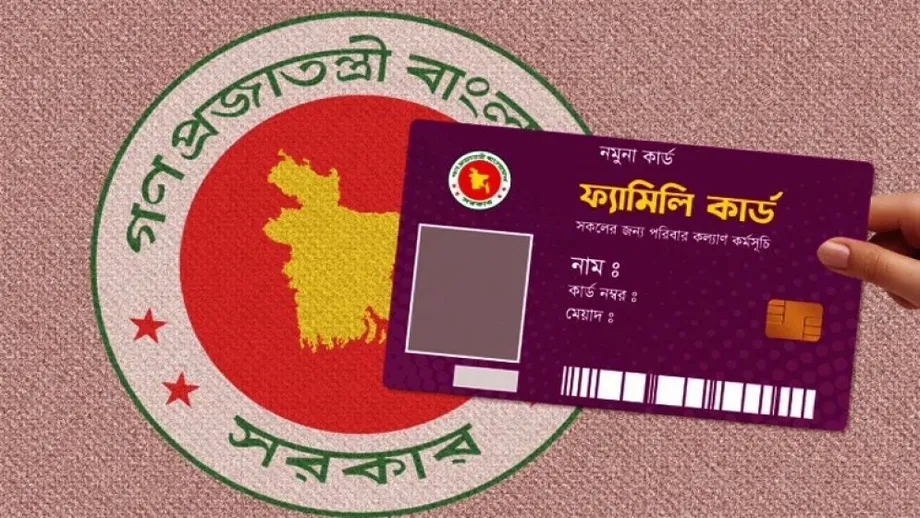
Bangladesh has begun collecting household information nationwide for its Family Card programme, with Social Welfare Minister AZM Zahid Hossain setting a target of entering an estimated 44.5 million families into a database by December 2026. The government plans to give cards and allowances to 4 million new female household heads during the 2026–27 financial year, selecting recipients from that larger register.
Contents
- A national register with a much smaller first payment list
- What the pilot delivered
- How the programme reached the national stage
- Who will qualify for assistance?
- What the budget can support
- Why the earlier database matters
- What households can expect during collection
- Payments, existing allowances and data checks
- The household definition will shape the register
- Key Points
The exercise began on Monday, October 12, with 66,815 data collectors and 6,681 supervisors assigned to the work. Speaking at the Secretariat's Department of Information conference room, Zahid said the national expansion follows a pilot launched by Prime Minister Tarique Rahman on March 10. State Minister for Social Welfare Farzana Sharmin attended the briefing.
Zahid gave the December target of 44.5 million households, while another account of his Monday briefing put the collection goal at 35 million to 40 million households by November 30, across 791 locations. The November figure describes an earlier collection deadline; December is the stated deadline for putting the larger total into the database.
The government has allocated Tk145 billion, or Tk14,500 crore, to the programme for the current financial year. Of that, Tk123 billion is reserved for allowances. The central task is now to turn millions of household records into a payment list that reaches poor families, directs support to women and avoids the problems that left an earlier national household database unused.
What the pilot delivered
The pilot collected information on 112,094 families through June 2026. It covered all eight divisions, reaching 44 districts and 57 units across 55 upazilas and city corporations. An upazila is an administrative area below the district level.
Zahid said 71,831 eligible beneficiaries received Family Cards and allowances after selection through a Proxy Means Test, known as PMT. That amounts to about 64% of the households whose information was collected during the pilot. The result shows the programme already operates through screening: recording a household comes first, and deciding whether it qualifies for payments comes later.
The government began the main implementation phase in July. Its latest annual target of 4 million new recipients is about 56 times the number selected during the pilot, making the expansion a substantial test of both data collection and payment administration.
Women are at the centre of the payment model. Zahid described economic independence for women as part of the government's commitment to national development and social justice. The planned transfer goes to a woman heading the household, giving her direct access to the assistance rather than routing it through an intermediary.
How the programme reached the national stage
The February policy discussions described a programme that would start with vulnerable families and gradually expand. Ministers initially considered divisional cities, then shifted attention toward places where poverty and exposure to disasters make assistance especially urgent.
The main steps announced during 2026 were:
- February 19: An interministerial meeting chaired by Prime Minister Tarique Rahman approved the policy direction and formed a cabinet committee of 15 members.
- February 24: The committee was instructed to submit its preliminary report on programme design, eligibility and the pilot roadmap.
- March 10: The prime minister launched the pilot, which continued collecting household information through June.
- July: Main implementation began. On July 22, the Social Welfare Ministry sought Bangladesh Bureau of Statistics permission for nationwide data collection.
- August 12: The Cabinet Committee on Government Purchase approved a proposal to procure Android tablets worth Tk3.2 billion.
- October 8: The Social Welfare Ministry issued a letter preparing public awareness activities for the national exercise.
- October 12: Nationwide household data collection began, with collection and database targets extending through November and December.
Environment, Forest and Climate Change Minister Abdul Awal Mintoo explained the change in geographical priorities during the early planning stage:
Our initial intention was to start from divisional cities. But after reviewing the realities, we have decided to prioritise poverty-stricken and vulnerable areas.
Mintoo identified coastal communities and chars, the islands formed in rivers, as priorities. Families in these places face cyclones, tidal surges and river erosion, which can damage homes, interrupt work and quickly change a household's financial circumstances.
Who will qualify for assistance?
Zahid said the programme would serve people living in extreme poverty, poverty and low income, with selection based on need rather than political or religious identity. He also described a goal of bringing between 16 million and 21.5 million families into the programme over the next four years.
Earlier planning statements put the eventual ambition at nearly 40 million families. Project documents also described smart cards for female heads of 41 million households. Those figures concern different stages and purposes: the latest national register target is 44.5 million households, while the immediate target for new payments is 4 million women.
The PMT system uses household information to estimate economic circumstances and assign a score. Under the method described for this exercise, a higher score out of 100 indicates greater wealth, while a lower score indicates greater poverty. It is a way of assessing need when a family's income may be irregular or difficult to document.
Zahid said fully automated software and PMT scores would be used to choose beneficiaries. The practical effect is that selection depends heavily on the information entered by collectors. A household recorded inaccurately can receive a score that misrepresents its circumstances.
The programme's broad ambition has sometimes been described as universal. A universal cash benefit goes to every household without an income test; a targeted benefit goes to households that meet eligibility rules. The pilot's selection process and the planned use of PMT put the current payment system in the targeted category, even as the government seeks a much broader national register.
What the budget can support
The Finance Ministry estimated that implementing the Family Card election pledge would cost about Tk1.34 trillion over five years, with a monthly transfer of Tk2,500 per household headed by a woman. Early February discussions had placed possible monthly assistance between Tk2,000 and Tk2,500.
At Tk2,500 a month, one household would receive Tk30,000 over a full year. Providing that amount to 4 million households for 12 months would cost Tk120 billion. That is close to the Tk123 billion allowance allocation for 2026–27, helping explain the scale of the government's immediate payment target.
The remaining Tk22 billion in the annual programme allocation sits outside the allowance portion. Separately, the household database work is being carried out under the Strengthening Social Protection for Improvement, Resilience, Inclusion and Targeting project, known as SSPIRIT, with a total budget of Tk28.13 billion and financing from a World Bank loan.
Project estimates put combined card production and data collection spending at Tk19.06 billion. Listed costs include Tk6.76 billion for field collection, processing, employee honoraria and training; Tk5.5 billion for smart cards; and the approved Tk3.2 billion tablet procurement proposal.
Other planned spending includes Tk200 million for publicity, Tk125 million for travel and Tk500 million for card distribution events. These project figures describe the machinery needed to build and operate the register, while the annual allowance allocation describes money intended for beneficiaries.
Why the earlier database matters
Bangladesh previously spent Tk6.37 billion on the National Household Database, a project intended to help identify recipients of social protection programmes. Approved in 2013 at an estimated cost of Tk3.28 billion, it underwent four cost revisions that raised its budget to Tk7.27 billion before closing in 2022 without completing its work.
The Planning Ministry's Implementation Monitoring and Evaluation Division published an assessment in 2023 finding that the project had failed to meet its objectives and that its data was outdated and unusable. By August 2026, the database had neither been updated nor used for its intended purpose.
The new collection and processing estimate of Tk6.76 billion is Tk390 million higher than the Tk6.37 billion actually spent on that earlier effort. The comparison makes maintenance as important as collection: a register needs regular updates as families move, incomes change and household membership changes.
Social Services Director General Shah Mohammad Mahbub described the new exercise as specialised because it collects information from female household heads. He said the department's experience with the Family Card pilot gave it confidence to conduct the national operation.
The Bangladesh Bureau of Statistics granted conditional permission for the exercise, instructing the department not to describe it as a census or survey. Statistics and Informatics Division Secretary Firoz Sarkar said BBS would provide technical assistance. The operation was renamed the Family Card Household Database after objections to its initial title, Family Card Census 2026.
What households can expect during collection
The Social Welfare Ministry's October 8 letter said trained government personnel carrying official identity cards would visit households. The exercise follows the Family Card Thana Database Information Collection Guidelines, 2026, and asks families to give information reflecting their actual economic and social circumstances.
Providing information is free. The public awareness campaign warns against paying anyone who claims they can secure a place on the Family Card list. Anyone demanding money in connection with the exercise should be reported by calling 1098.
Mosques, temples, churches and Buddhist monasteries have been asked to help spread the message. The Religious Affairs Ministry was asked to coordinate through the Islamic Foundation and the Hindu, Buddhist and Christian Religious Welfare Trusts.
The campaign provides for announcements lasting three minutes before Friday prayers at mosques and two minutes at other religious institutions. Messages also encourage people to check on elderly neighbours and neighbours with disabilities so they are included in household visits.
February planning discussed free applications through local government offices and a possible online portal connected to the National ID database. Officials mentioned a National ID card, photograph and active mobile number as likely requirements, with birth registration potentially available as an alternative to National ID. Those were proposed arrangements; the October exercise centres on household visits by authorised collectors.
Payments, existing allowances and data checks
Officials initially identified bKash, Nagad, Rocket and bank accounts as possible channels for direct transfers, preferably into the account of a woman in the household. Food assistance, including rice, lentils, oil and salt, was also considered during planning.
Social Welfare Minister Zahid said during the February discussions that existing old age, widow and disability allowances would continue:
Those programs will continue.
The Family Card was therefore presented as an additional layer of social protection rather than a replacement for those benefits. For households, the distinction matters because different schemes support different needs and have their own eligibility rules.
Administrative arrangements were still incomplete in August. Recruitment had missed its intended July 31 completion date, and decisions on data storage, preparation of the final list, independent checking and staff monitoring were unresolved at that stage. The October briefing supplied precise staffing figures and promised automated selection, but did not explain how those earlier issues had been settled, how eligibility appeals would work, when an online portal would open or whether food support would accompany cash.
Zahid also urged people to complain if a collector appeared suspicious. Public reporting offers a way to flag problems during visits, while independent checking would assess the accuracy of the database itself. The planned Post Enumeration Check is a follow up exercise in which a third party checks records for collection errors.
The household definition will shape the register
Zahid said the estimate of 44.5 million families was calculated by treating every five people as one family. That is the planning basis for the national target. February proposals also specified one card per household to prevent duplicate benefits.
A clear household definition matters when collectors encounter several generations living together, relatives sharing an address or family members living elsewhere for work. The way those circumstances are recorded affects which people are grouped together, whose economic circumstances are assessed and which woman receives a card.
The pilot offers a useful measure of the task ahead: 112,094 household records led to 71,831 eligible recipients. National collection will operate on a vastly larger scale, while the government plans to expand payments in stages. Accurate visits, consistent scoring, accessible complaints and updated records will determine whether the register remains useful after the December deadline.
Key Points
- Nationwide Family Card data collection began on October 12, 2026, with 66,815 collectors and 6,681 supervisors.
- Zahid set a target of 44.5 million household records by December; a November 30 collection target covered 35 million to 40 million households.
- The pilot recorded 112,094 families and provided cards and allowances to 71,831 eligible beneficiaries.
- The government aims to add 4 million female household heads to the programme in 2026–27.
- The annual allocation is Tk145 billion, including Tk123 billion for allowances.
- Beneficiaries will be selected using household information, automated software and PMT scores.
- Household information collection is free. Demands for money should be reported to 1098.