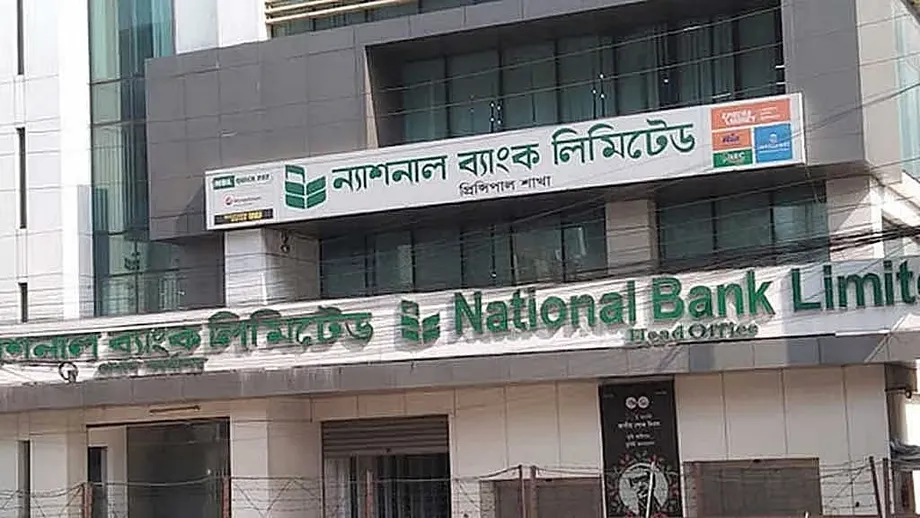
Emergency funding arrives ahead of promised withdrawals
State owned Sonali Bank has completed a Tk 7,000 crore loan to struggling National Bank, with Bangladesh Bank guaranteeing the full amount, as the private lender prepares to restore normal banking services on October 15, 2026. Nearly 7,000 withdrawal requests had already arrived by October 13, showing the immediate demand from customers seeking access to their savings.
Contents
- Emergency funding arrives ahead of promised withdrawals
- How the loan and guarantee work
- What customers are being promised
- The dates behind the rescue
- From an initial plan to Tk 7,000 crore
- Losses have continued into 2026
- Unpaid loans and the shortfall in reserves
- Management changes and efforts to bring money back
- A wider effort to support weak banks
- Key Points
The loan runs for three months and carries a 10 percent interest rate, Sonali Bank Managing Director Md Shawkat Ali Khan confirmed. Bangladesh Bank will repay Sonali if National Bank misses its repayment deadline. The arrangement gives National Bank money to meet withdrawals while placing responsibility for repayment with the central bank if the borrower cannot pay.
National Bank Chairperson Professor Melita Mehjabeen said preparations were underway to get funds to every branch by October 14. Bangladesh Bank has instructed the lender to provide enough cash at branches and ATMs so customers can withdraw according to their needs from October 15.
The support comes after four depositors went to the High Court in September seeking access to their savings. National Bank has suffered nearly Tk 9,000 crore in losses between 2022 and 2025, and its annual report put defaulted loans at 59.69 percent of total outstanding loans at the end of 2025.
For depositors, the immediate issue is whether the money will be available when they ask for it. For National Bank, the task stretches further: restoring daily services while dealing with losses, unpaid loans and a large shortage in the funds it should set aside against potential credit losses.
How the loan and guarantee work
Sonali Bank is providing the money, National Bank is borrowing it, and Bangladesh Bank is guaranteeing repayment. This is a loan between banks backed by the regulator, rather than a direct payment from the central bank to individual depositors.
Shawkat Ali Khan, Sonali Bank's managing director, described the guarantee as protection for his institution:
We face no risk here because Bangladesh Bank is providing the guarantee.
Under the arrangement he described, National Bank must repay within three months. If it fails to do so, Bangladesh Bank must repay Sonali Bank. The guarantee therefore gives Sonali assurance that it will recover the money even if National Bank remains unable to meet its obligations.
Liquidity means money a bank can use immediately, including cash needed for withdrawals. A bank may have loans and other assets on its books but still struggle to pay customers if it cannot turn those assets into cash quickly. National Bank's problem includes both a shortage of available cash and serious losses on its lending business.
The interest rate also means the assistance has a borrowing cost. The announced terms specify 10 percent interest and a three month duration, but do not give the precise repayment date or explain the interest calculation. National Bank will need to manage that obligation alongside the demands of depositors.
What customers are being promised
Bangladesh Bank's instruction is to allow withdrawals according to customer demand from October 15, with sufficient cash at all branches and ATM booths. National Bank says its preparations cover 221 branches, 65 sub branches and 53 ATMs.
Bangladesh Bank Executive Director and spokesperson Arief Hossain Khan stated the regulator's position after the meeting with National Bank executives:
Depositors must not be turned away under any circumstances. From October 15, they will get their money back. In this regard, the bank will be provided with liquidity support as needed.
National Bank began accepting withdrawal requests before the planned reopening of full services. Applications from depositors seeking large withdrawals were scheduled to begin on October 11, and nearly 7,000 requests had been received by October 13. The total value of those requests was not disclosed.
Mehjabeen said the return to full services would include more than cash withdrawals. Customers would also be able to use cheques, electronic transfer systems and letters of credit. A letter of credit is a bank's promise to pay a seller once agreed conditions are met, a service commonly used by businesses buying goods from abroad.
The electronic services she named include RTGS, which processes individual transfers in real time, and NPSB, a network connecting participating banks for services such as transfers and card transactions. Restoring those services matters to customers who need to move money without collecting physical cash.
The dates behind the rescue
National Bank's return to normal services follows a series of steps involving depositors, its management and Bangladesh Bank. The central bank meeting took place on October 8 at its headquarters in Dhaka.
Mehjabeen and Acting Managing Director Zahidul Haque met Governor Md Mostaqur Rahman, with four deputy governors also attending. The governor reviewed the bank's cash position and the difficulties customers faced when trying to withdraw money.
- September 2026: Four depositors approached the High Court seeking access to their savings.
- October 8: National Bank leaders met Bangladesh Bank, which directed the lender to prepare for withdrawals on demand.
- October 11: National Bank scheduled the start of applications from depositors seeking large withdrawals.
- October 13: The bank had received nearly 7,000 withdrawal requests.
- October 14: Funds were due to reach all branches ahead of the planned restoration of services.
- October 15: Full banking services and withdrawals according to customer needs were scheduled to resume.
The October 15 date is the operational target set by the regulator and announced by the bank. The next practical test is whether branches, ATMs and transfer systems can handle customer demand as promised.
From an initial plan to Tk 7,000 crore
Bangladesh Bank initially considered around Tk 3,000 crore in liquidity assistance, with a target of arranging up to Tk 10,000 crore through banks while acting as guarantor, according to a senior central bank official. The completed Tk 7,000 crore Sonali loan is larger than that initial amount and below the stated upper target.
Mehjabeen said the regulator had instructed National Bank to resume operations without initially specifying exactly how the assistance would be delivered. Sonali Bank's confirmation supplies that detail: a completed loan from the state owned lender, fully guaranteed by Bangladesh Bank.
The central bank had already provided National Bank with Tk 10,568 crore in liquidity support by early September 2026. The new Sonali loan has a different structure because the cash comes from another bank and Bangladesh Bank provides the repayment guarantee.
Shawkat Ali Khan said he hoped the money would help restore customer confidence. He also stressed that National Bank must direct it towards its intended purpose:
The National Bank needs to use this money properly. It must be utilised for the right purposes.
For the immediate operation, that purpose is meeting deposit withdrawals and restoring services. National Bank's ability to repay the borrowing will also depend on how much cash it can generate or retain over the loan period.
Losses have continued into 2026
National Bank's annual report recorded a Tk 2,430 crore loss in 2025, compared with Tk 1,722 crore in 2024, an increase of about 41 percent. Another published figure puts the 2024 loss at Tk 1,706 crore. Both figures show that the bank entered 2025 after a substantial annual loss.
The latest unaudited financial statements show the pressure continued in 2026. National Bank lost Tk 2,286 crore in the first six months, compared with Tk 985 crore in the same period of 2025.
The increase was Tk 1,301 crore, or about 132 percent. Put simply, the loss in the first half of 2026 was more than twice the loss a year earlier. It was also about 94 percent of the Tk 2,430 crore loss recorded for all of 2025, though the two figures cover different lengths of time.
National Bank reported a loss per share of Tk 7.10 for the first half of 2026. That measure divides the loss among the bank's shares, helping investors understand how the financial result relates to their ownership.
The new borrowing supplies cash for payments, while the losses show why rebuilding the bank requires more than getting branches stocked with money. National Bank must also improve the financial performance that determines whether it can meet future obligations from its own resources.
Unpaid loans and the shortfall in reserves
National Bank's annual report placed nonperforming loans at 59.69 percent of total outstanding lending at the end of 2025. A nonperforming loan is one whose borrower has fallen behind on required payments under the applicable classification rules.
Bangladesh Bank data cited in October coverage put the share at 56.44 percent, representing around Tk 24,000 crore, although the date of that measurement was not specified. The annual report's figure means nearly Tk 60 out of every Tk 100 lent was classified as nonperforming at the end of 2025; the central bank figure also puts the share above half.
National Bank also faces a provision shortfall of around Tk 20,000 crore, according to the central bank data. Provisions are amounts a bank sets aside in its accounts to cover expected losses on loans. A shortfall means it has set aside less than required for the risks in its lending.
These figures explain the continuing pressure on cash. When borrowers stop making repayments, the bank receives less money from its loans while depositors still expect access to their savings. Emergency borrowing helps with those payments, while recovering overdue loans and addressing the provision shortage remain major tasks.
Management changes and efforts to bring money back
Bangladesh Bank intervened in National Bank's board in 2024, ending years of control by Sikder Group during the Awami League government. Members of families associated with Multimode, Hosaf and Armana groups now run the bank.
Mehjabeen told the governor that recent central bank measures had allowed better governance and that changes in senior management had improved the bank's efficiency and capability. National Bank has continued to face the effects of past irregularities and alleged embezzlement, alongside its unpaid loans and losses.
The cash shortage also affected the bank's newly built head office. National Bank could not move into the building and was allowed to rent it out from July 2026 under an exemption from company law, with Bangladesh Bank cooperating in that process.
Mehjabeen said National Bank once held more than Tk 40,000 crore in deposits and expressed hope that reliable services would encourage customers to bring money back:
Customers still have confidence in the bank. We expect them to start depositing money with us again when they see that all services are available from October 15.
Her expectation makes service reliability central to the bank's recovery plan. Customers who can withdraw or transfer funds when needed have a practical reason to keep using the institution.
A wider effort to support weak banks
National Bank is part of a much larger liquidity support programme. Finance Minister Amir Khosru Mahmud Chowdhury told parliament that Bangladesh Bank had provided Tk 76,000 crore to weak banks as of early June 2026.
By early September, the total stood at Tk 84,945 crore. That was an increase of Tk 8,945 crore, or about 11.8 percent, over the June figure. National Bank's Tk 10,568 crore accounted for roughly 12.4 percent of the September total.
The minister's earlier breakdown showed Tk 15,810 crore in outstanding borrowing for First Security Islami Bank, Tk 12,010 crore for EXIM Bank and Tk 10,841 crore for Social Islami Bank. Other recipients included Union Bank, Premier Bank, AB Bank, Global Islami Bank, Bangladesh Commerce Bank and Islami Bank, as well as ICB Islamic Bank, Padma Bank and BASIC Bank.
For National Bank customers, the immediate development is concrete: Tk 7,000 crore has been transferred under a guaranteed loan, and October 15 has been set for normal services to resume. For the regulator, the commitment extends to supplying further liquidity if needed while the bank works through its financial problems.
Key Points
- Sonali Bank has completed a Tk 7,000 crore loan to National Bank for three months at 10 percent interest.
- Bangladesh Bank guarantees the full loan and will repay Sonali if National Bank misses the deadline.
- National Bank plans to restore full services and withdrawals according to demand from October 15, 2026.
- Nearly 7,000 withdrawal requests had been received by October 13.
- The bank lost Tk 2,286 crore in the first half of 2026, compared with Tk 985 crore a year earlier.
- Its annual report classified 59.69 percent of outstanding loans as nonperforming at the end of 2025.
- Four depositors approached the High Court in September seeking access to their savings.