A Clinic That Travels 20,000 Kilometers
Kazakhstan's medical trains travel approximately 20,000 kilometers a year, bringing free specialist care to more than 100 isolated railway stations. For eight months annually, doctors live, work and sleep aboard converted carriages that carry diagnostic equipment, treatment rooms and the staff needed to serve communities far from major hospitals.
Contents
- A Clinic That Travels 20,000 Kilometers
- Why Kazakhstan Turned to Its Railways
- Three Trains Serving Different Territories
- Eight Months of Life Aboard a Clinic
- Finding Illness Before It Becomes an Emergency
- Legal Advice Joins the Medical Service
- What the 2023 and 2024 Figures Show
- Permanent Hospitals Will Work Alongside the Trains
- Digital Connections Extend the Reach of Specialists
- The Essentials
Three trains, Densaulyk, Zhardem and Salamatty Kazakhstan, form this mobile healthcare network. Since the program began in 2010, they have collectively served more than 800,000 patients. Their work reaches beyond routine examinations: patients can receive dental treatment, minor surgery, cardiac testing and, through an expansion introduced in 2023, legal advice and mediation.
Kazakhstan's geography makes that service especially valuable. Settlements can lie hundreds of kilometers apart, while winter temperatures fall below freezing and roads can become impassable. For residents who cannot afford or manage a long journey to a regional capital, a train arriving at the local station brings services that would otherwise be difficult to reach.
The trains carry the clinic to the patient instead of simply carrying patients to a hospital. Specialists examine people close to home, identify conditions requiring further treatment and arrange continued monitoring through local polyclinics. These are outpatient facilities where patients receive consultations and ongoing care without staying overnight.
The program also connects mobile medicine with Kazakhstan's wider efforts to improve rural healthcare. New permanent facilities, medical aviation, ambulance crews and internet connections support a system in which an examination aboard a railway carriage can lead to treatment elsewhere when necessary.
Why Kazakhstan Turned to Its Railways
Kazakhstan entered the early 2010s with substantial differences in access to doctors between its cities and rural communities. Figures from 2010 put the number of physicians in the northern Kostanay region at 266 per 100,000 residents, compared with a national average of 388.
That gap amounted to 122 fewer physicians per 100,000 people, or about 31% below the national average. It illustrated a broader pattern in which medical workers were concentrated in major cities while widely scattered rural populations had fewer qualified professionals nearby.
The government considered building permanent clinics throughout sparsely populated areas an expensive and inefficient response to the distances involved. A small village facility would also struggle to accommodate sophisticated equipment and a full range of specialists. Kazakhstan's existing railway network offered another way to reach several communities with the same staff and equipment.
The approach fitted the State Health Care Development Programme for 2011-2015, known as Salamatty Kazakhstan. That program prioritized population health and the modernization of medical services across the country. It called for responses based on an understanding of existing health problems and adapted to the needs of particular populations and places.
The Ministry of Health, the Ministry of Internal Affairs and Kazakhstan Temir Zholy railway company worked together to put the transport medicine model into operation. Using railway infrastructure avoided the large capital expense of constructing hundreds of separate facilities, while giving medical teams accommodation and transport during rural assignments.
The trains addressed two shortages at once: a lack of nearby specialist services and difficulty placing medical professionals in remote locations. Doctors could serve a succession of villages without having to find housing or arrange travel at every stop.
Three Trains Serving Different Territories
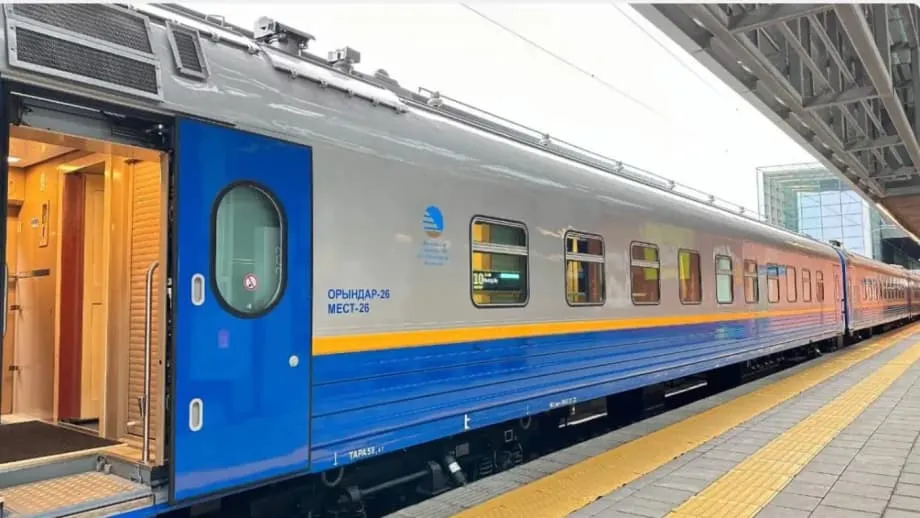
Densaulyk is based in Almaty and serves southern territories. Zhardem operates from Aktobe and covers eastern and western regions. Salamatty Kazakhstan is headquartered in Karaganda and serves northern areas. Their regional assignments spread the mobile service across the country, including communities difficult to reach by road during harsh winters.
Each train consists of eight wagons and carries approximately 80 personnel, about half of them medical providers. Teams include general practitioners, nurses, pediatricians, neurologists, gynecologists, cardiologists and dentists. Managers oversee timetables and maintain supplies during journeys lasting a month.
The carriages contain clinical equipment, diagnostic machinery and radiology suites. Bringing these resources together allows a village visit to include several types of examination and treatment, including dental procedures and minor outpatient surgery. Patients can see specialists whose equipment would be impractical to install in every small settlement.
The operating description gives approximately 20 days for a full itinerary of 832 remote stations, alongside annual travel of about 20,000 kilometers and service to more than 100 isolated stations. The relationship between the 832 stations and the annual stops is not specified.
Predetermined timetables give residents a date to anticipate. Many mark their calendars because the visit offers their only opportunity for comprehensive screening and specialist consultations without an expensive and demanding trip to a regional capital.
Medical records are retained for patients who return in subsequent years, allowing doctors to follow changes in their health. Real time video links also connect staff aboard the trains with hospital professionals, helping them assess cases that require expertise beyond the mobile team's immediate resources.
Eight Months of Life Aboard a Clinic
Doctors assigned to the trains spend eight months of the year away from their families and urban amenities. Compact living quarters provide the necessities for an extended deployment, while the train supplies both accommodation and transportation. The arrangement lets teams concentrate on patient care throughout their route.
Medical work in a railway carriage brings practical demands. Space is limited, equipment must be secured against vibration and movement, and procedures must be planned around scheduled stops. Staff need clinical skill and the ability to adapt to the conditions of railway travel.
The equipment supports fluorography, electrocardiography, ultrasound imaging, gastroscopy and comprehensive blood analysis. Fluorography uses X rays to examine the chest. Electrocardiography records the heart's electrical activity, while ultrasound uses sound waves to create images inside the body. Gastroscopy allows a doctor to examine the upper digestive tract using a camera.
Dental work and minor outpatient operations are provided without charge to train patients, including procedures outside Kazakhstan's standard list of guaranteed free medical care. Outpatient surgery means a smaller operation that does not require an overnight hospital stay.
The trains operate regardless of weather, including temperatures below freezing that can make road travel impossible. That resilience supports access during harsh months when respiratory illnesses and cardiac events often become more severe. Teams must preserve sterile conditions and work precisely even when a train is stopped amid snowdrifts or strong winds.
For doctors, the assignment combines technical challenges with the opportunity to treat people who have few alternatives. The secure accommodation and transport remove some of the practical difficulties of serving remote communities, although the long separation from home remains part of the job.
Finding Illness Before It Becomes an Emergency
Medical teams give particular attention to cardiovascular disease, diabetes and conditions affecting children. Screening seeks to identify problems before they require emergency treatment, while onboard diagnostic equipment can also help staff recognize an urgent illness during a routine visit.
At Zhaksy station, a patient with cardiac symptoms was diagnosed aboard the train with a myocardial infarction, the medical term for a heart attack. Cardiologists used the equipment on board to identify the condition, provide emergency assistance and enable rapid hospitalization that saved the patient's life.
More than 30% of patients receive diagnoses at their initial appointment. One in four of those cases involves a serious disease requiring immediate intervention. Finding such conditions locally allows a patient to begin the next stage of care without first having to arrange a distant specialist appointment.
Almost all patients identified with conditions requiring follow up, including hundreds of children, are enrolled in dynamic monitoring at their local polyclinics. Dynamic monitoring means repeated checks over time, so healthcare workers can assess a condition and respond to changes after the train has left.
Children account for approximately one in five patients. Pediatric specialists assess development, treat common childhood illnesses and identify problems needing specialist attention. Thousands of young patients have been identified for continued monitoring through local polyclinics.
Rural families can obtain these pediatric evaluations without traveling to distant cities. Elderly residents and people with limited mobility also benefit from receiving care nearby. Attendance is high compared with traditional clinic appointments because the train removes transportation barriers that often cause people to postpone examinations until illness becomes severe.
Legal Advice Joins the Medical Service
Salamatty Kazakhstan added legal professionals and mediators in 2023. They travel alongside medical teams to advise residents on labor disputes, government benefits, family law and court proceedings. Mediation helps people seek an agreed resolution to a dispute.
The Samruk-Kazyna Trust charity foundation coordinates these services. The expansion recognizes that medical needs and legal welfare can be closely connected, particularly for women and families in rural communities with limited access to legal protection or advocacy.
A visit can therefore address more than symptoms or test results. Residents can seek clinical care and help with civil concerns at the same stop, extending the train's role as a point of access to professional services that are otherwise distant.
What the 2023 and 2024 Figures Show
Salamatty Kazakhstan provided assistance to approximately 104,000 people in 2023. Between April and July that year, it visited 47 remote stations across nine regions, where approximately 27,000 people underwent diagnostics and received treatment.
In the first half of 2024, the train conducted 32,000 examinations across six regions and delivered more than 91,000 individual medical services. An examination and a medical service are different measures: a visit can involve several consultations, tests or treatments.
The 2024 expansion plan called for reaching 123 remote villages across 11 regions and serving more than 90,000 additional rural residents. Plans also included 44 additional stations by the end of that year. These figures describe the targets announced for 2024.
The sequence of the program's development shows how its role broadened:
- 2010: The medical train program began, against a backdrop of unequal access to physicians.
- 2011-2015: The Salamatty Kazakhstan state healthcare development program supported modernization adapted to local needs and geography.
- 2023: Salamatty Kazakhstan added legal advice and mediation, assisted approximately 104,000 people, and visited 47 stations across nine regions between April and July.
- 2024: First half activity included 32,000 examinations and more than 91,000 medical services across six regions, alongside plans to expand coverage.
Permanent Hospitals Will Work Alongside the Trains
Kazakhstan's Modernization of Rural Health national project aims to build 655 primary healthcare facilities and establish 32 multidisciplinary central district hospitals equipped with modern technology. Multidisciplinary hospitals bring several medical specialties together, allowing patients to receive a wider range of care in one place.
The project requires 217.7 billion tenge and includes measures to attract medical personnel to rural areas. These include lifting allowances, financial assistance associated with taking up an assignment, and compulsory rural service for graduates.
The permanent facilities are intended to complement the mobile units. Larger rural centers can support fixed clinics and hospitals, while trains continue reaching scattered outposts. Together, they create successive levels of care: local examinations, specialist assessment and hospital treatment when a patient's condition requires it.
Medical aviation also supports this network. Kazakhstan has 33 aircraft for medical aviation services, which can provide emergency transportation when immediate hospitalization is needed. The trains coordinate with 595 ambulance crews operating in rural areas.
The Zhaksy heart attack case illustrates why those connections matter. A diagnosis aboard the train can start emergency care, but a patient requiring hospitalization must then reach a facility able to continue treatment. Rail services, ambulances, aircraft and hospitals each perform a different part of that process.
Digital Connections Extend the Reach of Specialists
More than 86% of rural health facilities maintain internet connectivity. That access supports telemedicine, in which medical professionals consult or exchange information remotely, and helps connect rural services with expertise based in urban hospitals.
Video communications aboard the trains allow doctors to consult hospital colleagues while examining patients far from a city. The mobile clinic supplies the physical examination and diagnostic equipment; the digital connection brings additional professional advice to the same encounter.
Kazakhstan's wider approach to primary healthcare was also reflected in the 2023 Astana conference marking the 45th anniversary of the Alma-Ata Declaration. The declaration's focus on primary healthcare concerns the accessible services people use first, before more specialized hospital treatment becomes necessary.
The World Health Organization has recognized the district polyclinic in Enbekshikazakh as a demonstration site for primary healthcare best practices. That recognition supports the country's approach of organizing care around patients and connecting services across different settings.
Continued expansion of rural broadband can strengthen the links between mobile clinics, local facilities and hospital specialists. Kazakhstan's medical trains already combine those connections with a physical presence: doctors, nurses and equipment arrive where patients live, then help place those who need further care into the wider health system.
The Essentials
- Three trains serve different territories: Densaulyk from Almaty, Zhardem from Aktobe and Salamatty Kazakhstan from Karaganda.
- The trains operate for eight months annually, travel approximately 20,000 kilometers and reach more than 100 isolated stations.
- Each train has eight wagons and about 80 personnel, including roughly 40 medical providers.
- Since 2010, the program has served more than 800,000 patients with free examinations, diagnostics, dental treatment and minor surgery.
- More than 30% of patients receive diagnoses at their first appointment; one in four of those cases involves serious illness requiring immediate intervention.
- Children make up approximately one fifth of patients, with continued monitoring arranged through local polyclinics.
- Salamatty Kazakhstan added legal advice and mediation in 2023 and assisted approximately 104,000 people that year.
- Rural modernization plans include 655 primary healthcare facilities and 32 district hospitals, supported by medical aviation, ambulance services and telemedicine.