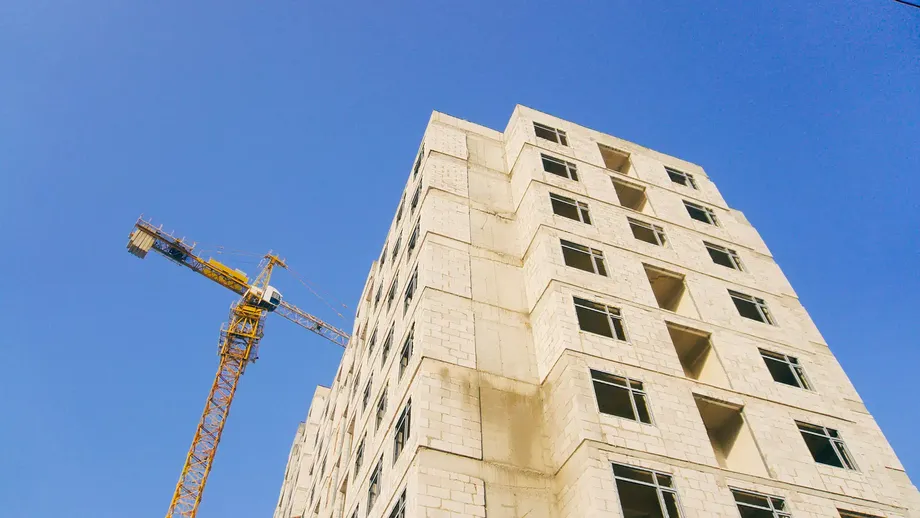
A smaller deposit is being considered, while housing costs remain under pressure
Kazakhstan is considering reducing the upfront payments required under housing programs as the government pushes to complete 20.4 million square meters of housing by the end of 2026. Prime Minister Olzhas Bektenov has instructed the Agency for Regulation and Development of the Financial Market and the Ministry of Industry and Construction to prepare proposals, with the directive publicized on October 13 and 14.
Contents
- A smaller deposit is being considered, while housing costs remain under pressure
- What buyers currently need to pay
- The government wants completed homes, not just completed buildings
- Why construction growth can coexist with weak housing demand
- Tax changes could make deposits harder to save
- Builder safeguards and access to construction money
- Pension savings are another part of the deposit equation
- A proposed quality standard reaches beyond major cities
- The dates that shape the housing debate
- Key Points
A report published on October 13, 2026, at 17:57 describes the instruction as requiring the Agency for Regulation and Development of the Financial Market, together with the Ministry of Industry, "to develop additional proposals for introducing mechanisms to reduce the size of the down payment." This wording is translated from the report; the supplied sources do not include the official instruction or a submission deadline.
The potential change addresses a specific obstacle: even a subsidized mortgage can require several million tenge before a buyer receives the keys. For an apartment costing 20 million tenge, a deposit of 10% means finding 2 million tenge. A requirement of 20% doubles that amount to 4 million tenge.
Developer and construction and renovation specialist Dilyara Seitnurova argues that housing demand has been constrained by financing difficulties rather than disappeared. She supports reducing deposits, while warning that buyers also need access to affordable loans and developers need enough financing to finish their projects.
Her assessment brings together three pressures: a higher value added tax rate, tighter rules governing money collected from homebuyers during construction, and restrictions on access to pension savings. Each affects a different part of the same transaction, from the price of an apartment to the money a household can put toward it.
The government has requested proposals rather than announced a new deposit requirement. No replacement percentage, implementation date or deadline for submitting the proposals has been announced. For prospective buyers, the immediate position is that existing program requirements still determine how much they need to save.
What buyers currently need to pay
Otbasy Bank's official Nauryz program rules require a minimum down payment of 20% of the loan amount, or 10% of the loan amount when buying primary housing with finishing work completed. The 5-10-20 program also has a minimum deposit of 10%.
A down payment is the part of a home's purchase price that the buyer pays upfront. The mortgage covers the financed portion, which the borrower repays over time with interest. Lowering the deposit reduces the savings needed at the beginning, but increases the amount borrowed when the price and other loan terms stay the same.
For a home priced at 20 million tenge, moving from a 20% deposit to 10% would reduce the upfront requirement from 4 million to 2 million tenge. The financed portion would rise from 16 million to 18 million tenge. This is an illustration using the existing percentages, not an announced government proposal.
These purchase-price examples are not calculations of Nauryz's required deposit: its official rules express the minimum as a percentage of the loan amount.
Household income remains central to whether that change helps. A family may be able to assemble a smaller deposit yet still struggle with monthly repayments. Lower deposits and affordable repayments therefore address different parts of the purchase: one helps a household enter the program, while the other determines whether it can keep paying.
The government wants completed homes, not just completed buildings
Bektenov has made delivery of the planned 20.4 million square meters a construction priority. His instructions also address the condition in which those homes reach residents.
Prime Minister Olzhas Bektenov said housing must be ready for use, with infrastructure and amenities included:
"At the same time, housing must be fully completed and equipped with the necessary infrastructure and amenities," Bektenov said.
Regional akimats, the local executive authorities, have been told to prepare land plots in advance and accelerate infrastructure work. The requirements described include water, heating, electricity, road access and landscaping. Those services affect whether a family can actually move into a finished building.
The connection to mortgage policy is practical. A buyer needs both a manageable purchase arrangement and a usable home. Developers also depend on timely connections to utilities and prepared land to deliver projects. The government's instructions put financing and construction readiness on the same agenda.
Why construction growth can coexist with weak housing demand
Kazakhstan's economy grew by 4.2% over the nine months described in the government meeting coverage, while construction expanded by 11.5%. Construction therefore grew about 2.7 times as fast as the economy, using those two figures.
Seitnurova says large government infrastructure projects help support construction activity, even while private residential developers and households face financing problems. She cites an infrastructure plan worth $90 billion through 2029 alongside the housing completion target.
Construction figures measure a broader range of work than home purchases. Infrastructure spending can keep builders busy, while families remain unable to assemble a deposit or qualify for a mortgage. Private housing depends more directly on household purchasing power and the financing available to the companies building it.
Seitnurova's industry estimates describe a much tighter private market. She says legal housing supply has nearly halved, around 12% of companies resumed operations in the first quarter, and up to 70% of market transactions take place in cash. She identifies these as industry estimates rather than official statistics.
Her interpretation is that limited mortgage access is restricting purchases while the supply of housing is shrinking. The cash transaction estimate is especially relevant to the proposed policy: reducing deposits would target buyers who need a loan to complete a purchase, rather than those able to pay the entire price themselves.
Tax changes could make deposits harder to save
Seitnurova identifies the increase in value added tax to 16% in 2026 as another source of pressure, noting that housing sales were previously exempt. Value added tax, usually shortened to VAT, is a tax charged on taxable sales.
She says developers expect prices to rise by 14% to 20% because of the higher tax burden, with the main effects likely in 2027 and 2028. Those percentages are expectations described by Seitnurova, rather than an announced increase in apartment prices.
The size of the deposit depends on both the required percentage and the home's price. Applying her expected price increases to the 20 million tenge example produces a price of 22.8 million to 24 million tenge. At a deposit requirement of 10%, the buyer would need 2.28 million to 2.4 million tenge, compared with 2 million before the increase.
At a 20% requirement, the same illustrative deposit would rise from 4 million tenge to between 4.56 million and 4.8 million. A reduction in the required percentage could ease the burden, while rising prices would push it in the opposite direction. The eventual benefit to buyers would depend on both.
Builder safeguards and access to construction money
Seitnurova also points to the new Construction Code and its treatment of money collected from citizens through shared equity agreements. These arrangements allow a buyer to pay toward a home while it is being built, making construction progress and completion especially important to the buyer.
She describes the code as allowing developers to raise citizens' money through such agreements only when state guarantees are in place. In her assessment, obtaining the required guarantees creates difficulties for small and medium sized companies and could reduce the supply of affordable housing.
Guarantees are intended to protect buyers committing money before completion. Seitnurova's concern is how tighter requirements interact with the financing available to builders. If companies lose access to buyers' funds without obtaining another source of construction finance, she warns, projects could be frozen.
She argues that regulation needs to be coordinated with measures supporting purchases. Her warning concerns both sides of a housing transaction: households need a workable route to buying, and developers need the money to complete what they sell. Frozen projects, she says, could leave more buyers without the homes they paid for.
Pension savings are another part of the deposit equation
Withdrawals from Kazakhstan's Unified Accumulative Pension Fund have been a major source of housing deposits, according to Seitnurova. She says the volume of withdrawals rose by 83% in 2025, showing how important access to those savings had become for home purchases.
Pension withdrawal rules use minimum sufficiency thresholds, which determine how much savings a person must retain in their pension account. Raising a threshold can leave less money available to withdraw for housing, even when the balance in the account has not changed.
Seitnurova cites 52 housing improvement applications fulfilled by the fund between June 5 and June 10 after the thresholds were raised. She presents that figure as an indication of restricted access to pension savings. The example counts applications fulfilled during that short period; the broader withdrawal figure measures a change in volume over a year.
For a household planning to use pension money for its deposit, tighter withdrawal rules can increase the amount it must find elsewhere. A lower mortgage deposit could partly ease that problem, although the borrower would still need to meet the program's eligibility and repayment requirements.
Household microloans were also reported to have reached 1.4 trillion tenge. Microloans are generally smaller loans than mortgages, and the figure adds to the picture of household borrowing discussed alongside the housing directive. The government's task is to improve access to housing finance while taking account of families' capacity to repay.
A proposed quality standard reaches beyond major cities
Deputy Maksut Nasibulov has called at a Kurultai plenary session for a unified minimum housing quality standard. His proposal covers housing built with state money and with other financing, extending the discussion from purchase costs to the surroundings residents receive.
Nasibulov wants housing designs to include lighting, pedestrian paths, landscaping, playgrounds, sports areas and recreation spaces. He also highlighted places suited to older people and people with disabilities, saying these needs are being overlooked, particularly in district centers and villages.
The deputy proposed checking previously built public housing by comparing the requirements in design and cost documents with the work actually completed. That would put attention on whether promised facilities were delivered, rather than simply whether a building was handed over.
Nasibulov said the standard should apply beyond Astana and regional capitals, while accounting for each settlement's needs. His proposal connects with Bektenov's instruction that new housing arrive with infrastructure and amenities: access to a mortgage is only one part of obtaining a home suitable for daily life.
The dates that shape the housing debate
The deposit proposal sits alongside changes and targets extending over several years. The sequence helps explain why Seitnurova is urging officials to consider buyer finance and construction finance together.
- 2025: Seitnurova says the volume of pension withdrawals rose by 83%, with pension savings serving as a major source of housing deposits.
- 2026: The VAT rate rises to 16%, a tax change Seitnurova identifies as a source of future price pressure.
- October 13 and 14, 2026: Bektenov's instruction to prepare proposals for lower housing deposits was publicized.
- End of 2026: The government aims to complete 20.4 million square meters of housing, with utilities and amenities ready.
- 2027 and 2028: Seitnurova expects the main housing price effects of the higher tax burden to emerge.
- Through 2029: The $90 billion infrastructure plan cited by Seitnurova extends over this period.
For buyers, the most immediate decision is whether the proposed deposit changes make the upfront payment more manageable. For builders, access to financing and prepared infrastructure will help determine how much housing reaches the market. Seitnurova's central argument is that support for demand needs to move alongside measures that keep construction going.
Key Points
- Bektenov has requested proposals to reduce housing program deposits; a new percentage and start date have not been announced.
- Nauryz's official minimum down payment is 20% of the loan amount, or 10% for primary housing with finishing work completed.
- The government targets 20.4 million square meters of completed housing by the end of 2026, with infrastructure and amenities ready.
- Seitnurova warns that tax costs, developer financing restrictions and reduced access to pension savings could put pressure on prices and supply.
- Her estimates of shrinking legal supply and widespread cash purchases are industry assessments, not official statistics.
- Nasibulov proposes minimum housing quality requirements for cities, district centers and villages.