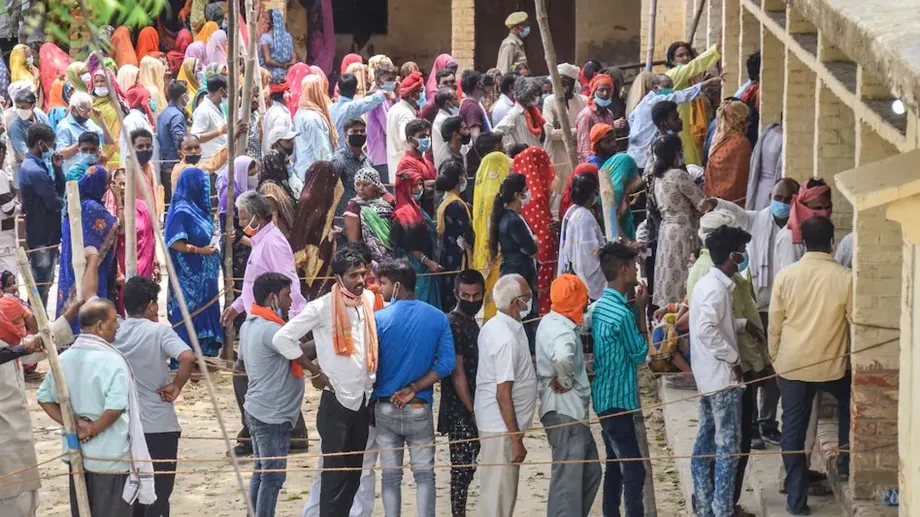
Three months to restore elected village councils
The Allahabad High Court has directed the Uttar Pradesh government and the State Election Commission to complete panchayat elections within three months, while allowing outgoing village heads to continue as administrators during that period. The ruling keeps the existing election framework, including 27 per cent reservation for Other Backward Classes, as authorities face scrutiny over how they collected evidence for a new reservation exercise.
Contents
- Three months to restore elected village councils
- What the court ordered
- Why 11 petitions reached the bench
- What outgoing village heads can do
- Agra's figures put the OBC survey under scrutiny
- Why the triple test matters
- Who is responsible for setting the schedule?
- The dates behind the dispute
- Government options and political reactions
- Key Points
A division bench of Justices Ajit Kumar and Garima Prasad delivered the decision after hearing 11 petitions, six of them public interest litigations. The cases challenged delays in elections and the government's decision to appoint outgoing gram pradhans, or village heads, as administrators after elected panchayats completed their terms in May 2026.
The judges heard arguments for about three hours before reserving their decision, which was subsequently delivered on a Wednesday. The detailed written order had not yet been uploaded, and the exact date of delivery was not specified. A precise calendar deadline for completing the elections therefore remains unavailable.
The decision addresses two connected problems: how to restore elected representatives and how to keep village services running until voting is complete. The court rejected challenges to the appointment of administrators, allowing the temporary arrangement to continue while imposing a deadline for elections.
Uttar Pradesh's election preparations have been held up by the process of determining OBC reservation. Work on the voter list is complete, but decisions on reserved seats remain pending. The ruling requires the government and election authorities to move ahead rather than leave the election timetable dependent on the completion of the OBC Commission's continuing work.
What the court ordered
The bench directed elections under the existing rules and framework, retaining the 27 per cent reservation arrangement. The OBC Commission may continue its work without obstruction, but completion of that exercise is not a prerequisite for holding the polls.
Reservation means setting aside a specified share of elected positions for eligible candidates from a particular group. For election authorities, deciding which positions are reserved is a practical step: candidates need to know the eligibility rules before nominations and voting can proceed.
The proceedings covered elections for village heads, members of kshetra panchayats at the block level and members of district panchayats. Together, these form the state's three levels of rural local government. Much of the dispute about temporary administrators concerned village panchayats, where outgoing heads had been appointed to keep administration functioning.
The reservation timetable needs clarification in the written order. Advocate Imtiaz Hussain described a requirement to finish reservation determination within the three months allowed for elections, while petitioner Rai Sahab Yadav described six months for a reservation decision alongside the three months for polls. The central election direction is consistent: voting must proceed within three months under the existing framework, independently of the commission finishing its wider exercise.
Why 11 petitions reached the bench
Imtiaz Hussain's petition sought a detailed election schedule that would complete the process before the existing panchayats' terms expired. It said elections should have been held by May 26, 2026, or earlier. Dashrath Yadav, Anil Kumar, Akbar Ansari and Hemchandra were also among the named petitioners.
Six of the 11 cases were public interest litigations, meaning they sought court intervention over an issue affecting the public rather than only an individual dispute. The bench heard the petitions together because they concerned the same election delays and administrative arrangement.
The petitions challenged the government's May 25 decision to appoint outgoing village heads as administrators. Hussain said their aim was to restore elected representation through timely elections. The court rejected challenges to the administrator appointments and the validity of the statutory arrangement, while directing authorities to complete the polls.
What outgoing village heads can do
The government's administrator arrangement was to take effect from May 27, 2026. District magistrates were authorised to formally appoint outgoing village heads until new panchayats were formed or for a maximum of six months. Under the ruling, outgoing heads may continue as administrators during the three months allowed for elections.
Administrators were permitted to carry out routine work, including maintaining cleanliness, drinking water services and street lighting, handling small administrative matters and conducting ordinary monitoring of government schemes. They were barred from major policy decisions, new schemes and large financial decisions.
For residents, this means the people previously running their village councils can continue dealing with everyday services while preparations for voting proceed. Their temporary role has narrower powers than a fresh elected mandate, particularly over new policies and major spending.
The court's decision preserves that continuity without accepting an open ended wait for elections. Existing administrative work and development activity can continue, subject to the limits attached to the appointments, while the government and election commission organise the return of elected councils.
Agra's figures put the OBC survey under scrutiny
Agra district supplied the clearest example of the bench's concerns about the reservation exercise. At the October 9 hearing, the court questioned how the commission had assessed an OBC population exceeding 300,000 when only 179 people approached it following newspaper advertisements and statements were recorded from just 29.
The figures show the scale of the judges' concern. The 179 participants represented less than 0.06 per cent of the stated population, while the 29 recorded statements amounted to about 16 per cent of those who approached the commission. The bench asked how this process could provide adequate evidence about different communities.
The judges questioned the absence of fieldwork and asked why the report appeared to have been prepared from an office. They wanted the commission to explain how it was assessing social, economic and political backwardness by caste, rather than simply collecting a small number of responses to public notices.
The commission told the court that data collection had been completed in 40 districts and that work in the remaining districts would follow. The bench also noted that an advisory committee created after the commission's formation had not held a meeting with it, although the exercise had been underway for about five months.
The judges sought a detailed account of the work carried out in Agra by noon on October 14. That direction focused attention on the method behind the figures: whom the commission contacted, what evidence it gathered and how it planned to assess that evidence within its allotted period.
Why the triple test matters
The bench referred to the Supreme Court decisions in Dr. K. Krishna Murthy v. Union of India and Suresh Mahajan v. State of Madhya Pradesh when questioning the commission about the requirements known as the triple test for OBC reservation in local elections.
In simple terms, the triple test requires a dedicated commission to study backwardness in relation to local political representation, recommendations to determine reservation for the relevant local bodies, and compliance with the prescribed limit on combined reservations. The process is intended to connect reserved positions to evidence about representation in local government.
The judges asked how the commission had gathered empirical data and how it would assess that material. Empirical data means information collected through observation, surveys, records or other evidence about actual conditions. Here, the question was how the commission's work captured the circumstances of OBC communities across different areas.
Agra's population and participation figures made that issue concrete. A commission examining hundreds of thousands of residents needs a method for reaching and assessing communities beyond the small group that responds to a newspaper notice. The court asked for details of that method while allowing the broader exercise to continue separately from the election process.
Who is responsible for setting the schedule?
Hussain relied on Article 243E of the Constitution, arguing that a panchayat's term cannot exceed five years from its first meeting and that elections must be completed on time. His petition sought a schedule before the existing terms ended, rather than an arrangement that would begin only after elected councils expired.
The State Election Commission pointed to Section 12-BB of the Uttar Pradesh Panchayat Raj Act, 1947. It argued that the state government is responsible for issuing the notification fixing the date for a general election or a by election for village heads, in consultation with the commission.
The two positions identify the practical need for cooperation. The government must take the notification and reservation decisions assigned to it, while the State Election Commission must organise the election process. The court had earlier asked the commission for an affidavit explaining its readiness and expected a complete election schedule to be placed on record before the next hearing.
Reservation preparation also requires administrative work outside the OBC Commission. During the proceedings, the Panchayati Raj Department had yet to begin forming a committee to determine reservations, despite a request from the election commission. That exercise was described as taking about two months and using the reservation arrangements from 2015 and 2021 to determine the positions for 2026.
The dates behind the dispute
The litigation began with a demand for elections before the panchayats' terms expired. It later expanded to cover the government's decision to retain outgoing heads as administrators and the quality of the OBC Commission's work.
- March 17: The court sought a response from the State Election Commission on preparations and whether elections could be completed within the constitutional timeframe.
- May 25, 2026: The government decided to appoint outgoing village heads as administrators.
- May 26, 2026: Hussain's petition identified this as the latest date by which elections should have been completed.
- May 27, 2026: The administrator arrangement was to take effect.
- October 9: The bench questioned the OBC Commission's fieldwork and the limited participation recorded in Agra.
- October 14, noon: The court required detailed information about the commission's work in Agra.
- The subsequent Wednesday ruling: The bench directed elections within three months and allowed outgoing heads to remain administrators during that period.
The sequence shows why the final direction goes beyond setting a polling deadline. By the time the bench ruled, the dispute involved expired elected terms, temporary administration and unfinished work on reservation.
Government options and political reactions
Panchayati Raj Minister Om Prakash Rajbhar welcomed the verdict and noted that the government could approach the Supreme Court. The government can comply with the three month direction, seek relief from the Supreme Court or ask the High Court for more time before the deadline expires.
A Special Leave Petition would ask the Supreme Court to consider a challenge to the High Court's decision. The government could seek a stay, which would suspend the relevant direction, or request additional time. An application to the High Court could instead seek modification or review of its order. Any change would require a court decision.
Samajwadi Party spokesperson Fakhrul Hasan Chand said elections should have taken place in March or April and accused the Bharatiya Janata Party government of delaying them. He also alleged that the party feared defeat. His comments were a political response to the judgment, alongside the minister's welcome for the ruling.
The immediate tasks are now concrete: settle the reservation arrangements needed for the existing framework, issue the necessary notification and publish a schedule that fits the court's deadline. The OBC Commission can continue its evidence gathering at the same time. Village administrations will remain in the hands of outgoing heads until elections are completed, with routine services continuing under the limits on their temporary powers.
Key Points
- The Allahabad High Court directed Uttar Pradesh to complete panchayat elections within three months.
- Justices Ajit Kumar and Garima Prasad heard 11 petitions, including six public interest litigations.
- Elections are to proceed under the existing framework, retaining 27 per cent OBC reservation.
- The OBC Commission can continue its work independently of the election process.
- Outgoing village heads may remain administrators during the election period, with limits on major policy and financial decisions.
- The court questioned Agra's survey process: more than 300,000 OBC residents, 179 participants and 29 recorded statements.
- The detailed written order was still awaited, including clarification of the reservation timetable.
- The government may seek relief from the Supreme Court or request an extension from the High Court.