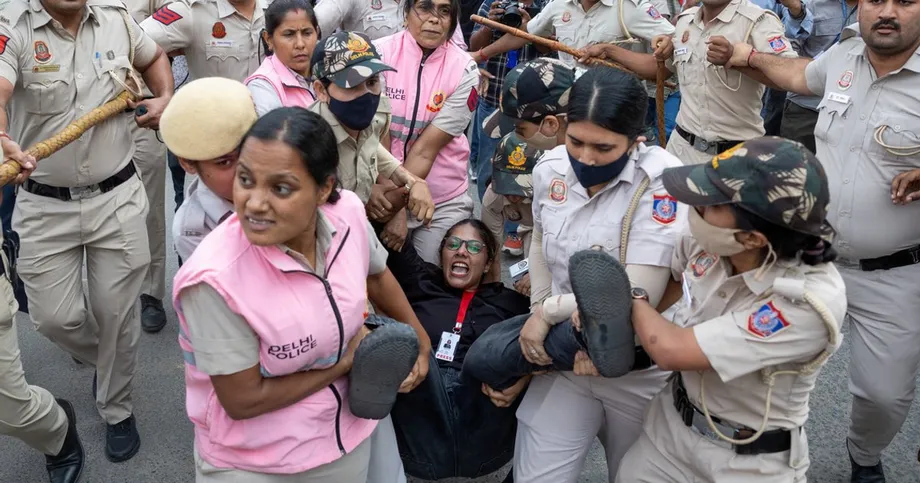
Press detentions deepen the confrontation in Delhi
Nearly three dozen journalists were detained while covering protests in New Delhi over October 10 and 11, according to accounts from reporters, as a dispute over the removal of more than 130 million names from voter lists widened into a confrontation over press freedom, peaceful assembly and police powers.
Contents
- Press detentions deepen the confrontation in Delhi
- Reporters describe force and seized devices
- What the voter list dispute concerns
- How the confrontation unfolded
- The Supreme Court examines restrictions
- Opposition leaders take the dispute to court
- CJP disputes the terms of its leaders' release
- Why the protest venue matters
- Government supporters reject the protests
- Key Points
The demonstrations, led by the Cockroach Janta Party (CJP) youth movement and backed by opposition parties, demand the resignation of Chief Election Commissioner Gyanesh Kumar. Protesters allege that the electoral revision benefits Prime Minister Narendra Modi's Bharatiya Janata Party (BJP). The Election Commission denies favouring any party and says the exercise removes duplicate and ineligible entries.
Journalists described being dragged, having their phones seized and being held for hours, sometimes despite being identifiable as members of the press. Press associations called for an apology and an investigation. Police said some protesters had posed as journalists and interfered with officers, but did not immediately answer questions about the number of reporters detained or their treatment.
The confrontation continued on October 12, 2026, when opposition leaders marched to the Supreme Court and filed a petition concerning alleged electoral irregularities. Authorities closed six metro stations ahead of the march, while Delhi Police withdrew Jantar Mantar's designation as a protest venue.
Two distinct disputes are now before the public and the courts: whether the electoral revision wrongly excluded eligible voters, and whether authorities unlawfully restricted protesters, lawyers and journalists. Allegations about the voter lists have not been established by a final court ruling, and judicial intervention over policing does not itself resolve the electoral claims.
Reporters describe force and seized devices
Journalists from several newspapers and digital outlets were among those detained. Accounts from reporters and footage of the police operation described officers roughly handling members of the press while they documented arrests. One journalist covering the events was also briefly detained.
Anmol Pritam, a reporter at digital outlet Newslaundry, said he and his producer were detained for nearly three hours on October 10 while interviewing people already held inside a bus. He described an officer interrupting the interview and taking his equipment.
I was interviewing some people detained in a bus when a police officer came at me and grabbed my mic... I was dragged, my phone was snatched and I was forcefully detained along with my producer,
Police did not respond to a request for comment on his case. The Press Club of India, together with three other press bodies, said journalists were detained while filming police holding protesters and that their devices were seized. The associations requested a formal apology and an investigation into senior officers' actions.
Ritika Jain, India representative of Reporters Without Borders, said the restrictions worked together to obstruct reporting. Her criticism extended beyond detention to surveillance, disrupted connectivity and the removal of journalistic material.
Detention, surveillance, internet shutdowns, and the removal of journalistic content form a chain of restrictions,
Some journalists said detentions continued after an October 11 Supreme Court order allowing journalists and lawyers to perform their duties. That allegation makes the timing and circumstances of individual detentions central to assessing whether officers complied with the court's direction.
What the voter list dispute concerns
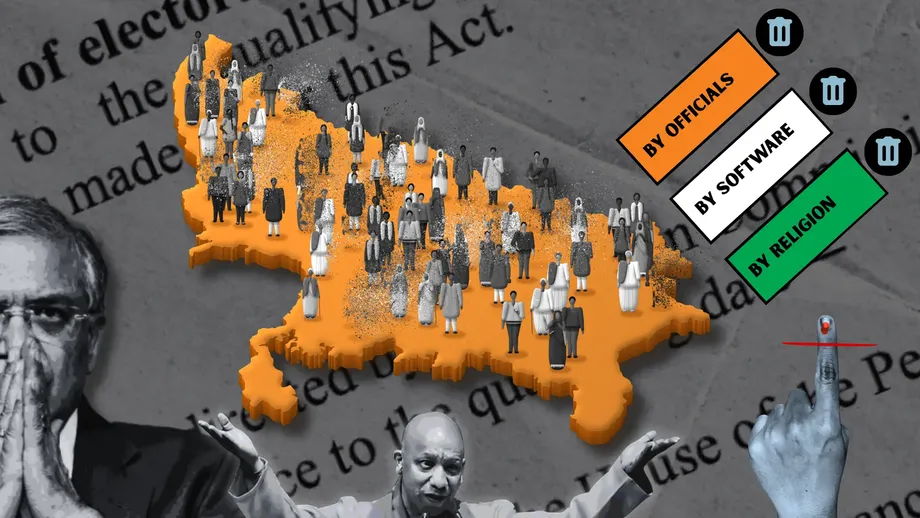
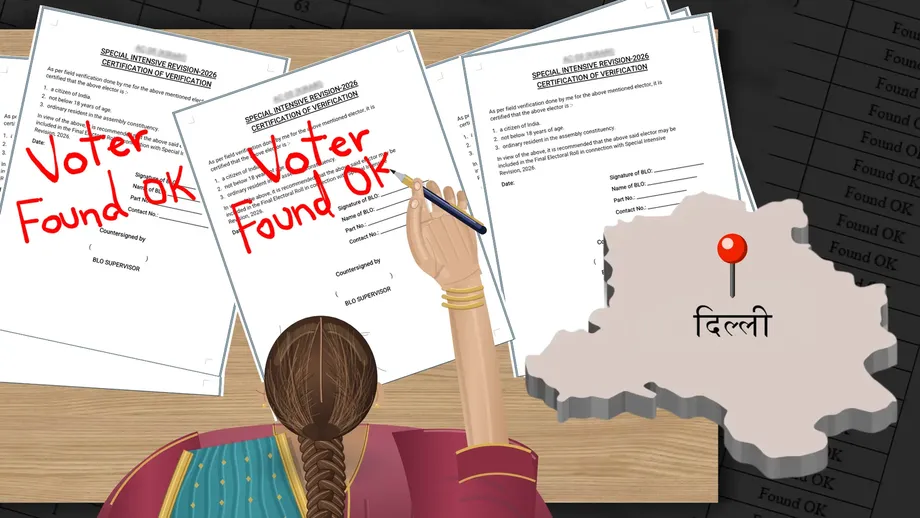
The protests centre on the Special Intensive Revision (SIR), an exercise to review electoral rolls, the lists determining who can vote. The revision began the previous year and reportedly removed more than 130 million names, including entries for people who had died, moved or could not be traced.
Removing an entry is not necessarily the same as excluding an eligible voter. The Election Commission says the exercise is intended to remove duplicates and ineligible names, and that voters wrongly deleted can enrol again. Critics argue that legitimate voters have been removed and that requiring them to restore their registration can prevent them from voting.
The dispute intensified after a September 23 report alleged that two election commissioners had objected to decisions Kumar took during the revision. Those decisions were reported to have disadvantaged voters and reduced the authority of local election officers. The commission has maintained that its actions followed the law and its instructions.
Local allegations illustrate the concerns but do not establish their scale. Deshraj Ranawat, a 56 year old Congress worker from Delhi's Deoli constituency, claimed that about 100,000 voters had been deleted there, nearly all Congress supporters. That assertion has not been independently established in the accounts of the protests.
The distinction matters: the reported nationwide total of deleted names does not show how many belonged to eligible voters, how many people successfully registered again, or whether deletions disproportionately affected supporters of any party. Those are central questions for the electoral challenge.
How the confrontation unfolded
The October demonstrations followed an earlier CJP mobilisation at Jantar Mantar. A protest lasting weeks helped pressure Education Minister Dharmendra Pradhan to resign in July, giving the youth movement a prominent role before the electoral dispute escalated.
- September 23: A report described objections by two election commissioners to decisions concerning the voter list revision.
- October 2: CJP announced a demonstration at Jantar Mantar for October 10, demanding Kumar's resignation.
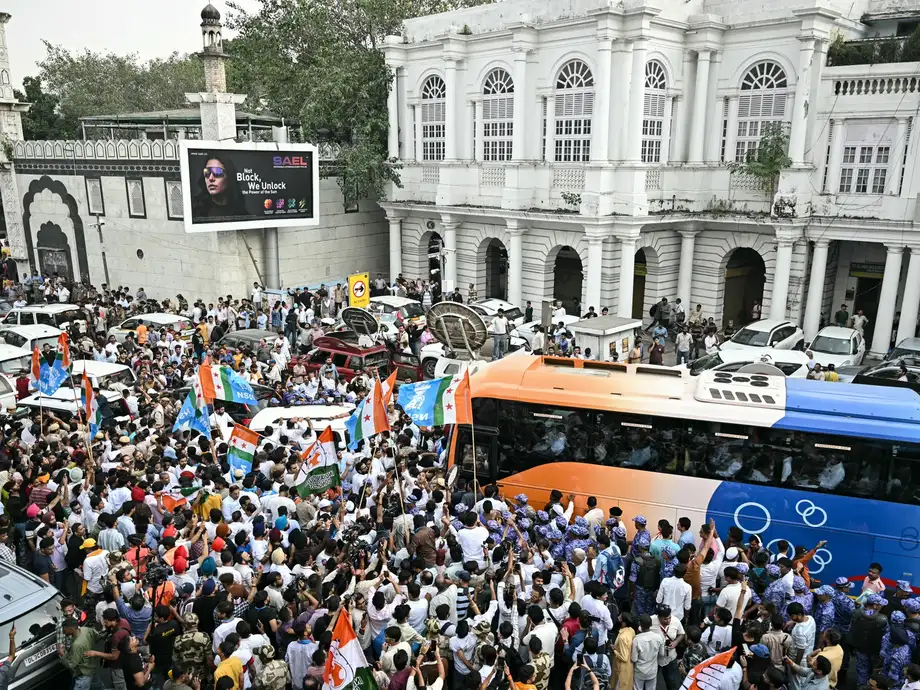
- October 10: Police blocked access to the planned protest, and thousands of demonstrators were reportedly detained. Journalists and lawyers were also held.
- October 11: CJP leaders were released after nearly 24 hours. The Supreme Court intervened over restrictions and the ability of journalists and lawyers to work.
- October 12: Opposition leaders marched to the Supreme Court and filed an electoral petition. Jantar Mantar lost its designated protest status.
- October 13: Officials were asked to submit affidavits and a compliance report concerning transport restrictions.
Reports differ in their precision about the weekend detentions. Several describe thousands of people being held; one gives a figure of 7,000, including YouTuber Dhruv Rathee. Police did not provide a comprehensive count in their responses concerning journalists.
The Supreme Court examines restrictions
The legal response extends beyond the opposition's challenge to the electoral revision. Lawyers sought an October 11 ruling allowing lawyers and journalists to carry out their duties, and the court ruled in their favour. Journalists' accounts of later detentions leave compliance with that order in dispute.
A separate contempt plea by advocate Shailendra Mani Tripathi alleged that authorities continued closing metro stations and cancelling train services despite an earlier direction that rail services could be regulated but not shut. A contempt proceeding examines whether a court's order has been disobeyed; it is separate from deciding the merits of the protests.
A special bench was reported to have found an initial basis for considering contempt and issued notices to Home Affairs Secretary Govind Mohan, the Delhi police commissioner and the chairperson of the Delhi Metro Rail Corporation. It sought affidavits and a compliance report by October 13.
Those notices are not a final finding against the officials. They require a response to allegations about continued restrictions. The reported deadline is the next concrete step in that proceeding, while no final decision on the opposition's electoral petition has been announced.
Opposition leaders take the dispute to court
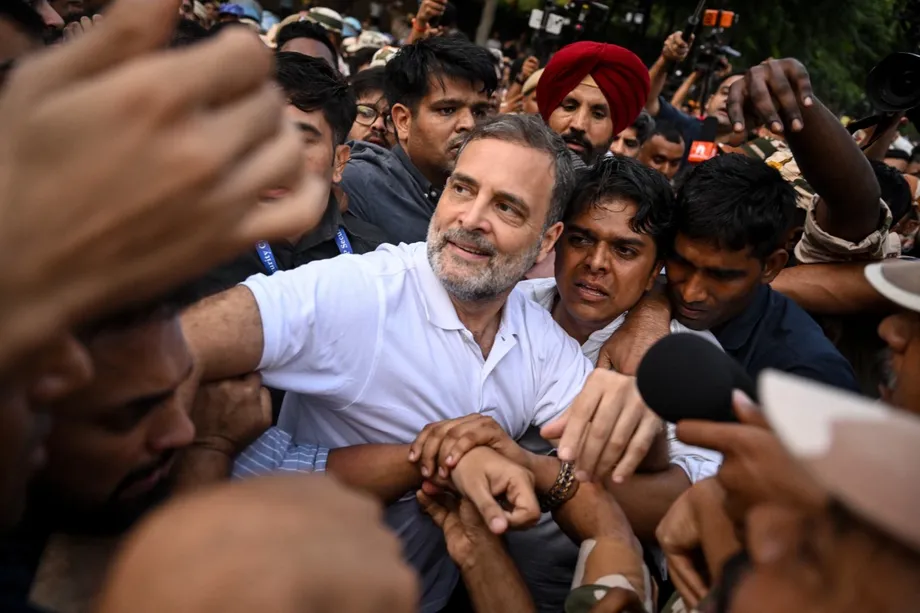
Tens of thousands of opposition supporters reportedly gathered on October 12, the third consecutive day of protests. Congress leader Rahul Gandhi and other leaders travelled to Barakhamba Road by bus before proceeding towards the Supreme Court, about one kilometre away.
Participants included party workers, students, lawyers and civil society representatives. Reports described a heavy security presence, including personnel equipped with tear gas launchers. Across the operation, more than 30,000 security personnel were reportedly deployed.
Gandhi, leader of the opposition in the lower house of Parliament, presented the mobilisation as a defence of constitutional rights rather than simply a demand to replace the election chief.
It is a fight to save the Constitution,
Other leaders associated with the petition included Mallikarjun Kharge, Saugata Roy, Akhilesh Yadav and Tejashwi Prasad Yadav. The court administration agreed that five to 10 leaders, accompanied by lawyers, could enter the complex to file at its filing counter.
That arrangement was distinct from the meeting Congress had sought with Chief Justice Surya Kant. He reportedly declined the meeting because the voter list issue was already before the court. Filing a petition provides a formal route to seek judicial action, but does not mean that the court accepts its allegations or the demand for Kumar's resignation.
CJP disputes the terms of its leaders' release
CJP founding members Abhijeet Dipke, Ashutosh Ranka and Saurav Das said they were detained from their arriving flight in Delhi and taken to different locations. After their release, the leadership, including legal head Ratna Singh, said demonstrations would continue until their demands were met.
Police said the release involved a bond requiring peace and good behaviour for one year. CJP rejected suggestions that its leaders had agreed to stop protesting, saying the undertaking concerned breaches of peace, not participation in peaceful demonstrations.
The leaders also alleged that police took their phones without due process. They expressed fears that the devices could have been cloned, tampered with or used to plant evidence. No technical findings establishing those suspicions have been reported.
After police removed Jantar Mantar's protest designation, Ranka gave authorities 24 hours to provide a new date for a demonstration there, warning that CJP would otherwise issue another protest call. The demand directly challenges the decision to redirect gatherings to other venues.
There were also allegations of violence by people outside the police force. Delhi Police arrested Raman Saini, Vivekanand, Kapil Kumar and Ravinder Singh, members of Hindu Raksha Dal, over accusations that they assaulted protesters, including a woman. Their arrests do not resolve separate allegations about police conduct.
Why the protest venue matters
Delhi Police named Ramlila Ground in Central Delhi, Burari Ground in North Delhi and CBD Ground in East Delhi as alternatives to Jantar Mantar. Opposition groups criticised the change as moving dissent away from the institutions protesters wanted to address.
Jantar Mantar is less than two kilometres from Parliament and had been a focal point of CJP demonstrations since June. Its location helps explain why offering another ground does not settle the argument over access: proximity to public institutions and visibility are part of what organisers seek.
Manoj Kumar Jha, a Rashtriya Janata Dal member of the Rajya Sabha, argued that removing an established venue changes the practical opportunities for democratic participation. His position is that a formally recognised right to protest loses force if gatherings are directed to places where decision makers and the public are less likely to notice them.
Article 19(1)(b) of India's Constitution protects peaceful assembly, subject to reasonable restrictions. Police cited Section 163 of the Bharatiya Nagarik Suraksha Sanhita, a criminal procedure law, when banning unauthorised gatherings, and said the planned protest lacked permission.
Reports also described internet suspension within four kilometres of Jantar Mantar and restrictions on movement. Taken together with transport closures, these measures affected access to demonstrations and the ability to communicate about them. Whether particular restrictions were lawful or proportionate is part of the continuing legal dispute.
Government supporters reject the protests
The BJP argues that opposition parties are undermining constitutional institutions by questioning legitimate electoral procedures. Minister Shivraj Singh Chouhan accused Congress of defaming those institutions, spreading anarchy and riots, and misleading the public.
Assam Chief Minister Himanta Biswa Sarma said the march sought to apply political pressure to the Supreme Court after the chief justice declined a meeting. His position was that constitutional institutions should not be made answerable to a party's electoral frustrations.
The criticism extended beyond party leaders. Actor Ranvir Shorey urged CJP supporters to pursue their demands through Parliament, elections or courts rather than obstruct roads. Actress Kangana Ranaut described the movement's leaders as forces seeking to destabilise the country. Those statements were political accusations, not findings of criminal conduct.
Political commentator and Modi biographer Nilanjan Mukhopadhyay took a different view, arguing that the government was relying on police deployments and executive orders instead of a political response. He urged negotiation with the protesters. Modi had not publicly commented on the demonstrations in the reports describing the October 12 march.
The press freedom dispute remains distinct from these political disagreements. India ranks 157th of 180 countries in the Reporters Without Borders press freedom index, compared with 133rd a decade earlier, a fall of 24 places. The ranking provides context for concern about the detentions, but does not establish what happened in each case.
The government has repeatedly denied accusations that it seeks to suppress critical journalism. Immediate answers are still missing on how many reporters were detained, why identifiable journalists were held, what happened to seized devices and whether all officers complied with the court's directions.
Key Points
- Nearly three dozen journalists were reportedly detained while covering the Delhi protests; press groups seek an apology and investigation.
- Protesters demand Gyanesh Kumar's resignation over alleged wrongful voter deletions. The Election Commission denies partisan manipulation.
- Opposition leaders filed a Supreme Court petition on October 12 concerning electoral roll irregularities.
- The court separately sought official responses over transport restrictions, with a compliance report due October 13.
- Delhi Police replaced Jantar Mantar's designated protest status with three alternative venues.
- CJP leaders vow to continue protesting and dispute claims that their release terms prevent peaceful demonstrations.