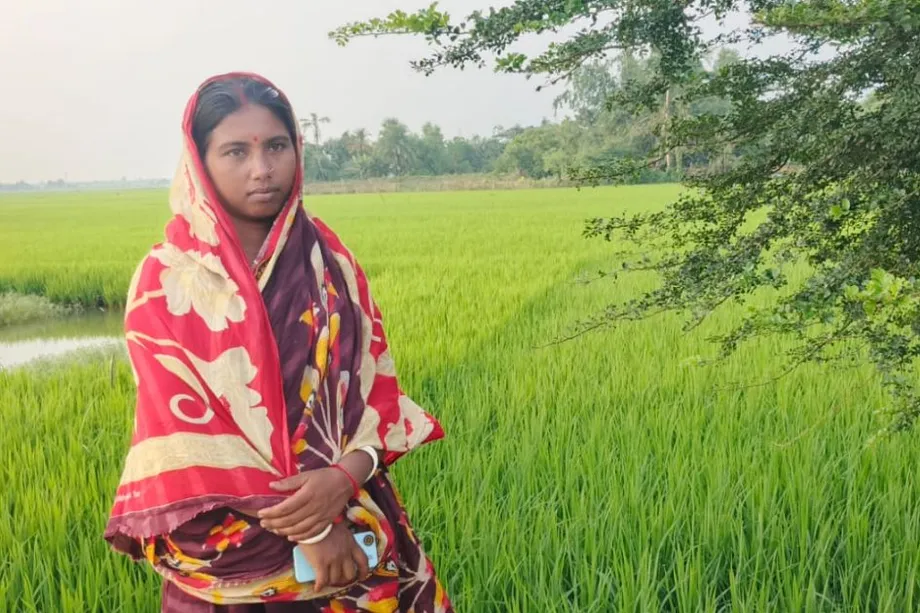
A return to farming on land still burdened by salt
In Shyamnagar, near Bangladesh's Sundarbans, the government agriculture office lists 71,000 farmers and 17,539 hectares of cultivable land. Its assessment identifies five obstacles to production: salinity, irrigation shortages during the dry season, waterlogging during the monsoon, insufficient staff and a lack of cold storage. Farmers trying to rebuild crop production after decades of shrimp cultivation face another pressure: paying for seeds, fertilisers and pesticides before they have a harvest to sell.
Contents
- A return to farming on land still burdened by salt
- Why shrimp farmers are changing course
- Production gains do not mean uniform recovery
- Borrowing to keep fields productive
- Chemical use and declining soil quality
- Health risks require better evidence and safer handling
- Local seed collections offer another route
- Freshwater remains the limiting resource
- Training connects farming with household food security
- Government measures and the gaps still unresolved
- Key Points
The Shyamnagar agriculture office profile records 16,850 hectares under transplanted aman rice, the main monsoon crop, and a cropping intensity of 125%. That measure compares the total area planted across successive seasons with the net cultivated area. It indicates some repeat cultivation, rather than multiple harvests across every field.
For farmers who have spent the past decade trying to restore freshwater crops, the shift is far from straightforward. Saline river water brought into shrimp enclosures has left land difficult to cultivate. Farmers describe using larger quantities of chemical inputs to maintain yields, then borrowing from dealers, seed companies, moneylenders and microfinance institutions to cover the expense.
There are signs of agricultural recovery across the southwest. Rice, vegetable and fruit production have risen as some farmers abandon struggling shrimp operations. Yet district production gains do not mean every village has recovered its soil, trees or access to freshwater. In Shyamnagar, the central challenge is whether that return to crops can support livelihoods without deepening debt and environmental damage.
Why shrimp farmers are changing course
Commercial shrimp farming expanded along the southwest coast about four decades ago, as increasing salinity made rice cultivation more difficult. Bringing saline water into enclosed fields initially offered an alternative income. More recently, excessive salinity, viral disease and losses have persuaded some farmers to switch back to agriculture.
Sheikh Sirajul Islam, a farmer in Shyamnagar, resumed rice cultivation after two decades of raising shrimp. He described falling shrimp production during viral outbreaks and soil so salty that other crops could not grow around his enclosure. His new approach combines rice during the monsoon with vegetables or fruit during the dry season.
Nirmal Gayen, a farmer in Dakop, Khulna, also moved from shrimp to rice and watermelon after losing money. Recalling his final shrimp investment, he said:
The last time I cultured shrimps, I could only recover half of the $705 (60,000 taka) I had invested. I incurred losses because viral diseases frequently attacked my shrimp farm.
A study in Dakop found higher gross benefits and net income from rice and watermelon cultivation than from shrimp alone. Research published in Land Use Policy in 2023 also identified growing crop diversification in coastal shrimp cultivation zones. These findings support the shift, although freshwater shortages still limit how much land farmers can bring back into production.
Production gains do not mean uniform recovery
Department of Agricultural Extension figures cited for the five fiscal years from 2018 to 2023 show aman rice production increasing by 11% to 14% across Khulna, Bagerhat and Satkhira. Vegetable production rose by about 50%, while watermelon production increased six to ten times across those districts.
Fruit production rose by 197% in Khulna and 114% in Satkhira. Those increases mean output reached roughly 2.97 times and 2.14 times its earlier level, respectively. Farmers were growing a wider range of commercial crops, including mango, coconut, guava and banana.
The shrimp figures cover a different group of districts and should not be treated as a direct comparison with those crop totals. Across Khulna, Patuakhali, Bhola, Barguna and Noakhali, shrimp production fell by more than 7% from about 30,000 tonnes in the 2018 fiscal year to the 2022 fiscal year ending in 2023. The area used for shrimp farming contracted by nearly 5%. Khulna alone recorded an 8% production decline.
Local farmers in Shyamnagar nevertheless report that mango, jamun, lemon, coconut, sapodilla and wax apple trees have become uncommon around them. There is no necessary contradiction: greater commercial fruit output across a district can coexist with the loss of established trees in particular saline villages. The figures measure production, not the survival of every local orchard or species.
Borrowing to keep fields productive
Farmers describe a cycle in which difficult soil conditions encourage heavier spending on fertilisers and pesticides, while limited cash during the growing season forces them to borrow. Credit comes from several directions, including the businesses selling the inputs. Some loans carry high interest, and repayments can continue in instalments throughout the year.
That arrangement links a farmer's next planting decision to obligations from an earlier season. A poor harvest can leave both the cost of cultivation and the debt unpaid. Borrowing from an input dealer may also make that dealer the most accessible source of advice about what to buy and how much to apply.
The agriculture office's farmer categories show how many households have little room to absorb losses. It lists 15,820 landless farmers, 20,925 marginal farmers and 22,400 small farmers. Together, these groups account for 59,145 of the 71,000 farmers, or about 83.3%.
The office also identifies a problem after harvest: without cold storage, farmers may sell perishable produce cheaply rather than risk spoilage. Higher production therefore does not automatically produce a proportionate rise in earnings. Farmers need water and suitable seeds to grow crops, but also affordable credit and a way to retain more of their sale value.
Chemical use and declining soil quality
The concerns in Shyamnagar sit within a much wider increase in agricultural chemical use. Figures attributed to the Department of Environment put pesticide imports at 3,000 metric tonnes in 1990 and more than 45,000 tonnes in 2021, an increase of more than fifteen times. Import volume, however, does not establish how much was applied in Shyamnagar or the toxicity of individual products.
Research attributed to the Soil Resource Development Institute in 2022 found that about 80% of Bangladesh's agricultural land was losing organic matter. Organic matter includes decomposed plant and animal material that helps soil hold water and nutrients. Its loss makes rebuilding productive soil more difficult, especially where salt and water shortages already restrict growth.
Studies in rice fields in Jhenaidah and Kushtia found reduced soil nitrogen and carbon following prolonged combined use of chemical fertilisers and pesticides. These findings concern those study locations, not direct measurements of Shyamnagar's fields. They nevertheless show why maintaining yields through repeated chemical purchases is not the same as restoring soil health.
Farmers also describe fewer birds, snails, frogs, snakes and fireflies. Saline water, habitat change and chemical exposure are all concerns, but their observations do not establish how much each factor contributed. The practical distinction is crucial: fertiliser can supply nutrients, but it cannot substitute for freshwater management or remove accumulated salt.
Health risks require better evidence and safer handling
Farmers in the coastal area report recurring illness and concerns about reproductive health, vision and heart problems. Women and children are described as particularly vulnerable. Reports also refer to studies linking chemical exposure with cancer and other illnesses, but the evidence presented does not establish the cause of particular diseases in Shyamnagar.
Two separate exposures need to be distinguished: contact with agricultural chemicals and prolonged contact with saline water. Action Against Hunger describes women developing health problems while working in salty water. That is not the same exposure as spraying pesticides, and neither account demonstrates that eating a crop grown in saline soil itself causes the illnesses listed.
National figures attributed to the Department of Agricultural Extension suggest widespread unsafe application. About 77% of farmers reportedly spray pesticides more than twice per cropping season, and nearly 95% do not observe the recommended interval between spraying and harvest. This interval allows residues to decline before produce is collected; its length depends on the product and crop.
A cited National Institute of Cancer Research and Hospital survey reportedly found that 64% of surveyed cancer patients were farmers. That proportion alone cannot establish that pesticides caused their cancers or measure farmers' cancer risk compared with other occupations. The survey's scope and comparison group are not specified. The strongest practical conclusion is the need for safer handling, accurate product guidance and medical investigation, rather than a blanket claim about the cause of illness.
Local seed collections offer another route
Salinity has made some traditional crop varieties difficult to grow, while farmers increasingly buy seed from commercial companies. Farmers who once saved and exchanged seed now describe purchasing it each year, alongside fertilisers and pesticides. That adds another recurring expense to cultivation.
Hybrid seeds are produced by crossing selected parent lines. Saving their seed does not reliably reproduce the same characteristics in the next crop, which can encourage repeat purchases. Hybrid status alone, however, does not mean a crop inherently requires pesticides. Chemical needs depend on the variety, field conditions, pests and cultivation practices.
With support from BARCIK, a nongovernmental research organisation, farmers in Shyamnagar are conserving local varieties and experimenting with natural fertilisers, organic pest treatments and insect traps. Jogesh Chandra Mondal says participating farmers have begun cultivating local varieties on a small scale using these methods.
Kalpana Rani Mistri has helped organise women who conserve and exchange seed, and her collection contains more than 400 local varieties. In Kultali village, Tumpa Rani Mondal grows rice and vegetables with natural inputs on land she owns and leases. She says regular buyers contact her for produce. These examples demonstrate functioning local alternatives, though no figures establish their average yields, production costs or capacity to serve all 71,000 farmers.
Freshwater remains the limiting resource
Surface water salinity in the southwest peaks from February to April, when crops grown during the dry season need irrigation. Farmers depend heavily on monsoon rain stored in ponds and canals. Some build temporary embankments after the monsoon to separate canals from tidal rivers and prevent saltwater entering their irrigation supply.
Sirajul Islam, the Shyamnagar farmer who returned to rice cultivation, described the limits of that approach:
An acute water shortage persists here during summer. Whatever little water remains available in the rain-fed ponds and canals, we use it for watering the growing crops. But sometimes, even that becomes unmanageable.
University College London professor Mohammad Shamsudduha recommends restoring or excavating rivers and canals to capture monsoon rainwater. The Shyamnagar agriculture office similarly encourages pond and mini pond excavation, alongside crops tolerant of salt and drought.
Other techniques aim to make stored water last longer or reduce plants' contact with saline ground. Mulch covers soil to slow evaporation. Drip irrigation delivers small amounts of water near roots. Raised beds, sacks and elevated containers can create more manageable growing spaces. These methods address particular constraints, but their success still depends on water availability, suitable growing material and maintenance.
Training connects farming with household food security
Action Against Hunger launched its agriculture programme in Satkhira in 2021. Its Satkhira programme account connects farming difficulties with hunger and describes training in compost, crop diversification, rainwater storage, mulching and elevated growing structures.
Khaleda Hossain Moon, an Action Against Hunger expert based in coastal Satkhira, explained the relationship between soil conditions, income and nutrition:
Due to the high salinity of the soil, crop production is very low, and people with low incomes cannot afford to buy food. Thus, many suffer from malnutrition, especially small children.
The programme promotes sunflower, okra, spinach and chilli where conditions permit, rather than relying on rice alone. It says crop rotation can produce yields 10% greater than monoculture, although that is not presented as a measured result for every participating Satkhira farm. Rotation means changing crops between seasons; diversification spreads production across several crops.
Rekha, a participant, grows vegetables around her home using stored rainwater, kitchen waste compost and livestock manure. She now trains other women. The organisation also reports that all households in Simul Baria undertake multiple livelihood activities, including sewing, livestock, aquaculture and small businesses. The account does not give a household count or measured income change, but it describes a strategy for reducing dependence on a single harvest.
Government measures and the gaps still unresolved
Farmers have campaigned for a dedicated ministry or directorate for agriculture in coastal areas exposed to disasters, saying their needs receive too little state attention. The Department of Agricultural Extension says it already supports suitable crop varieties, organic fertilisers, plastic mulching, drip irrigation, green manure and sack and tower cultivation. Its local office also lists orchard training and machinery purchases under government subsidies.
Pesticide regulation is another part of the response. The Pesticides Act, 2018 provides for registration, testing, inspection and seizure, with mobile courts able to handle certain offences. Reports describe weak enforcement and insufficient guidance at the point of sale. The programme descriptions do not establish how many Shyamnagar farmers receive support, how much funding is available, or whether training and inspection reach the villages reporting problems.
The dated developments show that agricultural change and mounting environmental pressure have occurred together:
- 1990 to 2021: Reported pesticide imports rose from 3,000 to more than 45,000 metric tonnes nationally.
- 2018: The Pesticides Act established the current regulatory framework described in the reports.
- 2018 to 2023: Agricultural figures recorded rising crop production and declining shrimp production across different groups of coastal districts.
- 2021: Action Against Hunger launched its Satkhira agriculture programme.
- 2023: A Land Use Policy study examined coastal crop diversification and environmental stress.
- Since May 2024: Action Against Hunger reports four major disasters affecting 18.4 million people across Bangladesh.
No decision or scheduled deadline is identified for the proposed coastal agriculture body. The unresolved issue is how widely existing measures can reach farmers, and whether better water storage, soil management, seed access and safer chemical use can make the return to crops financially sustainable.
Key Points
- Shyamnagar's agriculture office lists 71,000 farmers and identifies salinity, irrigation shortages and waterlogging as major constraints.
- Some coastal farmers are leaving shrimp cultivation after disease outbreaks and financial losses.
- Crop output has risen across several districts, but recovery is uneven between villages.
- Input purchases and borrowing place pressure on farmers with limited cash and land.
- BARCIK supports local seed conservation and cultivation using natural inputs.
- Rainwater storage, crop diversification and soil management are central to existing support programmes.
- Health concerns warrant investigation, but reported patient statistics do not prove that pesticides caused particular cancers.