Dhaka water bodies face a new approval restriction
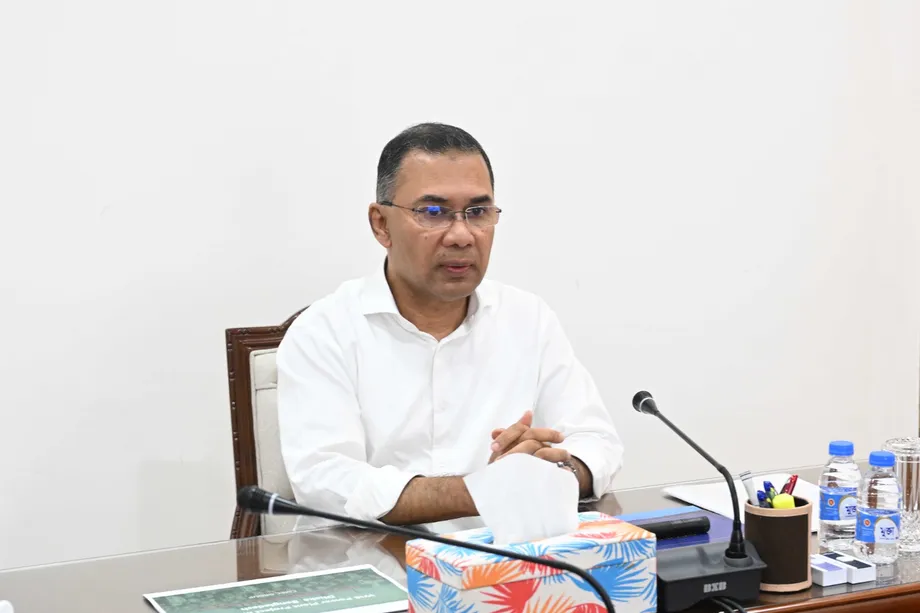
Prime Minister Tarique Rahman has instructed Rajdhani Unnayan Kartripakkha (Rajuk), Dhaka's urban development authority, not to approve projects that involve filling water bodies in the capital, State Minister for Environment, Forest and Climate Change Sheikh Faridul Islam said on October 3, 2026.
Contents
- Dhaka water bodies face a new approval restriction
- What the instruction means for development
- July decisions set a separate pollution deadline
- Photographs connect rivers with bird habitats
- Recording damage and disappearing traditions
- Public awareness becomes part of the response
- Implementation details are still missing
- Key Points
The announcement came at the Bangladesh National Museum during the opening of a four day photography exhibition about rivers and birds. It follows a July 12 government meeting that assigned Rajuk responsibility for improvements at Gulshan Lake and set a six month deadline for shutting illegal waste discharge lines into Gulshan and Baridhara lakes.
Together, the two announcements address different pressures on Dhaka's waters: the loss of water bodies through development and the contamination of those that remain. The latest instruction concerns project approvals, while the July decisions concerned restoration, cleaning and sewage management.
Faridul said the government was taking steps to address waterlogging, flooding and pollution. He also announced that single use plastics and polythene had been banned in the Sundarbans, Bangladesh's largest mangrove forest.
The minister described river protection as part of a wider effort to preserve nature for future generations:
It saddens me to see many of the rivers that once flowed strongly now struggling. We are working to restore their natural flow, protect water bodies, curb plastic pollution and safeguard rivers, birds and the environment for future generations.
The announcement establishes a stated direction for Rajuk's approval decisions. Details about how the instruction will be applied, including its treatment of projects already approved, have not been made public in these accounts.
What the instruction means for development
Rajuk's role places the directive at a consequential stage of urban development: the decision on whether a project can proceed. Faridul's description was specific to projects involving the filling of water bodies in Dhaka. He did not announce a halt to all construction or development near water.
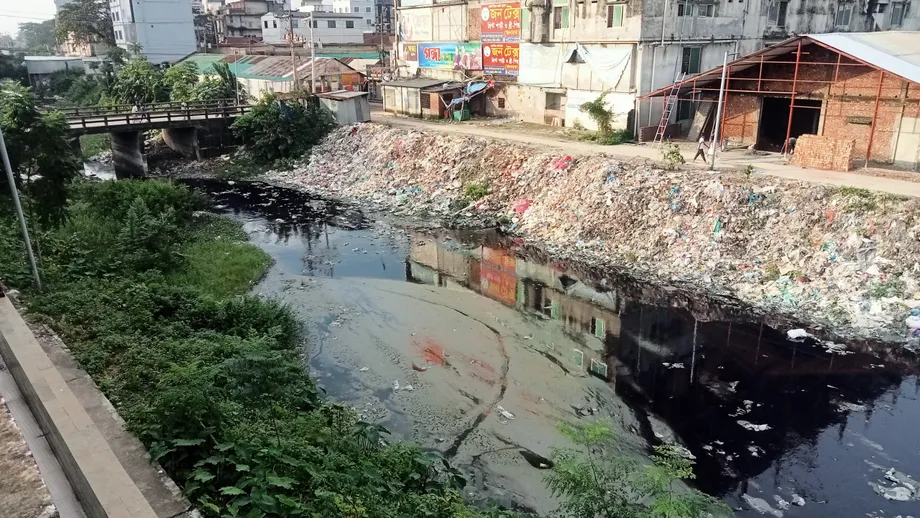
Filling a water body replaces space that can hold or carry water with solid ground. In a city facing waterlogging and flooding, retaining that space matters because rainfall needs somewhere to collect and a route through which to drain. Protecting water bodies can therefore support drainage as well as preserve habitats.
That connection helps explain why the minister discussed project approvals alongside restoring the natural flow of rivers. Preventing further filling protects existing water space; restoring flow addresses how water moves through it. Neither action, on its own, establishes that pollution or flooding has been resolved.
The announcement did not identify particular development projects, developers or sites affected by the instruction. It also did not give an approval review procedure, penalties for violations or a monitoring schedule. Those details will determine how the stated restriction operates in practice.
July decisions set a separate pollution deadline
The approval instruction follows a meeting at the Cabinet Division in the Bangladesh Secretariat on July 12, 2026. At that meeting, Rahman called for coordinated measures to protect Dhaka's environment and water bodies and for timely implementation of relevant projects.
The discussion covered restoration and development of Dhanmondi and Gulshan lakes, ongoing cleanliness initiatives, and the installation of sewage treatment plants in residential and commercial establishments. Sewage treatment plants process wastewater to reduce pollutants before it is discharged.
Officials decided to take measures to shut all illegal waste discharge lines connected to Gulshan and Baridhara lakes within six months. Counting from July 12, that period runs to January 2027. No more precise completion date was given.
Rajuk was assigned to lead cleaning, beautification and environmental improvement activities at Gulshan Lake. The prime minister also received briefings on Dhaka South City Corporation's Dhanmondi Lake restoration and redevelopment projects, construction of Nazrul Sarobar, and sewage treatment installations linked to modernization of the city's sewerage system.
The decisions give Rajuk two distinct responsibilities: improving an existing lake and, under the newly described instruction, withholding approval from projects that would fill water bodies. A cleaner lake can still be threatened by encroachment, while a protected lake can still receive polluted wastewater. The two measures address those separate risks.
The sequence of announcements is:
- July 12, 2026: Rahman reviews lake restoration and sewage treatment initiatives, with Rajuk assigned to lead improvements at Gulshan Lake.
- July 12, 2026: Officials set a six month period for closing illegal waste discharge lines into Gulshan and Baridhara lakes.
- October 3, 2026: Faridul announces the prime minister's instruction against approving projects that fill Dhaka water bodies.
- October 3 to 6, 2026: The River and Birds exhibition is scheduled at the Bangladesh National Museum.
- January 2027: The six month period set in July reaches its endpoint.
Photographs connect rivers with bird habitats
The exhibition, titled River and Birds, was organized by Dhoritri Rokhhay Amra (DHORA). Its inauguration took place at the museum's Kabi Sufia Kamal Auditorium, with the photographs displayed at the Nalini Kanta Bhattashali Gallery from October 3 to 6.
River photographs by photojournalist and photography educator Abir Abdullah appeared alongside bird photographs by wildlife photographer Ansar Uddin Khan Pathan. The pairing connected the condition of Bangladesh's rivers and wetlands with the wildlife those environments support.
Pathan said healthy rivers and wetlands help protect birds' habitats and food sources. He explained the practical connection between conserving birds and preserving the places where they live:
Therefore, protecting birds requires protecting rivers, wetlands and the natural environment around them.
He also described the condition of birds as an indicator of the health of rivers, wetlands and the wider environment. That observation broadens the discussion beyond the appearance or cleanliness of a water body to whether it continues to support living ecosystems.
Recording damage and disappearing traditions
Dr Mujibur Rahman Howlader, a former chairman of the National River Conservation Commission and a member of DHORA's advisory committee, said documenting encroachment, pollution and environmental degradation could increase public awareness and make river protection efforts more effective.
His comments identified a practical purpose for environmental photography: showing damage in a form people can recognize. The exhibition was presented as a way to bring those realities before the public, though no formal process for using its photographs in enforcement or project reviews was announced.
For Abdullah, the camera also preserves memory and history. He said the photographs told stories of river erosion, floods, human resilience and disappearing traditions. Historic sailboats and boat racing culture were fading, he added, warning that their loss would mean losing part of Bangladesh's identity.
These accounts put two kinds of change side by side. Pollution and encroachment affect the physical condition of rivers, while disappearing boats and traditions affect the cultural life built around them. Abdullah's comments show why preserving a river can matter to communities for reasons that extend beyond drainage or water quality.
DHORA co-convener M. S. Siddiqui, who chaired the event, called for greater professionalism, work and research in photography. He said photography involved respect for people, originality and responsibility as well as capturing scenes.
Public awareness becomes part of the response
Mahbuba Farjana, secretary of the Ministry of Information and Broadcasting, described rivers and birds as part of Bangladesh's nature, culture, heritage and identity. She said rivers were drying up and shrinking, while birdsong was becoming increasingly rare.
Farjana connected government action with public responsibility and offered the ministry's support for awareness efforts:
Protecting the environment and rivers is not the responsibility of the government alone; every citizen must play a role. The Information and Broadcasting Ministry stands ready to support public awareness efforts.
Bangladesh Bird Club founder and ornithologist Enam Ul Haque said photographing rivers and birds can deepen people's knowledge of them and their interest in conservation. DHORA Member Secretary Sharif Jamil similarly described the exhibition as an effort to encourage affection for nature and action to protect rivers, wetlands and bird habitats.
Environmental activists, journalists, photographers, government officials, civil society representatives and diplomats attended the inauguration. Foysal Ahmed, editor of River Bangla and a DHORA member, delivered the welcome speech, while DHORA member Jabbar Hossain moderated the event.
Implementation details are still missing
The most concrete upcoming checkpoint is the end of the six month period for shutting illegal discharge lines into Gulshan and Baridhara lakes. The October announcement did not report how many lines had been closed, how many remained or whether the work was on schedule.
For the project approval restriction, the accounts give the minister's statement about the prime minister's instruction but no text of a Rajuk circular or written order. They do not specify the date Rajuk received the instruction, how affected water bodies will be identified, or how disputed applications will be handled.
The Sundarbans plastics announcement also lacks details about the ban's commencement date, exemptions, enforcement arrangements or penalties. It should be understood as a separate measure announced by the minister, rather than as evidence of a nationwide ban covering every use of plastic.
The distinction between an announced instruction and demonstrated results matters. The government has described measures targeting filling, wastewater and plastic pollution. Evidence of their effect will depend on approval decisions, closure of discharge lines and enforcement of the Sundarbans restriction.
Key Points
- Faridul said Rahman instructed Rajuk not to approve projects that fill water bodies in Dhaka.
- A July 12 meeting assigned Rajuk to lead improvements at Gulshan Lake.
- Officials set a six month period, ending in January 2027, to shut illegal waste discharge lines into Gulshan and Baridhara lakes.
- The minister also announced a ban on single use plastics and polythene in the Sundarbans.
- River and Birds was scheduled for October 3 to 6 at the Bangladesh National Museum, featuring photographs by Abir Abdullah and Ansar Uddin Khan Pathan.
- Details of the approval restriction's procedures and progress against the wastewater deadline were not announced.