Empty polling stations, but no national turnout figure
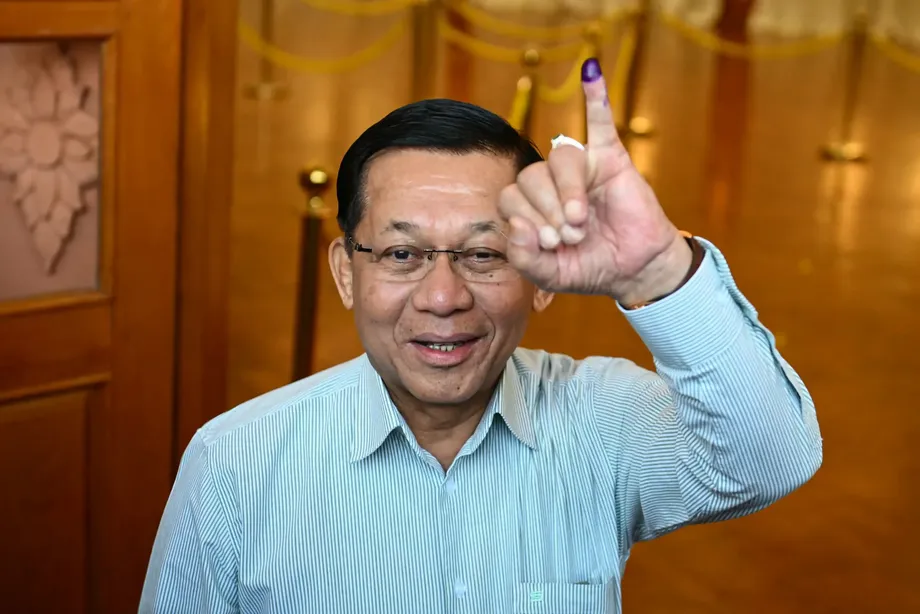
Myanmar’s military held the second phase of its election in 100 townships on January 11, 2026, amid reports of nearly empty polling stations, pressure on residents to vote and attacks by resistance forces. In Yangon, polling places visited repeatedly through the morning showed little of the enthusiasm or long queues seen during the 2020 election, whose results the military overturned after seizing power.
Contents
- Empty polling stations, but no national turnout figure
- The comparison with 2020 is about choice
- Fifty-seven parties, with the main opposition missing
- War excluded whole communities from voting
- Fear could keep people away or bring them in
- Criticism carried prison terms and worse
- Overseas voting exposed another gap in consent
- Advance ballots and machines drew complaints
- A phased election without an end to conflict
- Key Points
The contrast was visible even in areas where the authorities could organize voting. Observations at about 14 polling stations in downtown Yangon found few voters. Polling places visited in Insein and Shwepyithar also had no queues and only small numbers of people entering and leaving. A taxi driver in Shwepyithar said he saw about 20 voters when he cast his ballot around 7:30 a.m.
Those observations do not establish a national turnout rate. No complete figure for either of the first two phases is established in these accounts, and an empty station at a particular hour cannot measure participation across an entire constituency. Nevertheless, the repeated observations, candidate assessments and migrant research point to several reasons for weak participation: opposition parties were excluded, many people distrusted the outcome, conflict prevented voting elsewhere, and fear influenced both participation and abstention.
The Asian Network for Free Elections (ANFREL) identifies a crucial feature of the exercise in its election assessment: the framework sets no minimum voter turnout and no minimum territorial coverage. Low participation therefore need not prevent the authorities from declaring the election valid under their rules.
The comparison with 2020 is about choice
The strongest documented comparison is with Myanmar’s 2020 election, rather than a complete history of turnout since independence. Migrants interviewed for Burma Affairs and Conflict Study’s RESPECT Myanmar research recalled that election as a meaningful contest. They described taking part as voters, volunteers and community organizers, with expectations that their participation could produce political change.
At polling stations in Insein in 2020, voters queued for hours. During the January 11 round, visits around 6:30 a.m., 8 a.m. and noon found little change in the sparse attendance. That difference suggests more than a quieter campaign: the political choices that motivated many voters in 2020 were no longer available.
Daw Sandar Min, a former National League for Democracy member of parliament running as an independent in Latha Township, described the contrast with elections under the previous civilian government:
starkly different
She said her constituency had more than 17,000 eligible voters and estimated that about 10,000 would participate. That would represent less than 59 percent of the electorate, but it was a prediction, not a certified turnout result. She also said she did not expect to win.
The military’s February 1, 2021 coup broke the connection between voting and the transfer of political authority. The election commission operating before the coup had accepted the 2020 results. On July 26, 2021, the commission installed by the junta declared that election void. For voters who had participated enthusiastically, the new process asked them to trust institutions controlled by the force that had overturned their previous choice.
Fifty-seven parties, with the main opposition missing
The presence of 57 registered parties did not restore the choices available in 2020. Only six were registered to compete nationally; the other 51 could contest within a single state or region. The National League for Democracy, led by the detained Aung San Suu Kyi, and the Shan Nationalities League for Democracy had been dissolved.
ANFREL reports that 57 percent of the parties that contested the 2020 general election no longer existed under the new registration arrangements. Those parties had received more than 70 percent of the votes and 90 percent of the seats. Their exclusion removed organizations representing most of the previous election’s recorded support, not merely a few smaller competitors.
The military aligned Union Solidarity and Development Party (USDP) fielded more than one fifth of all candidates in the first phase. Dozens of constituencies were effectively uncontested, according to ANFREL. Reporting after the first round described the USDP as winning nearly 90 percent of the votes, although that figure is not a national turnout measure or a final result for all three phases.
The remaining nationwide competitors included the National Unity Party, People’s Pioneer Party, Myanmar Farmers Development Party, Shan and Ethnic Democratic Party and People’s Party. Every registered party had passed screening by the junta appointed Union Election Commission (UEC). The number of party names on a ballot therefore concealed a much narrower political contest.
War excluded whole communities from voting
Abstention was only part of the explanation for limited participation. In many places, there was no opportunity to vote. ANFREL says the UEC announced on December 5 that polling would not take place in 2,931 wards and village tracts, about 17 percent of basic administrative units, alongside 56 previously excluded townships.
Another account gives the exclusions as 161 wards and 2,770 villages. Those figures also total 2,931, but the descriptions differ: a village tract is an administrative unit and should not automatically be treated as a single village. Neither count establishes the share of eligible voters excluded, because administrative units have different population sizes.
The territorial limits were especially apparent in Rakhine State, where the Arakan Army controlled 14 of 17 townships, roughly 82 percent. Parts of Sagaing, Magway and Mandalay were also difficult for the military to access because of armed resistance and continuing conflict.
Reports before the vote put civilian deaths since the coup at more than 7,000 and displacement at over 3 million people. Displacement separates residents from their homes and normal registration arrangements, while active fighting can make travel to a polling station dangerous. A national election label does not remove those barriers.
Fear could keep people away or bring them in
Accounts from Yangon show that fear did not operate in a single direction. Some residents refused to vote because they did not want to lend credibility to the military’s process. Others participated because they worried that absence would attract attention from officials or informers.
Business owners described concern that their shops or livelihoods could face retaliation if they stayed away. Young men expressed anxiety about military conscription and avoiding scrutiny by the authorities. These accounts help explain why a ballot cast cannot automatically be read as political support, just as an absence cannot automatically be read as a voluntary boycott.
The UN human rights office reported that displaced people in several areas, including Mandalay Region, had been warned they could face attacks or seizure of their homes if they did not return to vote. ANFREL also described reports of students being required to cast advance ballots as a condition of enrolment, and displaced people or aid recipients being threatened with losing food, shelter or financial assistance.
UN human rights chief Volker Türk described the conditions surrounding the election:
clearly taking place in an environment of violence and repression
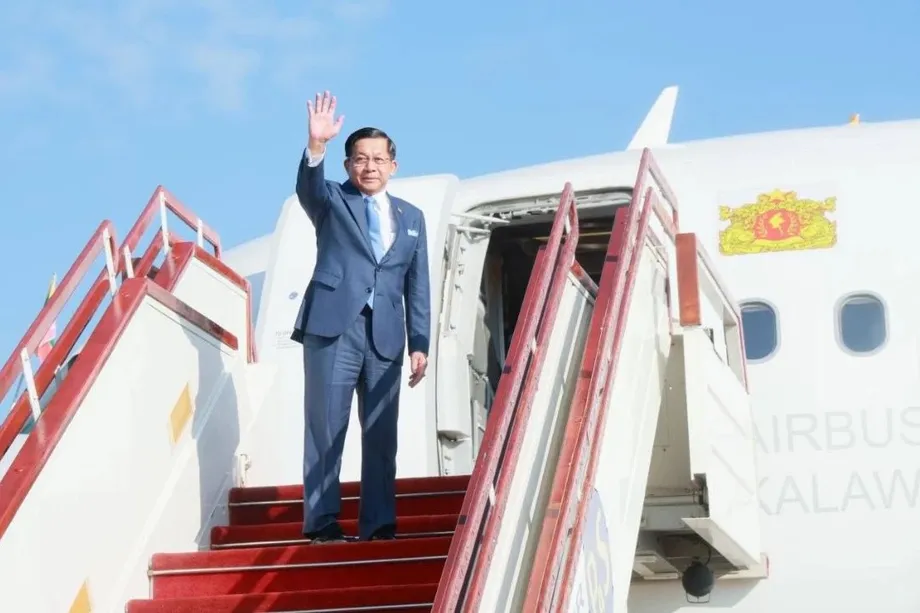
Military leader Min Aung Hlaing rejected criticism and presented the vote as a credible return to democracy. Speaking during the first phase, he defended its organization:
It’s organised by the military; we can’t let our name be tarnished,
He also urged participation, saying that people who did not vote did not completely understand democracy. That position contrasted with residents who described their decision as a calculation about safety rather than a judgment about candidates.
Criticism carried prison terms and worse
On July 29, 2025, the junta enacted the Law on the Protection of Multiparty Democratic General Elections from Obstruction, Disruption, and Destruction, commonly called the Election Protection Law. ANFREL says its provisions criminalize a broad range of criticism or interference, with a minimum prison term of three years and penalties that can reach the death penalty in some circumstances.
At least 88 people had reportedly been prosecuted under the law before polling began. Cases included action against artists and filmmakers over social media reactions, as well as prosecutions connected to boycott activity. In September, a man in Shan State received seven years with hard labour for a Facebook post criticizing the election.
After an anti election protest in Mandalay on December 3, troops reportedly destroyed dozens of shops in Zaycho market. Authorities announced a reward of 20 million kyat for information leading to the activists’ capture.
These measures narrowed the space in which voters could discuss their choices openly. They also complicate any attempt to assess public consent: when criticism can bring severe punishment, silence around an election is not reliable evidence of acceptance.
Overseas voting exposed another gap in consent
The RESPECT Myanmar study examined migrant experiences in Bangkok, Mae Sot, Chiang Mai, Samut Sakhon and nearby industrial areas. Almost none of the interview and focus group participants intended to vote in the junta’s election, according to ANFREL’s account of the research. Participants described the exercise as a show or a trap intended to prolong military rule.
This was qualitative research, designed to explore experiences and reasoning. It was not a representative survey establishing a boycott percentage among all Myanmar nationals overseas. Its value lies in the contrast participants drew between their enthusiasm in 2020 and their rejection of the new process.
Myanmar opened 50 overseas polling stations at embassies, permanent missions and consulates. Officials said advance voting had been completed at 41 locations by December 8, 2025. That means 82 percent of the locations had finished their voting windows, not that 82 percent of overseas voters had participated.
Some migrants in South Korea reported phone calls urging them to vote and threats that passport renewal or other consular services could be withheld. Such pressure matters for people whose legal status and ability to work depend on access to documents.
The size of the overseas electorate was also uncertain. Census figures listed around 1.12 million Myanmar citizens abroad, nearly 70 percent in Thailand. Civil society estimates put the number in Thailand alone as high as 5 million. The figures use different coverage and methods, particularly for irregular migrants, so they cannot be treated as directly comparable counts.
Advance ballots and machines drew complaints
Participation figures would not, by themselves, settle concerns about how votes were collected and counted. In Kawhmu Township, People’s Party member Daw Su Su Nway said the UEC collected advance ballots without notifying competing parties. She described the process:
They collected the advance votes by themselves,
After she complained, party representatives were allowed to observe advance voting in three villages. The incident illustrates the importance of access for competing parties: without it, they cannot independently check how ballots are gathered.
Reports also described an electronic voting machine in Kha Rike Khani Village breaking down six times. In Cocokyun, the USDP won all seats, with more than 370 advance ballots cast among about 1,000 eligible voters, almost all for the USDP. The advance ballots represented more than roughly 37 percent of that electorate, making their handling a substantial part of the contest.
Neither a machine failure nor an unusually concentrated advance vote proves manipulation on its own. They do, however, require transparent explanations and verifiable records. ANFREL’s assessment had already raised concerns about opaque advance voting, questionable voter lists and untested electronic voting machines.
A phased election without an end to conflict
The voting schedule stretched across several weeks, while fighting continued. The sequence also shows how plans developed: ANFREL’s December assessment described January 25 as an unconfirmed possibility, while subsequent reporting identified it as the scheduled final round.
- February 1, 2021: The military seized power after the 2020 general election.
- July 26, 2021: The junta installed election commission declared the 2020 election void.
- July 29, 2025: The junta enacted the Election Protection Law.
- December 28, 2025: The first voting phase took place, scheduled to cover 102 townships.
- January 11, 2026: The second phase took place in 100 townships.
- January 25, 2026: The third phase was scheduled to take place.
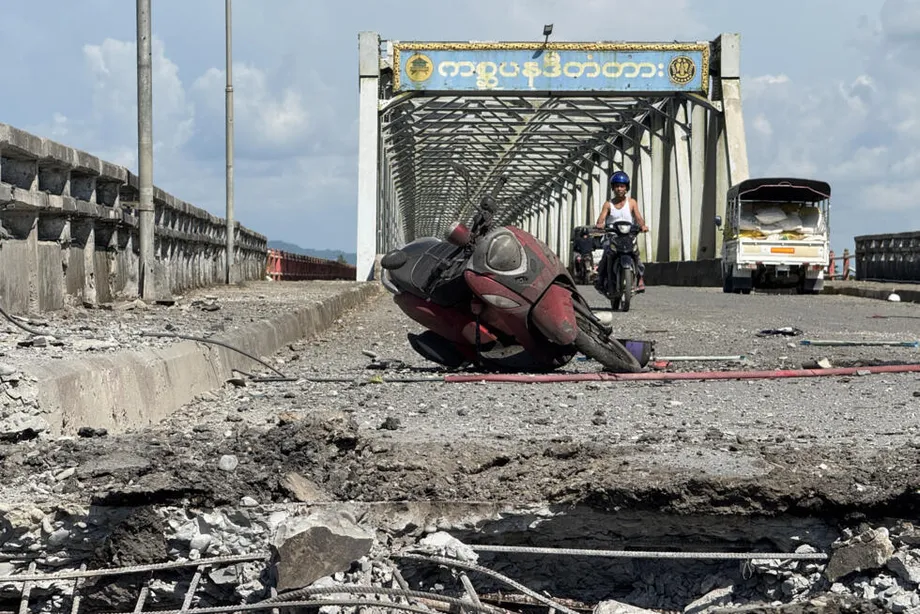
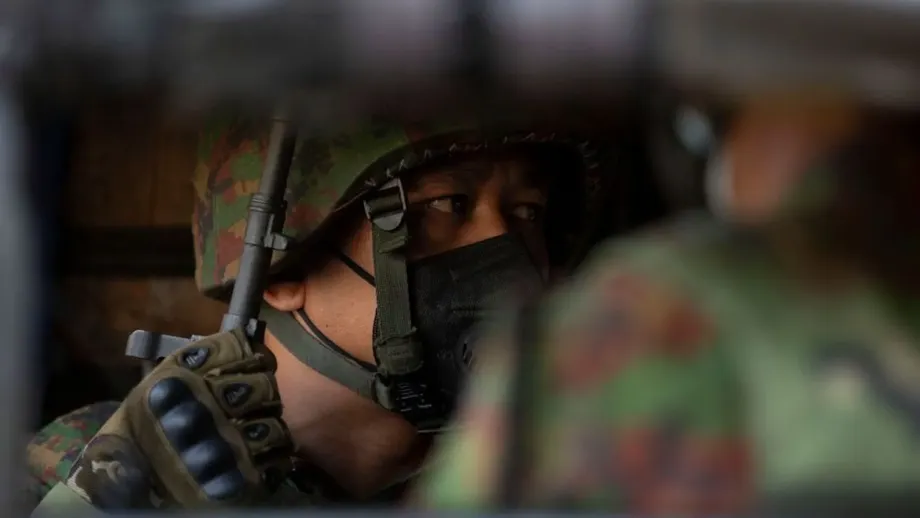
The second round was accompanied by reports that a junta election official was killed in a drone strike in Htantabin Township and that resistance forces attacked a checkpoint in nearby Pyu Township. During the first phase, military air and artillery strikes continued in Sagaing while opposition forces also carried out attacks.
Tom Andrews, the UN special rapporteur on human rights in Myanmar, urged UN member states to reject the process and press the junta to cancel its remaining phases. ANFREL likewise argued that the election could not meet international standards and urged governments to avoid lending it legitimacy.
The military’s effort to secure international acceptance nevertheless had outside support. China backed the process, and military controlled media said China, Russia, India and Vietnam sent observers. Observer attendance, however, did not resolve the exclusions, coercion or restrictions documented before and during polling.
The central distinction is between completing an electoral procedure and obtaining a freely expressed public mandate. Without a complete turnout tally, the scale of abstention cannot be measured nationally. What is documented is a process in which many communities could not vote, major political choices were absent, and some participants feared the consequences of staying home.
Key Points
- The January 11 second phase covered 100 townships, with repeated reports of sparse attendance in Yangon.
- No complete national turnout figure is established by these accounts.
- ANFREL says the framework requires no minimum turnout or territorial coverage.
- Voting exclusions covered 2,931 wards and village tracts, alongside 56 excluded townships.
- Only six of 57 registered parties competed nationally, while major opposition parties were dissolved.
- Residents and migrants described pressure to vote, while election criticism carried severe criminal penalties.
- The third phase was scheduled for January 25, despite continuing conflict and calls to cancel the process.