A Korean bid to enter the US nuclear market
SK Group, Samsung C&T, Hyundai Engineering & Construction and Doosan Enerbility are considering a consortium that could invest up to 4 trillion won for a 5% to 10% stake in Westinghouse Electric Company, the US nuclear technology business. The proposed investment would connect some of South Korea's largest industrial companies with a broader government effort to build nuclear power plants in the United States.
Contents
- A Korean bid to enter the US nuclear market
- How SK could supply half the investment
- What the proposed stake might cost
- Eight reactors and an intellectual property agreement
- What each company wants to gain
- SK's nuclear strategy stretches beyond TerraPower
- The scale of America's nuclear ambition
- Why private money cannot simply enter every project
- Financing expectations and the natural gas connection
- Key Points
The plans, described in reporting published on October 14, 2026, put SK in the role of anchor investor, meaning the company providing a large initial commitment around which other investors can gather. SK is exploring an investment worth trillions of won, while other participants are weighing contributions of several hundred billion won each.
South Korea's Ministry of Trade, Industry and Energy is reportedly collecting letters of intent from interested companies. Such letters record a willingness to pursue an investment while negotiations continue. No final purchase agreement, confirmed company allocations or completion date has been announced in the accounts describing the proposal.
The potential share purchase sits alongside a reported plan to spend $120 billion building eight nuclear reactors in the United States through cooperation between the two governments. Korean companies want opportunities across that work: construction contracts, equipment orders and a place in a market seeking more electricity for artificial intelligence and other uses.
The distinction between the two amounts matters. The consortium's proposed investment is up to 4 trillion won, rather than $4 billion, and would buy shares in Westinghouse. The $120 billion figure concerns the proposed reactor construction programme, a much larger undertaking with its own financing needs.
How SK could supply half the investment
SK is considering a matching arrangement under which it would contribute as much money as the other participating companies combined. The government has reportedly approached seven or eight companies, including Doosan Enerbility, Samsung C&T, Hyundai Engineering & Construction and GS Engineering & Construction.
Under an example described in the investment discussions, contributions of 1.5 trillion won from companies other than SK would be matched by another 1.5 trillion won from SK, creating a pool of 3 trillion won. This illustrates how the arrangement could work; the participants are still considering their individual amounts.
SK Chairman Chey Tae-won is reportedly overseeing the group's interest personally. The strategy extends beyond nuclear power to the US natural gas market, linking energy investment with SK's existing semiconductor and AI data centre businesses.
SK could make its investment through AI Company, an unlisted US subsidiary of SK Hynix. That investment vehicle grew out of Solidigm, which entered the group through SK Hynix's acquisition of Intel's NAND memory business in 2021. Following a restructuring, the operating memory business retained the Solidigm name while the former entity became a vehicle for AI investment.
What the proposed stake might cost
Investment banking estimates place Westinghouse's potential value at as much as $30 billion if it goes public. Reporting on the proposed Korea-US nuclear framework says the Korean side has secured a right to purchase shares at a 10% discount to the public offering price.
At that valuation, a 10% stake would cost $3 billion before the discount and $2.7 billion after it. The latter amount was estimated at about 3.7 trillion won, close to the consortium's proposed fundraising ceiling of 4 trillion won. Using the same assumptions, a 5% stake would cost $1.35 billion after the discount.
The calculation explains why a minority share purchase could require several trillion won. The eventual percentage is expected to depend on the rights attached to the shares and the results of due diligence, the process of examining a company's finances, contracts and risks before investing. The targeted stake reportedly includes voting rights, giving the buyers a voice in shareholder decisions.
Eight reactors and an intellectual property agreement
Korea Electric Power Corporation, known as KEPCO, and Korea Hydro & Nuclear Power, known as KHNP, are central to the government cooperation behind the proposed investment. Officials have also been exploring private participation to reduce the financial burden those public companies would carry in a Westinghouse purchase.
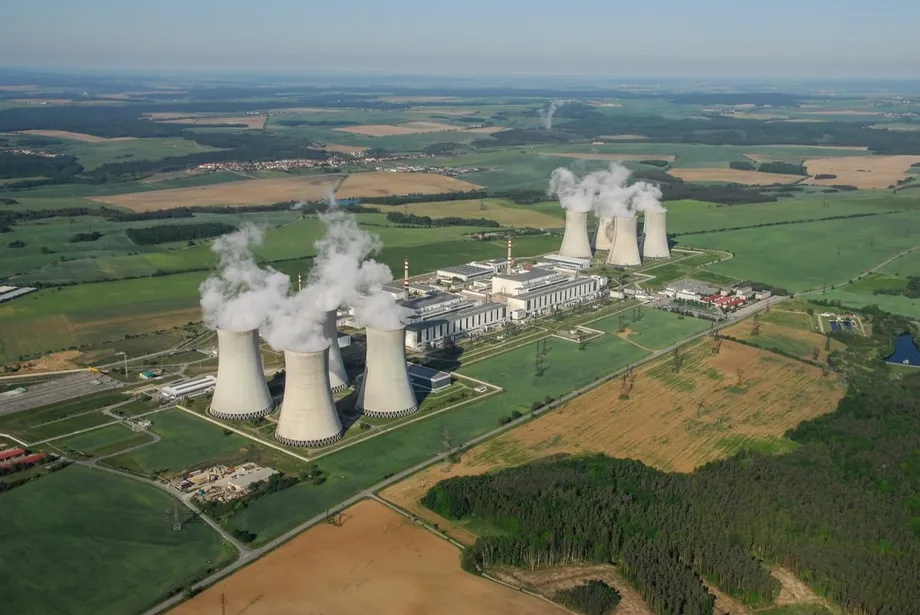
The reactor plan reportedly combines up to two Korean APR1400 units with six Westinghouse AP1000 units. These are different reactor designs, each associated with its own technology, engineering requirements and commercial arrangements.
A settlement agreement reached between KEPCO, KHNP and Westinghouse in 2025 addressed an intellectual property dispute. Intellectual property means legal rights over technology and designs. The agreement had restricted entry by Korean reactor technology into the US market, according to reporting on the investment discussions.
The new cooperation plan reportedly provides an exception allowing the proposed mix of Korean and Westinghouse reactors. That makes the settlement terms commercially important: Korean companies are seeking both access to Westinghouse through share ownership and room for their own reactor design within the US construction programme.
The reported $120 billion reactor proposal is being discussed alongside a wider $200 billion Korea-US strategic investment commitment. The figures describe different levels of investment planning. Investors still need to settle how money, ownership and revenue would be organised within individual projects.
What each company wants to gain
Samsung C&T and Hyundai Engineering & Construction are looking for engineering, procurement and construction contracts, usually shortened to EPC. In plain language, that means designing a project, obtaining its equipment and materials, and building it.
Doosan Enerbility wants to increase supplies of major components, including reactors and steam generators. A steam generator transfers heat from a reactor's cooling system to water in another circuit, producing steam that drives a turbine to generate electricity.
SK's interests connect energy with the electricity needs of computing. Its semiconductor and AI businesses depend on reliable power, while its investments in reactor technology offer a way to participate in supplying that power. Across the consortium, the share purchase is being considered as a strategic investment, with potential commercial work alongside returns from owning shares.
SK's nuclear strategy stretches beyond TerraPower
SK already has a position in US nuclear technology through TerraPower, whose board chair is Bill Gates. SK Inc. and SK Innovation invested a combined $250 million in the company in 2022, becoming major shareholders.
SK Innovation also signed an agreement on key terms with TerraPower in August to pursue small modular reactor projects internationally. Small modular reactors, or SMRs, are designed to produce less power per unit than conventional large reactors, with developers aiming to manufacture more components in factories and assemble them at project sites.
KHNP reportedly invested in TerraPower in January as well, adding another connection between the Korean public nuclear operator and SK's existing investment. Westinghouse would broaden SK's exposure to a business covering large reactor design, nuclear fuel supply and maintenance, alongside its interest in newer reactor technology.
The investment discussions follow several steps in the companies' nuclear activities and the US expansion agenda:
- 2022: SK Inc. and SK Innovation invested $250 million in TerraPower.
- 2025: KEPCO, KHNP and Westinghouse reached an intellectual property settlement.
- May 2025: President Donald Trump set a goal of expanding US nuclear capacity to 400 gigawatts by 2050.
- August 2026: SK Innovation signed an agreement on key terms with TerraPower for global SMR projects.
- October 14, 2026: Reporting detailed the proposed Korean consortium and investment of up to 4 trillion won.
The scale of America's nuclear ambition
President Donald Trump's May 2025 executive order set a goal of increasing US nuclear generating capacity from about 100 gigawatts to 400 gigawatts by 2050. Capacity describes how much electricity plants can produce at a given moment, rather than the total energy they generate over a year.
The target would quadruple capacity, adding 300 gigawatts. Dividing that increase by an assumed 1.4 gigawatts per reactor gives roughly 214 reactors, commonly expressed in the investment discussions as about 210. The calculation conveys the size of the expansion ambition; actual capacity additions would depend on the designs and sizes chosen.
AI data centres are a central commercial reason for the Korean companies' interest. The facilities operate large numbers of computers and need dependable electricity. SK's plan connects its computing businesses with energy infrastructure, while the construction and equipment companies see opportunities to supply new generating plants.
Why private money cannot simply enter every project
The existing government investment structure presents a practical obstacle to private participation. Under the arrangement described in the negotiations, an umbrella investment company, called an I-SPV, would own 100% of each individual project company, called a P-SPV.
An SPV is a special purpose vehicle, a company created for a particular investment or project. Here, the umbrella company would sit above the project companies, with investment revenue distributed according to principles agreed between South Korea and the United States.
A senior government official said that structure makes direct participation by private strategic investors or financial investors difficult, and that the United States currently does not want private capital participating in individual projects. Allowing it would require changes to both ownership and revenue distribution.
The issue affects two kinds of prospective investor. Strategic investors, such as builders and equipment manufacturers, want business opportunities as well as investment income. Financial investors, including private equity funds and financial institutions, chiefly seek returns on the money they commit. Buying Westinghouse shares and financing a specific reactor project involve different ownership arrangements, so negotiations must address each separately.
Financing expectations and the natural gas connection
Some Korean private equity firms are reportedly contacting major companies about US nuclear investment. Investment banking expectations suggest returns of around 6% a year could be possible under arrangements using commercial loans. Those expectations depend on financing conditions and the eventual project structure.
Combining government funds, corporate investment and private finance could reduce the amount that industrial companies must contribute to individual plants. Builders could concentrate more resources on construction, while equipment manufacturers could focus on production. Financial investors would gain access to infrastructure projects intended to generate income over many years.
The Alaska liquefied natural gas project is also being discussed as a possible reason to reconsider the government investment structure. LNG is natural gas cooled into liquid form for transport. Developing the Alaska project would require extensive pipelines and liquefaction facilities, creating substantial financing needs.
Investment banking participants argue that commercial lending could become necessary as project budgets and spending plans take shape. That connects with SK's interest in both nuclear power and natural gas: its US energy strategy covers more than one way of supplying electricity and fuel. For the Westinghouse consortium, the immediate task is to turn expressions of interest into a workable purchase structure while the governments address participation in the larger projects.
Key Points
- SK, Samsung C&T, Hyundai Engineering & Construction and Doosan Enerbility are considering up to 4 trillion won for a 5% to 10% Westinghouse stake.
- SK could match the combined contributions of other participants and invest through its US AI investment vehicle.
- A reported valuation of $30 billion and a 10% purchase discount would put the cost of a 10% stake at $2.7 billion, or about 3.7 trillion won.
- The related US construction proposal involves $120 billion and eight reactors: up to two APR1400 units and six AP1000 units.
- Construction contracts, equipment supplies and electricity for AI businesses are key commercial interests.
- The government investment structure would need changes to allow private investors directly into individual projects.
- The companies are still considering their commitments; a final purchase agreement and completion date have not been announced.