Central bank money will settle digital government bonds
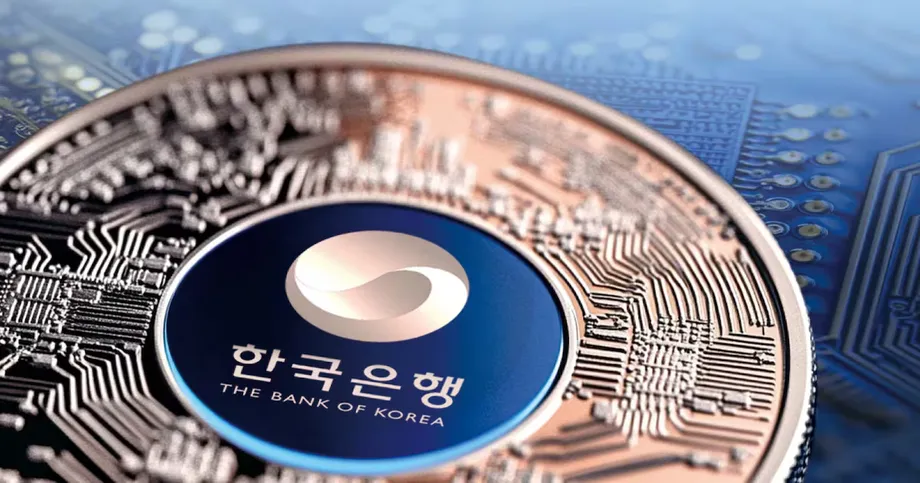
The Bank of Korea plans to use institutional central bank digital currency, rather than privately issued stablecoins, to settle transactions in a government bond tokenization pilot scheduled for 2027. The decision puts central bank money at the core of an experiment intended to connect transfers of digital bonds with payment and reduce the risk that one side of a trade fails to deliver.
Contents
- Central bank money will settle digital government bonds
- Why the settlement asset matters
- A targeted decision, not a ban on stablecoins
- What automation could change in bond markets
- Project Hangang expands without a retail CBDC
- Public spending provides another practical test
- The legal timetable is taking shape
- Private transactions offer a comparison, not proof
- What still needs to be decided
- Key Points
In written answers submitted to the National Assembly committee responsible for finance and economic planning, the bank said it was not currently considering private stablecoins as a settlement asset for the pilot. Its aim is to secure settlement finality, the point at which a transfer is completed and cannot be reversed, using digital money issued by the central bank.
Preparations are already under way. The bank established an asset tokenization team within its digital currency department on August 6, with three authorized positions and two staff members initially in place. It has been discussing the scope of the experiment with the finance ministry, although an interagency task force had not been formed as of September.
The bond project sits alongside an expansion of Project Hangang, which tests institutional digital currency and commercial bank deposit tokens. Its next phase will increase the number of participating banks from seven to nine and raise the ceiling for eligible participants from 100,000 to 500,000. A separate test will use deposit tokens to distribute 30 billion won in subsidies for electric vehicle charging facilities.
Why the settlement asset matters
Tokenizing a government bond means representing it as a digital asset on a blockchain. The underlying instrument remains government debt. What changes is the infrastructure used to record rights, transfer the bond and connect those transfers with payment.
The proposed settlement mechanism links the delivery of the bond to the delivery of money. This is sometimes called atomic settlement: the two transfers happen together, rather than leaving one party waiting after it has delivered its side of the transaction. That can reduce the risk of losing the asset or payment when a counterparty fails to complete a trade.
The Bank of Korea wants institutional CBDC to provide the money side of that exchange. Institutional, or wholesale, CBDC is intended for transactions among eligible financial institutions, rather than as a digital wallet issued directly by the central bank to every household.
A private stablecoin is a different instrument. It is designed to maintain a value linked to a currency, but its reliability depends on its issuer, reserves and redemption arrangements. Choosing central bank money removes that private issuer from the settlement asset. It does not, by itself, settle every legal or technical issue involved in transferring a tokenized bond.
A targeted decision, not a ban on stablecoins
The choice for government bonds is narrower than a rejection of private stablecoins throughout the economy. At an October 12 National Assembly audit, Bank of Korea Governor Hyun Song Shin distinguished the central bank's responsibilities from the operation of private digital currencies.
Responding to lawmaker Lee Jun-seok, Shin said stablecoin operations belong with private businesses:
It is right for stablecoins to be handled by the private sector.
That statement did not introduce unrestricted issuance or withdraw the bank's earlier support for groups led by banks during the initial introduction of won stablecoins. The distinction is between who operates a stablecoin and what safeguards should govern its use.
The bank's May 14, 2026 report, Domestic and Overseas Asset Tokenization Status and Future Policy Tasks, argued for CBDC or commercial bank deposit tokens as primary payment instruments for tokenized assets. Its reasoning placed weight on the reliability of regulated institutions and central bank settlement.
The government has also outlined plans to pursue legislation for a proposed Digital Asset Basic Act during the second half of 2026. The Bank of Korea has warned that introducing won stablecoins requires attention to possible weakening of monetary policy effects and circumvention of foreign exchange policy. The bond pilot therefore represents a specific settlement choice while wider stablecoin legislation is still being developed.
What automation could change in bond markets
Shin has presented government bond tokenization as a way to automate more than the final exchange of an asset for money. At the European Central Bank forum in Sintra, Portugal, in early July, he described how direct issuance and circulation through a digital currency system could allow smart contracts to handle processes ranging from checking collateral eligibility to repayment at maturity.
A smart contract is software that executes specified actions when programmed conditions are met. In this setting, it could check whether a bond qualifies as collateral or trigger a repayment process. Those functions still require accurate information and rules that match the legal rights attached to the bond.
In a July statement, Shin described tokenized government bonds as:
the big prize
The potential benefit is a more connected process for issuing, holding, transferring and redeeming government debt. A November 2025 Korea Capital Market Institute report by senior research fellow Kim Pil-kyu and research fellow Jeong Hwa-young, titled Government Bond Tokenization in the Era of Digital Transformation: Global Trends and Lessons for Korea's Financial Markets, also discussed how tokenization can connect traditional finance with digital asset markets and automate transactions through smart contracts.
These are proposed benefits, not demonstrated results from the 2027 experiment. The possibility of longer trading hours, including continuous trading, is also part of the discussion. No confirmed operating schedule, settlement performance target or marketwide rollout date has been announced for the pilot.
Project Hangang expands without a retail CBDC
Project Hangang combines central bank digital money used between institutions with deposit tokens issued by commercial banks. A deposit token represents a claim on a bank deposit in digital form. It is distinct from both a private stablecoin and a retail CBDC issued directly to the public.
Under the model described by Shin, commercial banks manage customer deposits and personal information, while the central bank handles settlement between banks. At the October audit, he rejected the suggestion that Project Hangang would allow the central bank to monitor individual transactions. He also said the Bank of Korea had not considered introducing a general purpose retail CBDC since 2023.
The next Hangang phase will add Kyongnam Bank and iM Bank to the existing seven participants. The planned increase from 100,000 to 500,000 eligible users is a fivefold expansion of the participation ceiling, not a forecast that 500,000 people will actually take part. The bank also intends to broaden acceptance locations, including convenience stores.
The relationship between Hangang and the government bond pilot remains unsettled. A separate account describes Hangang's June 2026 integration of commercial bank ledgers and blockchain systems as a technical foundation for bond tokenization. The more specific parliamentary answers, however, say the concrete connection between the two projects has not been finalized. Experience from Hangang may inform the bond experiment without establishing its final architecture.
Public spending provides another practical test
The planned 30 billion won subsidy experiment will use deposit tokens for grants supporting medium speed electric vehicle charging facilities. Its stated purposes are to test whether digital payment controls can reduce improper subsidy claims and shorten the time needed to reconcile spending.
This is a public spending test, not a government bond transaction. It examines how money reaches an approved recipient and how that expenditure is checked. The bond pilot instead examines the exchange of a financial asset for a settlement asset. Keeping those functions separate is essential to understanding what each experiment can demonstrate.
A separate finance ministry pilot using tokenized bank liabilities for government operating expenditure is anticipated to begin in Sejong during the fourth quarter of 2026. The reported timetable is an expectation, not confirmation that the system has launched. Its relationship to the charging subsidy test has not been fully explained.
Project Hangang's 2026 budget is 12.52 billion won, excluding Bank of Korea employee salaries. That is up from 7.74 billion won in 2025, an increase of 4.78 billion won, or 61.8%. The 30 billion won subsidy amount is the spending to be tested through deposit tokens, not the project's operating budget.
The bank plans to begin further transactions involving the public before the end of 2026 and continue testing during the period authorized under its innovative financial service designation. Those trials will help establish a basis for commercial use of deposit tokens, but they do not amount to a confirmed nationwide launch.
The legal timetable is taking shape
The finance ministry's Economic Growth Strategy for the Second Half of 2026, announced on July 14, includes the 2027 government bond pilot linked to institutional CBDC. It also calls for examining interoperability between the Bank of Korea's digital currency infrastructure and other blockchains. Interoperability means allowing systems to exchange information or assets without losing the integrity of their records.
Amendments dated February 2 to the Electronic Securities Act and the Financial Investment Services and Capital Markets Act established a basis for issuing and distributing token securities. Detailed rules on issuance, trading and infrastructure are being discussed by a joint public and private consultative body organized by the Financial Services Commission.
Reports place implementation of the broader framework in February 2027. One account anticipated the unveiling of comprehensive rules in July 2026, while another describes detailed制度 design as continuing. That difference matters: legislation, publication of detailed rules and the date those rules take effect are separate milestones.
The reported sequence of preparations is:
- February 2, 2026: Amendments to securities legislation establish a legal basis for token securities.
- May 14, 2026: The Bank of Korea publishes its report on asset tokenization and future policy tasks.
- July 14, 2026: The government announces a strategy including the 2027 bond pilot and work on blockchain interoperability.
- August 6, 2026: The Bank of Korea establishes its asset tokenization team.
- Fourth quarter of 2026: A separate government expenditure pilot is anticipated in Sejong.
- February 2027: The token securities framework is expected to take effect.
- 2027: The government bond tokenization pilot is planned.
The Bank of Korea still needs to examine the legal basis and technical requirements for the bond experiment with the Financial Services Commission, Korea Securities Depository and other relevant bodies. A planned pilot should not be read as permission for unrestricted commercial trading in tokenized government bonds.
Private transactions offer a comparison, not proof
Ripple and Kyobo Life Insurance reportedly completed a tokenized government bond settlement on April 15, 2026, using Ripple Custody. The transaction was described as settling in near real time rather than following a conventional T+2 cycle, which means completion two days after a trade.
That private transaction is separate from the proposed Bank of Korea pilot. It shows a reported use of tokenization technology for bond settlement, but does not establish that the 2027 experiment will use the same platform, payment asset or legal structure. The Bank of Korea has expressly chosen institutional CBDC for its planned test.
The bank's May report put the global tokenization market at $50.37 billion, about 75.16 trillion won, as of March 3, with annual growth of 169% in the preceding year. It estimated cumulative investment in Korea at 640 billion won as of January 1.
Those figures measure different things at different dates. Global market value cannot be directly compared with Korea's cumulative investment to calculate a reliable domestic market share. Korea's earlier experimentation also had a different focus: music copyright and fractional property investments were temporarily permitted through the regulatory sandbox in 2019. The government bond initiative shifts attention toward an established financial instrument and the infrastructure used to settle it.
What still needs to be decided
The most consequential open issues concern implementation. The precise scope of the bond pilot, its technical connection to Hangang, the legal treatment of token transfers and arrangements for connecting different blockchains have not been finalized. Nor have the parliamentary answers established a transaction volume or a date within 2027 for the first test.
Stablecoin concerns extend beyond bond settlement. At the October audit, lawmaker Kim Nam-joon cited average daily stablecoin trading in South Korea of about 200 billion won as of July and questioned overseas crypto cards that convert digital assets into conventional currency for purchases. Shin pointed to conversion fees, the presence of an additional intermediary and difficulties involving regulatory oversight.
Kim also referred to an overseas estimate of $10 billion in cumulative card payments, without establishing how much involved South Korean users. Questions about hacking, frozen accounts, refunds and customs reporting therefore concerned a separate consumer payment market, not measured activity in the government bond pilot.
Responding to those concerns, Shin said:
We will continue to monitor closely and consult closely with relevant agencies.
The next substantive milestones are the planned public spending trials in late 2026, the expected securities framework in February 2027 and the eventual specification of the bond experiment. Together, they will test distinct parts of a digital financial system: bank issued money for users and public expenditure, and central bank money for institutional bond settlement.
Key Points
- The Bank of Korea plans to settle tokenized government bond transactions with institutional CBDC in a 2027 pilot.
- Private stablecoins are not currently being considered as the pilot's settlement asset.
- The asset tokenization team was established on August 6, but an interagency task force had not formed as of September.
- Project Hangang's next phase will expand to nine banks and up to 500,000 eligible participants.
- A separate deposit token test will cover 30 billion won in electric vehicle charging subsidies.
- Hangang's 2026 budget is 12.52 billion won, up 61.8% from 2025, excluding central bank staff salaries.
- The token securities framework is expected in February 2027; the bond pilot's detailed design remains undecided.