New limits arrive with major gaps still in dispute
Australia will introduce federal political donation and campaign spending caps on 1 January 2027, setting a AU$50,000 annual donation limit alongside a AU$90 million campaign ceiling for a national party. Yet a donor distributing money across party branches and other political recipients could still give up to AU$1.6 million a year, making the structure of the limits as consequential as their headline amounts.
Contents
- New limits arrive with major gaps still in dispute
- Rinehart's support puts gifts and access under scrutiny
- Disclosure falls to AU$5,000, with reporting accelerated
- Why AU$50,000 is not a donor's total limit
- Seat limits leave room for national party advertising
- Public funding changes the position of incumbents
- Business forum payments test the meaning of a donation
- Outside campaigners present a familiar enforcement problem
- A constitutional challenge could reach both sets of caps
- What happens before January 2027
- Key Points
The Australian Electoral Commission (AEC) confirms the commencement date in its funding reform guidance. Transitional rules begin on 1 July 2026 for people and organisations already subject to federal funding and disclosure obligations. The commission is preparing a new reporting system, educational materials and guidance for the change.
The Electoral Legislation Amendment (Electoral Reform) Act 2025 passed in February 2025 with Labor and Coalition support. It brings donation limits, spending restrictions, faster reporting and greater public funding into a federal system that previously had no general donation or campaign spending caps.
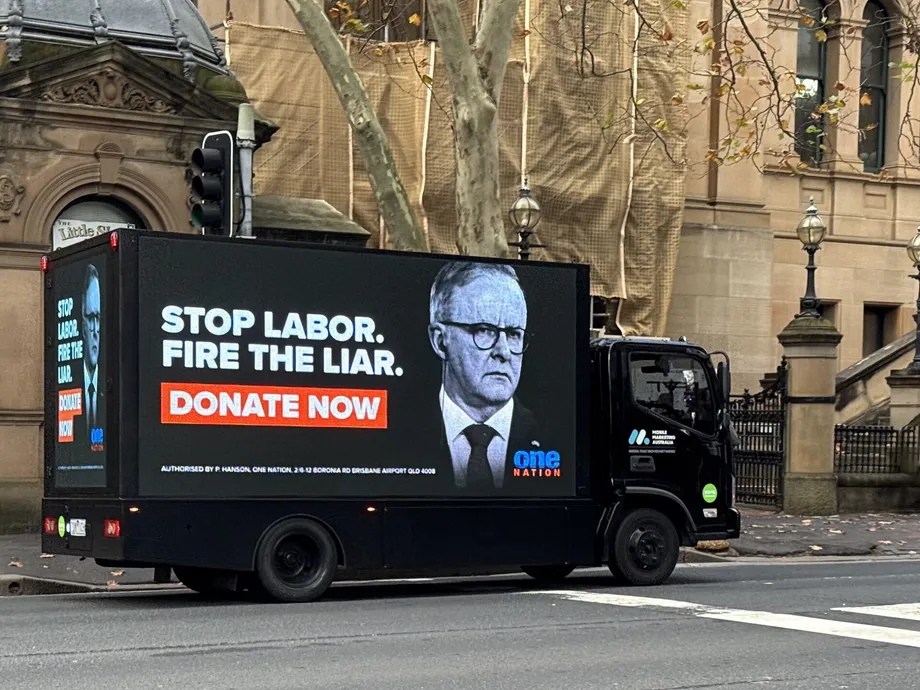
The changes come amid scrutiny of mining billionaire Gina Rinehart's support for One Nation, Clive Palmer's spending across successive elections and corporate payments to major party fundraising forums. These arrangements raise different questions: how much money can enter politics, when voters can see it, and whether payments for access count as donations at all.
Supporters of reform argue that caps can reduce dependence on wealthy patrons. Critics say the legislation gives established parties financial options that independents and newcomers cannot match. Its implementation timetable is settled in the AEC's current guidance, but disputes about fairness, enforcement and constitutional validity are not.
Rinehart's support puts gifts and access under scrutiny
Rinehart and close associates reportedly provided more than AU$3 million in cash and other support to One Nation during the financial year described in recent accounts. Those accounts say the relevant annual disclosures are not expected until February 2027. The total should therefore be treated as a reported amount, rather than a complete figure established through published electoral returns.
The support extends beyond cash. Rinehart reportedly gave Pauline Hanson a private aircraft worth more than AU$1.5 million in April. Hanson and One Nation MP Barnaby Joyce also stayed at Rinehart's Brisbane mansion after party fundraising events that month.
One Nation is preparing to relocate its national headquarters from the Brisbane airport area to a Spring Hill office building purchased by Hanrine, Rinehart's property investment company. The building is estimated to be worth about AU$8 million, although that is not a confirmed purchase price. Its previous recorded sale was AU$2.4 million in 2003.
Joyce says the party will pay commercial rent. A Hancock Prospecting spokesperson denied that the property arrangement involved subsidised accommodation:
Hancock Prospecting holds a range of commercial property, and this building is one of them. Hancock is not providing free or discounted space to any outside tenant, political or otherwise.
A commercial tenancy does not establish wrongdoing, and an AU$8 million building owned by a landlord is not equivalent to an AU$8 million donation to its tenant. The distinction matters when assessing the scale of support.
Hanson has described Rinehart as an unofficial policy adviser and credited her with One Nation's proposal to let pensioners work without losing their pension or healthcare card. The party's opposition to climate action and support for fossil fuel industries also draw scrutiny to that relationship, although shared policy positions do not prove a financial exchange.
Separately, Hanson reportedly failed to declare several flights gifted by Hancock Prospecting under Senate rules. Parliamentary interest declarations and AEC financial disclosures are different obligations. A delay before an electoral return becomes public does not remove a separate parliamentary declaration requirement.
Disclosure falls to AU$5,000, with reporting accelerated
The AEC's disclosure overview, updated on 1 April 2026, says the threshold will fall from AU$17,300 to amounts above AU$5,000 on 1 January 2027. That is a reduction of AU$12,300, or about 71 per cent.
Reports differ on the existing threshold. One gives AU$16,900, while the AEC's dated guidance gives AU$17,300. The latter is the figure used here for the official comparison. These amounts should not be presented as interchangeable descriptions of the same threshold.
Disclosure will be required when a donation exceeds AU$5,000 or when donations from the same donor to the same recipient collectively exceed that amount during a calendar year. Repeated smaller payments to one recipient therefore cannot simply escape reporting because each payment is below the threshold.
The obligations cover registered parties and their state branches, MPs, senators, candidates, donors and several categories of related organisations and outside campaigners. Financial information will be reported through donation disclosure notices and annual returns.
Annual reporting shifts to the calendar year, with returns due eight weeks after its end. The deadline for an individual donation notice depends on the recipient's category and whether the payment occurs during an election period. Faster disclosure should not be confused with immediate publication of every payment.
Anne Twomey, Professor Emerita at the University of Sydney, argues that the final AU$5,000 threshold, raised from a proposed AU$1,000, still permits substantial undisclosed funding through AU$4,999 payments spread among different recipients. Her concern is about distributing money across the political network, rather than repeatedly paying the same recipient without aggregation.
Why AU$50,000 is not a donor's total limit
The donation cap was increased from a proposed AU$20,000 to AU$50,000 in the final political agreement. It includes aggregation rules that restrict what a donor can collectively give to a party branch and the MPs, senators or candidates it endorses.
That does not make AU$50,000 the maximum a donor can provide to an entire national party. Twomey calculates that a party with separately registered branches in six states, two territories and at the federal level could receive AU$450,000 annually from one donor: nine branches multiplied by AU$50,000.
Donations to other eligible recipients, including related fundraising organisations and sympathetic outside campaigners, create further possibilities. The broader annual donor limits are AU$250,000 for donations attributed to a particular state or territory and AU$1.6 million nationally.
These figures describe different restrictions, not competing estimates of a single cap. AU$450,000 is the branch calculation for a nationally organised party. AU$1.6 million is the wider ceiling across recipients, subject to the other limits.
An independent cannot reproduce that branch network and can receive no more than AU$50,000 annually from a particular donor. This is central to complaints from community independents: the same nominal donation rule can produce very different fundraising capacity depending on whether a candidate belongs to a national party.
Seat limits leave room for national party advertising
The spending regime sets an AU$800,000 limit for a House electorate campaign and a AU$90 million ceiling for a national party. Separate Senate limits depend on the state or territory. Twomey's analysis gives examples of AU$9.2 million for New South Wales and AU$1 million for Tasmania.
The critical distinction is between advertising targeting a particular electorate and generic party advertising. Under the rules described in her analysis, advertising that identifies the candidate or electorate counts towards the local limit. Advertising promoting the party without identifying either can fall outside that electorate cap, while remaining subject to the broader party ceiling.
A party candidate can consequently benefit from national advertising about leadership, policies and the party brand, as well as the local campaign. An independent's message is more closely tied to their own candidacy, making it harder to obtain the same benefit outside the seat limit.
Palmer's reported spending exceeds AU$260 million across the last three national polls. Other figures refer to narrower activities or periods: AU$117 million donated to the United Australia Party at a previous federal election, and a AU$60 million advertising campaign discussed after the 2019 election. Donations, advertising expenditure and spending across several elections are not identical measures.
The AU$90 million ceiling will impose a limit where none previously existed federally. Its practical effect, however, depends on what expenditure is counted, the campaign period covered and how spending by parties and other organisations is treated.
Public funding changes the position of incumbents
The reforms increase public election funding to AU$5 per eligible vote. Because voters cast separate House and Senate ballots, the rate can correspond to AU$10 across the two votes, although it is not an automatic AU$10 payment for every elector to one party.
A separate administrative funding stream will support parties and independent parliamentarians according to their representation in Commonwealth Parliament. This creates another distinction between those already holding seats and those seeking entry.
Twomey also identifies advance election funding based on funding received at the previous election as an advantage for incumbents. New candidates and parties do not have the same previous entitlement on which to draw.
Party campaign accounts can receive transfers from a nominated entity, a designated party fundraising body. Her analysis says those transfers are not constrained in the same way as donations from an outside donor, although campaign expenditure remains capped. That gives parties another financing route unavailable to an independent relying on capped donations or loans.
University of Queensland emeritus professor Graeme Orr has pointed to South Australia's legislated ban on donations to parliamentary parties and MPs as a different model, supported by public funding reported at AU$14 per vote. That rate is 2.8 times the federal reform's AU$5 rate, but the two systems have different eligibility and funding arrangements. It is a comparison of stated rates, not proof that their total support is directly equivalent.
Business forum payments test the meaning of a donation
Caps on gifts do not automatically answer concerns about payments that buy access or membership. Major party business forums charge companies for participation in events and contact with political figures, and such payments can be recorded as receipts rather than donations.
Amazon paid Labor and Liberal branches AU$538,000 across 34 payments over six years, including AU$46,500 to federal Labor on 28 June 2025. It also paid more than AU$200,000 in Labor Business Forum membership fees since mid 2021. Those fees were classified as "other receipts", not donations.
Amazon's payments to NSW Labor and the NSW Liberals between mid 2021 and mid 2025 were AU$38,100 and AU$37,400 respectively, a combined AU$75,500. These amounts form part of a broader pattern of engagement across party lines, rather than evidence by themselves of improper decision making.
An Amazon spokesperson rejected any connection between forum payments and public investment announcements:
Amazon's participation in these forums is longstanding. Any suggestion that these payments were timed to coincide with public announcements is incorrect.
Macquarie Technology Group has paid AU$2.2 million to Labor and Liberal state and federal branches since 2000. The company says it complies with disclosure requirements and does not provide political support in exchange for approvals, government decisions or policy outcomes.
Another datacentre company, Viridis Green, donated AU$20,000 to Queensland's Liberal National Party in October 2025 and engaged former Queensland premier Rob Borbidge to lobby ministers and officials. These examples connect fundraising with the separate issue of lobbying access. They do not establish that payments caused favourable decisions.
Transparency International Australia chief executive Clancy Moore has criticised the industry's use of political fundraising and lobbying. The central regulatory question is whether a payment qualifies as a capped donation, not simply whether money ultimately reaches a party. The announced headline caps alone do not settle the treatment of every membership or commercial arrangement.
Outside campaigners present a familiar enforcement problem
Lobby groups face an AU$11.25 million election campaign spending limit, while advertising confined to policy issues can remain uncapped. The boundary between arguing for a policy and promoting or attacking a candidate will therefore matter to enforcement.
This problem predates the federal reforms. A NSW parliamentary committee's 2011 bill inquiry examined whether spending by party affiliates should be combined with party spending and whether only enrolled individuals should be permitted to donate.
The report records that NSW amendments in 2009 and 2010 had capped donations at AU$5,000 to parties and AU$2,000 to candidates. They also prohibited donations from property developers, tobacco and alcohol companies, and gambling businesses. These are historical NSW figures, not current federal limits.
The committee recommended combining affiliate spending with party expenditure when it directly advocated a vote for the party or was undertaken at its request or in cooperation with it. It sought to preserve an affiliate's ability to campaign independently, including against the party.
It also recommended permitting organisations with members to pool funds for issue campaigns within existing caps, and limiting party affiliation fees to modest administration costs with member consent. The lessons are specific: regulators need to distinguish coordinated electoral activity from independent advocacy, and genuine service costs from financial support disguised as fees.
A constitutional challenge could reach both sets of caps
Twomey argues that unequal treatment of parties, independents and newcomers could expose the federal regime to a High Court challenge. A separate account says a constitutional challenge is under way, but gives no case name, hearing date or ruling. The analysis should not be mistaken for a court finding that the legislation is invalid.
The relevant constitutional principle is the implied freedom of political communication. Australia has no general constitutional bill of rights, but the High Court has recognised protection for political communication arising from the requirement that Parliament be directly chosen by the people. That protection limits government restrictions; it does not make every donation or spending cap unconstitutional.
Twomey places the issue within a line of cases including Australian Capital Television v Commonwealth (1992), Unions NSW v NSW (No 1) (2013), McCloy v New South Wales (2015) and Brown v Tasmania (2017). Her concern is whether the design can justify its restrictions while treating political participants fairly.
The amendments specify that donation and expenditure caps are intended to operate together. According to her analysis, that connection could make a successful challenge affect both sets of provisions rather than leaving one intact.
The NSW committee had also warned that its proposed 2011 restrictions risked a constitutional challenge if enacted without amendment. It expressly left the outcome to the High Court. The federal dispute likewise cannot be resolved by the existence of caps alone; their structure and operation are central.
What happens before January 2027
Reports describe the substantive regime as originally due to start in July 2026 before implementation difficulties led to a delay. The AEC's current guidance provides the operative distinction: transitional rules begin in July, while the new funding and disclosure obligations commence in January.
- February 2025: Parliament passed the Electoral Legislation Amendment (Electoral Reform) Act 2025 with Labor and Coalition support.
- 1 April 2026: The AEC updated its disclosure overview with the AU$5,000 threshold and calendar year reporting requirements.
- 1 July 2026: Transitional rules begin for participants covered by the existing scheme.
- 1 January 2027: The substantive reforms and planned new Funding and Disclosure System begin.
- February 2027: Recent accounts expect publication of relevant donations under the existing annual disclosure arrangements.
Orr described the reforms as "better than nothing" and the approximately 250 pages of legislation as "Byzantine". His concern is that smaller political organisations and volunteers may struggle with rules that well financed participants can obtain specialist advice to navigate.
He also suggested Rinehart's support for One Nation gave the major parties a reason to allow more time before caps began. Unnamed major party figures rejected that explanation. It remains a disputed interpretation, not an established reason for the delay; the stated explanation concerns implementation.
The case for spending limits has a longer record. In its 2019 reform proposal, the Grattan Institute cited an Australian Election Study finding that 74 per cent of Australians thought people in government looked after themselves. It also cited a 2018 Democracy 2025 survey in which campaign spending caps were the most supported reform.
A separate survey received responses from 98 of 226 federal politicians, with three quarters of respondents supporting spending limits. That is evidence of support among respondents, not three quarters of the entire Parliament. Grattan proposed focusing restrictions on paid party and outside advertising while leaving other political expression unrestricted.
The immediate task is implementation: clear guidance, a working reporting portal and consistent treatment of donations, receipts and campaign activity. The unresolved issues are the constitutional dispute, the practical position of independents and how effectively the rules will capture coordinated spending without restricting genuine policy advocacy.
Key Points
- Federal donation and spending reforms commence on 1 January 2027, with transitional rules from 1 July 2026.
- The disclosure threshold falls from AU$17,300 to amounts above AU$5,000.
- The AU$50,000 donation cap operates alongside branch aggregation rules and a AU$1.6 million national annual donor ceiling.
- National parties face a AU$90 million campaign limit, with AU$800,000 limits for electorate campaigns.
- Generic party advertising, business forum receipts and independent issue campaigns remain central to disputes about the rules.
- Rinehart's reported support for One Nation includes an aircraft, while the party says it will pay commercial rent for her company's Brisbane property.
- Public funding increases, but critics argue incumbents retain financial advantages over newcomers.
- A constitutional challenge is reported, but no hearing date or ruling is identified.