Repayment ordered, with major gaps unresolved
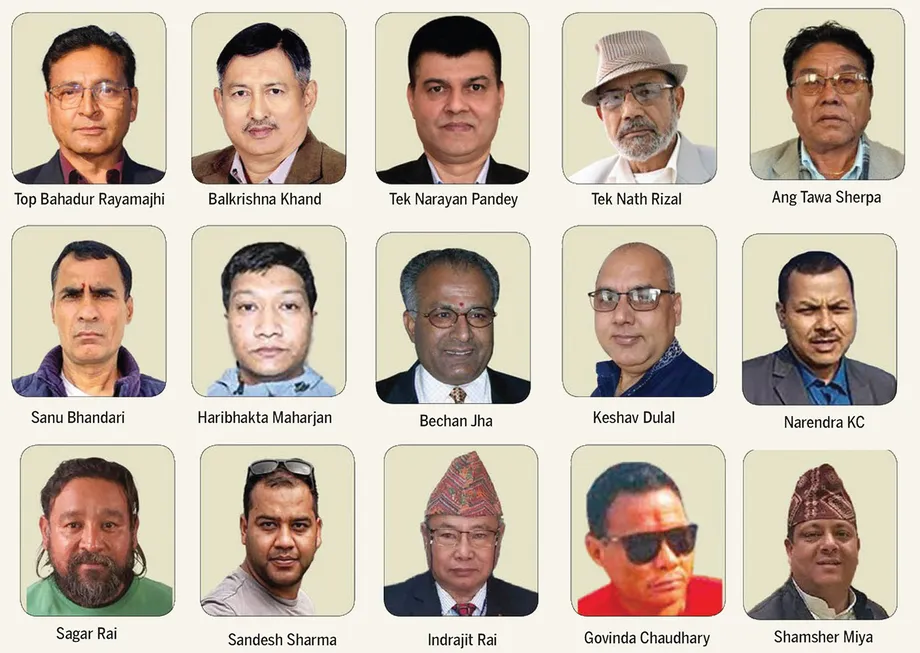
Kathmandu District Court has ordered eight defendants in Nepal's fake Bhutanese refugee scam to repay Rs153.797 million to 59 people, placing the largest liability, Rs74.7 million, on Sandesh Sharma of Dang. Former deputy prime minister Top Bahadur Rayamajhi must return Rs4 million under a judgment that separates money owed to victims from prison sentences and criminal fines.
Contents
- Repayment ordered, with major gaps unresolved
- A promised journey became a false identity
- Who must return the money?
- Why 53 complainants received no award
- Collectors could also be victims
- The report that made the promise look official
- Forgery proved, access to the document unresolved
- Messages and policy decisions supported other convictions
- How the case reached judgment
- Seven acquittals and eight pending cases
- Key Points
The full judgment by Judge Tej Bahadur Khadka explains how a network collected money by promising to send Nepali citizens to the United States under false Bhutanese refugee identities. It describes altered government documents, fabricated registration procedures and communications between intermediaries and senior officials.
Yet the ruling leaves two substantial gaps. Of the 112 people identified in police complaints, 53 have no compensation award. The court also established that a government task force report had been forged without resolving the complete chain of responsibility for accessing and altering it.
The compensation order does not mean the victims have received their money. It establishes repayment obligations, alongside criminal penalties, at the district court level. An appeal to the High Court remains possible, and proceedings against eight defendants who remain at large have been suspended until their arrest.
Those distinctions matter in a case that reached former ministers, the Home Ministry's senior bureaucracy and people who collected payments from neighbours and acquaintances. Some defendants were convicted without being ordered to repay money. Others who handled payments were acquitted because the court found they, too, had been deceived.
A promised journey became a false identity
Tejina Lamsal's experience shows how the scheme turned a promise of migration into a succession of payments. On February 5, 2021, she took Rs500,000 in cash to the home of her neighbour Gajendra Budhathoki in Tulsipur, Dang. He had promised to arrange documents and send her to the United States for a total cost of Rs4.5 million.
She was then directed to Sauraha in Chitwan for an interview. According to her police complaint, Budhathoki waited outside while two people dressed as government employees sat inside. A vehicle with a government registration number was parked nearby. She was photographed, fingerprinted and asked to complete a form.
Lamsal was entered on a false refugee list under the name Sharada Chaulagain. She said it was at this point that she understood the arrangement was intended to present her as a Bhutanese refugee eligible for resettlement.
She nevertheless continued paying after assurances that the process was advancing and that Budhathoki knew influential people in government. She paid another Rs1 million on June 9, 2022, and Rs2.5 million on October 3 that year. After being sent to Birat Medical College in Morang for an examination, where she met Santosh Sharma, she paid a further Rs500,000 on December 17.
Those payments add up to Rs4.5 million. The court, however, ordered Sandesh Sharma to repay her Rs2 million. Lamsal did not appear to testify, and the judgment limited her recoverable loss to the amount it found established in her complaint. Her case illustrates the difference between a claimed loss and the amount a court accepts as proved.
Who must return the money?
The judgment assigns repayment to eight defendants rather than making every convicted person financially responsible for every claim. Sharma's Rs74.7 million liability covers 38 people, most of them young residents of Dang who paid in the hope of reaching the United States.
The principal repayment amounts described in the judgment are:
- Sandesh Sharma: Rs74.7 million for 38 people.
- Sanu Bhandari: Rs26 million.
- Keshav Prasad Dulal: Rs15.8 million.
- Indrajit Rai, security adviser to then home minister Ram Bahadur Thapa: Rs15 million.
- Sagar Rai of Morang: Rs12.9 million.
- Top Bahadur Rayamajhi: Rs4 million.
- Angtawa Sherpa, a Congress leader and former Constituent Assembly member: Rs2.7 million for six people.
- Govinda Kumar Chaudhary: Rs2.5 million.
Sharma's liability alone represents about 48.6 percent of the stated Rs153.797 million total. The individual amounts reported above are rounded and do not reproduce the exact total.
Reports differ over the Rs2.7 million obligation. One account assigns it to former home minister Bal Krishna Khand, while also stating that he has no repayment liability. The detailed account and another report assign it to Sherpa and state that Khand owes no repayment. The internally inconsistent account should not be treated as confirmation of a separate order against Khand.
Why 53 complainants received no award
The court accepted repayment claims for 59 of the 112 people identified in police complaints, approximately 52.7 percent. It rejected claims for the remaining 53. For 43 of those people, the judgment records that they had neither submitted statements describing what happened nor appeared in court to testify.
The reason each of the other ten claims failed is not specified in the accounts of the judgment. Their exclusion should not automatically be interpreted as a finding that no deception occurred. It means the court did not establish a recoverable amount for them in this ruling.
Budhathoki's complaint demonstrates how much narrower the accepted claims could become. The detailed account says he named 61 people, including himself, but the court established recoverable losses for only 23. Reports differ on the complaint's size: one describes Budhathoki and 61 others, making 62 people, while another gives 61 including him.
The court also directed that compensation fees be collected from convicted defendants under the Crime Victims Protection Act and deposited in the Victim Relief Fund. That obligation is distinct from returning specific sums to individual victims. Neither the repayment order nor the fund contribution establishes that collection has already taken place.
Collectors could also be victims
Premraj Panthi told the court that he collected Rs57.8 million from about 50 acquaintances and handed it to the network. He said Rs21.2 million had already been returned, leaving Rs36.6 million outstanding.
The court divided that balance among three sets of defendants: Rs4 million from Rayamajhi, Rs15 million from Indrajit Rai, and Rs17.6 million from Dulal and Bhandari. These allocations describe the handling of Panthi's claim, not an additional sum to add to the headline compensation figure.
Ram Sharan KC of Tokha, Kathmandu, also collected payments from a group of 34 people and deposited money into Bhandari's accounts. He mortgaged property and handed Rs15 million in cash to Dulal.
The court acquitted KC, finding that Dulal and Bhandari had deceived him. It transferred the repayment liability claimed against him to those two men. The judgment compared his position with that of Panthi, Ram Kumar Regmi, Budhathoki and Bhesh Raj Sharma Lamsal, who collected money from others before passing it to the network.
This distinction was central to assessing individual responsibility. Handling another person's payment did not, by itself, establish that the collector knowingly participated in the criminal scheme.
The report that made the promise look official
The scheme drew its apparent authority from a genuine government exercise concerning Bhutanese refugees who remained in Nepal. A resettlement programme launched in 2007 had helped more than 100,000 refugees move to eight countries, including the United States. UNHCR ended the programme in December 2016, and the World Food Programme stopped its assistance in January 2019.
With around 6,500 refugees remaining in camps in Jhapa and Morang, the Cabinet directed the Home Ministry to prepare a policy and action plan. On June 13, 2019, then home minister Ram Bahadur Thapa formed a task force led by joint secretary Bal Krishna Panthi. It was to consider the remaining refugees' future and examine claims from people who had missed registration.
The task force submitted its report on October 18, 2019. It recommended registering only 429 people whose cases had been examined jointly by UNHCR and the refugee coordination unit. These people were described as census absentees, meaning they had missed the registration count. The report found no evidence establishing that another 581 families claiming missed registration were genuine refugees and recommended accepting no further applications.
The forged version reversed the practical effect of those restrictions. It inserted schedules 9(a) and 9(b), presenting 875 people from those 581 families as eligible for registration. Prospective migrants were instructed to use fictitious names matching the altered list and received false identities.
Panthi told the court that his original report contained nine annexes, while the forged version contained ten. He identified differences in fonts, formatting and wording, including changes to the recommendation ending late registration. The original remained in Cabinet records; the forged version was held at the Home Ministry.
Registration and resettlement were separate matters. The genuine task force's work concerned the status and management of people remaining in Nepal after the resettlement programme had ended. It did not establish a new route to the United States for Nepali citizens.
Forgery proved, access to the document unresolved
The court convicted Dulal, Bhandari and Bhutanese refugee leader Teknath Rizal of forgery. Rayamajhi, Khand, former home secretary Tek Narayan Pandey, Indrajit Rai and other government officials were acquitted of that charge.
Judge Tej Bahadur Khadka's bench explained the documentary basis for the forgery finding in its order:
"It has been established that the offence of forgery was committed, as the fake report altered and added to the contents of the original report, and evidence was also found that counterfeit identity cards identifying individuals as Bhutanese refugees had been issued," the order says.
That finding did not resolve how the official document was obtained and altered. The three men convicted of forgery had no direct institutional connection to the government offices holding the report. The judgment did not establish the complete sequence of access, alteration and replacement.
For Pandey, prosecutors failed to establish when, where and how he removed the report from the ministry and forged it. A forensic examination of Khand's phone found no evidence directly connecting him to forgery. Those limits concerned the forgery charge, not their responsibility for the broader scheme.
Messages and policy decisions supported other convictions
The court treated Viber and WhatsApp exchanges between Pandey and Dulal as key evidence. It found that the home secretary maintained contact with the intermediary and supported the scheme through proposals taken to the Cabinet and extensions of a committee's deadline.
Khand's approval of proposals extending deadlines and changing the committee's mandate supported the finding that he assisted the scheme at the level of government policy. The court found no evidence that he personally received proceeds, but convicted him as an accomplice in fraud, organised crime and offences against the state.
Khand received two years in prison and a Rs20,000 fine. Pandey received four years and a Rs40,000 fine for the same three categories of offence. Rizal received two years and a Rs20,000 fine for forgery and his accomplice role in the other offences. None of the three was ordered to repay victims under the detailed account of the judgment.
Rayamajhi and other principal defendants received four years in prison and Rs40,000 fines. The court applied Section 43 of the Muluki Criminal Code, 2074, to treat several offences arising from the same incident as an integrated offence. As described in reports of the ruling, this involved adding half the punishment for another offence to the most severe punishment rather than simply stacking every sentence.
The court distinguished the coordinated network from an ordinary individual fraud. It also found offences against the state because the use of false refugee identities harmed the dignity of Nepali citizens and Nepal's international reputation, including its relations with UN agencies and donor countries.
How the case reached judgment
The proceedings moved through investigation, detention disputes, findings of guilt and sentencing. Reports disagree on some dates and totals, so those stages should not be collapsed into a single uncontested chronology.
- May 2022: The scheme became public and police investigations began.
- May 24, 2023: Several accounts place the initial prosecution on this date, although they differ between 30 and 31 defendants. The detailed account instead describes cases filed in phases against 31 people on August 13, 2024.
- June 2023: The district court remanded 16 of 18 arrested defendants to custody and granted bail to two. Reports place the order on June 15 or June 16.
- December 14, 2023: A Patan High Court ruling allowed Khand's release on Rs3 million bail. He was released the following day.
- April 25, 2024: Supreme Court Justices Kumar Regmi and Tek Narayan Dhungana upheld custody for seven of ten petitioners, while allowing Angtawa Sherpa and Govinda Chaudhary bail and Shamsher Miya release subject to regular court appearances.
- Verdict and sentencing: One account dates the guilt ruling to Asar 23, 2083 in the Nepali calendar. Other accounts scheduled sentencing for July 13 and describe penalties imposed on Asar 30, identified in the detailed account as July 14.
The earlier custody account described allegations involving Rs288.17 million and 115 victims, compared with approximately Rs290 million and 112 complainants in the detailed judgment account. These are different reported figures, not interchangeable measures. The final Rs153.797 million repayment award is also not a finding that every other alleged loss was disproved.
Seven acquittals and eight pending cases
The detailed verdict accounts identify 16 convicted defendants, seven acquittals and eight suspended cases, accounting for 31 defendants. Alongside the principal figures, convictions included Shamsher Miya, Narendra KC, Hari Bhakta Maharjan and Niranjan Kumar Kharel as accomplices in organised fraud. Bechan Jha was convicted of fraud.
The seven acquitted were Ram Sharan KC, Tanka Kumar Gurung, Sandeep Rayamajhi, Laxmi Maharjan, Keshav Tuladhar, Ashish Budhathoki and Pratik Thapa. Sandeep is Rayamajhi's son, and Pratik is the son of former home minister Ram Bahadur Thapa.
Proceedings remain suspended against Ashok Pokharel, Dhiren Rai, Deepa Humagain, Niraj Rai, Rajesh Aryal, Mohanraj Rai, Binita Sawaden Limbu and Sunil Budhathoki. Their cases are to resume once they are arrested. The district court ruling can also be challenged through an appeal, but no appeal hearing date or deadline is specified in the accounts of the full judgment.
The unresolved issues are therefore concrete: collection of the ordered repayments, the future proceedings against absent defendants, possible appeals, and the incomplete account of how the official report was accessed and forged. Convictions and repayment orders settle parts of the case without resolving all of them.
Key Points
- Eight defendants were ordered to repay Rs153.797 million to 59 people.
- Sandesh Sharma carries the largest liability, Rs74.7 million for 38 people.
- Fifty three of 112 complainants received no compensation award; 43 had not submitted incident statements or testified.
- The forged report added schedules presenting 875 people from 581 families as eligible for refugee registration.
- Khand, Pandey and Rizal received prison terms and fines without individual repayment obligations.
- Seven defendants were acquitted, while proceedings against eight absent defendants remain suspended.
- The judgment does not establish that victims have been paid, and a High Court appeal remains possible.