A narrow contest and a first for women
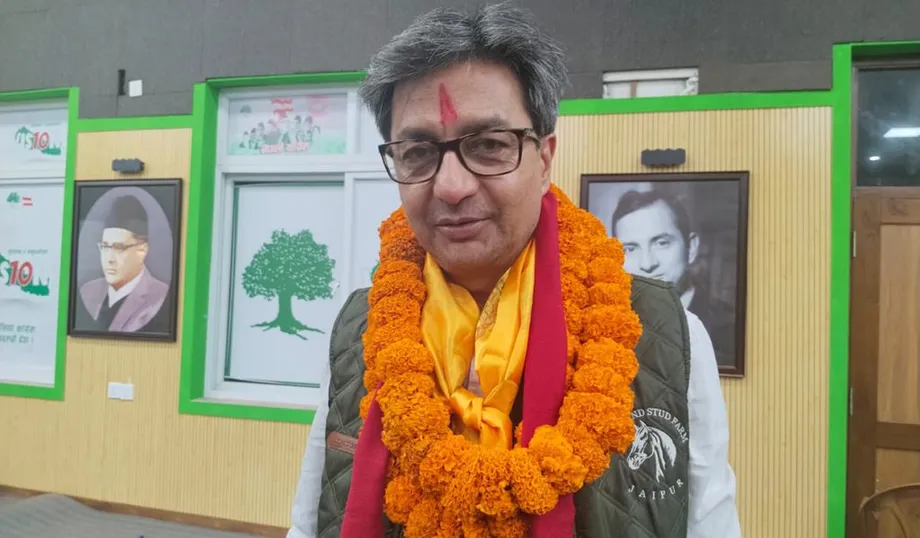
Pradip Paudel, Udaya Shumsher Rana and Dr. Dila Sangroula Pant have been elected general secretaries at the Nepali Congress's 15th general convention. Paudel led the open category with 4,194 votes, while Rana secured the second open seat with 2,330, finishing just 73 votes ahead of Dr. Sunil Kumar Sharma.
Contents
- A narrow contest and a first for women
- Paudel leads the open category
- Sangroula wins the women's seat
- A pledge to respond to younger voters
- Rana calls for unity before local elections
- Ghimire promises to continue his political work
- Five vice president positions take shape
- Other leadership counts remain unfinished
- Key Points
Sangroula won the women's category with 3,118 votes, defeating Mahalaxmi Upadhyay Dina by 254 votes. Her election makes her the party's first woman general secretary, a distinction she described as a source of pride for women rather than simply a personal achievement.
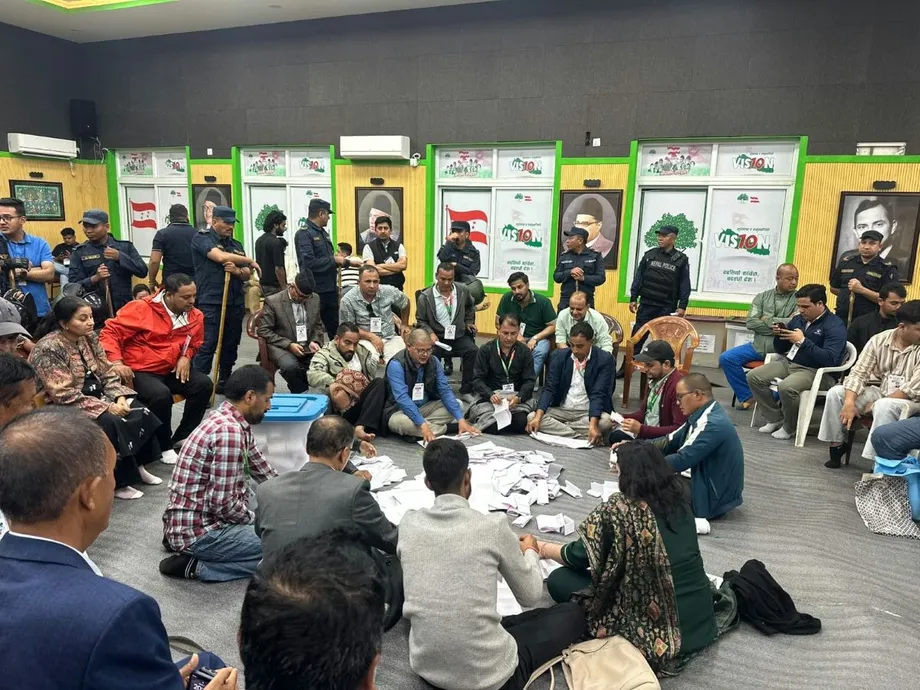
Raju Katuwal, member secretary of the party's Election Committee, announced the general secretary results. They establish a leadership team drawn from two separate contests: two seats in the open category and one in the women's category. The final results for the general secretary and contested vice president positions were made public on Sunday night.
The results also reveal different patterns of support. Paudel finished 1,864 votes ahead of Rana, while the contest for the second open seat was much closer. In the women's contest, Sangroula and Upadhyay both finished well ahead of the third candidate, Rita Khanal, who received 804 votes.
The newly elected leaders have already set out their priorities. Rana called for unity and a focus on the upcoming local elections. Sangroula pledged to work toward a party that reflects the aspirations of younger people. Their commitments come as other convention counts continue, leaving parts of the wider leadership selection unfinished.
Paudel leads the open category
Eight candidates contested the open category for general secretary. Paudel's 4,194 votes put him comfortably at the head of that field. Rana's victory depended on a much smaller advantage over Sharma, whose 2,257 votes placed him third.
The complete open category results were:
- Pradip Paudel: 4,194 votes, elected.
- Udaya Shumsher Rana: 2,330 votes, elected.
- Dr. Sunil Kumar Sharma: 2,257 votes.
- Gururaj Ghimire: 1,513 votes.
- Nain Singh Mahar: 1,134 votes.
- Amarsingh Pun Magar: 1,125 votes.
- Shankar Tiwari: 123 votes.
- Dr. Santosh Upadhyaya: 97 votes.
Rana's 73 vote margin shows how close the competition was at the point that determined the second winner. Farther down the field, only nine votes separated Mahar and Pun Magar, although neither was close to securing a seat.
Katuwal put the total number of convention representatives at 7,317, while the Election Committee said 7,255 representatives were eligible to vote. These are representative and eligibility figures, not a confirmed count of ballots cast. Voting centers were assigned by province and group, with identity cards and voter lists checked before voting. Mobile phones and other items prohibited by the election code were barred, and Khadka said 32 senior advocates were signing ballots. The available information does not specify how many candidates each voter could select on a ballot.
These figures describe support for individual candidates, not the proportion of convention delegates backing each one. Without a confirmed total of participating voters and the ballot rules, adding the candidate totals would not establish turnout or provide a reliable basis for calculating each candidate's share of delegates.
Sangroula wins the women's seat
Sangroula received 3,118 votes in the women's category, compared with Upadhyay's 2,864 and Khanal's 804. Her 254 vote winning margin was 181 votes larger than Rana's advantage over Sharma in the open contest. The comparison shows the difference in the closeness of the two contests, rather than measuring the winners' support across categories.
After the result, Sangroula said she felt both happiness and a greater sense of responsibility. She credited women who had supported her through the Nepal Women's Association and treated her election as recognition of their contribution to the party.
Sangroula, the newly elected general secretary, thanked those women in remarks translated from Nepali:
All the sisters have voted for me; this is their pride.
Her victory gives a woman a place in the general secretary leadership for the first time in the party's history. The result is separate from the women's vice president position, which Pushpa Bhusal had already secured without opposition.
Sangroula pointed to her previous organizational work as preparation for the new role. She said she had served as president of the Nepal Women's Association, worked in several party positions and bodies, and spent eight months as a joint general secretary.
A pledge to respond to younger voters
Sangroula's initial response placed the aspirations of the younger generation at the center of her stated agenda. She promised to work toward changing the party in ways that younger people want, while also committing herself to its plans and programs.
Explaining that commitment, Sangroula said, in remarks translated from Nepali:
I will work with commitment in our great campaign to build the Congress that today's younger generation wants.
She also said she intended to play a strong role inside the party, drawing on her experience in the women's organization and other party bodies. Her remarks connected the historic nature of her election with the practical responsibilities of the office.
No detailed youth policy, implementation schedule or specific program was announced in those remarks. Her statement sets a direction for her work, but does not yet establish how the leadership will turn that promise into party decisions.
Rana calls for unity before local elections
Rana used his response to the result to urge the party to unite and concentrate on the upcoming local elections. He thanked convention delegates, active members, supporters and journalists who had helped make the convention successful.
He described the convention as more than a process for choosing leaders. In his account, it was also an opportunity to decide new policies and programs through which the party could move forward and reach the public.
Rana urged members to treat the contest as friendly internal competition. Those elected had received greater responsibilities, he said, but the result should not be understood simply as some people winning and others losing. He called for leaders who received fewer votes to be included in efforts to unite the organization.
That message has a concrete setting in the results: Sharma finished only 73 votes behind him, while Ghimire and several other unsuccessful candidates also attracted substantial support. Bringing those leaders into party work would give practical meaning to Rana's appeal for unity.
Rana also referred to a mandate for transformation from the special convention. He said the leadership would develop policies and programs to take the party to the public. His remarks did not identify a specific policy package or give a date for the local elections.
He said most active members from the 14th general convention had participated in the 15th, and that the new leadership would try to include leaders who had been unable to attend. No participation figures accompanied that statement, so it cannot be used to calculate how attendance changed between conventions.
Ghimire promises to continue his political work
Gururaj Ghimire, the outgoing general secretary, finished fourth in the open contest with 1,513 votes. After his defeat, he thanked the delegates who had supported him and said the outcome would mark a new beginning in his political work.
Writing on Facebook, Ghimire said, in a statement translated from Nepali:
Victory and defeat are a natural process in democracy. Without being shaken by this result, I express my commitment to continue my political journey with a fresh approach.
He said his future political work would follow a different approach, style and culture, with integrity, ideas, dialogue, honesty and party transformation as its foundations.
Ghimire also described his 1,513 votes as more than a number. He treated them as an expression of trust and a source of inspiration for his political journey. His response and Rana's unity appeal point toward continued participation by unsuccessful candidates, although neither statement assigns them a specific role in the new leadership's work.
Five vice president positions take shape
The convention also selected vice presidents under a structure that provides for five positions, including a senior vice president. The reported provision in the amended party statute brings together open, inclusive and women's positions alongside the senior office.
Chandra Bhandari and Madhu Acharya won the two open category vice president seats. Bhandari received 3,735 votes and Acharya 2,342. Acharya finished 590 votes ahead of Govinda Bhattarai, the next candidate.
The remaining open category candidates were Bhattarai with 1,752 votes, Surendra Raj Pandey with 1,673, Dhanraj Gurung with 1,596, Deepak Giri with 923 and Chandra Mohan Yadav with 760.
Binod Chaudhary won the inclusive category vice president seat with 1,745 votes. Jeevan Pariyar followed with 1,658, leaving Chaudhary with an 87 vote margin. That contest was also close, with a winning margin just 14 votes larger than Rana's in the general secretary election.
The other inclusive category candidates were Farmullah Mansur with 1,144 votes, Sita Gurung with 1,112 and Ranjit Karna with 562.
Pushpa Bhusal had already been elected unopposed as women's vice president, while Bishwo Prakash Sharma had secured the senior vice president position unopposed. Their selection did not require a competitive vote, unlike the contests that elected Bhandari, Acharya and Chaudhary.
Other leadership counts remain unfinished
The announcement of the general secretaries did not complete the convention's counting process. Election Committee coordinator Prem Bahadur Khadka said the final joint general secretary results were expected that afternoon.
At the time of that counting update, Ramhari Khatiwada and Ajay Babu Shiwakoti were leading in the open category, while Pratima Gautam was ahead in the women's category. Counting in other categories was also continuing.
Those names were provisional leaders, not confirmed winners. No final vote totals for those contests were given in the update. The distinction matters because the narrow margins in the completed races show why a counting lead should not be treated as an election result.
Khadka also said counting was beginning for central committee members representing the public relations category. The next expected development was therefore the announcement of joint general secretary results, followed by further results as the remaining counts progressed.
The confirmed general secretary team now has clear public commitments from Rana and Sangroula: unite the party for local elections, develop policies and programs, and respond to younger people's aspirations. Specific measures, dates and responsibilities for carrying out those commitments have not yet been set out in their initial reactions.
Key Points
- Pradip Paudel won an open category general secretary seat with 4,194 votes.
- Udaya Shumsher Rana won the second open seat with 2,330 votes, defeating Sunil Kumar Sharma by 73 votes.
- Dila Sangroula Pant became the party's first woman general secretary with 3,118 votes, a margin of 254 over Mahalaxmi Upadhyay Dina.
- Rana called for unity and preparation for local elections; Sangroula pledged to respond to the aspirations of younger people.
- Chandra Bhandari, Madhu Acharya and Binod Chaudhary won contested vice president seats. Pushpa Bhusal and Bishwo Prakash Sharma were elected unopposed.
- The convention had 7,317 representatives, with 7,255 eligible to vote; those figures do not establish actual turnout.
- Joint general secretary results were still pending in the counting update, with final results expected that afternoon.