When a demolished home also means a lost livelihood
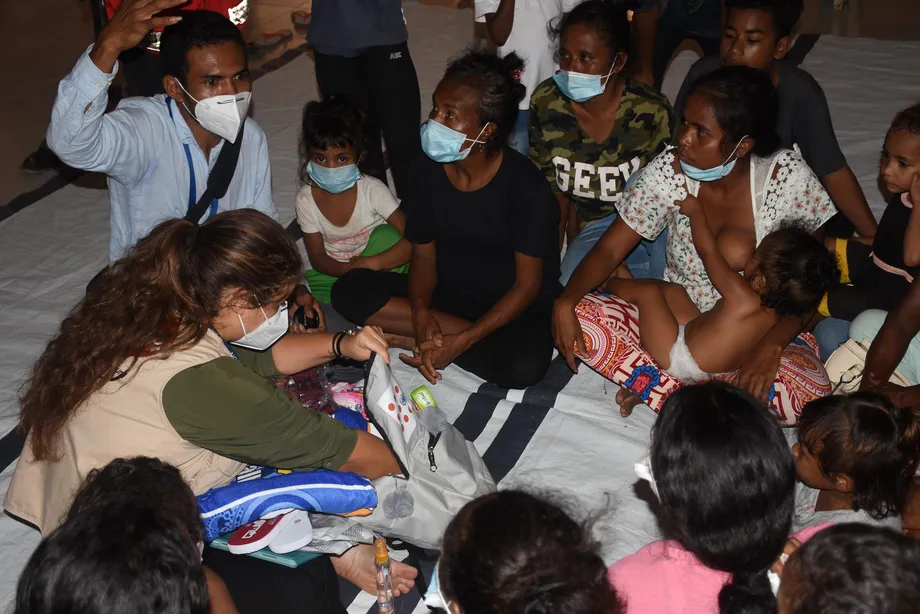
Roughly 1,500 households were reportedly forcibly evicted in Dili and other municipalities in Timor-Leste during 2024 and 2025, as the government reclaimed land it considers state property. For women earning money through small, informal businesses, the loss extended beyond shelter: it also removed the income used to support their families and keep children in education.
Contents
- When a demolished home also means a lost livelihood
- Who is carrying out the evictions?
- What the figures establish, and what they do not
- Why women's businesses are especially exposed
- Few secure alternatives after displacement
- Disputed permission and gaps in promised support
- Urban improvements and disputed motives
- Land insecurity meets pressure to move beyond oil
- Key Points
The campaign accelerated in early 2024, according to Fundasaun Mahein, a Timorese civil society institution. Its July 5, 2024 assessment described hundreds of families losing homes, businesses or income within a few months, alongside the closure of informal markets and confiscation of goods from commercial activities operating without licences.
Noe Gaspar, program manager at the Mata Dalan Institute, said the evictions had affected livelihoods, education and mental health, particularly among women. He described the immediate economic loss:
"Many women lost their sources of income," he said.
Gaspar said women subsequently struggled to meet their children's educational and daily needs. In one affected community, residents have remained despite the destruction of their homes, describing the government's approach as unfair and unjust.
National employment figures help explain why women face particular risks. Before the recent campaign, 80.4% of employed women were already in informal employment, compared with 75.3% of employed men. Women also had fewer opportunities to enter paid employment. These figures do not measure eviction damage directly, but they show the unequal economic conditions in which families must attempt to recover.
Who is carrying out the evictions?
Fundasaun Mahein's July 2024 assessment identifies a joint team led by the State Secretariat for Toponymy and Urban Organisation Affairs, known as SEATOU, under the Ministry of State Administration. The ministry's stated responsibilities include urban hygiene and public order.
The government has justified removals on the grounds that buildings illegally occupy state land. The campaign has been concentrated in Dili, although Fundasaun Mahein also recorded reports of evictions in Baucau municipality. Notices had been issued in areas of the capital for several years before enforcement intensified.
Supporters of the removals have argued that unregulated buildings can obstruct roads, create unsafe conditions and undermine urban order. Fundasaun Mahein itself has called for action against hazardous construction, improper waste disposal and the illegal blocking of public roads.
Its objection is to the methods, timing and consequences of the campaign. The institution alleges that videos showed intimidation by the head of SEATOU and security forces beating people protesting peacefully against demolitions. Those allegations are separate from the government's argument about land ownership and require scrutiny in their own right.
The central dispute is therefore about both the use of public land and the treatment of people living or working on it. Removing a hazardous structure does not, by itself, resolve where its occupants will live or how they will replace the income lost with it.
What the figures establish, and what they do not
The different eviction figures cover different periods and units. The account of thousands of people displaced in Dili concerns recent years. The later estimate of roughly 1,500 households covers 2024 and 2025 and includes other municipalities. Fundasaun Mahein's account of hundreds of families describes the first few months of the intensified campaign in 2024.
These totals cannot be directly compared as if they counted the same population. A household can contain several people, and none of these figures provides a complete breakdown by municipality, sex or type of loss. They nevertheless indicate that displacement reached far beyond isolated property disputes.
The sequence of events is:
- October to November 2021: A national labour force survey documented substantial differences between women's and men's access to employment.
- Before 2024: Eviction notices were delivered in several areas of Dili over a period of years.
- Early 2024: The eviction, demolition and confiscation campaign intensified.
- July 5, 2024: Fundasaun Mahein published concerns about enforcement and inadequate support for displaced families.
- 2024 and 2025: Later reporting put the number of forcibly evicted households at roughly 1,500 across Dili and other municipalities.
The later account describes those evictions as unlawful and identifies apparent deficiencies in due process. That description should not be confused with a court finding covering every case. No case by case judicial determination or consolidated government displacement register is identified here.
Why women's businesses are especially exposed
The 2021 labour force survey, available through the International Labour Organization, provides the strongest statistical basis for understanding women's economic exposure. It was carried out by the General Directorate of Statistics in collaboration with the Secretariat of State for Vocational Training and Employment. Researchers collected data from a representative sample of 7,275 households in October and November 2021.
The survey found that 24.2% of women aged 15 and above participated in the labour force, compared with 36.9% of men, a difference of 12.7 percentage points. Labour force participation counts people who are employed or unemployed and seeking work. It does not count all forms of work, including unpaid household duties.
The proportion of working age women actually in employment was 22.7%, compared with 35.2% of men. Among those employed, just 31.5% of women were employees, against 59.2% of men. Women were much more likely to work for themselves or contribute to family businesses.
The survey's table shows that 48.0% of employed women were working on their own account, meaning they ran an activity without employing others. That is a proportion of female employment, not a claim that women represented 48.0% of all workers in that category. Wholesale and retail trade accounted for 31.9% of female employment.
Stall and market sales alone employed 23.7% of working women, compared with 10.9% of working men. Together, field crop and vegetable growing and stall and market sales accounted for 49.5% of female employment. Market closures and the removal of informal businesses therefore affect activities in which women were already heavily concentrated.
Few secure alternatives after displacement
Informal employment covered 80.4% of employed women and 75.3% of employed men in 2021, a gap of 5.1 percentage points. Informal employment refers to work lacking the formal arrangements or protections associated with a regulated job. It is not the same thing as illegal occupation of land, and employment status alone does not establish whether a business has permission to use a particular site.
The survey also recorded greater unmet demand for work among women. Female unemployment was 5.9%, compared with 4.6% for men. The broader measure of labour underutilization was 33.3% for women and 25.8% for men, a difference of 7.5 percentage points. That measure captures insufficient employment more widely than unemployment alone.
These national figures predate the intensified eviction campaign and cannot establish how many displaced women subsequently became unemployed. They do show why replacing a small business with a secure wage job may be difficult. Women were already less likely to have such jobs and more likely to face a shortage of suitable work.
Gaspar's account connects the destruction of businesses to family expenses, education and mental health. The harm is therefore broader than the value of a demolished structure. Losing an earning activity can reduce the money available for everyday needs at the same time that a household must find somewhere else to live.
A complete assessment would need to distinguish women who lost housing, women who lost businesses, and those who lost both. There is no published total here for those groups, nor a measured estimate of income lost or children whose education was interrupted.
Disputed permission and gaps in promised support
Fundasaun Mahein said some evictees reported having agreements with the state to rent land for business activities. Others said their families had established homes or businesses decades earlier, during Indonesian or Portuguese administration, sometimes with authorization from local authorities.
The institution acknowledged that inadequate documentation made those claims difficult to verify. The distinction matters: a claim of longstanding occupation is not automatically proof of ownership, while the absence of complete paperwork does not settle every question about prior permission or the procedures followed during removal.
The government said the evictions formed part of a program involving four ministries: State Administration, Social Solidarity and Inclusion, Education, and Health. The stated purpose was to provide coordinated social welfare and access to basic services for affected people.
Fundasaun Mahein said direct testimonies indicated that most evictees were not receiving the promised support. It reported that dozens of families, at a minimum, faced homelessness and lost income, including mothers with young children, elderly people and people who were ill.
Those testimonies describe a gap between the announced program and families' experiences. They do not provide a complete count of assistance delivered. No schedule for compensation, permanent rehousing or restoration of businesses is established in these accounts. Without such information, it is difficult to judge whether assistance addresses both displacement and the destruction of earning opportunities.
Urban improvements and disputed motives
The timing of the 2024 campaign added to public concern. Fundasaun Mahein said government officials had acknowledged that urgency was partly connected to preparations for Pope Francis's planned visit later that year. The institution argued that preparations for the visit should not justify mass evictions.
It also suspected that growing foreign interest in Dili's property market could be influencing the clearing of strategic locations. It described possible future shopping centres and apartments, while questioning whether such developments would benefit most Timorese people.
The investment motive remains an allegation, not an established explanation for each eviction. No specific development contract, investor agreement or documented transfer of an evicted site is identified in the account. It would therefore be inaccurate to describe the whole campaign as a proven clearance program for foreign developers.
The wider economic tension is nevertheless concrete. The government wants to improve urban order and attract investment, while demolitions have removed homes and businesses built with scarce household resources. Any assessment of development benefits must account for those losses rather than treating cleared land as if it had no previous economic use.
Land insecurity meets pressure to move beyond oil
The evictions have unfolded as Timor-Leste faces growing pressure to develop sources of income beyond petroleum. Approximately 73% of the 2025 state budget was projected to come from the Petroleum Fund. A June 2025 announcement of the shutdown of the Bayu-Undan gas field reinforced concerns about reliance on the fund, although the field had stopped producing substantial revenue before that year.
Land insecurity is part of that economic problem. Unclear ownership, overlapping claims and weak land governance, shaped by the country's history of conflict, obstruct investment and the development of productive sectors. They also strain social relations when people disagree about who has the right to occupy or use a site.
Enforcement that leaves families without secure housing or a way to earn can deepen that insecurity. The issue is not simply whether investment arrives, but whether rules are predictable and whether existing residents and businesses receive a fair process.
Timor-Leste joined ASEAN in 2025, opening opportunities for regional markets and investment. Those opportunities do not resolve disputed land claims or replace lost household income. The employment survey and eviction accounts together show why economic diversification must also be assessed through women's access to work and the survival of small businesses.
The unresolved questions are practical: how many displaced households have received assistance, which occupancy claims have been examined, and what arrangements exist for people who lost both shelter and income. No forthcoming hearing, compensation deadline or assistance release date is identified in these accounts.
Key Points
- Roughly 1,500 households were reportedly forcibly evicted in Dili and other municipalities during 2024 and 2025.
- The campaign intensified in early 2024 under a joint team led by SEATOU within the Ministry of State Administration.
- Women lost informal businesses that helped pay for family needs and children's education.
- The 2021 labour survey found informal employment among 80.4% of employed women, compared with 75.3% of employed men.
- Fundasaun Mahein reported disputed occupancy claims and testimonies that promised government assistance was not reaching most evictees.
- The full scale of income loss, support delivered and disruption to education has not been established.