A New Partnership With a Broad Agenda
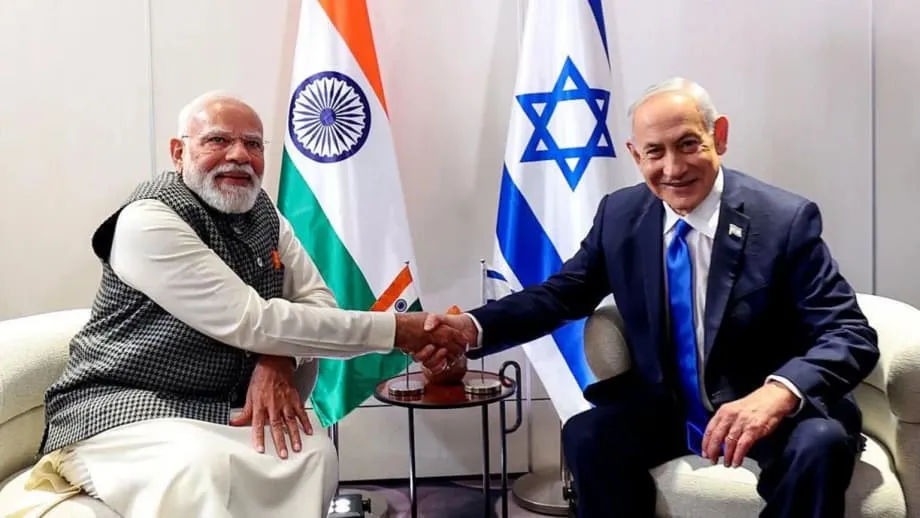
India and Israel elevated their relationship to a "Special Strategic Partnership" during Prime Minister Narendra Modi's visit ending on February 26, 2026, combining 16 to 17 agreements with discussions on defense purchases potentially worth $8 billion to $10 billion. The package stretches from missiles and drones to artificial intelligence, cybersecurity, agriculture, space, financial technology and employment opportunities for Indian workers.
Contents
- A New Partnership With a Broad Agenda
- How the Visit Fits Into Recent Events
- Which Weapons Are Under Discussion?
- From Buying Equipment to Making It Together
- Why Iron Dome and Iron Beam Were Excluded
- AI, Cybersecurity and Strategic Planning
- Space, Nuclear Energy and Digital Payments
- Trade Talks Resume After a Long Pause
- More Employment Routes for Indian Workers
- A Warm Welcome Amid the Gaza Conflict
- Why the Visit Drew Criticism in India
- The Essentials
Modi's visit, his second to Israel since 2017, lasted two days. He addressed the Knesset, Israel's parliament, visited the Yad Vashem Holocaust memorial and held extensive talks with Prime Minister Benjamin Netanyahu and President Isaac Herzog. The agreements create arrangements for cooperation across government, business and research, extending a relationship long associated with weapons sales.
Israel is seeking to ease its relative international isolation amid the ongoing conflict in Gaza. India is pursuing security and economic interests while managing relationships with Israel, Palestinian representatives and Arab partners across the Middle East. Those competing pressures shaped both the substance of the visit and the political debate surrounding it.
The defense figure represents potential procurement under discussion. Alongside those negotiations, the two governments agreed to pursue joint development, joint production and technology transfer, placing greater weight on making equipment together and sharing the knowledge needed to manufacture it.
Israel also pledged to allow up to 50,000 additional Indian workers over five years. Negotiations on a Free Trade Agreement resumed on February 24, while plans to extend India's Unified Payments Interface to Israel added a digital payments component to the wider economic agenda.
The main developments unfolded against several years of interrupted trade talks and recent conflicts that sharpened both countries' attention to air defense, drones and cyber threats.
How the Visit Fits Into Recent Events
India and Israel established modern diplomatic relations in 1992, although Jewish connections with India extend back centuries. Modi's first visit to Israel in 2017 marked an earlier stage in the relationship; the February 2026 trip gave cooperation a new formal designation and a broader set of agreements.
Trade negotiations and regional conflicts provide the immediate timeline behind the latest decisions:
- 2017: Modi made his first visit to Israel. The period of eight rounds of Free Trade Agreement negotiations began that year.
- 2021: The earlier sequence of trade negotiations ended, followed by a prolonged pause.
- October 7, 2023: Hamas attacked Israel. Restrictions on Palestinian workers imposed since October 2023 subsequently contributed to Israel's labor shortages.
- 2023 to 2025: Israel's regional conflicts demonstrated the effectiveness of its air defense systems.
- May 2025: The India-Pakistan conflict exposed Indian vulnerabilities involving drones, missiles and cyber warfare.
- February 24, 2026: Free Trade Agreement negotiations formally restarted.
- February 26, 2026: Modi concluded his second visit to Israel after two days of meetings and ceremonies.
The May 2025 conflict gave New Delhi a practical reason to seek stronger surveillance, precision weapons and protection against aerial attacks. Israel's recent combat experience, meanwhile, increased interest in its military technology and the ways its defensive systems work together.
Which Weapons Are Under Discussion?
Potential defense purchases have been estimated at $8 billion to $10 billion. The negotiations cover defense systems operating at several layers, unmanned aerial vehicles, precision guided munitions and advanced applications of artificial intelligence for military use.
The weapons discussed include Rafael's SPICE 1000 guidance kits, Elbit Systems' Rampage missiles launched from aircraft against ground targets, Israel Aerospace Industries' supersonic Air LORA missiles and Ice Breaker naval cruise missiles. Guidance kits help weapons reach designated targets more accurately, while the different missile systems offer options for striking from different platforms.
A substantial agreement is also expected for Elbit's Hermes 900 drone, intended to improve India's surveillance and strike capabilities. Surveillance means gathering information about activity on the ground or at sea; strike capabilities allow forces to attack selected targets.
Artificial intelligence forms another part of the military discussions. In this setting, it involves using computer systems to process information and support military tasks, alongside the aircraft, missiles and other equipment being considered.
From Buying Equipment to Making It Together
India and Israel agreed to pursue joint development, joint production and technology transfer in defense manufacturing. Joint development means designing systems together; joint production means sharing their manufacture; technology transfer gives a partner access to knowledge needed to produce or maintain equipment.
The approach fits Modi's "Make in India" initiative and moves the relationship beyond a straightforward arrangement in which India buys finished Israeli weapons. Israeli defense companies would establish subsidiaries in India and manufacture systems locally with Indian partners.
Licensed manufacturing could include certain weapons platforms previously restricted by confidentiality arrangements. Such agreements allow production with the permission of the company or country that controls the design, subject to the terms negotiated.
From 2020 to 2024, India purchased approximately 34 percent of Israel's total arms exports, valued at around $20.5 billion according to the Stockholm International Peace Research Institute (SIPRI). That share made New Delhi Israel's largest defense customer and amounted to roughly one third of Israeli arms exports during the period.
Local production would give the expanded partnership an industrial dimension alongside its military purpose. The discussions place Indian factories and Israeli technology within the same manufacturing arrangements, with cooperation extending to the development of new systems.
Why Iron Dome and Iron Beam Were Excluded
Iron Dome and Iron Beam attracted considerable speculation, but their transfer was excluded from the agreements. Discussions covered Israel's defense architecture, including both systems, while export restrictions limited what could be transferred directly.
Iron Dome and the laser based Iron Beam involve substantial American funding and production partnerships. Their export to another country, including India, requires explicit United States approval under American export control laws.
Israel may instead help India improve detection systems and the coordination of defenses operating at different layers. Such cooperation could help connect India's existing Russian S-400, Akash, Barak and QRSAM platforms.
A defense network with several layers uses different systems against different threats. The cooperation envisaged would address long range ballistic missiles, rockets and cruise missiles operating at medium ranges, and threats arriving from shorter distances.
The emphasis is on advice, integration and developing new systems together. Connecting detection and response equipment would help existing Indian defenses operate as a coordinated network, while direct transfers of the restricted Israeli platforms require American consent.
AI, Cybersecurity and Strategic Planning
India and Israel signed a memorandum of understanding on artificial intelligence cooperation covering joint development, ethical frameworks, civilian applications and partnerships between government and private companies. Ethical frameworks set principles for how AI should be developed and used.
A separate "Declaration of Intent" addresses "horizon scanning," a method of looking for emerging changes in technology, the economy and society. The proposed cooperation uses data analysis and tools driven by artificial intelligence to identify trends that may affect future decisions.
Joint research and training under that initiative would strengthen India's strategic planning. Rather than responding only after a change becomes obvious, the process aims to help governments recognize developments early enough to prepare.
Cybersecurity cooperation includes a Letter of Intent to establish an India-Israel Centre of Excellence in Cybersecurity in India. The planned facility would demonstrate best practices, strengthen the ability of digital systems to withstand attacks and bring together government agencies, businesses and academic institutions.
The two countries also agreed to develop a strategic program covering several years, including joint exercises and training. These activities would help participants practice responding to digital threats and build the skills needed to protect networks.
Funding under the India-Israel Joint Research Calls framework is to rise from $1 million to $1.5 million. The increase is $500,000, or 50 percent, giving the research arrangement a larger financial commitment alongside the new cooperation plans.
Space, Nuclear Energy and Digital Payments
Technology cooperation also extends to quantum computing, semiconductors and space exploration. Quantum computing uses the properties of very small particles to approach certain calculations differently from conventional computers. Semiconductors are the materials central to computer chips and many electronic devices.
India and Israel agreed to collaborate on civilian nuclear energy projects and advance space initiatives. These areas sit alongside agriculture and education within the broader package, showing the range of cooperation beyond defense procurement.
India announced that its Unified Payments Interface (UPI) would extend to Israel through a partnership between NPCI International and Israel's MASAV system. UPI is India's digital payments system, and the proposed connection would support transfers across borders.
The arrangement could simplify remittances and payments for businesses, tourists and startups operating between the countries. Remittances are money transfers, often sent by people working abroad to recipients in another country.
A separate agreement between India's International Financial Services Centres Authority and the Israel Securities Authority will promote cooperation in financial technology innovation and regulatory technology. Financial technology concerns digital tools for financial services; regulatory technology helps institutions manage rules and compliance.
Trade Talks Resume After a Long Pause
Negotiations for a Free Trade Agreement restarted on February 24, 2026, shortly before Modi's arrival. The earlier process had stalled after eight rounds between 2017 and 2021. Both governments now express renewed commitment to expanding commerce beyond a trade structure dominated by diamonds, petroleum products and chemicals.
Bilateral trade stood at $3.62 billion in fiscal year 2025, making India Israel's second largest trading partner in Asia. Indian exports fell 52 percent to $2.14 billion, while imports dropped 26.2 percent to $1.48 billion.
The figures show the scale of the task facing negotiators: the renewed push comes after trade declined in both directions. A Free Trade Agreement sets negotiated conditions for commerce between countries, including how goods and services enter each other's markets.
The two sides launched a dedicated Financial Dialogue to deepen coordination between regulators. They also presented the report of the fourth India-Israel CEO Forum, which proposed ways to align public policy with trends affecting businesses.
An agreement between the Israeli Institute of Commercial Arbitration and the Indian Council of Arbitration will support knowledge exchange and joint training in resolving commercial disputes. Arbitration allows parties to submit a disagreement to an agreed decision maker, giving businesses another route for handling disputes.
More Employment Routes for Indian Workers
Israel pledged to admit up to 50,000 additional Indian workers over the next five years as it faces severe labor shortages. Restrictions on Palestinian workers since October 2023 have worsened those shortages.
The new arrangements expand beyond existing agreements in construction and caregiving. They cover commerce, manufacturing, restaurants, retail, logistics, warehousing, hospitality, food processing, textiles, electronics and chemicals.
Three implementation protocols were signed to enable regulated recruitment across the sectors. The protocols provide structured employment routes for Indian professionals with different levels of training and experience, including skilled and semi-skilled workers.
The five year commitment connects Israel's need for workers with India's interest in employment opportunities abroad. Its scope reaches from factory production and warehouse operations to restaurants and care services, making labor mobility a substantial part of the economic package.
A Warm Welcome Amid the Gaza Conflict
Netanyahu personally welcomed Modi at Ben Gurion Airport and accompanied him to a special session of the Knesset. Lawmakers awarded Modi the "Knesset Medal," a first for a visiting foreign leader.
Modi opened his parliamentary address with greetings in Hebrew and Hindi. The Indian prime minister condemned the October 7, 2023 Hamas attack as "barbaric terrorism" and described India's support for Israel in emphatic terms.
firmly, with full conviction, in this moment and and beyond.
Modi also supported the Gaza peace plan proposed by United States President Donald Trump. While offering condolences to Israeli victims and condemning terrorism, he called for the protection of humanity during conflict.
humanity must never become a victim of conflict.
India reiterated its traditional support for a two-state solution and expressed concern about civilian casualties in Gaza. A two-state solution envisages Israel and a Palestinian state existing alongside each other. That position forms part of New Delhi's effort to deepen its Israeli partnership while maintaining relationships with Arab countries.
The visit also advanced discussions on the India-Middle East-Europe Economic Corridor (IMEC) and cooperation under I2U2, the grouping of India, Israel, the United Arab Emirates and the United States. Both initiatives are viewed as emerging supports for economic and strategic connections across the region.
President Isaac Herzog described India's place in the region's future during the visit.
a vital part of the great future of the Middle East
Modi invited Herzog to make an official return visit to India, reinforcing the diplomatic relationship and the much older Jewish connections with the country.
Why the Visit Drew Criticism in India
Congress leaders criticized Modi's visit as a betrayal of India's historic foreign policy principles amid international scrutiny of Israeli military operations and civilian deaths in Gaza. The warmth of the reception in Israel stood alongside a sharp dispute at home over India's position on the Palestinian cause.
Jairam Ramesh, a Congress spokesperson, accused the Modi government of abandoning that cause. Congress criticism described the visit as an act of "moral cowardice." Priyanka Gandhi urged Modi to mention the killing of civilians in Gaza in his Knesset address; that specific reference was absent from the speech.
Modi's government has gradually changed India's approach since he took office in 2014. Its strategy of "delinking" treats relations with Israel and Palestine as separate tracks, moving away from an approach centered on traditional solidarity with Palestinian statehood.
India has abstained from several United Nations resolutions critical of Israel during the Gaza conflict, including a 2024 General Assembly vote calling for an immediate ceasefire. India has also reportedly supplied ammunition and drones to Israel during the recent conflict, while Indian companies have been linked to AI weapons systems used in Gaza and produced jointly with Israeli firms.
The political interpretation of the alignment extends beyond equipment and trade. Modi and Netanyahu lead nationalist movements that place strong security responses to jihadist terrorism at the center of their politics and give priority to ethnic and national identity in their respective state structures.
The alignment has been described as a "nationalist international," prioritizing cooperation against terrorism and technological partnership over traditional solidarity with Palestinian self-determination. The dispute therefore concerns both what India gains from its Israeli relationship and how that relationship fits its longstanding position on Palestinian statehood.
The Essentials
- Modi concluded a visit lasting two days on February 26, 2026, his second visit to Israel since 2017.
- India and Israel adopted a "Special Strategic Partnership" and signed 16 to 17 agreements across defense, technology, economic cooperation and other sectors.
- Potential defense purchases worth $8 billion to $10 billion remain under discussion, alongside joint development, production and technology transfer.
- Iron Dome and Iron Beam transfers were excluded because exports require explicit United States approval.
- AI and cybersecurity agreements include a proposed center in India, joint exercises and research funding rising from $1 million to $1.5 million.
- UPI is to extend to Israel through NPCI International and MASAV, supporting transfers across borders.
- Trade negotiations resumed on February 24 after stalling in 2021; bilateral trade was $3.62 billion in fiscal year 2025.
- Israel pledged places for up to 50,000 additional Indian workers over five years across a wider range of industries.
- Modi condemned the October 7 attack and supported Trump's Gaza peace plan, while India retained support for a two-state solution.
- The visit advanced IMEC and I2U2 discussions and drew criticism in India over Gaza and the government's approach to the Palestinian cause.