Builders face a November deadline and a costly redesign
Yangon's requirement for solar systems capable of running elevators and emergency lighting is confronting builders with an estimated installation bill of around 100 million kyat and a deadline shorter than the time one supplier says the work requires. The Yangon City Development Committee's Engineering Department issued the order on October 1, with compliance required from November 1.
Contents
- Builders face a November deadline and a costly redesign
- What buildings must install
- Why an elevator needs more than a household solar kit
- Rising prices leave contractors and owners to divide the bill
- How the solar policy developed
- The junta chief's family has interests across the solar business
- A proposed plant illustrates concerns about pricing and approval
- Blackouts turn solar into a basic business expense
- The next pressure point is building completion
- Key Points
The requirement covers commercial projects and buildings with many floors, including projects under construction and those awaiting Building Completion Certificates, which are needed before people can legally occupy them. Commercial buildings must also integrate their solar equipment with electricity supplied by the Yangon Electricity Supply Corporation, or YESC.
A solar dealership manager estimated that installing a suitable commercial system takes at least two months. The interval between the order and its implementation is just one month. For developers approaching completion, the new equipment could mean additional spending, changes to finished designs and delays before buyers or tenants can move in.
The mandate also directs new demand into a business in which Aung Pyae Sone, the son of military ruler Min Aung Hlaing, has substantial interests. His companies have been linked to solar imports, equipment supply licenses and electricity generation projects, including contracts awarded without competing bids.
Construction industry accounts dated October 2026 describe the immediate pressure on builders. Earlier developments, including tax exemptions introduced in April 2023 and a national solar policy announced in January 2025, show how the requirement follows a broader push toward solar as electricity shortages deepen. Builders already struggling with expensive steel and cement, import restrictions and unstable exchange rates now face another major purchase.
What buildings must install
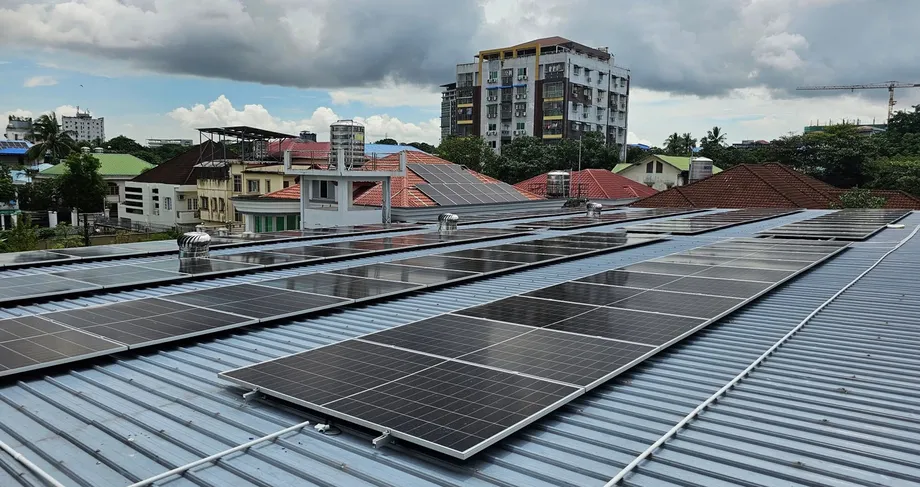
YCDC's requirement focuses on keeping elevators and emergency lights operating, rather than simply placing a few panels on a roof. Those uses demand equipment sized for the building's electricity needs, together with suitable wiring, power controls and, where necessary, batteries.
Commercial premises must arrange their systems to work alongside YESC electricity. That creates a design task beyond buying panels: engineers must decide how power will move between the solar installation, the building's circuits and the public supply.
The reported installation rules also include physical limits. Panels mounted on roofs must be set back at least one foot from the roof boundary. For ordinary buildings, the supporting structure is subject to a maximum height of eight feet, with the arrangement depending on panel numbers, angles and supplier specifications.
Older buildings and projects designed before the requirement face particular difficulties. Contractors describe roofs with too little space, wiring that is difficult to alter and projecting balconies that complicate installation. A building close to completion may therefore need changes to both its electrical system and its physical layout.
Why an elevator needs more than a household solar kit
An elevator motor can briefly draw much more electricity when it starts than when it is already moving. A technical specialist cited in construction coverage put that starting demand at around three times normal operating power.
For an elevator rated at five kilowatts, the specialist gave an example of an inverter rated at least 15 kilowatts, or equipment able to handle a sufficiently large temporary surge. An inverter converts electricity from panels or batteries into the form used by the building. Its ability to handle that brief surge matters as much as the elevator's ordinary running demand.
Batteries add another substantial expense. The specialist cited lithium battery configurations of 48 or 51.2 volts and capacities of 280 or 300 ampere hours or more as examples for consideration. The actual installation must be calculated for the particular elevator, the other equipment being powered and the length of time it needs to operate.
Buildings needing elevator service during a complete power cut require a system designed to work without the public supply, or a hybrid system combining solar, batteries and grid electricity. Roof panels alone cannot supply power at night, making storage and controls central to the requirement.
Rising prices leave contractors and owners to divide the bill
A Mandalay builder said the directive arrived while solar panels and related equipment were becoming more expensive every day. Steel and cement were already putting pressure on construction budgets, leaving little room for an additional system that had not been included in the original contract.
One market account priced a 500 watt panel at about 650,000 kyat in early August and more than one million kyat by mid October, an increase exceeding 54 percent. A contractor cited in October 2026 put panel prices at about 550,000 kyat in early August and nearly 900,000 kyat later, without specifying the panel's wattage.
The panel is only part of the purchase. Commercial installations also require inverters, batteries, mounting equipment, wiring and skilled labor. Construction specialists described possible bills ranging from tens of millions to hundreds of millions of kyat, depending on the system. The dealership manager's estimate of around 100 million kyat falls within that broad range.
Existing construction contracts create another problem: someone must pay for work that was not included when the price was agreed. Contractors warn of budget disputes with owners, while smaller firms could struggle to continue projects. A shortage of technicians able to design and install large systems could also slow completion even where equipment and money are available.
How the solar policy developed
The building requirement follows several stages of policy and market expansion. Solar imports received tax exemptions before officials proposed wider construction rules, while worsening blackouts pushed households and businesses to buy equipment on their own.
- April 2023: The regime waived taxes on solar imports, presenting the measure as a way to improve electricity supply.
- January 9, 2025: Electricity and Energy Development Commission chairman Tin Aung San called for solar panels on new buildings and the transfer of surplus electricity to the national grid.
- January 13, 2025: Accounts of electricity shortages described supply reduced to two periods of four hours each day and rising demand for solar equipment.
- October 2026: Construction industry coverage described YCDC's October 1 installation order and its November 1 compliance deadline.
Tin Aung San, also a deputy prime minister, described the proposed obligation for developers in January 2025 as including a requirement to:
supply the surplus electricity to the national grid
The national proposal's coverage of residential buildings was not specified. The Yangon requirement described in October is more concrete about commercial buildings, elevators, emergency lighting and projects awaiting occupancy approval.
The junta chief's family has interests across the solar business
Aung Pyae Sone's interests extend beyond selling equipment to individual buildings. His Venus Essential company has been linked to supply licenses for projects in Naypyitaw and planned plants of 40 megawatts in Taungdwingyi, Salin, Pakokku, Pauk, Chauk and Kyunchaung.
Venus Essential was also awarded three solar projects with a combined capacity of 390 megawatts, with no other companies invited to bid. That gives the family business interests in electricity generation as well as the equipment market now facing additional demand from construction rules.
Accounts of the import business describe Aung Pyae Sone as controlling a lucrative share of solar imports after the April 2023 tax exemption. His sister, Khin Thiri Thet Mon, has also been identified as importing and supplying solar kits and related equipment.
A former political prisoner in Mandalay accused the authorities of using blackouts and compulsory solar purchases to generate private profit, alleging that only the ruler's son's company was allowed to import and sell nationwide. The wider retail market includes many other sellers: about 80 local and Chinese solar companies were exhibiting products in Yangon in January 2025. Import permissions, distribution and retail sales are different parts of the business, making the allocation of licenses central to concerns about who benefits.
A proposed plant illustrates concerns about pricing and approval
Golden Future Linkage, another company owned by Aung Pyae Sone, proposed a 40 megawatt solar plant on 230 acres in Thazi Township, Mandalay Region, in partnership with China Energy Engineering Corporation Ltd. The proposal envisaged nine months of construction and an electricity selling price of US$0.085 per kilowatt hour.
A kilowatt hour measures the amount of electricity used by a device drawing one kilowatt for one hour. It is the unit commonly used to calculate electricity bills and payments to power producers.
The proposed tariff was higher than prices quoted by other foreign bidders for solar projects. Western companies had offered US$0.07 per kilowatt hour, while some Chinese companies quoted US$0.035 to US$0.051. Against the Western offer, Golden Future Linkage's proposed rate was about 21 percent higher, using the two quoted prices.
The approval request went first to the State Administration Council, headed by Min Aung Hlaing, and was then sent to Mandalay authorities and the electricity ministry. A local electricity supplier said the normal procedure began with the ministry and regional authorities before moving upward when necessary. Sending the proposal downward from the central authorities, the supplier argued, discouraged close examination of the ruler's son's company.
The ministry's final decision on that proposal was not established in the account describing it. The exchange rates quoted at that time, 2,100 kyat per dollar officially and about 2,850 unofficially, also illustrate the financial uncertainty surrounding energy deals priced in dollars while local customers earn and spend kyat.
Blackouts turn solar into a basic business expense
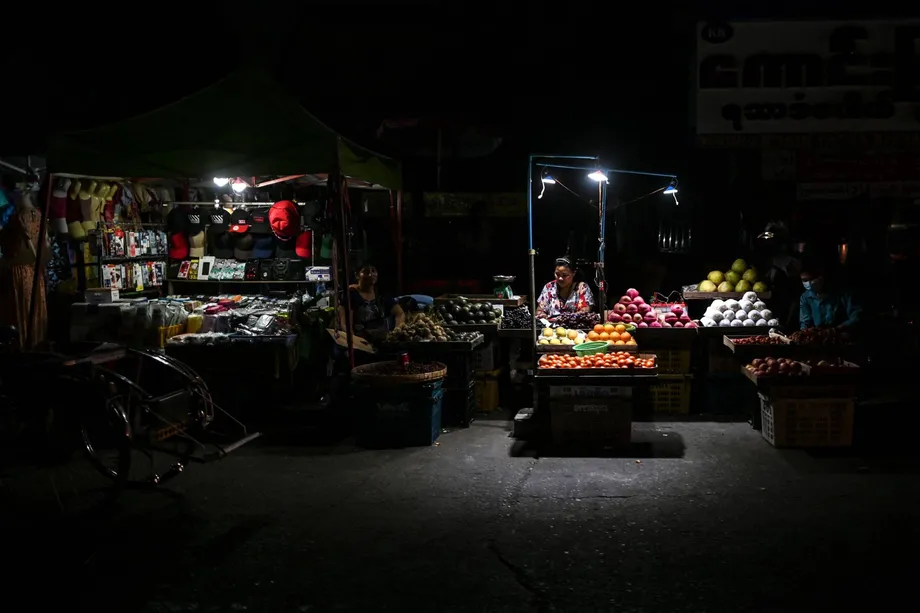
Households and businesses were buying solar equipment well before the Yangon building deadline. By January 2025, Yangon residents commonly received electricity in two periods of four hours each day, sometimes less. Mandalay businesses described interruptions severe enough to suspend work or force investment in alternative power.
The authorities attributed shortages to attacks on electricity infrastructure, reduced natural gas production, pipeline repairs and natural disasters. An October 5 rationing announcement cited increased demand during El Niño heat. Households in Yangon, Mandalay and Naypyitaw subsequently faced daily outages.
Small purchases show how families were trying to cope. Electronics sellers in Mandalay described strong demand for panels rated at 100 watts paired with batteries rated at 70 ampere hours, particularly for phone charging and lighting. Solar lights cost at least 45,000 kyat, while rooftop systems started at around four million kyat.
A supplier said a system costing five million kyat could support cooking and a water pump rated at 1.5 horsepower. A phone repair shop owner in Patheingyi Township spent around six million kyat on solar equipment because running a generator for long periods brought high fuel and maintenance bills.
The shop owner described warranties of 13 years for the inverter, five years for the panels and three years for the battery. Those differing periods matter for business budgets because the components have different replacement and servicing needs. For families unable to afford even a small system, reduced public electricity continues to determine when they can light their homes, charge phones or use appliances.
The next pressure point is building completion
November 1 is the immediate deadline for the affected Yangon projects. Developers awaiting Building Completion Certificates face the risk that unfinished solar work will delay occupancy, even when the rest of a building is ready.
The timing brings several constraints together: expensive equipment, limited roof space, a shortage of specialist installers and contracts that may not account for the new cost. The dealership manager's minimum installation estimate of two months exceeds the one month between the October 1 order and the compliance date.
Solar installations can give buildings electricity during outages when they are properly designed with the necessary storage and controls. The immediate burden falls on contractors and owners who must finance that equipment, while the resulting demand reaches a supply business in which the military ruler's family already has substantial interests.
Key Points
- YCDC's October 1 order requires affected commercial buildings and buildings with elevators to install solar systems from November 1.
- The systems must support elevators and emergency lighting, with commercial installations integrated with YESC electricity.
- A dealership manager estimated around 100 million kyat and at least two months to install a suitable commercial system.
- Contractors face rising equipment prices, limited roof space, scarce technicians and possible disputes over additional costs.
- Aung Pyae Sone's companies have interests in solar imports, equipment licenses and generation projects, including contracts awarded without competing bids.
- Long blackouts have already pushed households and small businesses to spend millions of kyat on alternative electricity.