Two energy projects move on different timetables
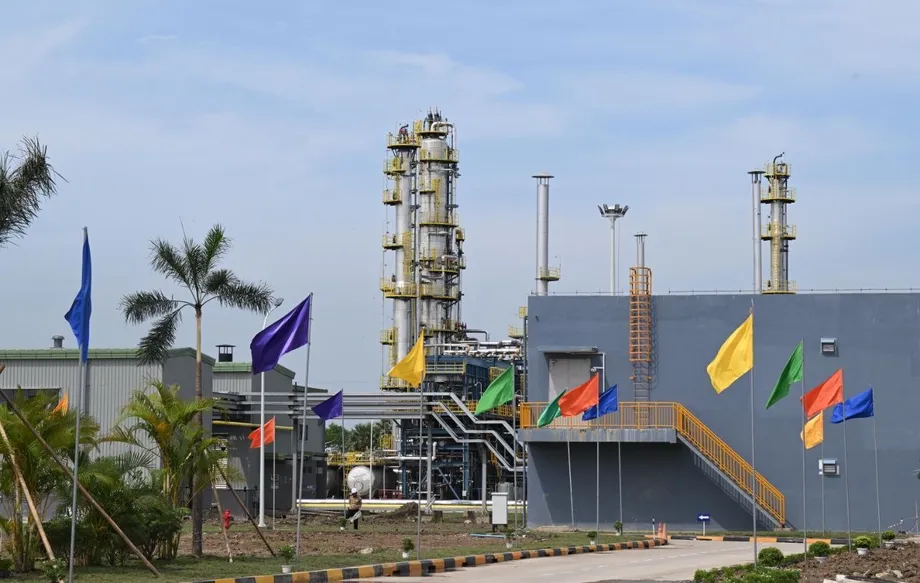
Myanmar's military authorities have reopened the first phase of the Thanlyin Oil Refinery near Yangon, with capacity to process 500,000 tons of crude oil annually, while pursuing a Russian nuclear power project scheduled to begin construction in 2027. The refinery's planned expansion would raise annual processing capacity to three million tons by 2028. The nuclear project would initially provide 110 megawatts of electricity, with possible expansion to 330 megawatts.
Contents
- Two energy projects move on different timetables
- What the Thanlyin reopening is intended to deliver
- What the nuclear agreement actually covers
- How much electricity could the reactors produce?
- From early agreements to a construction target
- Where the plant might be built
- Earthquake safety and the cost of building
- Russia's energy discussions extend beyond nuclear power
- Peaceful uses, public scrutiny and conflict
- Key Points
Military leader Min Aung Hlaing attended the refinery ceremony on October 14, 2026, in Thanlyin Township, about 14 kilometers southeast of Yangon. He presented the reopening as a way to reduce spending in foreign currency and meet domestic energy needs.
The two projects address different parts of Myanmar's energy shortages. A refinery turns crude oil into usable fuels, while a nuclear power plant generates electricity. Their practical value will depend on how much fuel and power they actually deliver, the cost of production and the infrastructure needed to reach customers.
Russia's state nuclear corporation, Rosatom, expects an initial nuclear project contract by the end of 2026. That places a further contractual step ahead of the announced construction start. The partnership has developed through more than two decades of agreements, including plans for a research center in 2007, a broader cooperation framework in 2023 and an agreement on a small modular reactor project in 2025.
Myanmar's authorities describe nuclear cooperation as peaceful, covering electricity, science, medicine and agriculture. The proposed plant also brings questions about earthquake safety, financing, security and public accountability in a country where the civil war following the 2021 military coup has displaced millions and damaged the economy.
What the Thanlyin reopening is intended to deliver
The Thanlyin refinery operates under the regime's Ministry of Electricity and Energy. Its first phase is designed to process half a million tons of crude oil a year. Completion of the first two phases is scheduled for 2028, when planned capacity would reach three million tons annually, six times the initial level.
Min Aung Hlaing, the military leader who presided over the reopening, described the economic purpose of the project in his ceremony remarks:
The refinery is a vital step towards reducing foreign currency expenditure, supplying domestic energy needs and sustaining long-term economic benefits,
Processing more crude oil inside Myanmar could reduce the need to buy finished fuels from abroad. The foreign currency savings would depend on the cost and origin of the crude, the refinery's operating expenses and the quantity of usable products it produces. Processing capacity measures how much crude a facility can handle; the amount of each finished fuel depends on its equipment and the crude being processed.
The expansion schedule gives the refinery a specific capacity target for 2028. For households and businesses, the useful outcome would be a steadier supply of fuel at an affordable price, rather than capacity alone.
What the nuclear agreement actually covers
Rosatom's agreement announcement says the two governments established the conditions and main directions of cooperation for a small modular reactor project with an initial capacity of 110 megawatts and possible expansion to 330 megawatts.
Rosatom dates the signing to March 4, 2025, during a state visit by Myanmar's leadership to Russia; another published account places it on March 5. The corporation identifies its director general, Alexey Likhachev, and Myanmar's Union Minister of Science and Technology, Dr. Myo Thein Kyaw, as the signatories. Russian President Vladimir Putin and Min Aung Hlaing attended.
A memorandum on nuclear and radiation safety cooperation was also signed. Other arrangements cover workforce training and infrastructure, both necessary for a country developing its first nuclear electricity plant.
How much electricity could the reactors produce?
The initial 110 megawatts would come from two reactors of 55 megawatts each. The facility is expected to use RITM-200N technology, adapted from reactors used in Russian icebreaker ships. A small modular reactor is a smaller nuclear generating unit designed for use individually or alongside additional units.
Nuclear reactors produce heat, which is used to make steam and turn electricity generators. Megawatts describe generating capacity at a particular moment. The electricity delivered over a year also depends on how long the plant operates and how much time it spends undergoing maintenance.
Myanmar's electricity production in 2019 was 24.3 terawatt hours, including 13.7 terawatt hours from fossil fuels and 10.5 from hydropower. A terawatt hour measures electricity produced over time, rather than the capacity of a plant.
A 110 megawatt plant operating continuously for an entire year would generate about 0.96 terawatt hours, roughly 4% of Myanmar's 2019 production. At 330 megawatts, the equivalent would be about 2.89 terawatt hours, or nearly 12%. Those calculations assume uninterrupted operation; maintenance and other stoppages would reduce production.
The comparison gives a sense of scale against a historical baseline. Myanmar's demand, generating fleet and electricity network will be different by the time a nuclear plant begins supplying power.
From early agreements to a construction target
Myanmar and Russia have signed more than 20 nuclear agreements and memorandums since the early 2000s. The sequence shows a gradual move from research and cooperation plans toward a proposed electricity project:
- 2007: An agreement set out plans for a nuclear research center.
- October 2022: Officials discussed an existing memorandum and an approved road map during Russia Energy Week.
- February 2023: The countries signed peaceful nuclear cooperation arrangements. A comprehensive framework covered 14 areas, and Myanmar opened its first Nuclear Technology Information Center in Yangon that year.
- March 2025: The governments signed principles of cooperation for the 110 megawatt reactor project, with possible expansion to 330 megawatts.
- End of 2026: Rosatom expects an initial project contract.
- 2027: Rosatom says construction is scheduled to begin.
The information center provides a public information component alongside the agreements, training arrangements and proposed generating facility. Each serves a different function within the wider program.
Where the plant might be built
Rosatom has disclosed that it surveyed an area near Paunglaung Dam in Zeyarthiri Township, about 31 miles east of Naypyidaw. Security sources had earlier identified Naypyitaw, Bago and the Dawei economic zone as possible locations.
Myanmar's military authorities have not publicly confirmed a final site. The project's total cost, settled financing terms and date for supplying electricity have also not been disclosed. Rosatom's announced 2027 construction start follows an April 2025 position in which the company declined to give a construction timetable or location.
Likhachev's expectation of an initial contract by the end of 2026 makes that the next stated milestone. The construction announcement followed an August 18 summit involving Min Aung Hlaing, Putin and Russian Prime Minister Mikhail Mishustin.
A location near a dam would still require detailed assessment of ground conditions, water availability, access, electricity connections and emergency arrangements. A site survey is an early part of that work. Construction, testing and authorization to operate are further stages before a reactor can supply electricity.
Earthquake safety and the cost of building
Myanmar's earthquake in March 2025, with a magnitude of 7.7, killed more than 3,700 people according to figures reported the following month. The disaster brought the proposed nuclear facility's ability to withstand earthquakes into immediate focus.
Rosatom's press office said the company would continue with the project after the earthquake:
The recent earthquake has not affected Rosatom's plans in Myanmar,
The corporation said it would apply international safety and reliability standards, including strict requirements for resistance to earthquakes. For a nuclear facility, that involves protecting structures, cooling systems, power supplies and other equipment needed to keep the reactor safe during and after ground movement.
Financing is another major part of the planning. Myanmar's authorities have explored arrangements that could combine Rosatom funding and borrowed money. Russia has extended loans for conventional nuclear projects in Bangladesh and Egypt, providing examples of how it has financed nuclear construction abroad.
For Myanmar, the eventual terms will help determine how construction costs are paid and recovered. Nuclear projects also require continuing spending on trained staff, maintenance, security, waste management and, eventually, taking the plant out of service.
Russia's energy discussions extend beyond nuclear power
Myanmar's Ministry of Electric Power documented a much wider energy agenda in its October 2022 statement, which described meetings held in Moscow on October 12 during Russia Energy Week. Nuclear power, oil exploration, refineries, fertilizer production and hydropower equipment were all discussed.
Union Minister U Thant Han met Rosatom Deputy Director General Nikolai N. Spasskiy, who said a memorandum had been signed and a road map approved at the Eastern Economic Forum. Spasskiy anticipated initial results by the end of 2022 and offered a future visit to a Generation 3 Plus nuclear plant and an information center in St. Petersburg.
Energy Minister U Myint Myint Oo separately invited Russian investment in oil and gas exploration, refineries, fertilizer plants and equipment for the oil industry. He also discussed refinery investment with TANECO, a subsidiary of Tatneft.
Power Machines Chief Executive Alexander Konyukhov discussed equipment for hydropower, nuclear and thermal generation. U Thant Han identified potential hydropower capacity of about six megawatts using Hydromatrix technology and about 66 megawatts at sites suited to Low Head technology. Low head refers to generating power from a relatively small difference in water level.
Rosatom is also working with Myanmar on a proposed wind power plant of 200 megawatts. Taken together, the discussions show a relationship covering fuel production and several forms of electricity generation. The refinery talks in 2022 were part of that broader investment agenda.
Peaceful uses, public scrutiny and conflict
Myanmar joined the Convention on Nuclear Safety in 2016 and has been a signatory to the Nuclear Non-Proliferation Treaty since 1992. It also signed a country programme framework with the International Atomic Energy Agency in 2016. Myanmar currently has no nuclear electricity generation.
The Convention on Nuclear Safety concerns the safety of civilian nuclear installations. The Nuclear Non-Proliferation Treaty addresses the spread of nuclear weapons while providing a framework for peaceful nuclear cooperation. A civilian power program also needs domestic institutions capable of licensing facilities, inspecting operations and enforcing safety requirements.
Fortify Rights and other human rights groups have criticized Russia and Rosatom for cooperation that they say supports the legitimacy and continued rule of Myanmar's military authorities. The civil war adds practical demands for protecting facilities, retaining trained workers and maintaining emergency services.
Min Aung Hlaing's government presents the refinery and nuclear project as answers to energy shortages and economic pressure. Their schedules show two different stages of delivery: Thanlyin's first phase has reopened, with expansion planned for 2028, while the nuclear project is approaching a further contract and a proposed construction start in 2027.
For people facing unreliable electricity and expensive fuel, the concrete measures of success will be the quantity, reliability and price of energy reaching them. The refinery's planned increase from 500,000 to three million tons of annual processing capacity and the reactor project's proposed rise from 110 to 330 megawatts provide targets against which future progress can be measured.
Key Points
- Thanlyin refinery's first phase reopened on October 14, 2026, with annual crude processing capacity of 500,000 tons.
- Planned refinery capacity would reach three million tons annually after the first two phases, scheduled for 2028.
- The Russian nuclear project would initially provide 110 megawatts from two reactors, with possible expansion to 330 megawatts.
- Rosatom expects an initial contract by the end of 2026 and says construction is scheduled to begin in 2027.
- A survey near Paunglaung Dam has been disclosed, while the final site, total cost, financing terms and electricity supply date remain unannounced.
- Earthquake safety, security, trained personnel and regulatory oversight are central requirements for the proposed nuclear program.