A vast investment plan meets a practical test
South Korea should turn roughly ₩1,600 trillion in planned investment over the next decade into a connected industrial network, rather than simply build more factories and data centers, the Korea Institute for Industrial Economics & Trade (KIET) said in a report released on October 15, 2026.
Contents
- A vast investment plan meets a practical test
- Why Korea is targeting specific AI bottlenecks
- What the investment figures cover
- Chip expansion needs more than new fabrication plants
- Data centers have a timetable and a demand condition
- Power forecasts face scrutiny
- Workers and suppliers must be willing to move
- Physical AI connects seven regional growth plans
- Communities seek the evidence behind the promises
- Key Points
The report, Strategic Implications of Mega Projects and Industrial Policy Tasks, identifies three places where global artificial intelligence expansion is getting stuck: advanced semiconductor packaging, electricity and equipment for data centers, and the precision components and industrial data needed by robots. KIET argues that South Korea can become an essential supplier in those areas without trying to match the United States and China across every part of AI.
The government's three mega projects cover semiconductors, physical AI and AI data centers. Their targets include doubling production capacity for high bandwidth memory (HBM) and DRAM within five years, developing regional chip and robotics hubs, and building 8.4 gigawatts of AI data center capacity by 2029. A second phase would take the data center target to 18.4 gigawatts by 2035.
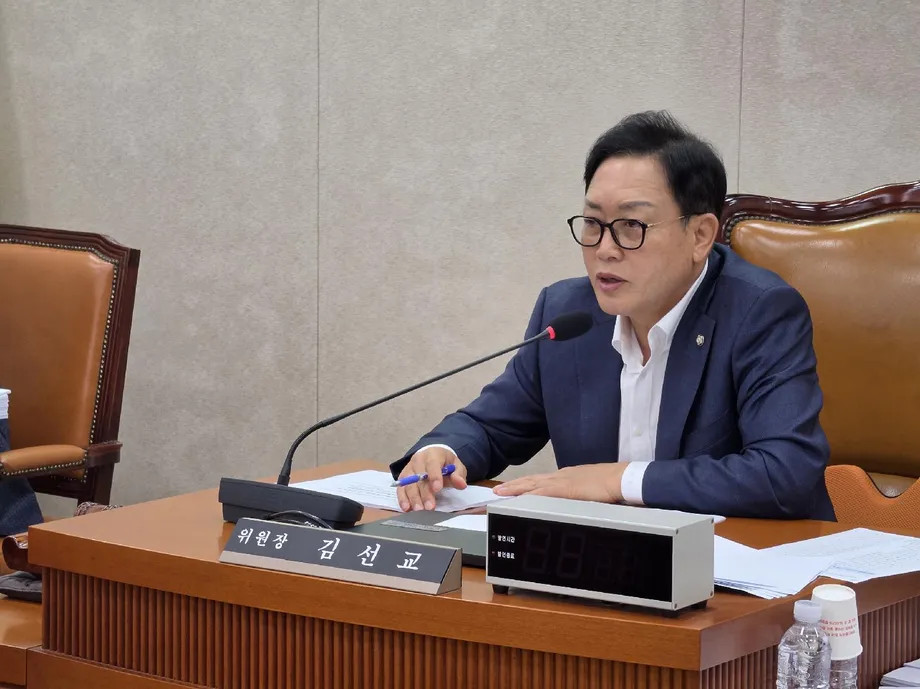
KIET's proposal arrived one day after a National Assembly discussion examined whether companies would actually use that much electricity and whether regional projects could attract workers. Civic groups had also requested the economic and environmental assessments behind the investment plans.
The central challenge is therefore bigger than raising money. South Korea needs factories, suppliers, trained employees, customers, water and electricity to become available together. A missing connection could leave expensive facilities waiting to operate.
Why Korea is targeting specific AI bottlenecks
President Lee Jae Myung announced the projects on June 29 alongside leaders of Samsung and SK Hynix, linking industrial expansion to the revival of communities outside Seoul. He described the three sectors as the foundation of the country's next economic leap.
We must secure the core elements of AI faster than any other country," Lee said. "Semiconductors, physical AI, and AI data centres are the triple axis for a great leap forward.
KIET proposes a connected route from memory semiconductors through advanced packaging to manufacturing data and physical AI. It calls this a strategic AI corridor. The idea is to build on industries where South Korea already has substantial manufacturing experience, then connect them to the next sources of demand.
Memory chips supply the rapid access to data that AI processors need. Packaging joins chips into working systems. Data centers house those systems and supply their power and cooling. Physical AI then uses computing and information from real workplaces to guide machines.
Samsung and SK Group already serve customers including Nvidia. The spending boom is substantial: Google, Amazon and Meta were among US technology companies that said they would spend $650 billion on the technology during the year. South Korea's strategy seeks a durable place in that expansion by supplying products and infrastructure that customers cannot easily obtain elsewhere.
KIET's recommendation also reaches beyond export sales. The institute wants research, demonstrations, investment and production connected through shared infrastructure, so existing Korean industries can adopt AI and turn new technologies into commercial products.
What the investment figures cover
KIET describes approximately ₩1,600 trillion in investment over ten years. The government's June announcement was described as more than ₩1,350 trillion in planned public and private investment, while another announcement account put the total above ₩1,430 trillion. A consolidated breakdown reconciling these totals has not been published in the accounts of the plans.
The largest identified components are about ₩800 trillion for four memory fabrication plants and around ₩550 trillion for the first phase of AI data centers. Samsung and SK Hynix would each build two memory plants in the Jeonnam and Gwangju area. Another ₩81 trillion is planned for HBM packaging facilities in Chungcheong.
Samsung Group and SK Group also announced separate commitments totaling ₩4,755 trillion for domestic investment over the longer term, including semiconductor plants and data centers. Those broader corporate commitments overlap with the types of projects in the national strategy and belong to a different investment framework.
The government says it will support site development, permitting and construction. For regional communities, the practical questions include how much public infrastructure is required, when companies will commit their own spending, and how many local businesses can participate.
Chip expansion needs more than new fabrication plants
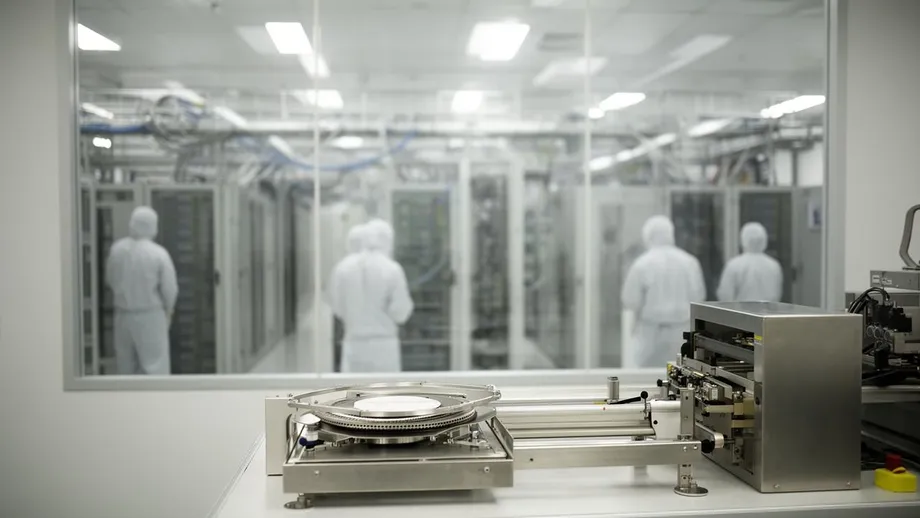
Advanced packaging is becoming a critical constraint as AI systems require more powerful combinations of processors and memory. Packaging connects several chips within a single high performance assembly, allowing them to exchange information rapidly. Increasing chip production without expanding this connecting stage can leave another part of the supply chain struggling to keep up.
KIET sees an opportunity to extend South Korea's strength in memory into that packaging business. The regional plan places new semiconductor fabrication plants in the southwest, an advanced packaging hub in Chungcheong, and a materials, components and equipment hub in the southeast.
The proposed geography gives different regions complementary roles. It also creates a coordination task: a chipmaker needs equipment, chemicals, replacement parts and specialist services close enough to keep a complicated production process running.
Lee Jong-hwan, a professor of system semiconductor engineering at Sangmyung University, said suppliers would need incentives to establish operations alongside the larger manufacturers.
The key is the semiconductor ecosystem," he said. "Suppliers of semiconductor materials, parts and equipment, many of which are small and medium-sized companies, also need to be in the region to complete the ecosystem. Providing incentives for those partner companies is also a critical task.
Existing manufacturing bases in Yongin and other locations around the capital would also be strengthened. The regional expansion therefore requires companies to support established operations while assembling new networks of workers and suppliers elsewhere.
Data centers have a timetable and a demand condition
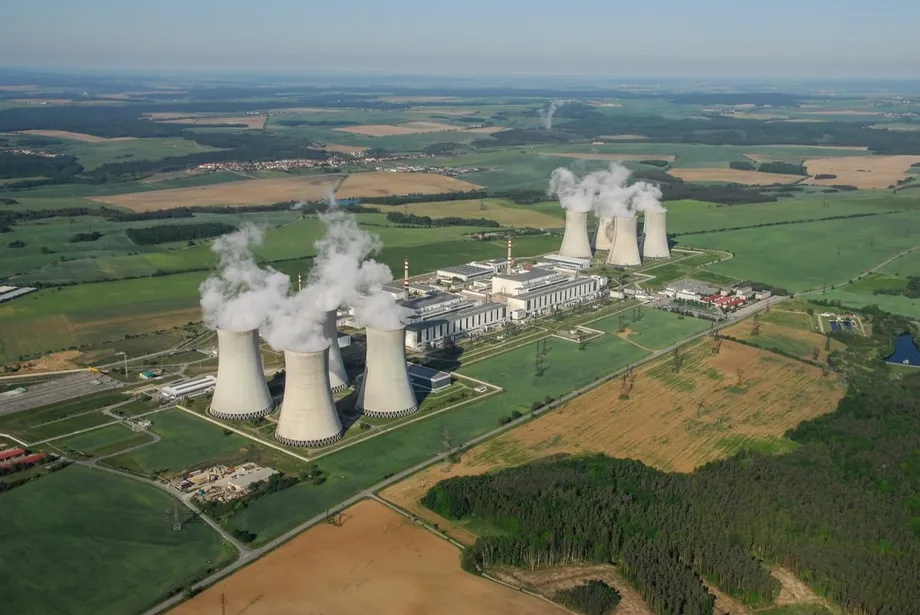
SK, GS and Naver are expected to lead the initial 8.4 gigawatts of data center development, with approximately ₩550 trillion in combined investment. SK accounts for 5 gigawatts, GS for 2.4 gigawatts and Naver for 1 gigawatt.
A gigawatt is a measure of electrical power. In these plans, it describes the scale of data center capacity, making power connections and cooling central to delivery. KIET identifies transformers, electricity supply, cooling equipment and grid access as growing constraints even when chips become easier to obtain.
Several projects were already under development or consideration before the national announcement. They include GS facilities of 1.2 gigawatts each in Donghae and Dangjin, Naver's planned 1 gigawatt Sejong facility, and SK's 1 gigawatt project in Ulsan. SK is also reviewing sites in Daegu-Gyeongbuk, Honam, Gangwon and the central region.
The rollout has several important dates:
- June 29, 2026: The government announced the three mega projects.
- October 12, 2026: A civic coalition requested economic, resource and environmental assessments.
- October 14, 2026: A National Assembly discussion examined electricity demand and regional investment conditions.
- October 15, 2026: KIET released its industrial strategy report.
- First half of 2028: The first phase of data center projects is scheduled to begin construction.
- 2029: Phased operations are expected to begin, against an initial capacity target of 8.4 gigawatts.
- 2035: The second phase would bring planned capacity to 18.4 gigawatts.
SK would be responsible for the additional 10 gigawatts between 2029 and 2035, depending on first phase results and market demand. That condition makes customer demand an explicit part of the later expansion decision.
Real estate consultancy Savills estimated South Korea's data center capacity at 1.9 gigawatts in December 2024. The planned first phase alone is about 4.4 times that figure; the full 18.4 gigawatt program is about 9.7 times it. Those comparisons show the scale of the proposed construction relative to the existing industry.
Power forecasts face scrutiny
The government's infrastructure plans include 6.3 gigawatts of electricity supply and 650,000 tonnes of water a day for the southwestern semiconductor industry. At the October 14 discussion, participants examined how such industrial commitments were being translated into national electricity forecasts.
Seok Kwang-hoon, a specialist at Energy Transition Forum, said the revised demand outlook for the 12th Basic Plan for Electricity Supply and Demand included 53.5 gigawatts of additional demand from semiconductors, data centers and electrification. It presented a baseline forecast of 179.2 gigawatts and a higher forecast of 186.4 gigawatts, without a lower scenario.
Seok argued that the method could count some demand twice and that improvements in AI efficiency could reduce future electricity requirements. His concern was that power stations take years to build and can become costly commitments if expected customers arrive late or use less energy.
Moon Hyo-dong, an associate research fellow at the Green Energy Strategy Institute, modeled electricity operations across 11 regions for 2030. His analysis put utilization of generation fueled by liquefied natural gas at 30.7% under the 11th electricity plan, rising to 40.6% with half the data center demand in the 12th plan and 47.8% with all of it.
The modeling estimated an increase of about ₩3.9 trillion in annual net fuel costs between the data center demand scenarios examined. It also showed that additional demand in Gangwon could increase gas generation in Seoul and Gyeonggi, illustrating how regional projects draw on a connected national grid.
Increasing renewable capacity from 100 to 120 gigawatts under the same data center demand conditions reduced fossil fuel generation by 22.9 terawatt hours in the model. It also increased unused renewable output by 4.8 terawatt hours, pointing to the need for grid and operating arrangements that can absorb that electricity.
Lee Seung-hyun, an adjunct professor at Hanyang University's ERICA campus, described the 18.4 gigawatt figure as the sum of companies' desired capacity rather than contracted demand. Moon recommended classifying projects by the certainty of their electricity requirements and preparing an implementation plan for 2026 through 2030.
Workers and suppliers must be willing to move
A survey presented by Lee Hyo-eun, an associate research fellow at the Green Energy Strategy Institute, captured the gap between corporate expansion interest and regional investment. Among 80 people responsible for company location, electricity or facilities investment, 83.8% were considering new facilities or expansion within five years. Just 38.8% indicated a high likelihood of regional investment under current government support conditions.
The gap is 45 percentage points. Among respondents whose consideration of a regional location had fallen through, 77.8% cited difficulty securing workers, compared with 22.2% citing uncertainty about electricity supply and grid connections.
Lee Byung-hun, an electrical engineering professor at Pohang University of Science and Technology, said new factories would initially need experienced engineers from the capital region. Companies would have to make relocation attractive enough for employees and their families.
Yoo Hoi-jun, an electrical engineering professor at the Korea Advanced Institute of Science and Technology, pointed to compensation, housing and children's education as matters companies should prepare for in advance.
Sangmyung University's Lee Jong-hwan said the lasting solution also required regional recruitment and training.
"This is an industry that requires a long-term commitment, and employees recruited from outside the region may leave after just a few years," he said.
Lee called for partnerships with regional high schools, universities and graduate schools to prepare production workers, engineers and research personnel. For towns expecting new industrial employment, local training connects the construction boom to jobs that residents can actually obtain.
Physical AI connects seven regional growth plans
Physical AI means robots and other machines using AI to perform tasks in the real world. A robot must turn a computing decision into accurate movement. KIET identifies precision actuators, which produce movement, and reducers, which control speed and torque, as critical components alongside reliable industrial data.
The government plans humanoid robot mass production centered on Saemangeum and Daegu-Gyeongbuk. KIET wants the wider investment program connected to seven regional growth engines, each building on a different industrial role:
- The central region: AI core components and advanced industries.
- Gangwon: Medical and biological applications of edge AI, which processes information near the device using it.
- Jeonbuk: Robot manufacturing and physical AI for agriculture.
- Daegu-Gyeongbuk: Physical AI components and the robot supply chain.
- The southeast: Manufacturing AI and demonstrations in shipbuilding, shipping, space, aviation and defense.
- The southwest: AI computing infrastructure and energy applications.
- Jeju: AI systems connected to renewable energy.
Manufacturing data is the information generated when machines and production lines operate. KIET's strategy connects that information with demonstrations and commercial production, so industries can develop AI around actual tasks rather than leave research isolated from factory use.
Lee Jun, head of KIET's Strategic Industry Research Center, said project demand and technological results should flow to the seven regional growth engines. His proposal treats the projects as a shared national platform for demand, technology and investment, with benefits extending beyond the companies building the largest facilities.
Communities seek the evidence behind the promises
A coalition of civic groups working on local participation and autonomy requested project records on October 12 from the ministries responsible for industry, climate and energy, science and technology, and land and infrastructure.
The requests cover economic feasibility studies, the underlying forecasts for electricity and water demand, and estimates of direct and indirect greenhouse gas emissions. They also seek measures addressing environmental damage and health protection in semiconductor production, alongside assessments of how AI data centers would affect local economies.
The coalition wants scrutiny of how costs and benefits will be shared. Its concern is that communities and the public could carry infrastructure and social costs while investment returns concentrate in companies.
KIET's report and the parliamentary discussion approach the same investment program from different directions. KIET identifies where Korean industry could win business and spread technology through regional economies. The discussion examines what must happen for that demand to become operating facilities with workers, customers and affordable infrastructure.
The next construction milestone is the first half of 2028, followed by phased data center operations from 2029. Between announcement and operation, the concrete tests are investment commitments, customer demand, permits, grid connections, supplier participation and recruitment. Delivering those together would give the regional strategy the industrial base it needs.
Key Points
- KIET recommends using roughly ₩1,600 trillion in planned investment to connect semiconductor, data center and robotics industries.
- The strategy targets advanced packaging, power infrastructure, precision robot components and industrial data.
- Initial data center plans allocate 5 gigawatts to SK, 2.4 gigawatts to GS and 1 gigawatt to Naver.
- The target rises from 8.4 gigawatts by 2029 to 18.4 gigawatts by 2035, with later expansion dependent on demand and initial results.
- Regional hiring, supplier networks, electricity and water are major delivery challenges.
- Researchers and civic groups are seeking stronger demand checks and disclosure of economic and environmental assessments.