237.8 Billion Won Remains Unreturned
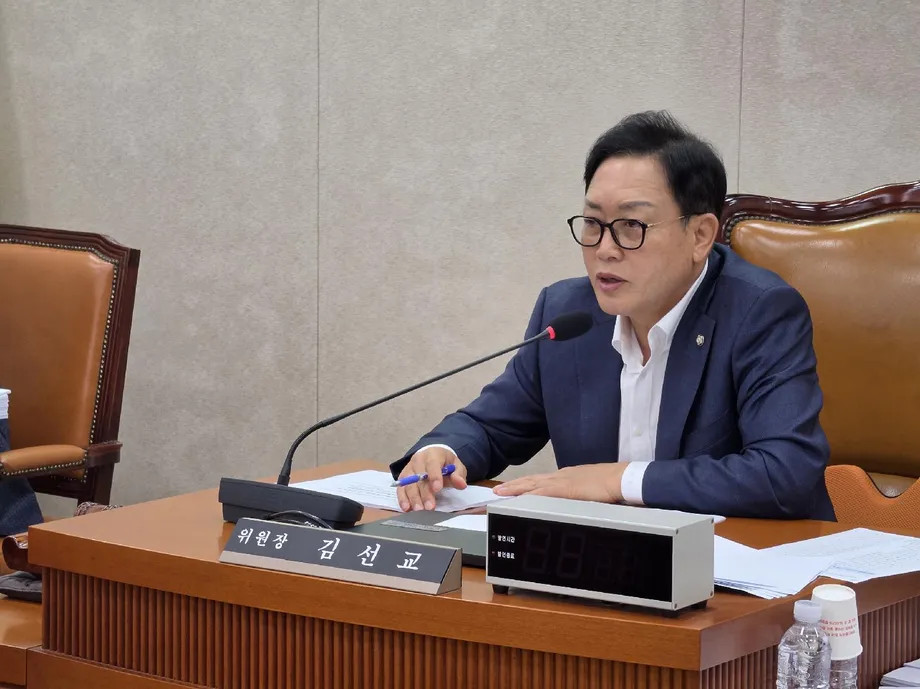
Customers of South Korea's NongHyup mutual finance network and NongHyup Bank made 249,917 mistaken transfers worth 481.679 billion won between 2021 and August 2026, according to figures submitted to lawmaker Kim Seon-kyo. Of that money, 237.787 billion won, or 49.4%, had not been returned.
Contents
- 237.8 Billion Won Remains Unreturned
- Fewer Errors Did Not Bring Steady Recovery
- The Annual Record
- Wrong Account Numbers Dominate
- Failed Contact Is a Major Barrier, Not the Whole Story
- Restricted and Fraud Accounts Complicate Recovery
- How Return Assistance Works
- Small Transfers Can Be Expensive to Pursue
- Kim Calls for Practical Changes
- Key Points
The figures cover transfers sent in error, overwhelmingly because customers entered the wrong account number. They do not describe money mistakenly transferred by the bank itself. Across the reporting period, 110,015 transactions remained unresolved, representing about 44% of all recorded mistaken transfers.
The difference between those two percentages matters. The share of money still unreturned was higher than the share of transactions still unresolved, indicating that unresolved transfers were larger on average than those successfully recovered. These are amounts recorded as unreturned, however, not necessarily amounts that can never be recovered.
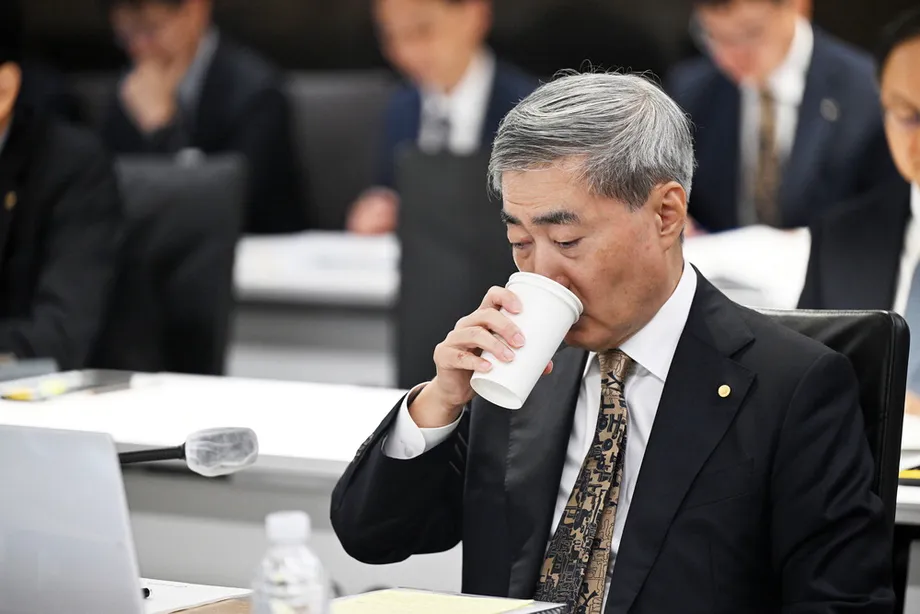
Kim, a People Power Party legislator representing Yeoju and Yangpyeong in Gyeonggi Province, obtained the figures from the National Agricultural Cooperative Federation and NongHyup Bank. He serves on the National Assembly's Agriculture, Food, Rural Affairs, Oceans and Fisheries Committee.
The central finding is broader than a problem with typing account numbers. Once money reaches the wrong recipient, recovery can depend on whether that person can be contacted, whether they agree to return it and whether legal restrictions apply to the receiving account. The statistics also show why failed contact alone cannot explain the missing money: it accounted for about one quarter of unresolved cases, while a larger miscellaneous category covered other circumstances.
Fewer Errors Did Not Bring Steady Recovery
The annual figures show a reduction in mistaken transfers between 2021 and 2025, interrupted by an increase in 2024. The number fell from 48,376 in 2021 to 38,803 in 2025, a decline of about 19.8%. The value dropped from 116.238 billion won to 74.5 billion won, a reduction of about 35.9%.
Recovery did not improve at the same pace. In 2021, 19,124 transfers remained unreturned, about 39.5% of that year's mistaken transactions. In 2025, the unresolved count was slightly lower at 18,777, but it represented about 48.4% of the smaller annual total.
The monetary comparison points in the same direction. Unreturned funds accounted for approximately 41.7% of mistaken transfer value in 2021, compared with 56.3% in 2025. These calculations compare recorded annual totals; they do not establish how quickly individual cases were handled or whether some money was recovered later.
The Annual Record
The reporting period contains five complete calendar years and the first eight months of 2026. The annual sequence shows both the decline in mistaken transfers and the persistence of substantial unreturned balances:
- 2021: 48,376 mistaken transfers worth 116.238 billion won; 19,124 cases and 48.475 billion won remained unreturned.
- 2022: 48,684 mistaken transfers worth 87.924 billion won; 19,669 cases and 39.867 billion won remained unreturned.
- 2023: 43,622 mistaken transfers worth 71.526 billion won; 19,905 cases and 38.469 billion won remained unreturned.
- 2024: 44,159 mistaken transfers worth 84.281 billion won; 21,221 cases and 48.414 billion won remained unreturned.
- 2025: 38,803 mistaken transfers worth 74.5 billion won; 18,777 cases and 41.949 billion won remained unreturned.
- January to August 2026: 26,273 mistaken transfers worth 47.21 billion won; 11,319 cases and 20.613 billion won remained unreturned.
The largest annual number of unresolved cases was recorded in 2024. Its unreturned value of 48.414 billion won was also close to the 2021 figure of 48.475 billion won, despite the total amount mistakenly transferred being much lower in 2024.
The 2026 figures cover only eight months and should not be treated as a full annual result. The accounts identify the disclosure as occurring on the 12th but do not specify the month, so the precise publication date cannot be established.
Wrong Account Numbers Dominate
Errors in entering an account number accounted for 231,504 transactions, or 92.6% of all mistaken transfers. That leaves 18,413 cases spread across every other recorded category, making the destination account the clearest concentration of errors.
Incorrect amounts accounted for 6,067 cases, followed by 5,273 miscellaneous cases and 4,099 duplicate deposits. The figures also included 1,683 repeat claims associated with a customer's stated intention to return money and 1,291 cases classified separately as errors in recording account details.
The distinction between account number entry errors and the smaller account recording category is not explained. They should therefore remain separate rather than being combined into a new category.
The data identify where most mistakes occur, but they do not show which payment channels generated them. There is no breakdown between mobile banking, internet banking, branch transactions or other methods. They also do not establish how many errors involved older customers, even though Kim raised concerns about that group.
Failed Contact Is a Major Barrier, Not the Whole Story
The largest specific reason for nonreturn was an inability to contact the recipient, recorded in 26,500 cases. A further 11,308 cases involved recipients refusing to return the money. Together, these categories accounted for 37,808 unresolved transactions, or about 34.4% of the total.
Failed contact alone represented approximately 24.1% of unresolved cases. It was therefore the largest individually identified obstacle outside the miscellaneous category, but it was not a majority of all failures. The distinction is important when assessing claims that nearly half the money was lost because recipients could not be reached.
The largest category was actually miscellaneous reasons, including the passage of a specified period, with 47,594 cases. That represented about 43.3% of unresolved transactions. Without a more detailed breakdown, this category limits how precisely the recovery problem can be explained.
The statistics give case counts for these reasons, not the amount of money attached to each one. It is consequently not possible to calculate how much of the 237.787 billion won was held by unreachable recipients, how much involved refusal or how much was subject to account restrictions.
Restricted and Fraud Accounts Complicate Recovery
Another substantial group involved accounts that could not be handled through an ordinary request for repayment. There were 8,252 unresolved transfers to accounts subject to legal restrictions, 5,564 to accounts with payments suspended and 4,996 to accounts linked to telecommunications financial fraud.
The original disclosure also described a rise in the latter two categories. Unreturned transfers involving suspended accounts increased from 591 in 2021 to 1,415 in the year described as the previous year. Cases involving telecommunications financial fraud accounts rose from 541 to 1,142 over the same interval. Both increases exceeded a doubling.
The accounts place the latest complete annual statistics in 2025, although the growth comparison itself uses a relative year reference. The figures point to a growing number of mistaken transfers becoming entangled with blocked or suspicious accounts. They do not prove that every such transfer went to an account controlled by a criminal.
Other recorded obstacles included 2,139 cases involving affiliated or linked accounts, 1,261 involving discrepancies with the original transaction and 1,165 involving closed accounts. Together, the listed reasons account for 108,779 cases, leaving 1,236 of the 110,015 unresolved transactions unexplained by the published breakdown.
How Return Assistance Works
Customers who send money by mistake can first ask their financial institution to seek its return. If that request does not recover the funds, they may be able to apply to the Korea Deposit Insurance Corporation through the mistaken transfer return assistance scheme.
The corporation contacts the recipient to request repayment and, where necessary, pursues recovery procedures such as seeking a payment order. A payment order is a court procedure for requesting payment of a debt; it is a recovery tool, not a promise that money will be returned.
The scheme is not insurance against every mistaken transfer. When recovery succeeds, actual expenses incurred in the process are deducted, and the customer receives the remaining amount. Even a successful application therefore does not necessarily produce repayment of the full sum originally sent.
The reported exclusions include cases where the recipient has died, does not reside in South Korea or holds a receiving account connected to fraud or another crime. These limits are especially relevant to the growing number of unresolved transfers involving fraud accounts. The aggregate figures do not show how many NongHyup customers applied for assistance, qualified for it or recovered funds through it.
Small Transfers Can Be Expensive to Pursue
A sender who cannot recover money through a return request may seek repayment from the recipient through a civil claim for unjust enrichment. In plain language, that means asking a court to order someone to return money they received without a valid legal basis.
The practical difficulty is that many mistaken transfers are reported to involve one million won or less. The time and expense of pursuing a claim can make litigation unattractive, even when the sender has a legitimate demand for repayment.
No distribution by transfer size was disclosed, so the proportion of cases below that threshold cannot be calculated. The total sums are large, but they combine hundreds of thousands of individual transactions, each with its own amount and recovery circumstances.
This makes the return assistance scheme relevant to smaller claims, while also exposing its limits. A customer may avoid some of the burden of pursuing recovery alone, yet still face deductions from recovered money or find that the receiving account falls outside the scheme.
Kim Calls for Practical Changes
Kim Seon-kyo, the lawmaker who obtained the figures, expressed concern about repeated losses among NongHyup customers, including farmers and older people whom he described as financially vulnerable. In a statement translated from Korean, he said:
It is concerning that large amounts of mistaken transfers recur every year, even though many customers using NongHyup are financially vulnerable groups, including farmers and older people.
Kim called for practical measures to increase the return rate, pointing to the difficulty of contacting recipients. His concern is supported by the 26,500 failed contact cases, although the statistics also show that account restrictions, recipient refusal and miscellaneous reasons require separate attention.
The evidence identifies two distinct tasks: preventing money from reaching the wrong account and improving recovery after an error. Account number mistakes dominate the first problem. Contact failures, legal restrictions and fraud connections complicate the second.
No specific new NongHyup programme, implementation deadline, legislative vote or hearing date was announced in the accounts. The figures also do not provide the contact methods used, the time spent pursuing each case or later recovery outcomes. Those missing details would be necessary to judge which changes actually improve repayment rather than simply reduce the number of new errors.
Key Points
- NongHyup mutual finance and NongHyup Bank recorded 249,917 mistaken transfers worth 481.679 billion won from 2021 through August 2026.
- Unreturned funds totalled 237.787 billion won, or 49.4% of the transferred value, across 110,015 unresolved cases.
- Wrong account number entries caused 92.6% of recorded mistaken transfers.
- Failed contact accounted for 26,500 unresolved cases, about 24.1%, rather than a majority.
- Annual mistaken transfers declined between 2021 and 2025, but the share of cases and money left unreturned increased.
- Return assistance can support recovery after a financial institution's request fails, but costs are deducted and some recipients and accounts are excluded.
- Kim Seon-kyo called for practical improvements, but no implementation timetable was disclosed.