Inflation takes priority after two rate increases
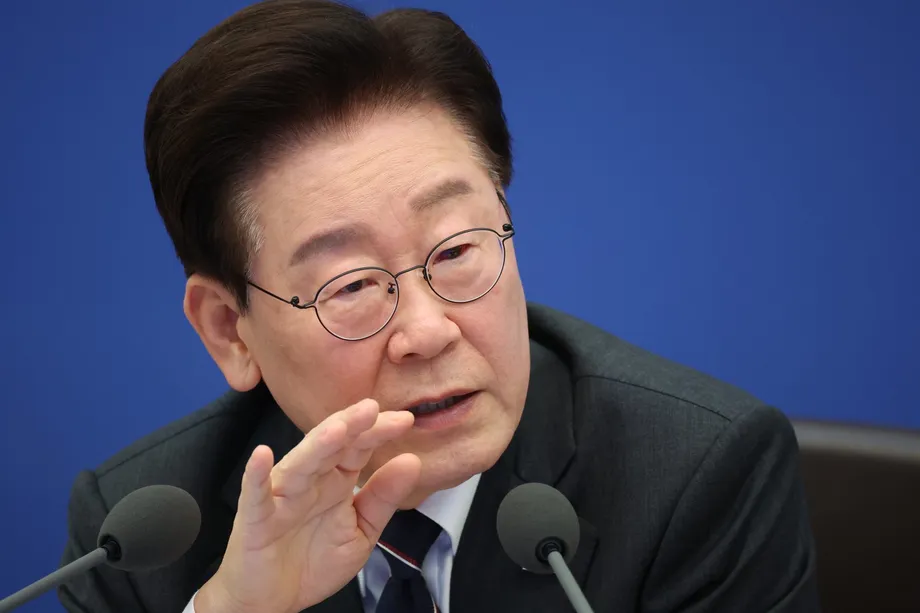
Bank of Korea Governor Shin Hyun-song signalled that further interest rate increases remain possible as South Korea approaches its October 22, 2026 policy meeting, warning that inflation will stay above the central bank's 2% target for a considerable period. The benchmark rate already stands at 3%, following increases of 0.25 percentage points in both July and August.
Contents
- Inflation takes priority after two rate increases
- What the inflation measures actually show
- The policy calendar and the limits of guidance
- Why Shin argues that acting early costs less
- Can the semiconductor boom support broader growth?
- The budget estimate is not a revised forecast
- Housing risks and the burden on vulnerable borrowers
- An apology over leveraged ETF warnings
- Digital payments, privacy and missing AI data
- Communication remains part of the policy test
- Key Points
Speaking at a parliamentary audit at the central bank's headquarters in Seoul on October 12, Shin put inflation at the centre of the next decision while also pointing to rising housing prices around the capital and growing household debt. September consumer inflation was 2.9%. The measure excluding food and energy reached 2.8%, up from 2.5% in June.
The hearing also produced a detailed estimate of the government's proposed 2027 budget: an additional 0.5 percentage point of economic growth and 0.06 percentage point of inflation. Those calculations are separate from the bank's official forecasts, a distinction that matters when judging whether government spending and monetary restraint are working against each other.
Shin, responding to questions about the monetary policy outlook, described how the bank would approach further increases:
We plan to decide the timing and pace of additional hikes while closely monitoring inflation and economic trends, and financial stability conditions.
He did not commit to an increase in October or November, or to a larger move of 0.50 percentage point. His message was narrower: the direction of policy remains towards possible additional tightening, but the next decision depends on the economic information assessed at the meeting.
What the inflation measures actually show
September's inflation figures describe different parts of the same price picture. Consumer inflation of 2.9% covers the broad basket of household purchases. Inflation excluding food and energy was 2.8%, while another underlying measure, excluding agricultural products and petroleum products, rose 2.7%. These are different indices, rather than conflicting estimates of one measure.
The food and energy measure was 0.8 percentage point above the bank's target in September, compared with 0.5 percentage point in June. That widening gap helps explain Shin's focus on controlling underlying inflation before it spreads further.
The bank expects consumer inflation to average 2.7% in 2026 and 2.3% in 2027. It also expects October inflation to be around 3%. Although September consumer inflation and the index excluding agricultural products and petroleum products were lower than in August, the bank warned that comparisons with last year's prices could obscure continuing pressure.
Such comparisons are known as base effects. An annual inflation rate depends partly on how high or low prices were a year earlier, so a lower annual reading does not necessarily mean that current price pressures have eased to the same extent.
Shin acknowledged that oil prices and the transfer of higher costs into selling prices had played a large role from spring through summer. The bank also linked recent underlying inflation to supply disruptions associated with the prolonged Middle East crisis. Its concern now is that improving incomes and consumption could add demand pressure to those existing costs.
The policy calendar and the limits of guidance
The sequence of decisions shows why the October meeting carries weight. Two increases have already raised borrowing costs, while the bank's conditional projections point towards the possibility of more:
- July 2026: The benchmark rate rose from 2.50% to 2.75%.
- August 2026: A second increase brought the rate to 3.00%.
- September 2026: The US Federal Reserve raised its policy range by 0.25 percentage point to 3.75% to 4.00%.
- October 12, 2026: Shin told lawmakers that inflation would be the most important consideration in the next decision.
- October 22, 2026: The Bank of Korea holds its next meeting to decide monetary policy.
- November 26, 2026: A further policy decision meeting is scheduled.
After the August meeting, the bank disclosed 21 conditional projections for the benchmark rate six months later. Ten were at 3.25%, six at 3.50% and five at 3.00%. The median was 3.25%, and 16 of the 21 projections were above the current rate.
Those projections are not promises or votes for the October meeting. Shin said new economic information had arrived since August and would be explained more fully at the forthcoming decision.
Why Shin argues that acting early costs less
Shin defended the July and August increases as a way to gain time before financial conditions became harder to manage. He said moving before the Federal Reserve's September increase helped authorities respond to market fluctuations and reduced the risk of having to raise rates defensively later.
At the parliamentary audit, the governor described the timing of the bank's policy shift:
We set the direction of our monetary policy toward raising interest rates a little earlier than other major countries.
He added:
I believe we have bought some time.
Shin credited the increases with helping stabilise the exchange rate. A stronger won can reduce the domestic cost of imported goods, including energy, and ease pressure on household purchasing power. He also said Korean government bond yields had been relatively stable over the preceding two to three weeks, with a reduction in planned government bond issuance contributing to calmer conditions.
Reports differ on how unusual the consecutive increases were. One account quotes Shin describing them as unprecedented, while another identifies them as the first consecutive increases since January 2023. The dates and size of the July and August moves are consistent across the accounts, but the broader historical description is not.
The governor's argument does not remove the immediate cost to borrowers. It is a claim about the cost of acting now compared with waiting until stronger inflation or market pressure requires more forceful action.
Can the semiconductor boom support broader growth?
The Bank of Korea forecasts economic growth of 3.3% in 2026 and 2.9% in 2027. In its report to the National Assembly, it said strong semiconductor exports were improving income conditions and that the benefits were expected to spread into domestic demand, including consumer spending.
That expectation is central to the rate debate. Lawmakers questioned whether raising rates in response to growth concentrated in semiconductors could weaken other industries. Shin replied that monetary policy must address the economy as a whole and argued that income improvements could spread beyond the chip sector.
The bank cited gross domestic income growth of 13.2% in the first quarter and 15.7% in the second, compared with 3.5% in the fourth quarter of 2025. Gross domestic income measures income generated through economic activity and can help show how changing trade conditions affect purchasing power.
Shin also cited a separate figure: nominal GDP increased 26.4% from a year earlier in the second quarter. Nominal GDP includes price changes, so that figure should not be read as a 26.4% increase in the volume of production or compared directly with the bank's annual growth forecast.
The bank is recalculating the GDP gap, the difference between actual output and the economy's estimated sustainable production capacity. Shin said it was approaching the threshold between negative and positive. A positive gap can indicate greater demand pressure on prices, but he did not provide a revised figure or a date for that transition.
The budget estimate is not a revised forecast
The proposed 2027 government budget totals 820.9 trillion won, an increase of 93 trillion won, or 12.8%. People Power Party lawmakers Lee Jong-wook and Park Soo-young questioned whether expanding government spending while the central bank raises rates would weaken policy effectiveness and increase hardship.
Shin acknowledged that fiscal expansion could add to demand and price pressure in the short term. His estimate, however, put the additional inflation effect at 0.06 percentage point, alongside a 0.5 percentage point contribution to GDP growth.
The bank's research department produced those estimates using its BOK20 macroeconomic model. The calculation assumed a mix of government consumption, investment and transfer payments based on past experience. Changes to the budget during parliamentary deliberations could therefore change the result.
Adding the estimated effects mechanically to the bank's August outlook would produce 2027 growth of 3.4%, rather than 2.9%, and inflation of 2.36%, rather than 2.3%. Those totals are arithmetic illustrations, not new official forecasts. The budget effects have not been directly incorporated into the published outlook.
Shin, addressing whether fiscal expansion and monetary tightening were moving against each other, said the bank was testing that proposition:
We are verifying with models whether it actually becomes a mismatch.
He also distinguished spending that immediately increases demand from investment that raises the economy's productive capacity over time. Transfer payments have a relatively low fiscal multiplier, he said. The multiplier describes how much additional GDP results from an increase in government spending; it depends on the type of spending and how recipients use the money.
Housing risks and the burden on vulnerable borrowers
Inflation is not the bank's only concern. Shin identified rising home prices in the greater Seoul area and increasing household debt as continuing sources of financial imbalance. He said monetary decisions must take account of those risks alongside prices and economic activity.
The bank described the financial system as broadly stable, supported by the resilience of financial institutions and the country's ability to meet external payment obligations. That assessment still left room for problems among vulnerable borrowers and other weaker parts of the economy.
Democratic Party lawmaker Ahn Do-geol pressed Shin on the cost of higher rates to households, companies and domestic demand. Shin acknowledged that vulnerable borrowers were experiencing pain from monetary tightening, while also arguing that low income households suffer heavily when prices rise.
His response pointed towards targeted government assistance rather than treating either inflation or debt costs as the sole concern. He said the bank and government should work together on other policy support measures for affected groups.
The bank has also treated its support lending differently from the benchmark rate. When it raised the policy rate in August, it kept the rate on its lending support programme at 1.25% and provided special assistance for small and medium businesses in flood affected areas. It plans changes to improve support for regional businesses with limited access to finance and to make the programme more responsive to economic conditions.
An apology over leveraged ETF warnings
The audit exposed a separate failure in the bank's communication about investment risk. Responding to Democratic Party lawmaker Jung Sung-ho, Shin apologised for insufficient warnings surrounding the introduction of leveraged exchange traded funds tied to individual stocks.
Shin, explaining the bank's role in warning the public, said:
I apologize to the public for failing to issue sufficient warnings regarding single-stock leveraged ETFs.
These funds seek to track twice the return of a particular stock, such as Samsung Electronics or SK Hynix. Exposure to one company makes its price movements especially important, and leverage magnifies losses as well as gains. A fall in the underlying share can therefore produce a loss approaching twice that move over the fund's tracking period.
Shin said the bank had not fully understood volatility in the domestic stock market and memory semiconductor sector at the time of a late May press conference. He had spoken generally about borrowing to invest in shares, but acknowledged that the warnings were insufficient.
The bank's June Financial Stability Report had assessed that the products could help keep domestic investment money from flowing overseas and attract foreign investment. Shin said that assessment was inappropriate for the circumstances at the time. The apology distinguishes possible benefits to investment flows from risks to investors, which the earlier assessment did not adequately convey.
Digital payments, privacy and missing AI data
Lawmakers also examined Project Hangang, the bank's digital currency pilot. Reform New Party lawmaker Lee Jun-seok questioned whether it amounted to introducing a central bank digital currency for individuals and whether transaction management could threaten personal privacy.
Shin said the bank had not been reviewing a retail central bank digital currency since 2023. He described Project Hangang instead as converting the existing monetary structure into a digital form, centred on an institutional digital currency. Commercial banks would continue handling customers, while the central bank would handle settlement between banks.
Under that structure, individual banks manage customer information. Shin argued that the arrangement does not enable central bank surveillance of personal data and said the project contains multiple security measures against hacking, including threats involving artificial intelligence. Those were the governor's assurances, rather than findings from an independent security assessment.
The bank is pursuing a second phase of actual transactions under Project Hangang and a pilot for executing government treasury payments. Separately, the foreign exchange market has operated around the clock since July. A won international payment network began pilot operations in September and is scheduled for full operation in January 2027.
The hearing also identified a gap in economic statistics. South Korea recorded a $6.4 billion intellectual property services deficit in the first half of the year, including $8.9 billion in software copyright payments. Overseas AI subscriptions are included within software payments, but the bank cannot currently isolate them. The $8.9 billion figure therefore cannot be treated as spending on AI subscriptions alone.
Communication remains part of the policy test
Another dispute concerned the removal of an international reserves ranking from the bank's release on foreign exchange reserves at the end of August 2026, published on September 3. Shin said journalists had received an explanation beforehand, while the account of the release states that no separate advance notice of the change or its rationale was issued.
Shin acknowledged insufficient communication about how useful that ranking is for judging external financial soundness and said the bank would correct the problem. Together with the ETF apology, the dispute shows that the hearing examined how the bank explains its assessments as well as the assessments themselves.
The next concrete test is October 22. Shin said the bank would then explain new information received since August. No additional rate increase, its size, or the revised GDP gap had been settled publicly at the audit. Parliamentary changes to the proposed budget could also alter the estimated growth and inflation effects.
Key Points
- The benchmark rate is 3%, following increases of 0.25 percentage point in July and August.
- September consumer inflation was 2.9%; inflation excluding food and energy was 2.8%, above the 2% target.
- The next policy meetings are October 22 and November 26, 2026.
- The bank forecasts growth of 3.3% in 2026 and 2.9% in 2027.
- The proposed 2027 budget could add 0.5 percentage point to growth and 0.06 percentage point to inflation, but those estimates are not revised official forecasts.
- Shin cited Seoul area housing prices and household debt as financial stability risks.
- He apologised for insufficient warnings about leveraged ETFs tied to individual stocks.
- The won international payment network is scheduled for full operation in January 2027.