A strong semiconductor cycle meets a weaker growth trend
South Korea could approach economic stagnation around 2029 or 2030 if its decades of declining growth continue, economists warned at a Seoul policy forum. Yet that warning is substantially earlier than the Korea Development Institute's published baseline forecast, which puts potential growth in the low 1% range in 2030 and contraction in the late 2040s.
Contents
- A strong semiconductor cycle meets a weaker growth trend
- Why the contraction forecasts differ
- Productivity explains most of the earlier slowdown
- Chip earnings can conceal weakness elsewhere
- AI demand and Chinese competition create separate risks
- A shrinking workforce compounds the problem
- Education reform targets ideas, not more imitation
- Government support without permanent protection
- Policy choices change the outcome, not the demographic trend
- Key Points
The difference matters. A semiconductor boom is lifting exports and corporate earnings in 2026, with annual economic growth projected to exceed 3% in one account of the forum. Neither a strong year nor an extrapolation of past weakness, however, establishes when the economy will begin shrinking.
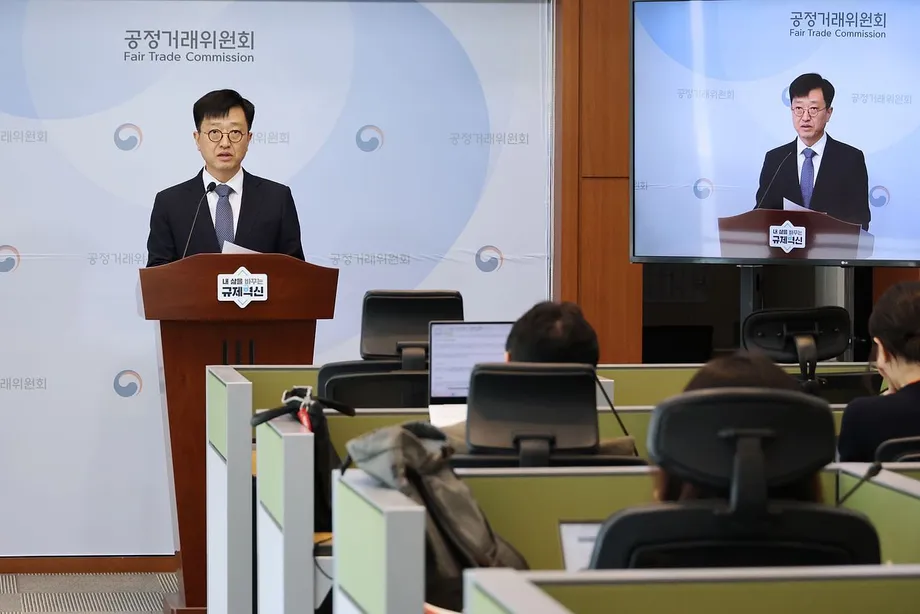
The NEAR Foundation, KDI and the Korean Economic Association held the roundtable at the Korea Chamber of Commerce and Industry in Seoul's Jung district on the 12th. The central concern was that gains from artificial intelligence chips are concealing slower productivity growth across much of the economy. Participants argued that education, industrial policy and the spread of AI need to become parts of a common growth strategy rather than separate initiatives.
Kim Mi-ru, head of KDI's macroeconomic and financial policy research department, described a decline in the real long term growth trend of about one percentage point every five years over the past three decades. Continuing that trajectory, she warned, could bring growth close to a standstill around 2029 or 2030, followed by contraction.
That is a conditional warning, not an agreed forecast. The more useful question is what separates those outcomes: how much output Korea can generate from its workers and investment as its population ages, and whether the chip industry's success spreads to other businesses.
Why the contraction forecasts differ
KDI's potential growth report, published on May 8, 2025, projects a slower deterioration than the forum warning. Its baseline puts potential growth in the upper 1% range in 2025, the low 1% range in 2030 and around zero during the 2040s. Small declines in output begin in the late 2040s.
Potential growth is the pace an economy can sustain using its labor, capital and productive capacity without creating persistent inflation pressure. Actual growth can exceed it during an export boom or fall below it in a downturn. A quarterly GDP increase, an annual growth forecast and a long term potential growth estimate therefore measure different things.
Reports of Kim's forum remarks also differ. One places near stagnation around 2029 or 2030; another describes entry into the 0% range in 2026 and possible contraction around 2030. Neither account establishes that KDI has replaced its published model with a new official forecast.
The main dates and projections are:
- August 5, 2013: The National Assembly Budget Office published research documenting a slowdown in productivity growth.
- May 8, 2025: KDI published its potential growth scenarios, placing baseline contraction in the late 2040s.
- 2026: Forum participants warned that the semiconductor boom was masking wider industrial weakness.
- 2029 to 2030: Kim's trend warning places the economy near stagnation if the historical decline continues.
- Early to late 2040s: KDI's pessimistic and baseline scenarios respectively place the beginning of contraction in these periods.
The OECD estimates cited in a separate account put potential growth at 1.92% in 2025, 1.71% in 2026 and 1.57% in 2027. The projected rate for the fourth quarter of 2027 is 1.52%. Those figures point to continued weakening, but not contraction around 2030.
Productivity explains most of the earlier slowdown
Korea's average annual growth fell from 4.7% in 2001 to 2010 to 3.1% in 2011 to 2019. KDI calculates that slower total factor productivity growth explains 66.9% of that 1.6 percentage point decline. That amounts to roughly 1.07 percentage points, making productivity the largest identified contributor.
Total factor productivity measures how effectively an economy turns inputs into output, beyond simply adding more workers or equipment. Better technology, stronger skills, improved organization and more efficient allocation of resources can all raise it. It is a calculated measure, not a direct count of inventions.
KDI finds that the slowdown continued in the more recent period. Comparing 2011 to 2019 with the overlapping 2015 to 2024 period, growth fell another 0.6 percentage points as both productivity gains and growth in labor input weakened.
The National Assembly Budget Office had identified a related problem much earlier. Its 2013 productivity analysis estimated that productivity growth in the market economy, excluding public activities such as administration and defense, slowed from 2.2% in the 1980s to 1.3% in the 2000s. Manufacturing productivity growth fell to 0.5% in the 2000s, while market services dropped from 0.8% in the 1990s to 0.1% in the 2000s.
Those historical estimates should not be joined directly to KDI's newer series. The Budget Office itself documented disagreements among researchers arising from differences in labor coverage, capital measurement and economic assumptions. The consistent finding is the direction of weakness, not a single uninterrupted dataset.
Chip earnings can conceal weakness elsewhere
Figures presented by Kwon Nam-hoon, president of the Korea Institute for Industrial Economics and Trade, show how heavily semiconductors influence the industrial picture. For January through August, total exports were reported to have risen 52.8% from a year earlier. Semiconductor exports increased 169.6%, while exports excluding semiconductors rose 18%.
Nonchip exports were therefore growing over that period, not contracting. The warning concerns their relative strength and the longer trajectory: exports outside semiconductors and automobiles were described as broadly flat for about 15 years. That measure excludes two industries, whereas the 18% figure excludes only chips.
The earnings comparison is sharper. Manufacturing's operating profit margin was reported at 24% in the second quarter, but only 7.2% after excluding Samsung Electronics and SK Hynix. The difference is 16.8 percentage points; the broader margin is more than three times the margin without the two companies. This is a company exclusion, not a precise measure of every semiconductor business.
Kwon warned that the boom could obscure industrial competitiveness. His proposals were to stabilize supply chains, respond to the circumstances of individual industries and expand networks of suppliers and related businesses around major industries.
The first quarter data cited separately from the Bank of Korea show GDP rising 1.7% from the previous quarter and exports increasing 5.1%, driven by IT products including chips. These quarterly figures and the forum's January to August and second quarter figures cover different reporting windows and should not be treated as one synchronized snapshot.
AI demand and Chinese competition create separate risks
The concern about semiconductors is not that strong demand is undesirable. It is that a reversal could expose industries already struggling to compete. Yang Jun-seok, an economics professor at the Catholic University of Korea, warned that weaker global chip demand amid concerns about an AI bubble could transmit a shock to the broader economy.
Kim Dong-won, a former visiting professor at Korea University, pointed to a forecast of an adjustment in US AI investment in 2028. He warned that industries using intermediate or lower levels of technology, which account for 42% of manufacturing jobs, could be particularly vulnerable if the semiconductor boom ends. The date is a forecast he cited, not a scheduled event or an established turning point.
Competition with China is a different pressure. The industrial analysis presented at the forum described worsening bilateral trade deficits in computers, industrial electrical equipment and precision chemical materials compared with a decade earlier. Batteries, materials, other steel products, automobiles and pharmaceuticals were described as having moved into deficit.
Ji Man-soo, a senior research fellow at the Korea Institute of Finance, called for policies supporting larger materials, components and equipment businesses facing China's low price competition. NEAR Foundation chairman Chung Duck-koo argued that geopolitical changes require Korea to reconsider its position in international production networks and respond to China's expanding manufacturing capacity.
Kim Dae-jong, a business administration professor at Sejong University, also cited labor disputes at Samsung Electronics as a possible production risk. He advocated support for steel and petrochemicals alongside defense and AI, rather than allowing national growth to depend so heavily on one industry.
A shrinking workforce compounds the problem
KDI's demographic assumptions show why stronger productivity is becoming more urgent. The population aged 15 to 64 peaked at 37.63 million in 2019. It is projected to decline by about 3.2 million during 2021 to 2030, another 5.1 million during 2031 to 2040 and 4.6 million during 2041 to 2050.
Those three projected reductions total 12.9 million people. The working age share of the population is expected to fall from 69.5% in 2025 to 51.9% in 2050. Over the same period, the share aged 65 or older rises from 20.3% to 40.1%, nearly doubling.
Age structure affects employment as well as headcounts. KDI notes that labor force participation is around 80% among people in their 30s through 50s, but below 50% among those aged 60 and older. In its baseline model, labor's contribution to growth becomes negative around 2030.
Slower productivity and fewer workers can also reduce expected investment returns, weakening growth in capital investment. KDI therefore recommends measures that support women's employment during childbirth and childcare, extend employment opportunities for older people and allow more foreign workers into the labor market.
The debate intersects with the proposed shorter working week, which envisaged reducing the standard week from 40 to 36 hours without reducing pay. Earlier figures put Korean output per hour at $54.64 in 2023, compared with $97.05 in the United States. The proposal's effect depends partly on whether businesses can improve output per hour enough to offset fewer hours. The current accounts do not establish the legislation's status.
Education reform targets ideas, not more imitation
KDI president Kim Se-jick argued that Korea's earlier success in absorbing existing knowledge no longer provides the same growth opportunities. During the 1960s through the 1980s, he said, the accumulation of skills suited to imitation supported long term growth above 8%. The value of that approach declined rapidly from the 1990s as the technological gap with advanced economies narrowed.
At the forum, Kim connected growth policy to education and the rewards for original thinking:
In the age of AI, the ability to think is critical to reversing the decline in long-term growth.
He proposed education and selection systems that develop creativity, including classes built around creating open problems and university entrance assessments that give greater weight to creative ability. The objective is to generate new knowledge rather than rely mainly on learning what others have already developed.
A proposed National Idea Registration System would register ideas, protect rights and reward their creators. Under the proposal described at the forum, government could purchase ideas with public value. KDI researcher Cho Deok-sang argued that good ideas can produce benefits beyond their creators, so even a small number of successful ideas could yield substantial returns.
Kim Jae-jun, emeritus professor at Kookmin University, focused on how promising ideas are judged. He proposed retaining records of rejected proposals, reassessing them and tracking evaluators' records. These remain policy suggestions. No implementation timetable, funding plan or detailed rights framework was specified.
Government support without permanent protection
Kang Sung-jin, president of the Korean Economic Association and an economics professor at Korea University, argued that the government's role should change as private companies' technological and investment capabilities grow. Businesses should lead investment, technology development and commercialization, while government supports basic research, skills and infrastructure where private investment is insufficient.
His proposal allows public sharing of the initial risks of uncertain technologies, but calls for defined objectives and performance standards so that support does not become permanent protection for particular companies. This differs from a model in which government directly selects industries and directs resource allocation.
Lee Young, head of the Korea Institute of Public Finance, argued that government should concentrate on the foundations for innovation and more rational regulation. Seoul National University professor Kim So-young cautioned against excessive government direction of distributive resource allocation in a mature market economy.
Workers' exposure to change is part of the same debate. Chung Chul, president of the Korea Economic Research Institute, warned that resistance to technology adoption and reform could increase if workers bear a concentrated share of the costs. He advocated both greater labor market flexibility and stronger employment safety nets.
The Budget Office's older research adds a caution about industrial scale. It estimated that returns to scale in the market economy rose from 0.66 in the 1980s to 1.16 from the 1990s onward, while estimated technological progress slowed from 4% to 1%. A value above one means output can rise proportionally faster than inputs as production expands. The office recommended cooperative structures for services and shared research and market access networks for smaller firms, while considering the effects on incomes.
Policy choices change the outcome, not the demographic trend
KDI models three annual productivity growth assumptions: 0.6% in the baseline, 0.9% in an optimistic scenario and 0.3% in a pessimistic scenario. The optimistic case assumes progress in AI development and adoption alongside economic reform. The pessimistic case assumes trade conflict restricts international specialization and technology diffusion while reform stalls.
The differences are consequential. The optimistic case still permits modest growth in 2050; the pessimistic case brings contraction forward to the early 2040s. With prices and exchange rates fixed at 2024 levels, projected GDP per person in 2050 is about $53,000, $48,000 and $44,000 respectively. These are scenario estimates, not predictions of future dollar incomes at prevailing exchange rates.
KDI also warns against treating structural weakness solely as a temporary downturn. It notes that the managed fiscal deficit averaged 1.4% of GDP in 2011 to 2019 but remained around 4% after the pandemic crisis. Repeated stimulus could weaken public finances without restoring productive capacity. Slower growth may also lower the interest rate consistent with stable activity, leaving less room for rate cuts during downturns.
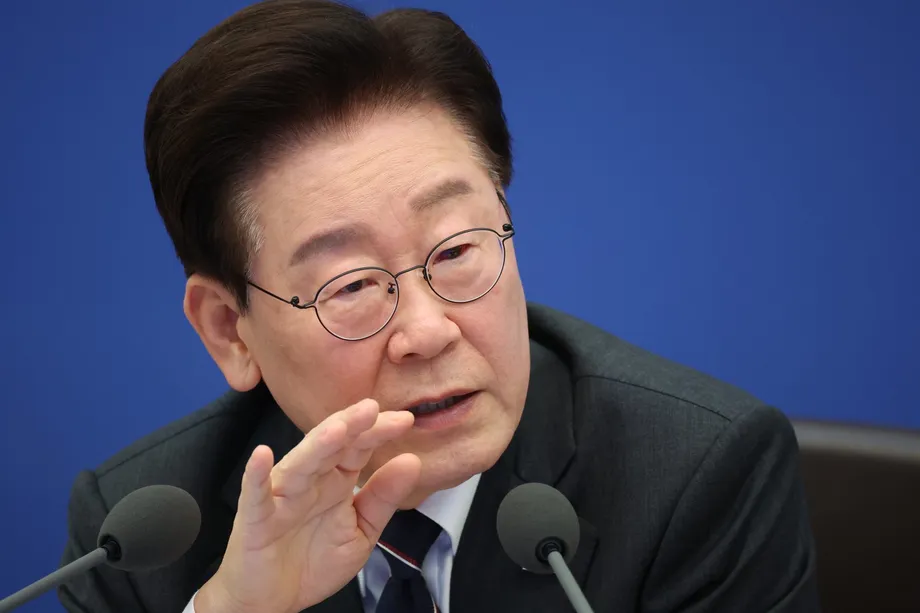
Finance Minister Koo Yun-cheol and Bank of Korea Governor Shin Hyun-song have called for structural reform and closer policy coordination. President Lee Jae Myung identified regulation, finance, public services, pensions, education and labor as reform areas. The forum accounts provide no binding schedule for adopting its proposals. The next test is whether these broad commitments produce changes in productivity and participation beyond the semiconductor sector.
Key Points
- A forum warning places possible stagnation around 2029 or 2030, earlier than KDI's published baseline forecast.
- KDI projects potential growth in the low 1% range in 2030 and baseline contraction in the late 2040s.
- Slower productivity gains explain 66.9% of the growth decline between 2001 to 2010 and 2011 to 2019.
- The reported manufacturing profit margin falls from 24% to 7.2% when Samsung Electronics and SK Hynix are excluded.
- KDI projects the working age population share falling to 51.9% by 2050, with people aged 65 or older accounting for 40.1%.
- Proposals include creative education, rewards for ideas, stronger industrial networks and wider labor force participation.
- The idea registration proposal and other forum recommendations have no specified implementation timetable.