Revised case identifies 10,123 investors
Vietnam's Supreme People's Procuracy has issued a new indictment against Nguyễn Ngọc Thủy, chairman and chief executive of Egroup Education Group, in a case alleging that fictitious share sales deprived 10,123 investors of more than 8.459 trillion dong. The case is being brought before the Hanoi People's Court after further investigation increased the alleged loss by approximately 782 billion dong.
Contents
- Revised case identifies 10,123 investors
- How much did the alleged losses increase?
- Inflated capital and invented revenue
- The promise behind the share contracts
- A sales network rewarded for raising money
- When new investments paid old obligations
- Bribery charges and differences in defendant counts
- Property transfers and civil judgments
- The procedural timeline and what is unresolved
- Key Points
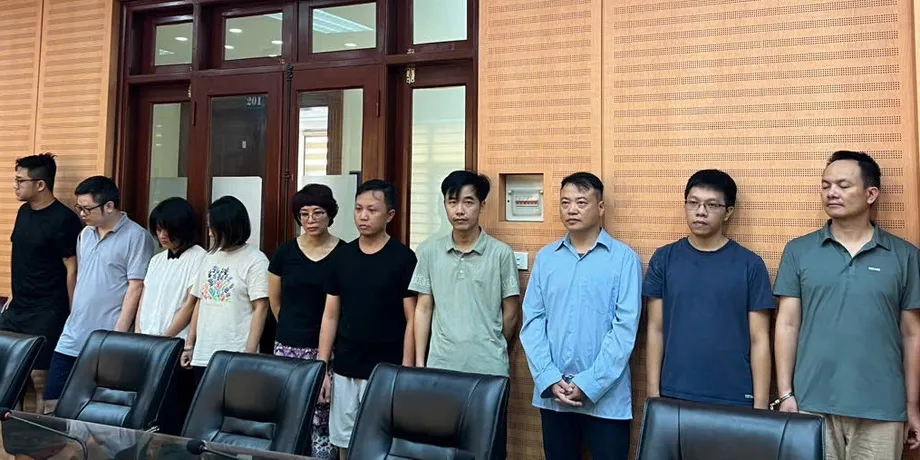
Thủy, commonly known as Shark Thủy, faces charges of fraudulently appropriating property and giving bribes. Tống Thị Kim Liên, an executive at Nhất Trần, faces a charge of accepting bribes. Most accounts put the total number of defendants at 29, including accountants and business managers accused of helping organize and sell the investments.
The allegations describe more than an unsuccessful education business. Prosecutors say Egroup's registered capital was artificially increased from 32 billion dong to 962.5 billion dong, fabricated revenue made up about 70% of its annual reported revenue, and investors bought purported shares under contracts promising a higher repurchase price after one year.
Investigators also allege that, as English centers and preschools closed between 2021 and 2023, managers were instructed to use 70% of money from new investors to pay earlier investors. The money raised through the alleged scheme was tracked separately and excluded from financial and tax reports submitted to the authorities.
The indictment is an accusation, not a finding of guilt. No trial date or verdict is identified in the reports describing the renewed prosecution. For investors, another distinction matters: the investigation separates the total number of people identified as victims from those who still had unpaid principal.
How much did the alleged losses increase?
The revised alleged loss of more than 8.459 trillion dong compares with a previously reported figure of more than 7.677 trillion dong. Using those stated figures, the increase is approximately 782 billion dong, or about 10.2%. Because both totals are reported as exceeding those amounts, the calculation is an approximate comparison rather than an exact accounting reconciliation.
Most accounts say the number of identified victims rose by 60, from 10,063 to 10,123. One account instead says the increase was 70, while giving the same final total. That discrepancy is not resolved in the descriptions of the indictment.
A further breakdown gives a more precise picture of outstanding claims. Investigators identified 8,938 people with unpaid principal totaling more than 8.459 trillion dong. Another 1,185 investors had received principal repayments and investment returns exceeding the money they originally contributed. Investigators reportedly did not seek civil compensation for that latter group.
Those two groups add up to 10,123. About 88.3% of the identified victims therefore belonged to the group with outstanding principal, based on the reported figures. This does not establish how much each person lost, or what anyone may recover. It does show why the total victim count should not be treated as the number of people with identical compensation claims.
Inflated capital and invented revenue
According to the indictment, the alleged scheme began taking shape in 2014, when Thủy needed money to repay debts, cover personal expenses and maintain Egroup's business operations. He allegedly instructed employees to inflate the company's registered capital and then arrange transfers of fictitious shares to investors.
Registered capital is the amount of capital recorded for a company. It is not the same as annual revenue, profit or cash available to pay investors. Prosecutors allege that Egroup's recorded figure rose from 32 billion dong to 962.5 billion dong without the genuine capital behind the increase.
The larger figure is roughly 30 times the starting amount. Most reports give 962.5 billion dong, although two give the rounded figure of 962 billion dong. Neither version changes the central allegation that the company's apparent capital base was vastly overstated.
Nguyễn Mạnh Phú, identified as Egroup's finance director and Egame's chief accountant, and Phạm Thị Thanh Thọ, generally identified as Egroup's chief accountant, allegedly implemented the capital and shareholding changes. Reports differ on some company affiliations, with one identifying Thọ as Egame's chief accountant.
The indictment also alleges that invented revenue accounted for about 70% of annual revenue. That allegation concerns the credibility of the business presented to investors, not simply the value assigned to its shares. Prosecutors say the figures helped portray Egroup as a profitable enterprise operating across several business areas.
The promise behind the share contracts
Investors were offered Egroup shares at 38,000 dong each. Thủy allegedly signed contracts promising to repurchase them after one year for 42,000 dong each. Investors also authorized him to exercise all their shareholder rights and obligations.
The promised increase was 4,000 dong per share. Dividing that increase by the purchase price of 38,000 dong gives a return of approximately 10.5% over one year, before any other payments or costs. That was a contractual promise described in the allegations, not evidence that the investment actually produced such a return.
The arrangement combined the language of share ownership with a fixed repurchase commitment. A share normally represents an ownership interest whose value depends on the business. A promise to buy it back at a specified price depends on the person or company making that promise having enough money when payment becomes due.
Here, prosecutors allege that the shares themselves were fictitious and that the financial picture used to sell them was false. Investors also delegated their shareholder rights to Thủy, putting the promised repayment and the exercise of those rights in the hands of the same person accused of directing the scheme.
A sales network rewarded for raising money
Đặng Văn Hiển allegedly organized fundraising plans, advertisements about school projects and calculations showing expected investment profits. He also oversaw sales training and efforts to bring prospective investors to visit the business before signing share purchase contracts.
Reports identify Hiển as head of shareholder relations, but differ on whether that position belonged to Egroup or Egame. They consistently describe his alleged role as managing the business department and organizing the promotion of the investments.
Sales employees received commissions equal to 5% of the investment they brought in. Of that amount, 2% was paid in Egroup shares and 3% in cash. Employees were encouraged to convert the cash portion into shares as well.
This commission structure rewarded the volume of money raised. The indictment alleges that managers and sales staff supported that fundraising with false statements about investment activities, business plans and profits. The accusation is therefore about both the financial representations made at company level and the claims used to persuade individual buyers.
The descriptions of the case do not establish that every employee had the same knowledge at every stage. They do, however, allege that staff continued raising money during the later period despite knowing that new funds were being used to repay earlier investors rather than finance education operations.
When new investments paid old obligations
Between 2021 and 2023, English centers and preschools in the Egroup network closed, according to the investigation accounts. New customer numbers fell, and incoming money was insufficient to meet expenses and contracts reaching their payment dates.
Thủy allegedly instructed 23 managers and team leaders overseeing 341 sales employees to redirect the money they raised. Employees could use 70% of funds from new customers to repay earlier customers whose outstanding balances they managed. The remaining 30% was to be sent to the company.
That alleged allocation is separate from the claim that fabricated revenue represented about 70% of annual revenue. One figure concerns invented business income; the other describes how newly raised investment money was distributed.
Using later investors' money to meet earlier obligations makes repayments dependent on continued fundraising rather than earnings from the activity sold to investors. In this case, investigators allege that sales staff knew the money was not being invested in education as represented, yet continued soliciting funds.
The alleged fraudulent share transfers ran from 2015 through 2023. Reports say the resulting investment flows were kept in separate records and omitted from financial and tax reports sent to the authorities. Egroup and Egame are described as financially unbalanced and unable to repay investors. No verified total for recoverable assets is given.
Bribery charges and differences in defendant counts
The alleged bribery amount remains 32 billion dong, unchanged after the supplementary investigation. Thủy is accused of giving bribes, while Liên is accused of accepting them. Most reports identify her as Nhất Trần's chairwoman and finance director; another describes her as its managing director.
Reports differ on Phú's charges. Some describe Thủy as facing both fraud and bribery charges, with 27 accountants and managers facing fraud charges. Other accounts say Phú also faces a charge of giving bribes, leaving 26 other defendants charged with fraud and Liên charged with accepting bribes. Both descriptions produce a total of 29 defendants.
Another account refers to 25 subordinates, while a research summary gives 28 defendants even though its accompanying account describes Thủy together with 28 others. The most consistently reported total is 29, but the exact allocation of charges cannot be settled from these differing descriptions alone.
The reports do not explain the alleged purpose of the 32 billion dong payment in enough detail to establish what action it was intended to obtain. The bribery allegation should therefore be distinguished from the much larger amount attributed to fraudulent share sales.
Property transfers and civil judgments
The supplementary investigation examined transfers and mortgages involving 28 properties belonging to 29 victims. One account places the notarized transactions between August 2016 and June 2021, extending the property inquiry across several years of the alleged fundraising scheme.
Seven victims reportedly signed property transfer contracts at Egame's request. Six entered arrangements described as strategic cooperation agreements involving Egroup shares. Another transferred two properties in exchange for bonds issued by Igarten. These transactions added property ownership and secured borrowing issues to the investigation of investor funds.
Lê Thị Thanh Hiền, Thủy's wife, and Nguyễn Ngọc Khánh, an Egroup deputy chief executive, allegedly received title to six properties from nine victims and subsequently mortgaged them to banks. Investigators concluded that the two did not know about the fictitious share sales and did not benefit from the alleged wrongdoing. They were not considered for criminal liability.
Five notaries who handled transactions involving the 28 properties were also not considered for criminal prosecution. Investigators reportedly found that the parties participated voluntarily, the notarization procedures complied with regulations and the notaries did not benefit from the alleged scheme.
The civil proceedings require a separate numerical distinction. Between August 2023 and January 2024, courts in Hanoi reportedly issued 22 effective civil judgments and two decisions recognizing agreements involving victims and six Egame companies. The Economic Police Department sought reopening of 18 judgments and both decisions. Several accounts explicitly say the Hanoi People's Court subsequently annulled those 18 judgments and two decisions. A broader description is less precise about how many were annulled; it should not be read as confirmation that all 22 judgments were canceled.
The procedural timeline and what is unresolved
This is the second indictment described in the case, following the return of the file for further investigation. The reported sequence spans the alleged conduct, related civil litigation and renewed prosecution:
- 2014: Thủy allegedly began directing the inflation of Egroup's registered capital.
- 2015 to 2023: Prosecutors allege that fictitious share transfers deprived investors of more than 8.459 trillion dong.
- 2021 to 2023: Education facilities closed, and 70% of new investment funds allegedly went toward earlier investor obligations.
- August 2023 to January 2024: Related civil judgments and agreement decisions were issued.
- Early August: The Procuracy returned the criminal case file for supplementary investigation. Two reports specify 2026.
- September 22: The Ministry of Public Security's investigation police agency reportedly issued its supplementary conclusion.
- October 12: Two accounts date their descriptions of the renewed indictment to this day.
The reports do not consistently establish the year for the September and October dates. The explicit August 2026 references should therefore not be silently extended to every later date in the sequence.
The Hanoi People's Court is the identified trial venue, but no hearing date is given. The reports also do not provide a final compensation order, a confirmed pool of assets available for repayment or a schedule for returning money to investors.
The next judicial decisions will need to address the alleged conduct and each defendant's responsibility. For affected investors, the unresolved practical issues include treatment of outstanding principal, the consequences of the annulled civil decisions and the status of properties transferred or mortgaged during the fundraising period.
Key Points
- The renewed indictment alleges losses exceeding 8.459 trillion dong and identifies 10,123 victims.
- Most reports put the defendant count at 29, although some descriptions of charges and subordinate numbers differ.
- Investigators identified 8,938 people with outstanding principal; another 1,185 had received payments exceeding their initial investment.
- Egroup's capital was allegedly inflated from 32 billion dong to 962.5 billion dong, with fabricated revenue making up about 70% of annual revenue.
- Shares sold for 38,000 dong carried a promised repurchase price of 42,000 dong after one year.
- During 2021 to 2023, 70% of new investment funds allegedly paid earlier investors.
- The investigation examined 28 properties, while reports describe the annulment of 18 civil judgments and two agreement decisions.
- The allegations await adjudication in the Hanoi People's Court. No trial date or repayment schedule is identified.