
Tokyo stands by the court as Washington widens sanctions
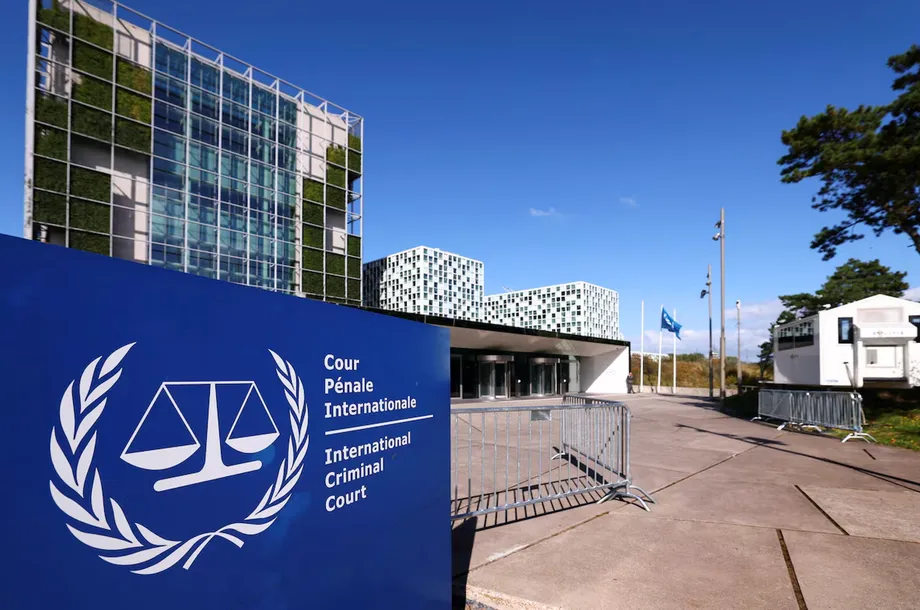
Japan has pledged to continue supporting the International Criminal Court after the United States announced sanctions against the institution itself on October 9, moving beyond earlier measures against individual judges and officials. Washington provided a 180 day period for some activities to continue, creating a window for diplomacy while threatening the court's access to financial services and technology.
Contents
- Tokyo stands by the court as Washington widens sanctions
- What the sanctions would restrict
- Japan promises support without demanding a reversal
- The diplomatic sequence
- Washington links its demands to allied security
- The court says victims will bear the cost
- European protection is discussed, but not activated
- Pillay condemns sanctions after Nobel announcement
- Support for Akane reaches beyond government
- Key Points
Chief Cabinet Secretary Minoru Kihara reaffirmed Japan's position on October 11 during a television appearance. His remarks followed Prime Minister Sanae Takaichi's expression of deep concern on October 9 and Foreign Minister Toshimitsu Motegi's separate telephone conversations with ICC President Tomoko Akane and U.S. Secretary of State Marco Rubio on October 10.
Japan is the court's largest financial contributor, while the United States is its principal security ally. Tokyo hosts roughly 60,000 U.S. service members. The dispute therefore places two Japanese priorities in direct tension: support for international courts and cooperation with Washington.
Kihara, Japan's top government spokesman, said the sanctions conflicted with the country's support for international justice.
"Continuing efforts to strengthen the rule of law in the international community is the stance of our country," he said.
The Hague based ICC prosecutes individuals accused of serious international crimes, including war crimes. Kihara also cited Japan's support for the International Court of Justice, a separate institution that deals principally with legal disputes between states. His reference to both courts presented Tokyo's response as part of a broader commitment rather than simply a defense of Akane, a Japanese national.
What the sanctions would restrict
The Trump administration's decision targets the ICC as an organization, following sanctions imposed in August on Akane and senior trial lawyer Abdoulaye Seye of Senegal. Washington ordered the court's addition to the Treasury Department's Specially Designated Nationals list, a sanctions designation that restricts dealings with listed entities.
The measures threaten to cut the ICC off from U.S. financial services, technology companies and dollar transactions. Earlier sanctions against individuals froze assets under U.S. jurisdiction and generally prohibited U.S. people and businesses from transacting with them.
Those restrictions can reach beyond the United States in practice. International banks with connections to the U.S. financial system may avoid sanctioned customers, leaving an institution with fewer ways to move money or pay for services. The broader designation could therefore affect the court's daily operations as well as its officials.
Descriptions of the transition period differ in scope. Some accounts describe six months before implementation or for businesses to end their dealings with the court. Others say the 180 day grace period applies to part of the measures and permits activities necessary to maintain the organization. It should not be understood as an assurance that every restriction is suspended.
The State Department said the period was intended to give member states time to pursue diplomatic and legal solutions addressing U.S. concerns. No precise conditions for lifting the sanctions have been identified, and no negotiated settlement has been announced.
Japan promises support without demanding a reversal
Takaichi responded late on October 9 in Japanese and English, describing the decision as incompatible with Japan's position. She reiterated support for the ICC and said Japan would continue approaching Washington while providing necessary assistance to the court.
The prime minister explained the government's intended response in her statement.
"We will continue to reach out to the United States and extend necessary support to the ICC so that the Court can fulfill its role and functions as originally envisaged," she said.
Tokyo's language is more restrained than the demand from the Bureau of the Assembly of States Parties for immediate revocation. Japan has expressed concern and disagreement, but has largely avoided a direct public call for Washington to withdraw the measures.
The government has not specified a new funding package or a legal mechanism to protect the court from the sanctions. Its promise of support therefore leaves an unresolved practical issue: how to sustain the ICC's work if banks and service providers withdraw.
The diplomatic sequence
Motegi spoke first with Akane on October 10, discussing the court's situation and its response, before calling Rubio. Each conversation lasted about 15 minutes. Japan and the United States agreed to maintain close communication, although their descriptions of the discussion made their disagreement plain.
Japan's Foreign Ministry said Motegi conveyed the government's position on the institutional sanctions. The State Department said Rubio stressed their necessity because of what Washington called the court's actions threatening American sovereignty.
The key developments unfolded over several weeks:
- August: Washington sanctioned Akane and Seye, extending its campaign against individual ICC officials.
- September 22: Trump used his U.N. General Assembly address to urge ICC members to withdraw.
- October 1: A Japanese support group presented about 170,000 petition signatures to the deputy chief Cabinet secretary.
- October 9: Washington announced sanctions against the ICC itself, and Takaichi expressed deep concern.
- October 10: Motegi called Akane and Rubio, while the ICC oversight bureau demanded revocation.
- October 11: Kihara publicly reaffirmed Japan's support for international courts.
The Rubio call also addressed the arrest of a U.S. Marine in Okinawa on suspicion of robbery and murder. Motegi conveyed Japan's position, including regret over the incident, and the ministers agreed to discuss effective measures to prevent recurrence. The parallel discussion illustrates the wider relationship within which the ICC dispute is being handled.
Washington links its demands to allied security
The Trump administration argues that the ICC threatens U.S. sovereignty. The United States has not ratified the Rome Statute, the treaty establishing the court, and is not an ICC member. That position does not by itself settle every question about the court's jurisdiction, which can also depend on where alleged crimes occurred and how a situation reached the court.
Reports differ on the treaty signature date: one gives 2002, while another identifies President Bill Clinton's signature in 2000. They agree that the United States never ratified it. Signature and ratification are separate steps, with ratification establishing a state's consent to be bound by a treaty.
Rubio, the U.S. secretary of state, issued a direct threat in a video released on October 9.
"Either the ICC will end its threats, or we will end the ICC," he said.
He also connected Washington's expectations to the military protection it provides allies.
"We expect our allies, many of whom are part of the ICC and that rely on American service members for their defense, to rein in the court," Rubio said.
The dispute follows U.S. objections to an investigation involving American troops in Afghanistan, which the court later decided to deprioritize, and the ICC's 2024 arrest warrant for Israeli Prime Minister Benjamin Netanyahu over suspected war crimes in Gaza. The Netanyahu warrant has been identified as a possible driver of the sanctions, rather than an established sole cause.
Rubio also cited outside calls to prosecute U.S. military personnel, Border Patrol agents and elected leaders. Those calls are distinct from court action: ICC officials have not taken steps toward the prosecutions he described.
The court says victims will bear the cost
The ICC condemned the institutional sanctions as an effort to obstruct its work and intimidate its staff and people cooperating with it. It appealed to its 125 member states and territories for the support needed to continue operating.
In its October 9 press release, dated 2026, the ICC said the institutional sanctions followed designations against thirteen independent judges and prosecutors. It said the designation was aimed at disrupting the court's operations and intimidating those who work for or cooperate with it.
Akane, the court's president, said the ICC would maintain its judicial independence despite the pressure.
The court would "continue to fully discharge its mandate, with independence and impartiality, acting only on the basis of the law and the evidence, for the sake of the countless victims of grave crimes," she said.
The release also said the court had worked with its States Parties to ensure the continuity and resilience of its activities. It called on states to continue taking concrete action, including ensuring that the court had the means necessary to continue its work.
In her video response, Akane described the sanctions as an attack on victims who had waited years, sometimes decades, for accountability. Her argument connects restrictions on institutional resources with the court's ability to carry cases forward.
Akane explained who she believed would ultimately experience the consequences.
"Every measure taken against the court is ultimately felt by those victims," she said.
On October 10, the Bureau of the Assembly of States Parties called for immediate revocation. The bureau has 21 elected members drawn from the court's 125 member states, including Japan. It assists the broader assembly, which is the court's management oversight and legislative body; the 21 member figure describes the bureau, not the full assembly.
The bureau said coercive measures were an attempt to impede independent judicial functions and urged international support for the court. That demand goes beyond Japan's national statements by expressly seeking reversal.
European protection is discussed, but not activated
Japan also joined a statement with other ICC members expressing strong disagreement with the sanctions. Reports differ on the number of participants. One describes Japan and eight other states, while another names eight countries in total: Canada, Denmark, Germany, France, Italy, Japan, the Netherlands and the United Kingdom.
The Netherlands, which hosts the ICC, has discussed possible use of the European Union's blocking statute with the European Commission. Such a measure could prohibit European companies from complying with specified foreign sanctions, potentially protecting some services used by the court and its staff.
Dutch Foreign Minister Tom Berendsen called that option the "nuclear option." The discussions concern preparedness; they do not establish that a protective measure has already taken effect.
Japan has no equivalent statute or comparable mechanism to nullify foreign sanctions applied beyond the issuing country's borders. That difference matters because diplomatic support and financial contributions may not resolve the problems created when commercial providers fear U.S. penalties.
Erika Guevara Rosas, a senior director at Amnesty International, urged governments to move beyond statements of opposition.
"States must take concrete action to resist the imposition of these measures and actively protect the Court," she said.
Pillay condemns sanctions after Nobel announcement
The sanctions were announced hours after former ICC judge Navi Pillay was named the year's Nobel Peace Prize laureate. The timing establishes the sequence of events, but does not establish that the award caused Washington's decision.
Pillay, an 85 year old South African lawyer and former U.N. human rights chief, addressed an event at the Nobel Peace Center in Oslo on October 10 through a video link from Nuremberg. She described anxiety about the continued existence of international courts and said hundreds of ICC staff felt threatened.
Pillay objected specifically to the targeting of judges over their judicial decisions.
"Most importantly, sanctions have been announced by one country against the judges, just for the judicial orders they issue. This is unheard of, unacceptable," she said.
Her comments reinforce the distinction at the center of the dispute. Washington portrays sanctions as protection against an institution threatening its sovereignty. The court and its supporters portray them as pressure on judges and an obstacle to independent justice.
Support for Akane reaches beyond government
In Japan, former students of Akane have organized support through the Japan International Rule of Law network, known as JIRoL. Following the August sanctions against her, the group launched a petition and delivered around 170,000 signatures to the deputy chief Cabinet secretary on October 1.
Akane, 70, is from Nagoya and taught at Nagoya University Graduate School of Law from fiscal 2005 through fiscal 2007 while serving as a prosecutor. Former students recalled that she continued advising them after leaving the school, including arranging visits to a prosecutors office for those considering their careers.
Yosuke Shamoto, a 45 year old lawyer and former student, explained the principle behind his support.
If we accept change through force, we will end up in a world where the strong can do whatever they want," he said. "I want to convey the importance of the rule of law to the younger generation.
Maiko Imaizumi, a 44 year old lawyer in the group, said Akane welcomed the number of signatures. JIRoL plans a picture book introducing the ICC and mock trials for high school students, extending its work beyond the immediate petition.
The next defined interval is Washington's 180 day transition period. No specific negotiating meeting, agreed settlement or detailed Japanese protection package has been announced. Japan has committed to continued support and communication, while Washington is demanding changes whose precise terms have not been publicly settled.
Key Points
- The United States announced sanctions against the ICC itself on October 9, expanding earlier measures against individual officials.
- Japan reaffirmed support for the court through statements by Takaichi and Kihara and diplomatic calls by Motegi.
- The sanctions threaten financial and technology access, with a 180 day transition period covering some activities.
- The ICC oversight bureau demanded immediate revocation, while Japan has used more restrained language.
- European governments are discussing protective measures; Japan has no equivalent blocking statute.
- No settlement or precise conditions for removing the sanctions have been announced.