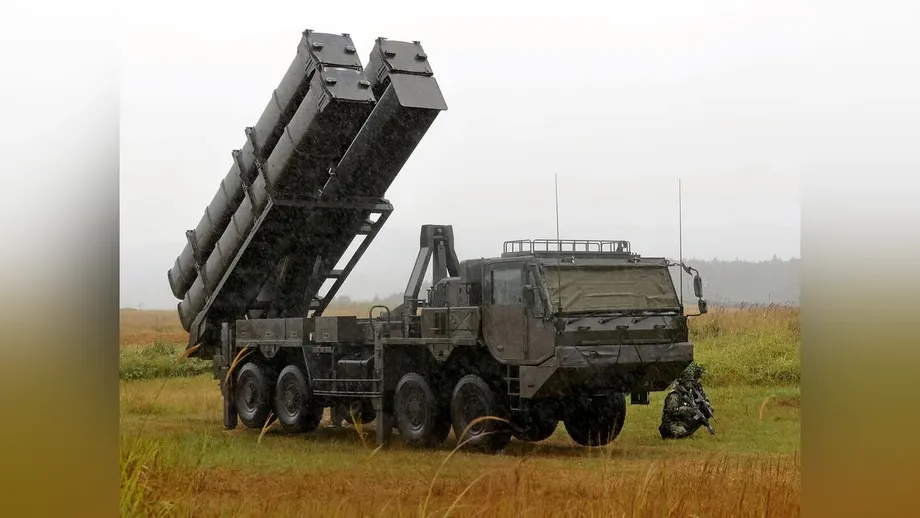
A missile launcher moves into position in under two minutes
Japan demonstrated its new Type-25 surface-to-ship missile launcher outside its home base for the first time on October 25, 2026, bringing a weapon with an estimated range of about 1,000 kilometers into the Keen Sword military exercise with the United States.
Contents
- A missile launcher moves into position in under two minutes
- What the soldiers practiced at Onohara
- How much farther can the Type-25 reach?
- A nationwide exercise with a southwestern focus
- When Japan says counterstrikes could be used
- The deployment calendar extends beyond Kumamoto
- Residents want answers about becoming targets
- Moving the missile also moves the public debate
- Finding targets and sustaining operations
- Key Points
At the Onohara Maneuver Area, which straddles Nagasaki and Saga prefectures, about 10 soldiers from the Ground Self-Defense Force's Camp Kengun moved a single launcher into firing position and checked preparations for a simulated attack on an enemy ship. The vehicle reached its position in less than two minutes and faced southwest. It carried no live missiles, and none were fired.
The demonstration brought together two central parts of Japan's changing defense policy: weapons that can reach much farther than earlier systems, and the ability to move them away from permanent bases when needed. Targeting practice also used information collected by Japan and the United States, showing how cooperation extends beyond the launcher itself.
Residents near the home base in Kumamoto and the exercise area have raised a different concern: whether hosting or receiving such weapons could make their communities targets. Some have asked for direct explanations about the risks, rather than equipment displays or brief public notices alone.
The Defense Ministry plans further deployments as Japan builds the counterstrike capability adopted in its 2022 National Security Strategy. The October exercise showed the practical work involved: moving soldiers and vehicles, finding a target, preparing to fire, and coordinating information across two militaries.
What the soldiers practiced at Onohara
Soldiers from the 5th Surface-to-Ship Missile Regiment brought the Type-25 from Camp Kengun in Kumamoto, where the system has been stationed since March 31. The regiment belongs to the Ground Self-Defense Force's 2nd Artillery Brigade.
The launcher appeared before journalists at about 9:20 a.m. in rainy conditions. Three soldiers left an escort vehicle and secured the area before the launcher moved into place. The crew then turned the launch assembly toward the simulated target and checked the steps needed to reach firing readiness.
Japan Joint Staff spokesman Cmdr. Atsushi Kubo said the demonstration involved one launcher and was conducted exclusively by Japanese forces. No American troops were scheduled to observe the system during the exercise. Japan and the United States nevertheless practiced identifying ship locations using information gathered by both countries.
Kubo explained why moving the equipment matters as much as owning it:
Simply deploying equipment does not immediately ensure that it can perform to its full potential.
The exercise therefore tested a practical part of readiness: whether a unit could leave its base, reach a required location and prepare its equipment for a mission.
How much farther can the Type-25 reach?
Mitsubishi Heavy Industries manufactures the Type-25, an upgraded version of Japan's Type-12 antiship missile. Its vehicle carries four missile tubes and measures approximately 36 feet long and more than eight feet wide.
The Type-25's reported range is about 620 miles, or 1,000 kilometers, compared with about 124 miles, or 200 kilometers, for the earlier Type-12. Those estimates put the newer weapon's reach at roughly five times that of its predecessor. Some estimates place the Type-25's range above 1,000 kilometers.
Lt. Col. Tomoyuki Obata, a spokesman for the Ground Self-Defense Force's Western Army, identified range as the main change:
The biggest difference with the Type-12 is its range.
Obata declined to disclose a precise figure because it would reveal Japan's defensive capabilities. Depending on its launch location, the missile could reach parts of China's eastern coastline and North Korea. Stand-off weapons allow forces to attack from a distance, reducing their need to approach an opponent's weapons.
A nationwide exercise with a southwestern focus
Keen Sword 27 began on October 19 and was scheduled to end on October 29. The exercise brought together about 45,000 Japanese personnel and 12,000 American personnel, with forces from seven other countries, including Australia and Canada.
Activities extended across 33 prefectures and used seven airports and 12 seaports, alongside Self-Defense Force facilities. Missile defense and landing exercises were among the activities in what was described as the largest exercise of its kind.
The Nansei Islands, stretching southwest from Kyushu toward Taiwan, received particular attention. The United States was sending an advanced antiship missile system to Yonaguni, an Okinawan island about 110 kilometers from Taiwan.
Japan had also considered taking the Type-25 to the Sakishima Islands in Okinawa during the exercise, but dropped that proposal. Its first deployment away from Camp Kengun instead took place at Onohara, on Kyushu.
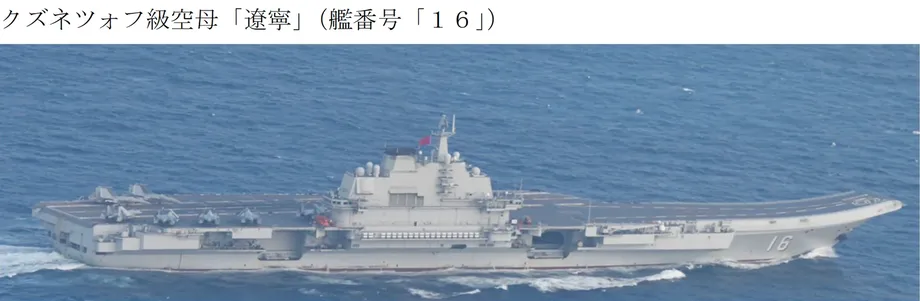
Recent Chinese military activity added context to the training. On October 14, Japan scrambled fighter aircraft after Chinese aircraft launched from the carrier Liaoning about 155 miles south of Ishigaki Island. Japanese ships and patrol aircraft monitored the carrier group as it passed between Okinawa and Miyako Island into the Pacific. Beijing described the operations as routine training.
When Japan says counterstrikes could be used
Japan's 2022 National Security Strategy set out the decision to acquire counterstrike capabilities. The government envisages using them after an armed attack has begun, including strikes on missile launch sites in another country's territory to prevent further attacks.
The timing is central to the policy. Under the government's explanation, Japan could act once it determines that an enemy has started an attack, even before Japan suffers physical damage. Critics worry that a mistaken judgment about whether an attack has begun could lead to an unlawful preemptive strike.
The October 25 scenario involved an enemy ship. The wider counterstrike policy also covers threats such as missile launch bases. For decision makers, both require reliable information about what the target is, where it is and what it is doing.
Ground Self-Defense Force Chief of Staff Gen. Masayoshi Arai said on October 20 that developing weapons able to engage approaching ships and landing forces from a distance was urgent. He described Japan's security environment as its most severe and complex since World War II. The government argues that the ability to respond could discourage an adversary from attacking.
The deployment calendar extends beyond Kumamoto
The Defense Ministry's Kyushu Defense Bureau has maintained a Camp Kengun deployment page containing explanations of stand-off defense, questions and answers about the deployment, and notices about equipment displays. Its dated entries trace the transition from development terminology to the Type-25 name.
The public record and deployment plans set out several milestones:
- August 29, 2025: The bureau listed materials on accelerating domestic stand-off missile development and explaining stand-off defense.
- September 1, 2025: It listed questions and answers about the planned Camp Kengun deployment.
- March 31, 2026: It posted material on the completion of development and naming of the improved ground launched Type-12 and the glide weapon for island defense. The page title changed to refer to the Type-25.
- October 19 to 29, 2026: Keen Sword 27 provided the setting for the Type-25's first deployment away from its base.
- Fiscal 2026: The ministry plans additional Type-25 deployments at Camp Kengun and Type-25 high speed glide weapon deployments at Kamifurano in Hokkaido and Ebino in Miyazaki.
- Fiscal 2027: Plans include a Type-25 deployment at Camp Fuji in Shizuoka and the start of operations involving related missiles launched from ships and fighter aircraft.
Japan's fiscal year runs from April through March. Fiscal 2026 therefore ends in March 2027, while fiscal 2027 ends in March 2028.
The glide weapon follows a different flight profile from the surface-to-ship missile. It is intended to travel at high altitude above the speed of sound and be difficult to intercept, with an estimated range of several hundred kilometers. A deployment of that weapon at Camp Fuji was also described as having taken place at the end of March.
Residents want answers about becoming targets
Kenji Kido, who heads a council formed by neighborhood associations and other groups around Camp Kengun, has voiced concern that the base could become a target during a conflict. The worry is especially immediate for people whose homes are close to the installation.
The ministry has held equipment viewings for residents, including displays of launchers and ammunition transport vehicles. The first resident viewing has been dated both October 3 and October 24; the October 3 attendance account records 220 participants across three sessions, after 270 people applied. It also describes displays of firing control and command vehicles, with explanations by members of the 5th Surface-to-Ship Missile Regiment.
An exhibition planned for August was postponed following a major earthquake in Kumamoto in July. The bureau's official page records an August 10 postponement notice and an October 9 entry about holding an equipment exhibition.
Seishi Taguchi, a resident aged 77 who attended with his wife, asked for continued opportunities to see the equipment and hear about its risks:
There are things one can't understand without seeing them. I hope there will continue to be opportunities for residents to view the equipment, as well as explanations about it, including its potential risks.
Akihiko Nishiguchi, a resident aged 72, described the system as impressive equipment. Kumamoto Governor Takashi Kimura, who saw part of the system before its March deployment, had requested a variety of explanations for residents.
Moving the missile also moves the public debate
Residents near Onohara raised questions about the absence of an advance community briefing. In Tano urago, a settlement west of the training area in Higashisonogi, the neighborhood association counted just over a dozen households.
Higashisonogi town sent a notice through its disaster information app in late September saying the exercise would use no live ammunition. Some residents wanted a fuller explanation from the national government about the new missile's presence.
Ishigaki Mayor Yoshitaka Nakayama has opposed deploying or training with stand-off missiles on the island because of its proximity to China. Speaking on October 22, he said there was no need to conduct the training on Ishigaki.
Keio University security professor Ken Jimbo said practicing movement to different locations is essential to operating the missiles. He also called for careful explanations of why the equipment is needed for Japan's security, so that communities can understand the government's case.
For the military, mobility creates more choices about where to position a launcher. For local authorities, it creates a need to discuss exercises even in places where the weapon is not permanently based.
Finding targets and sustaining operations
Japan's longer missile range makes accurate targeting increasingly important. A ship or mobile missile launcher can move between the moment it is detected and the moment a weapon reaches it. Forces need repeated updates to keep track of the intended target.
The government plans to expand satellite constellations, groups of small satellites operated together, to improve that tracking. Defense officials also expect information from the American military to support Type-25 operations, making intelligence cooperation a continuing part of the capability.
Ammunition supplies present another practical constraint. Japan has begun deploying longer range weapons, but its stockpiles remain insufficient for sustained fighting. The government is purchasing foreign systems, including American Tomahawk cruise missiles, while supporting greater domestic production.
The Aegis destroyer Chokai acquired the ability to launch Tomahawks in August and returned to Sasebo. Japan also plans to introduce inexpensive drones for attacks over long distances, drawing on the combination of missiles and cheaper drones used by Russia in its invasion of Ukraine.
The October 25 drill brought these requirements into focus. A launcher must be able to move, receive usable target information and prepare to fire. A sustained operation would also require enough ammunition and a production and supply network able to replenish it.
Key Points
- Japan publicly demonstrated the Type-25's first deployment outside Camp Kengun on October 25 at Onohara Maneuver Area.
- About 10 Japanese soldiers practiced launch preparations with one launcher. No live missiles were carried or fired.
- The missile's estimated range is about 1,000 kilometers, roughly five times the reported range of the earlier Type-12.
- Keen Sword 27 was scheduled for October 19 to 29, with about 57,000 Japanese and American personnel and participation from seven other countries.
- Further missile deployments are planned through fiscal 2027, alongside improvements in targeting, ammunition supplies and domestic production.
- Residents near bases and training areas have sought fuller explanations about safety and the risk of becoming targets.