Five new power plants anchor a major electricity expansion
Singapore plans to invest up to S$5.3 billion in its electricity grid and bring five new natural gas power plants into operation as peak electricity demand could rise from 8.6 gigawatts (GW) in August 2026 to as much as 13 GW by 2031.
Contents
- Five new power plants anchor a major electricity expansion
- Gas generation will grow while cleaner supplies develop
- A second LNG terminal will increase fuel handling capacity
- More cables and substations will carry electricity to users
- Solar targets rise, with space still a constraint
- Storage will help manage sudden changes in supply
- Regional imports need cables, approvals and buyers
- Supply disruptions give the expansion added urgency
- Research funding explores options beyond today's system
- The dates shaping Singapore's electricity buildout
- Key Points
The Energy Market Authority (EMA) unveiled its five-year Energy Infrastructure Plan on October 26, 2026, covering power generation, gas supplies, electricity cables, solar panels, energy storage and connections for imported electricity. The programme combines construction scheduled for this decade with studies of larger projects, including a possible energy cluster on Pulau Tekong.
EMA projects peak demand of between 9.9 GW and 13 GW by 2031. Compared with August's 8.6 GW, that represents an increase of about 15% to 51%. The wide range reflects uncertainty over when semiconductor factories, data centres and electric transport infrastructure will begin drawing more power.
Peak demand is the greatest amount of electricity consumers need at the same time. Singapore must have both enough generating capacity and a network capable of moving that electricity to the places using it.
Tan See Leng, Minister for Energy, Trade and Industry (Energy and Industry), presented the programme at Singapore International Energy Week at Marina Bay Sands. He linked the speed of electricity expansion to Singapore's ability to attract investment:
Our ability to scale our generation and grid capacity to meet these needs will be increasingly important. Simply put, the fastest megawatt will be the winning megawatt.
For businesses planning factories or computing facilities, the practical issue is whether electricity will be available when their operations are ready. Households will also depend on the expanded network as more vehicles and other activities use electricity.
Gas generation will grow while cleaner supplies develop
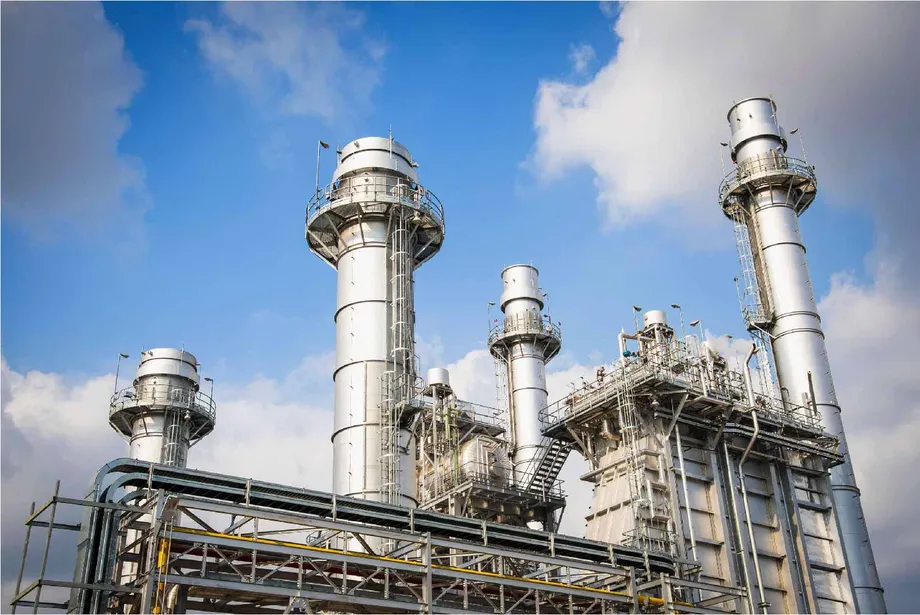
Five new natural gas power plants are scheduled to become operational between 2026 and 2031. EMA says they will expand Singapore's electricity generation capacity by around 26% from approximately 12 GW today. Using those figures, the additions amount to roughly 3.1 GW, taking capacity to about 15.1 GW.
Power systems need generating capacity above peak demand so they can accommodate maintenance, unexpected outages and changes in operating conditions. Singapore's demand forecast also leaves planners preparing for very different rates of growth.
EMA is evaluating a further group of proposals submitted through a request for proposals that closed in September 2026. Those additional plants are intended to be operational by 2032. The agency will seek more proposals over the next five years if electricity demand continues to grow strongly.
Tan said the government was prepared to support the entry of additional power plants and, where necessary, intervene to ensure enough capacity was available for new economic investments.
Natural gas currently supplies around 95% of Singapore's electricity. The plan therefore expands the fuel source supporting most existing electricity use while developing solar energy, regional imports and other options with lower carbon emissions.
A second LNG terminal will increase fuel handling capacity
Singapore's second liquefied natural gas (LNG) terminal, at Jurong Port, is expected to become operational by 2030. It will increase annual LNG regasification capacity from 10 million tonnes to 15 million tonnes, a rise of 50%.
LNG is natural gas cooled into liquid form for transport by ship. Regasification turns it back into gas so it can move through pipelines to users such as power plants. Terminal capacity and generating capacity perform different jobs: one handles fuel, while the other produces electricity.
Authorities are also studying expansion of the first LNG terminal on Jurong Island and extending the natural gas transmission network. Together, these projects would supply both existing and new plants.
Pulau Tekong could accommodate a further energy cluster, potentially including another LNG terminal, plants designed to use hydrogen and other technologies with lower carbon emissions. Electricity import facilities are also being examined as part of the island's possible role. The cluster remains under feasibility study.
More cables and substations will carry electricity to users
Singapore's projected grid investment of up to S$5.3 billion between 2025 and 2029 is 11 times the investment in the preceding five years. The expansion addresses a practical requirement: more generation is useful only when cables and substations can deliver the electricity.
Seven new transmission substations are planned by 2031, compared with four built during the previous five years. Substations connect parts of the network and adjust voltage so electricity can travel efficiently and then be delivered at suitable levels to consumers.
The high voltage transmission cable network will grow from around 7,700 kilometres to approximately 9,100 kilometres by 2030. That is an additional 1,400 kilometres, or about 18%. Singapore will also strengthen the lower voltage distribution network serving homes, businesses and industrial facilities.
Those local upgrades will support both rising consumption from electric vehicle charging and additional supply from solar panels. Electricity networks increasingly have to manage power entering from many locations as well as power flowing out to users.
Authorities are studying whether to more than triple the cable tunnel network from its current length of about 50 kilometres. Tunnels provide access for maintenance and new cables, reducing the frequency and duration of road excavations. An expanded network would support areas of strong demand growth, including Tampines Wafer Fab Park.
Solar targets rise, with space still a constraint
Singapore has installed 2.3 gigawatts peak (GWp) of solar capacity and remains on track for 3 GWp by 2030. The new target is 4 GWp by 2035, requiring another 1.7 GWp above today's level, an increase of roughly 74%.
EMA plans further installations on reservoirs, vacant land and building rooftops. GWp measures the maximum rated output of solar panels under standard test conditions. Actual generation changes with sunlight, cloud cover and the time of day.
Tan said solar remained Singapore's most viable domestic renewable energy source, but could meet no more than 10% of projected electricity demand in 2050, even with greater deployment. That limit helps explain why the infrastructure plan combines domestic solar with imported electricity and other technologies.
Singapore is also developing a proposed pilot with Chinese company GCL Perovskite. Perovskite solar materials could improve panel efficiency, allowing more electricity to be generated from the same area. The proposed trial would examine a technology particularly relevant to a country with limited space for installations.
Storage will help manage sudden changes in supply
Singapore aims to increase energy storage capacity from around 350 megawatt-hours (MWh) to just over 1 gigawatt-hour (GWh) by 2030. Since 1 GWh equals 1,000 MWh, the target is close to three times current capacity.
Storage can absorb electricity when it is available and release it when demand rises or generation falls. It can respond quickly to disruptions, smooth fluctuations in renewable output and help manage temporary network constraints while upgrades are underway.
Storage capacity measures how much energy a system can hold. Generating capacity, expressed in MW or GW, measures how quickly electricity can be supplied. The useful operating time of a storage installation depends on both its stored energy and the rate at which it releases that energy.
EMA has launched the Energy Storage Systems Vision and Industry Consultation Paper to seek practical technologies, business models and projects that can operate commercially at scale. It is also gathering feedback on technical requirements, existing rules and infrastructure constraints.
The agency plans operating requirements that could allow storage systems to be centrally controlled when necessary, depending on their size and role. It will work with industry and other agencies on access to energy market information and is seeking interest in an industry workgroup.
Regional imports need cables, approvals and buyers
EMA has granted Sembcorp Utilities conditional approval to import up to 1.3 GW of renewable electricity from and through Peninsular Malaysia. The proposed supply includes offshore wind from Vietnam and solar power from Malaysia, with imports targeted to begin by 2035.
Sembcorp is working with MY Energy Consortium and Petrovietnam Technical Services Corporation. The partners must secure approvals across the jurisdictions involved, finalise electricity purchase agreements with customers and obtain financing as they develop the project.
Singapore targets 6 GW of electricity imports with low carbon emissions by 2035, intended to meet around 30% of its electricity demand that year. Conditional approvals or licences have been granted to projects involving Australia, Cambodia, Indonesia, Malaysia and Vietnam.
Physical connections are another part of that effort. Detailed feasibility studies are underway for a second electricity interconnection between Singapore and Peninsular Malaysia, with marine surveys scheduled for October 2026. The proposed connection could add up to 2 GW by 2030, alongside the existing link allowing up to 1 GW of electricity flows in either direction.
If developed at that capacity, the two links would provide a combined 3 GW of connection capacity. EMA will determine the new connection's landing location after the studies, while Singapore progressively develops coastal sites where subsea electricity cables can connect to its grid.
Supply disruptions give the expansion added urgency
Indonesia began reducing gas supplies to Singapore over the weekend before the October 26 announcement. EMA put the reduction at less than 2% of Singapore's total daily gas demand. Tan said preparations made over many years had helped Singapore handle similar disruptions without incident.
About half of Singapore's gas now arrives as LNG from a global range of suppliers, including the United States and Australia, according to Tan. Singapore initially relied entirely on gas piped from neighbouring countries. Buying LNG from multiple countries gives it a wider choice of suppliers.
EMA also requires power plants to be able to run on diesel, allowing them to draw on reserves during a severe gas disruption. Tan warned that countries prioritising domestic resources during shortages could create greater risks for energy importers, particularly when established contracts were affected.
Singapore and Saudi Arabia announced an intended arrangement for Saudi crude oil storage at Jurong Rock Caverns, with operations expected in the second half of 2027. The caverns lie 150 metres beneath Jurong Island and have total storage capacity of 1.47 million cubic metres.
Tan, explaining Singapore's approach to unpredictable supply shocks, said:
We cannot predict every disruption, but we will always ensure that Singapore is prepared for them.
Research funding explores options beyond today's system
EMA and the Advanced Energy and Decarbonisation Office, part of the Agency for Science, Technology and Research, have set aside S$75 million for technologies that could reduce emissions from electricity generation. The initiative focuses on hydrogen, solar and biomass.
The funding sits within an S$800 million programme supporting research and innovation in technologies with lower carbon emissions. A separate S$143 million scheme, led by the office and the Economic Development Board, supports heavy industry through approaches including capturing carbon dioxide and using it in other processes.
Singapore is also building nuclear expertise through three programmes: placements for public officers with international nuclear organisations, support for employees of selected companies to undertake training and industry attachments, and a fellowship bringing international energy leaders to advise on long term strategy.
Geothermal energy, which uses heat underground, is another option under study. Consultants estimated technical potential for electricity generation at more than 60 times Singapore's current annual electricity consumption. Surbana Jurong and GLJ have been appointed to conduct a feasibility study examining whether that resource can be used in practice.
Singapore has not decided whether to deploy nuclear or geothermal energy. Tan said a geothermal decision could take many years. For now, the construction schedule centres on gas plants, grid expansion, solar, storage and connections for regional electricity trade.
The dates shaping Singapore's electricity buildout
Singapore's programme runs across several overlapping schedules. Grid investment begins before the five-year plan, while import projects and research extend beyond it.
- 2025 to 2029: Up to S$5.3 billion is projected for electricity grid expansion.
- 2026 to 2031: Five new natural gas power plants are scheduled to become operational.
- Second half of 2027: Operations are expected to begin under the intended Saudi crude oil storage arrangement.
- By 2030: The second LNG terminal, 9,100 kilometres of transmission cables, 3 GWp of solar and just over 1 GWh of storage are targeted. A second Malaysia connection could add up to 2 GW.
- By 2031: Seven new transmission substations are planned, while peak demand could reach 9.9 GW to 13 GW.
- By 2032: Additional gas plants covered by the September 2026 proposal exercise are intended to operate.
- By 2035: Solar deployment is targeted at 4 GWp and electricity imports at 6 GW. Sembcorp's proposed imports are also targeted to begin by then.
EMA will continue monitoring demand and adjusting its infrastructure plans. The central delivery task is to coordinate fuel, generation, cables and storage so that new electricity supplies reach consumers when needed.
Key Points
- Peak electricity demand could increase by about 15% to 51% from August 2026 levels by 2031.
- Five new gas plants will add around 26% to current generating capacity.
- Grid investment of up to S$5.3 billion will support more substations and cables.
- Singapore targets 4 GWp of solar by 2035 and just over 1 GWh of storage by 2030.
- A proposed second Malaysia connection could add up to 2 GW by 2030.
- Regional electricity imports, research and wider fuel supplies form part of the effort to meet demand while managing emissions and supply risks.