September exports outpace forecasts by a wide margin
Singapore's non-oil domestic exports jumped 68.4% in September 2026 from a year earlier, as large shipments of ship and boat structures combined with strong demand for electronics linked to artificial intelligence. Enterprise Singapore released the figures on October 16, showing a sharp acceleration from August's revised growth of 46.1%.
Contents
- September exports outpace forecasts by a wide margin
- What the headline export figure measures
- Ship structures give non-electronics a powerful lift
- Electronics more than double as AI demand continues
- Hong Kong and Taiwan record faster growth
- US demand stays strong as India contracts
- Re-exports show a second channel of trade growth
- How the export outlook changed through the year
- What September changes for Singapore's trade picture
- Key Points
The increase was more than twice the 32.2% growth economists had expected in a Bloomberg poll. Another forecast put expected growth at 33.8%. Against the 32.2% estimate, September's result was 36.2 percentage points higher, a substantial surprise even after August's strong performance.
Non-electronic exports were the main driver of the increase, growing 54.2%, while electronic exports rose faster in percentage terms, at 107.6%. Ship and boat structures, gold and specialised machinery helped lift the first category. Disk media products, integrated circuits and personal computers powered the second.
Singapore's non-oil domestic exports, commonly called NODX, rose 27.6% across the first nine months of 2026, according to Enterprise Singapore. September's surge therefore added to an already strong year, although the latest figures also reflect unusually large, irregular shipments in one important category.
What the headline export figure measures
NODX measures the value of goods exported from Singapore that were produced there or underwent substantial processing there, excluding oil. It is a way to track demand for goods associated with Singapore's production activity, from computer chips to machinery.
September's 68.4% increase compares export values with September 2025. Put simply, for every S$100 of such exports in that earlier month, Singapore exported S$168.40 a year later. That comparison describes the change in value, which can reflect quantities, prices and the mix of products shipped.
Monthly figures also showed an increase: NODX rose 25.5% from August, following a downwardly revised monthly rise of 10.8% in August. The monthly and annual figures answer different questions. One tracks the change from the preceding month; the other compares the same month across two years.
Singapore's September results were strong on both measures. The product breakdown helps explain why the annual increase accelerated even though electronics grew more slowly than in August.
Ship structures give non-electronics a powerful lift
Non-electronic NODX grew 54.2% in September, up from 11.9% in August. That was an acceleration of 42.3 percentage points, with structures of ships and boats contributing most to the category's increase.
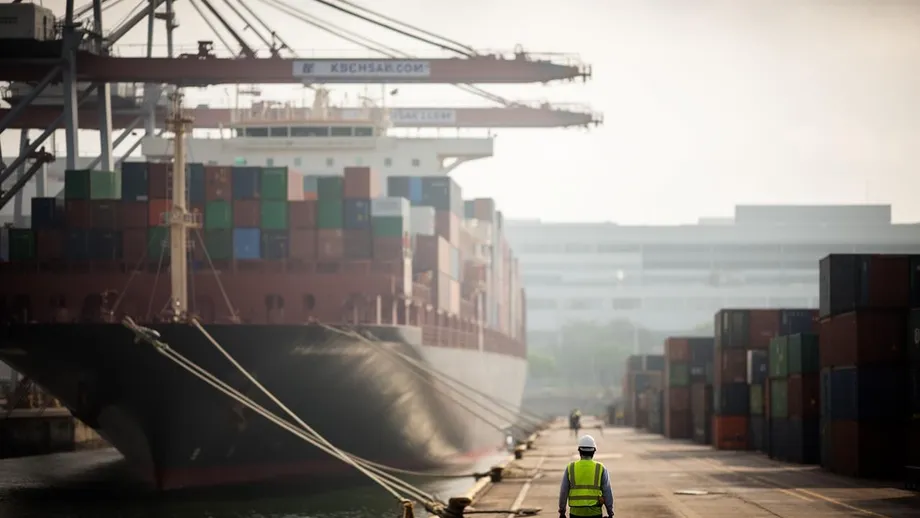
Enterprise Singapore attributed the exceptionally high growth in ship and boat structures to a low comparison base in September 2025. When shipments in an earlier period are very small, a large delivery a year later can produce an unusually high percentage increase. Ship structures also tend to move in large, irregular consignments rather than a steady monthly flow.
The agency did not publish a percentage growth rate for that category because of the exceptionally low comparison base. The size and timing of these shipments help explain why September's result was so far above economists' expectations.
Gold and machinery supplied additional support. Exports of non-monetary gold increased 124.3%, while specialised machinery exports rose 50.4%. Non-monetary gold means gold traded as a commodity rather than held as an official monetary reserve. Its inclusion shows how the non-electronics category brings together products serving very different markets.
Electronics more than double as AI demand continues
Electronic NODX rose 107.6% from September 2025, supported by robust demand related to artificial intelligence. Growth slowed from August's 131.6%, but the value of September shipments was still more than twice its level a year earlier.
Disk media products recorded the largest percentage increase among the named electronic categories, rising 312.4%. Personal computer exports grew 149.5%, while integrated circuits increased 74.7%. Integrated circuits, often called chips, contain tiny electronic components that process, store or control information inside computers and other devices.
AI systems require computing equipment to process information and storage products to hold large amounts of data. That demand helped support Singapore's electronics shipments, with gains spread across chips, computers and disk media products rather than concentrated in just one of those categories.
September's figures also show why the fastest percentage increase and the largest contribution to export growth can come from different categories. A contribution depends on the value of shipments as well as how quickly they grow. Non-electronics led the increase in total NODX, even though electronics recorded the higher growth rate.
Hong Kong and Taiwan record faster growth
Exports increased to nine of Singapore's 10 leading markets in September. Hong Kong recorded growth of 112.1%, up from 62.6% in August, supported by non-monetary gold, integrated circuits and specialised machinery.
Non-electronic exports to Hong Kong rose 183.4%. That increase helps explain why its total grew so quickly: the expansion included substantial demand for goods outside the electronics category, alongside higher chip shipments.
Taiwan received 96.9% more Singapore NODX than a year earlier, compared with growth of 58.5% in August. Non-electronic shipments to Taiwan increased 85.2%, adding another source of strength beyond the electronics products central to the wider AI demand story.
Hong Kong's annual growth rate accelerated by 49.5 percentage points between August and September, while Taiwan's increased by 38.4 percentage points. Those changes made both destinations important parts of September's stronger performance.
US demand stays strong as India contracts
Singapore's NODX to the United States increased 73.2% in September, following growth of 90.9% in August. The US remained a major source of export demand, although its rate of expansion eased while growth to Hong Kong and Taiwan accelerated.
Exports to the European Union rose 11.3%, reversing August's 1.7% decline. The EU had been the only one of Singapore's top 10 markets to record a fall in August, so its return to growth broadened September's expansion.
India moved in the opposite direction. NODX to India fell 5.6%, following a 23.6% increase in August, making it the only declining destination among the top 10 in September.
The market figures describe a strong but uneven month. Most leading destinations bought more Singapore domestic exports than a year earlier, yet the pace varied widely, from the EU's 11.3% increase to Hong Kong's 112.1% rise.
Re-exports show a second channel of trade growth
Singapore's non-oil re-exports grew 47.8% in September, following a 53.2% increase in August. Re-exports are goods brought into Singapore and then shipped elsewhere without substantial transformation. They capture a different part of trade from goods produced or substantially processed domestically.
Electronic re-exports increased 64.2%, while non-electronic re-exports rose 22.1%. Electronics were therefore the faster growing part of both domestic exports and re-exports, even as ship structures played a leading role in the domestic export surge.
For businesses handling cargo, warehousing and distribution, the re-export figures describe activity flowing through Singapore's trading network. The simultaneous increases in domestic exports and re-exports show expansion in both production related trade and the movement of goods onward to other destinations.
Total merchandise trade, which covers goods moving into and out of Singapore, rose 50.8% from a year earlier, accelerating from 44.4% in August. Total exports grew 51.5%, while imports increased 49.9%, placing both sides of goods trade close to 50% annual growth.
How the export outlook changed through the year
Enterprise Singapore had already raised its forecast for annual NODX growth in August to between 14% and 16%, from an earlier range of 3% to 5%. September's release then put growth for January through September at 27.6%, above the upper end of that annual forecast.
The main developments unfolded as follows:
- August 2026: Enterprise Singapore raised its annual NODX growth forecast to 14% to 16%, from 3% to 5%.
- August 2026: NODX grew a revised 46.1% from a year earlier, with electronics up 131.6% and non-electronics up 11.9%.
- September 2026: NODX growth accelerated to 68.4%, led by non-electronics shipments as electronics continued to expand strongly.
- October 16, 2026: Enterprise Singapore released the September figures, including growth of 27.6% for the first nine months.
The annual result will also include October, November and December. A growth rate for nine months and a forecast for the full year cover different periods, so the final three months will determine where 2026 finishes.
What September changes for Singapore's trade picture
Singapore entered the final quarter with export growth supported by several products and destinations. Electronics demand remained strong, gold and machinery exports increased, and nine leading markets recorded gains. Imports and re-exports also expanded sharply.
Large ship and boat structure shipments supplied an additional boost whose scale was magnified by a low base a year earlier. Their irregular timing makes the product breakdown especially useful for understanding September: part of the surge came from continuing electronics demand, while another part came from unusually large deliveries.
For Singapore's producers and trading businesses, the figures point to a much stronger flow of goods than a year earlier. The clearest change from August was the acceleration outside electronics, which more than offset slower growth in electronic exports and helped lift the headline figure far beyond forecasts.
Key Points
- Singapore's NODX rose 68.4% in September 2026, compared with revised growth of 46.1% in August.
- Non-electronic exports increased 54.2%, led by ship and boat structures, with support from gold and specialised machinery.
- Electronic exports grew 107.6%, supported by demand related to artificial intelligence.
- Exports rose to nine of the top 10 markets; India was the exception, falling 5.6%.
- Non-oil re-exports increased 47.8%, while total merchandise trade rose 50.8%.
- NODX grew 27.6% in the first nine months of 2026, against the agency's annual forecast of 14% to 16%.