A new court leader with nearly seven years before retirement
MANILA, Philippines: President Ferdinand Marcos Jr. has selected Supreme Court Associate Justice Rodil V. Zalameda as the Philippines' 28th chief justice, choosing a former Mandaluyong prosecutor whose decisions include the acquittal of former first lady Imelda Marcos and a ruling protecting people threatened by red-tagging.
Contents
- A new court leader with nearly seven years before retirement
- Five nominees, including two more senior justices
- From Caloocan student to prosecutor and judge
- The milestones behind his appointment
- The Imelda Marcos decision draws scrutiny
- A ruling on threats linked to red-tagging
- His votes on public money and constitutional disputes
- A reform plan measured by its effect on the public
- What changes when Gesmundo retires
- Key Points
Presidential Communications Office Secretary Lino Cayetano announced the selection on Thursday, November 5. Zalameda will succeed Chief Justice Alexander Gesmundo, who reaches the mandatory retirement age of 70 on November 6.
Zalameda, 63, was born on August 2, 1963. His appointment gives him a possible tenure lasting until August 2033, nearly seven years to lead the judiciary. The announcement did not give a date for his oath taking.
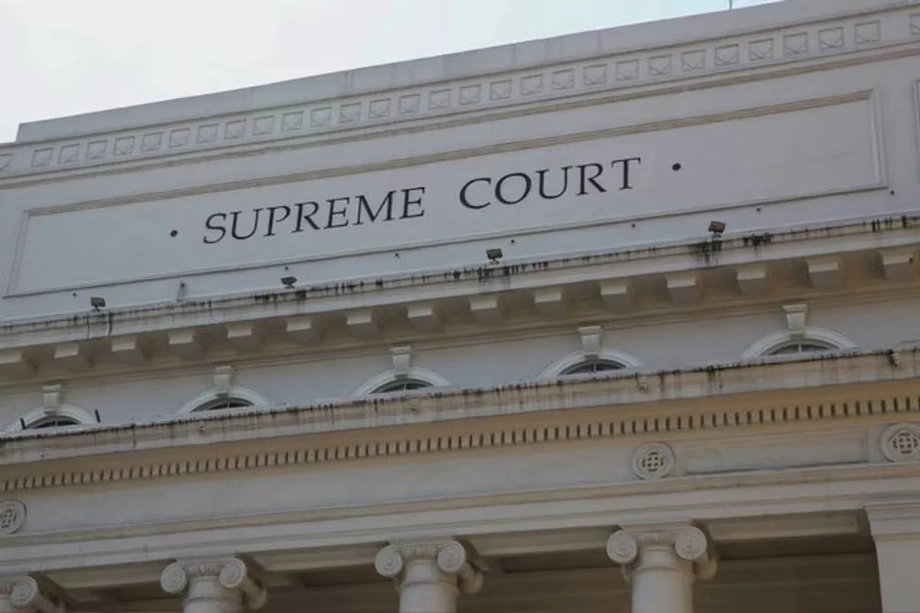
The appointment is Marcos' first selection of a chief justice. It places Zalameda at the head of an institution that decides major constitutional disputes, reviews criminal convictions and oversees the administration of courts across the country.
Cayetano presented the choice as a decision grounded in Zalameda's experience across several levels of the justice system. Speaking at a Palace briefing, the communications secretary described the responsibility entrusted to the president:
The selection of a Chief Justice is among the most consequential responsibilities entrusted to the President under our Constitution.
Five nominees, including two more senior justices
Zalameda was selected from five nominees endorsed by the Judicial and Bar Council, the body that screens candidates for judicial appointments. The other nominees were Senior Associate Justice Marvic Leonen and Associate Justices Alfredo Benjamin Caguioa, Japar Dimaampao and Jose Midas Marquez.
Leonen and Caguioa, both appointed to the Supreme Court by former president Benigno Aquino III, were more senior than Zalameda. Among the shortlisted justices appointed by former president Rodrigo Duterte, Zalameda was the most senior.
Duterte appointed Zalameda to the Supreme Court on August 6, 2019. Before his selection as chief justice, he occupied Seat No. 7 on the court.
Cayetano said Marcos had considered the importance of experienced and principled leadership in maintaining public confidence in judicial institutions. The Palace also pointed to Zalameda's service under several presidents when responding to criticism of the appointment.
From Caloocan student to prosecutor and judge
Zalameda was born in Caloocan City and studied at the University of the East. He finished high school at its Caloocan campus in 1979 and earned a political science degree from its Manila campus in 1983.
At Ateneo de Manila University, he studied law on an academic scholarship, became a dean's lister and worked on student legal publications. He completed his law degree in 1987 and passed the Bar examinations in 1988.
His career began as a branch clerk at the Makati Regional Trial Court. A branch clerk helps manage the work and records of a particular court branch, giving Zalameda early experience in how cases move through the judicial system.
He entered private practice from 1990 to 1995, then returned to government as a public prosecutor. In 2002, at age 39, he became Mandaluyong city prosecutor, a position he held until 2008.
The Mandaluyong city government named him an Ulirang Mandaleño in 2010 in recognition of his public service. His professional experience therefore spans private legal work, prosecution and judging, roles that approach a legal dispute from different sides.
The milestones behind his appointment
Zalameda joined the Court of Appeals in September 2008 and served there for 11 years, later chairing its 17th Division. The appellate court reviews decisions from lower courts and other bodies, examining whether the law was applied correctly.
His move to the Supreme Court in 2019 followed that extended period of appellate work. He was also the first applicant to undergo the court's newly introduced written examinations for candidates seeking appointment as a justice.
The main dates in his rise through the justice system are:
- 1987 and 1988: Completed his law degree at Ateneo and passed the Bar examinations the following year.
- 1995: Returned to government service as a public prosecutor.
- 2002: Became Mandaluyong city prosecutor.
- September 2008: Joined the Court of Appeals.
- August 6, 2019: Was appointed to the Supreme Court by Duterte.
- November 5: Was announced as Marcos' choice to succeed Gesmundo.
The Imelda Marcos decision draws scrutiny
Zalameda authored the Supreme Court First Division decision acquitting Imelda Marcos, the president's mother, of seven counts of graft involving Swiss foundations. The ruling reversed a November 2018 Sandiganbayan judgment that had imposed prison terms totaling as much as 77 years.
The Supreme Court found that the prosecution had failed to establish guilt beyond reasonable doubt. In a criminal case, that standard requires evidence strong enough to leave no reasonable doubt that the accused committed the offense. The Sandiganbayan is the court that handles corruption cases involving public officials.
The other participating members of the First Division concurred in the acquittal. Zalameda's role as the author of the decision has nevertheless become a central point of scrutiny because the president who selected him is the acquitted former first lady's son.
Asked about criticism of the appointment, Cayetano pointed to Zalameda's experience across successive administrations, including those of Fidel V. Ramos, Gloria Macapagal-Arroyo, Aquino and Duterte. The Palace's response focused on his professional record and its confidence in his impartiality.
Cayetano also described the president's expectations for the incoming chief justice:
The President expresses his confidence that Justice Zalameda will discharge the responsibilities of Chief Justice with integrity, impartiality, and an unwavering commitment to the rule of law.
A ruling on threats linked to red-tagging
Zalameda also authored Deduro v. Maj. Gen. Vinoya in 2024, a decision addressing red-tagging and the protection of people facing threats to their life, liberty or security.
Red-tagging means labeling a person or organization as connected to communist insurgents. Such accusations can expose the person to danger, including threats from armed groups or state agents.
The Supreme Court held that red-tagging, vilification, labeling and guilt by association may threaten a person's rights and may justify issuing a writ of amparo. An amparo proceeding gives someone facing such dangers a way to seek court protection.
For people targeted by accusations of communist links, the decision provides a legal route to ask a court for protective action. Its focus on personal safety places it among the most consequential rights rulings Zalameda has written.
His votes on public money and constitutional disputes
Zalameda's record also includes disagreement with colleagues over unprogrammed appropriations. These are budget provisions whose release depends on conditions, such as the availability of additional funding, rather than ordinary spending authority alone.
In his dissent, he argued that Congress was not barred from proposing new programs, activities and projects absent from the National Expenditure Program, the executive branch's proposed national budget. The dispute concerns how much room lawmakers have to change the government's spending plans.
In litigation involving P60 billion in Philippine Health Insurance Corporation funds, Zalameda agreed that the transfer to the national treasury was unconstitutional. He also took the position that the government could still be considered to have acted in good faith. That addresses a different issue: whether officials believed they were acting lawfully when they authorized the transfer.
Zalameda concurred in the unanimous decision declaring Vice President Sara Duterte's 2025 impeachment complaint unconstitutional. He also joined the unanimous ruling that the Philippines remained obliged to cooperate with the International Criminal Court.
His other votes included concurrence in denying Senator Ronald dela Rosa's request for a temporary restraining order against his ICC warrant, the dismissal of a petition concerning same-sex marriage, and a decision compelling Congress to pass legislation against political dynasties.
A reform plan measured by its effect on the public
Zalameda outlined an approach to judicial reform during his public interview for the chief justice position. He proposed introducing changes in phases, beginning with identifying institutional priorities and setting measurable benchmarks.
He said success should be assessed through the effect of those changes on the public. In practical terms, a benchmark gives an institution a defined result against which it can check its progress, rather than relying on a broad promise of improvement.
His proposed approach makes the experience of people using the courts the measure of success. The details presented during the selection process centered on sequencing reforms and assessing results, rather than announcing a completed program.
Cayetano, explaining why the Palace considered Zalameda qualified, linked his past positions to his understanding of the institution he will lead:
His experience across the different levels of our judicial system gives him a comprehensive understanding of the courts and the people they serve.
What changes when Gesmundo retires
Gesmundo's retirement on his 70th birthday triggers the leadership transition. Article VIII, Section 11 of the 1987 Constitution sets 70 as the compulsory retirement age for justices and judges. Republic Act 910 provides retirement benefits and pensions for members of the judiciary.
Zalameda's own 70th birthday falls on August 2, 2033. His possible tenure of nearly seven years would give him a substantial period to put his proposed phased reforms into practice and assess their results.
As chief justice, he will lead the Supreme Court and chair the Judicial and Bar Council. The council role connects the office directly to the screening of future judicial candidates, while his administrative responsibilities extend to the wider court system.
For litigants, lawyers, prosecutors and court employees, the transition changes the person responsible for leading judicial administration. For Marcos, it completes his first choice of a chief justice, with the Palace publicly tying that selection to impartiality, experience and confidence in the courts.
Key Points
- Marcos selected Rodil Zalameda as the Philippines' 28th chief justice from a shortlist of five nominees.
- He succeeds Alexander Gesmundo, who reaches the mandatory retirement age of 70 on November 6.
- Zalameda joined the Supreme Court on August 6, 2019, after 11 years at the Court of Appeals.
- He authored the decision acquitting Imelda Marcos of seven graft counts and the Deduro ruling addressing red-tagging and court protection.
- He proposed phased judicial reforms with measurable benchmarks and assessment based on their effect on the public.
- Born on August 2, 1963, he could serve until reaching compulsory retirement in August 2033.