Five months of drought forecast for Cebu
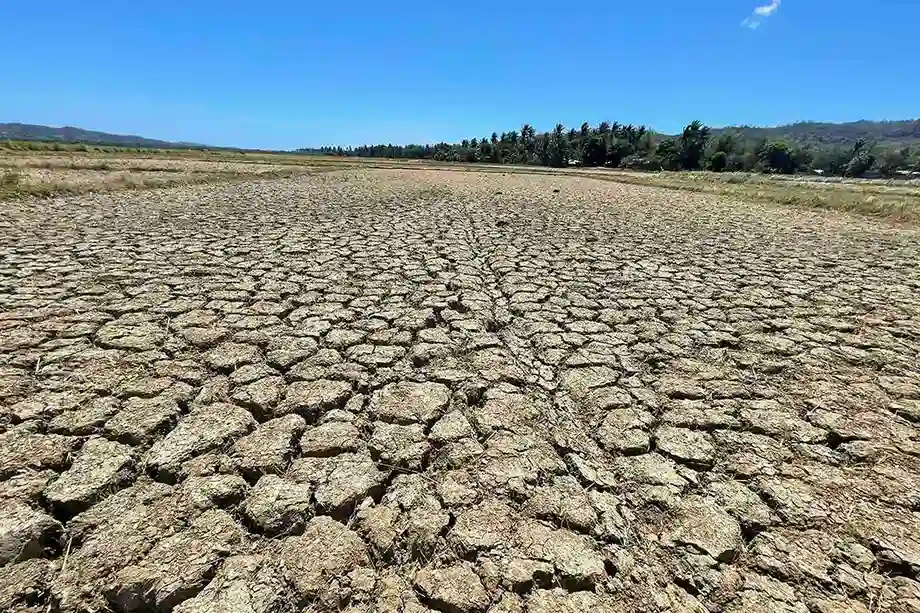
Cebu faces drought from December 2026 through April 2027, following a dry spell in November, as a very strong El Niño threatens water supplies, farms and communities across the Philippines. The provincial government has created a response task force and proposed ₱100 million for water supply development in its 2027 budget.
Contents
- Five months of drought forecast for Cebu
- What the Pacific forecasts show
- How a dry spell becomes drought
- Where Cebu's exposure is greatest
- Who will coordinate the response?
- When shortages reach the household
- Farm losses and the risk to livelihoods
- Heavy rain remains part of the outlook
- Water conservation becomes an immediate priority
- Key Points
The Philippine Atmospheric, Geophysical and Astronomical Services Administration (PAGASA) said on November 5 that the weather phenomenon could reach its strongest phase before the end of 2026 and continue affecting the country through the first half of 2027. By March and April, its projections indicate drought could extend across the country.
Cebu's vulnerability mapping has flagged 11 local government units where communities could be particularly exposed. Tuburan has the largest number of potentially affected barangays among the figures disclosed, with 36. Daanbantayan and Catmon each have 20.
The threat arrives as the Department of Agriculture puts national agricultural damage at ₱8.57 billion as of October 21, with more than 288,000 farmers affected. For households dependent on rainwater, prolonged shortages can also mean buying expensive drinking water or travelling to another island to obtain it.
Governor Pamela Baricuatro issued Executive Order No. 57 on October 26, establishing the Super El Niño Task Force. Its responsibilities range from assessing water supplies and arranging emergency distribution to coordinating agricultural assistance and preparing health services. The proposed spending and the new coordination body put water access and livelihoods at the centre of Cebu's response.
What the Pacific forecasts show
The World Meteorological Organization's Global Seasonal Climate Update for September to November 2026 forecasts an average sea surface temperature anomaly of about 3.6°C in the Niño 3.4 region. This is a central Pacific monitoring area used to track El Niño. An anomaly measures how much warmer or cooler the water is than its usual temperature.
WMO expects strengthening to peak in November and December. Its forecast systems generally show a narrow range of outcomes, indicating close agreement about the expected direction and strength of the event.
The US National Oceanic and Atmospheric Administration's Climate Prediction Center issued an El Niño Advisory in its October 8 ENSO Diagnostic Discussion. It put the probability of strong to very strong conditions continuing through January to March 2027 at greater than 83%.
NOAA recorded a Niño 3.4 temperature anomaly of 2.1°C, with readings of 3.0°C in Niño 3 and 3.9°C in Niño 1+2, areas farther east. Parts of the eastern equatorial Pacific exceeded 4.0°C above average. Those observations describe conditions already measured; WMO's 3.6°C figure is a forecast seasonal average.
NOAA also estimated the chance of an event exceeding the strength of previous episodes dating back to 1950 at 54% for September to November, 83% for October to December and 70% for November to January. Its benchmark uses a relative ocean temperature index of at least 2.5°C over three months. The next diagnostic discussion was scheduled for November 12.
How a dry spell becomes drought
PAGASA's classifications depend on both the amount of missing rain and how long the shortage lasts. Below normal rainfall means a reduction of 21% to 60% from an area's average. Way below normal means a reduction greater than 60%.
A dry spell means three consecutive months of below normal rainfall or two consecutive months of way below normal rainfall. Drought means three consecutive months of way below normal rainfall or five consecutive months of below normal rainfall. A province can therefore move into drought after months of accumulated shortages, even if some rain still falls.
PAGASA's October assessment placed five provinces in meteorological drought: Albay, Catanduanes, Negros Oriental, Samar and Siquijor. Another 11 provinces had dry spells and 10 had dry conditions, bringing the number experiencing rainfall shortages across those categories to 26.
For November, PAGASA expects below normal to way below normal rainfall across much of the Philippines, together with warmer than average temperatures. Its forecast places Cebu among areas facing a dry spell by the end of the month. Nearby provinces expected to face drought include Negros Oriental, Siquijor, Leyte and Southern Leyte.
Cebu's detailed outlook extends drought from December through April. An earlier conditional warning had identified possible drought in Cebu and Bohol by March if rainfall remained below normal. The December projection gives Cebu an earlier planning point for water distribution and farm support.
Where Cebu's exposure is greatest
The provincial vulnerability mapping identifies communities that may need particular attention as supplies tighten. The disclosed barangay counts are:
- Tuburan: 36 barangays.
- Daanbantayan and Catmon: 20 barangays each.
- Carmen: 15 barangays.
- Borbon: 12 barangays.
- Sogod: 11 barangays.
- Tabuelan and Bogo City: seven barangays each.
Those figures total 128 potentially affected barangays across eight local government units. The province flagged 11 local government units in total, but the names and barangay counts for the other three were not given.
Tuburan's 36 barangays represent more than a quarter of the 128 listed. That concentration gives the task force a concrete starting point for assessing water availability, identifying households with limited alternatives and coordinating assistance with municipal officials.
The task force's work also covers water utility providers. A shortage can develop differently in a community served by a distribution network, a farming area dependent on local water sources, or an island where stored rainwater is a household's main supply. Assessing those local conditions is part of the provincial mandate.
Who will coordinate the response?
Retired Col. Dennis Francis V. Pastor, head of the Cebu Provincial Disaster Risk Reduction and Management Office, will chair the task force. Provincial Administrator Joseph Felix Mari H. Durano will serve as vice chair, while the disaster office will act as secretariat.
Membership includes provincial department heads and regional representatives from the Department of Agriculture and the Department of Environment and Natural Resources. The team will coordinate with local governments, national agencies and water providers on weather monitoring, emergency water distribution, agricultural assistance, health readiness and public information.
The sequence of warnings and decisions sets out the preparation period:
- September 23, 2026: A PAGASA advisory cited by Baricuatro reported active, strong El Niño conditions.
- October 8: NOAA issued its advisory forecasting continued strengthening.
- October 26: Baricuatro established the provincial task force through Executive Order No. 57.
- November 5: PAGASA announced that a very strong El Niño was present in the tropical Pacific.
- November 2026: Cebu is forecast to experience a dry spell.
- December 2026 to April 2027: Cebu's outlook projects drought.
The proposed 2027 provincial budget includes ₱354.82 million for programmes benefiting farmers and fisherfolk, alongside ₱100 million for water supply development. Together, those allocations amount to ₱454.82 million. They are proposed spending, with implementation dependent on the budget process and the programmes funded.
When shortages reach the household
On Pangan-an Island, earlier experiences show the costs of losing a dependable water supply. Remedios Babatuan, an island healthcare worker interviewed in 2024, described households relying on rainwater, shared wells and brackish water, which contains some salt.
Babatuan explained how water purchases competed with food spending:
"There are times that the water is expensive and we don't have any money to afford it, especially when the rice is expensive, so we use the water from the well," she said.
Volunteer JP Rodriguez described a local water centre where households could buy only two gallons a day and supplies sometimes ran out. She estimated mineral water at about ₱80 per gallon and a return boat journey to Olango at another ₱80. At those prices, a trip to collect one gallon would cost about ₱160 before other expenses.
Rodriguez recalled that some residents temporarily stayed in Sta. Rosa on Olango Island during a difficult dry period. A leaking rainwater tank had reduced stored supplies, and the local water centre had run out.
Pangan-an has had a desalination plant powered by solar energy, documented in 2024. Desalination removes salt from water. For households, dependable access requires a plant to keep operating, produce enough water and make that supply affordable and reachable. The island's earlier experience makes storage, maintenance and distribution practical priorities as Cebu prepares for another prolonged dry period.
Farm losses and the risk to livelihoods
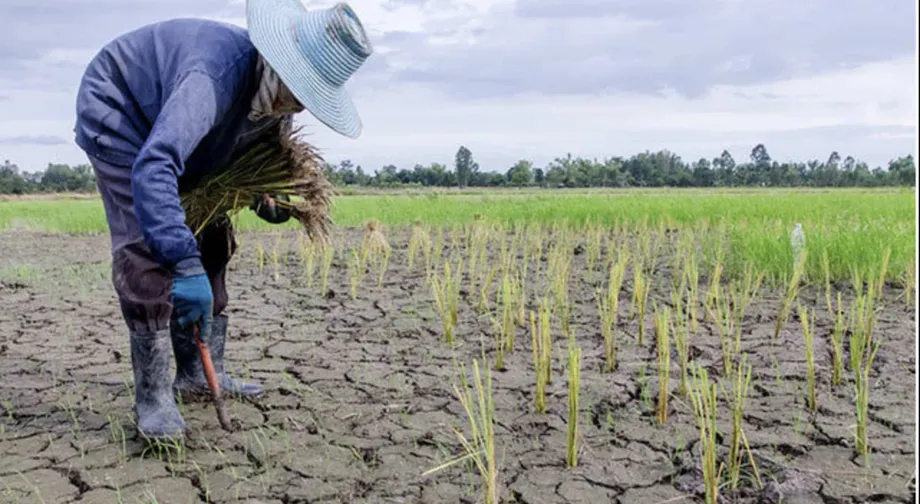
The Department of Agriculture's ₱8.57 billion damage estimate and count of more than 288,000 affected farmers show that agricultural losses are already substantial. Its worst case scenario puts about 4.6 million of the country's 10.4 million farmers and fisherfolk at risk, equivalent to roughly 44%.
The department said assistance included ₱10.81 billion in production support, such as seeds, fertilisers and soil conditioner. It also reported ₱569.95 million in Philippine Crop Insurance Corporation indemnification for 68,980 farmers. Indemnification is compensation paid for insured losses.
Analiza Solis, chief of PAGASA's Climate Monitoring and Prediction Section, warned that prolonged shortages could affect soil moisture, water sources and eventually people's ability to meet basic needs. She described the progression:
"There will be prolonged dry spell that will lead to meteorological drought conditions and even other forms of drought, such as the agricultural drought, hydrological drought," Solis said.
Meteorological drought concerns a sustained rainfall shortage. Agricultural drought develops when crops lack enough moisture, while hydrological drought affects water in rivers, reservoirs and underground supplies. Socioeconomic drought occurs when shortages disrupt the supply of goods and services people need, damaging livelihoods and household finances.
For Cebu, those risks connect the proposed farm assistance budget with water development. Farmers need water to sustain production, while families need reliable supplies for drinking, cooking and sanitation. Provincial officials have also identified possible fisheries losses, heat related illness and disruptions to essential public services.
Heavy rain remains part of the outlook
PAGASA forecasts two to six tropical cyclones developing within or entering the Philippine Area of Responsibility between November 2026 and April 2027. Tropical cyclones and other weather systems can still bring heavy rainfall during El Niño.
The northeast monsoon, the intertropical convergence zone where winds meet, and easterly winds can also produce rain. Local authorities therefore face a combination of prolonged water shortages and occasional heavy rainfall, requiring attention to both water conservation and storm preparedness.
WMO's seasonal outlook also forecasts a positive Indian Ocean Dipole, with an average index of 0.9°C for September to November. This measures a temperature contrast between the western and eastern tropical Indian Ocean, another influence on regional rainfall. WMO expects the North and South Tropical Atlantic to remain warmer than average as well.
PAGASA's provincial outlook provides the more direct guide for Cebu's preparations: a November dry spell, drought beginning in December and warmer conditions across much of the country. Rain brought by an individual weather system may replenish some supplies, while drought classifications reflect rainfall accumulated over several months.
Water conservation becomes an immediate priority
PAGASA Administrator Nathaniel Servando called on agencies and the public to prepare for the shortages, with particular attention to conserving and managing water:
"The public and all concerned agencies are strongly advised to implement appropriate sectoral interventions, conservation and mitigation measures, particularly water conservation and efficient management of water resources, to minimize the potential impacts of El Niño," Servando said in a statement.
For Cebu's task force, the assigned work begins with identifying exposed communities and checking available water supplies. Emergency distribution, agricultural support and health preparations are all part of the order, giving provincial offices and municipal governments specific responsibilities before the forecast drought period.
Household conservation can reduce waste, but the Pangan-an experience shows why public supply arrangements matter. A family facing an empty water centre or an expensive boat journey needs access to water as well as advice to save it. Cebu's response will have to address the availability, delivery and cost of that supply through several months of expected shortages.
Key Points
- PAGASA forecasts a dry spell in Cebu in November 2026 and drought from December through April 2027.
- Very strong El Niño conditions could peak before the end of 2026, with effects continuing into the first half of 2027.
- Cebu's vulnerability mapping flags 11 local government units; Tuburan has 36 potentially affected barangays.
- Executive Order No. 57 created a task force to coordinate water, agriculture, health and other preparations.
- The proposed 2027 provincial budget includes ₱354.82 million for farmers and fisherfolk and ₱100 million for water development.
- National agricultural damage reached ₱8.57 billion as of October 21, affecting more than 288,000 farmers.
- Heavy rain remains possible, with two to six tropical cyclones forecast within or entering the Philippine Area of Responsibility from November to April.