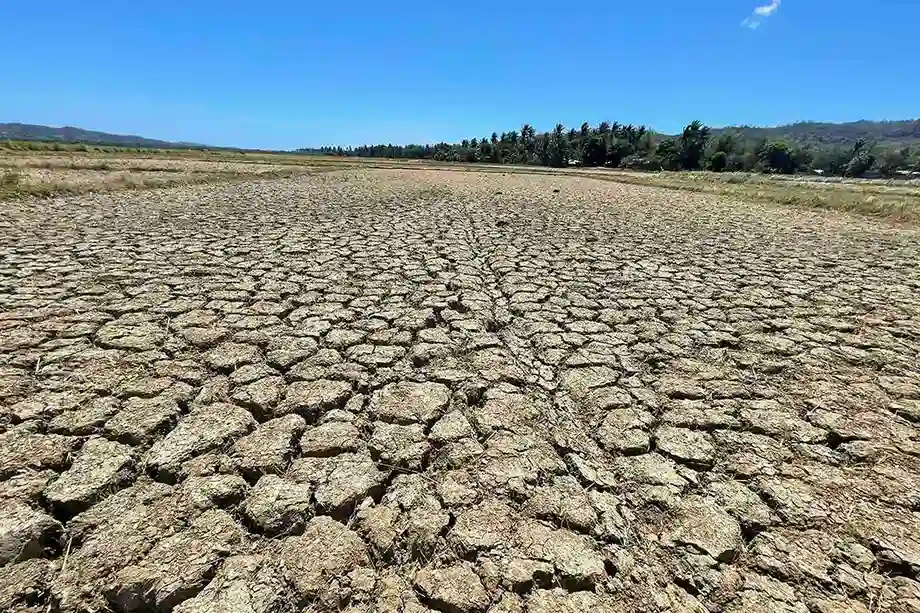
Pacific warming deepens as farm losses reach P8.5 billion
Philippine agricultural damage from El Niño reached P8.5 billion by October 21, while forecasts cited by CARE Philippines put February water inflows at just 2% of normal at Magat Dam and 5.5% at Pantabangan Dam. The combination threatens harvests and irrigation as a very strong El Niño is expected to peak before the end of 2026 and persist into the first quarter of 2027.
Contents
- Pacific warming deepens as farm losses reach P8.5 billion
- How the drought forecast is changing
- Rain can still fall, and flooding remains possible
- Corn losses lead, while rice production weakens
- Davao directs resources toward keeping farms productive
- Reservoir pressure reaches farms and Metro Manila
- Local plans prioritize drinking water and essential services
- Irrigation and local forecasts guide planting decisions
- Rice stocks offer near term protection, with limits
- Schools prepare for water shortages and food pressure
- Health officials warn about heat and unsafe water
- Key Points
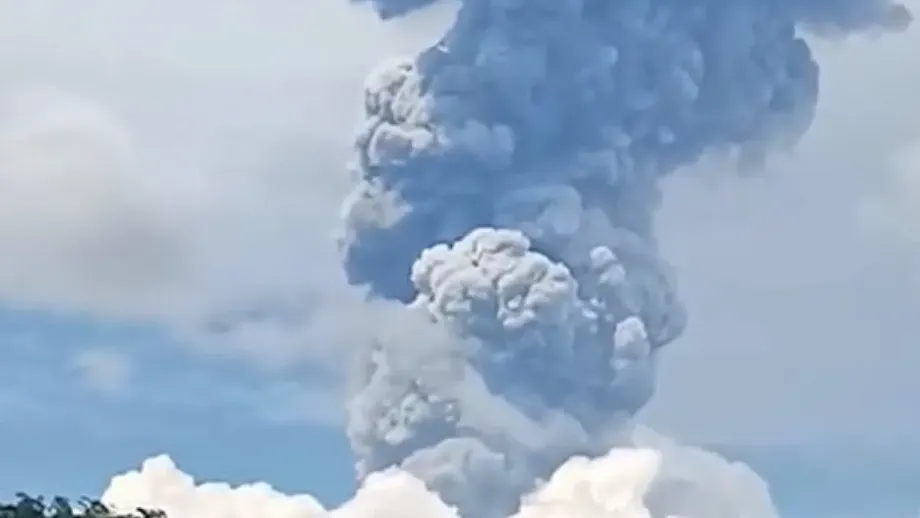
Ana Liza S. Solis, chief of the Philippine Atmospheric, Geophysical and Astronomical Services Administration's Climate Monitoring and Prediction Section, told a House agriculture committee hearing that tropical Pacific sea surface temperatures averaged about 2.5 degrees Celsius above normal from August to October. That exceeds the 2 degree threshold she cited for a very strong event.
Solis described the situation to lawmakers:
A very strong El Niño is present in the tropical Pacific.
PAGASA expects rainfall shortages to spread through the coming months, with warmer daytime temperatures possible even during the northeast monsoon, or Amihan. Farmers face decisions about planting and irrigation, while schools, hospitals and water utilities must preserve supplies for essential services.
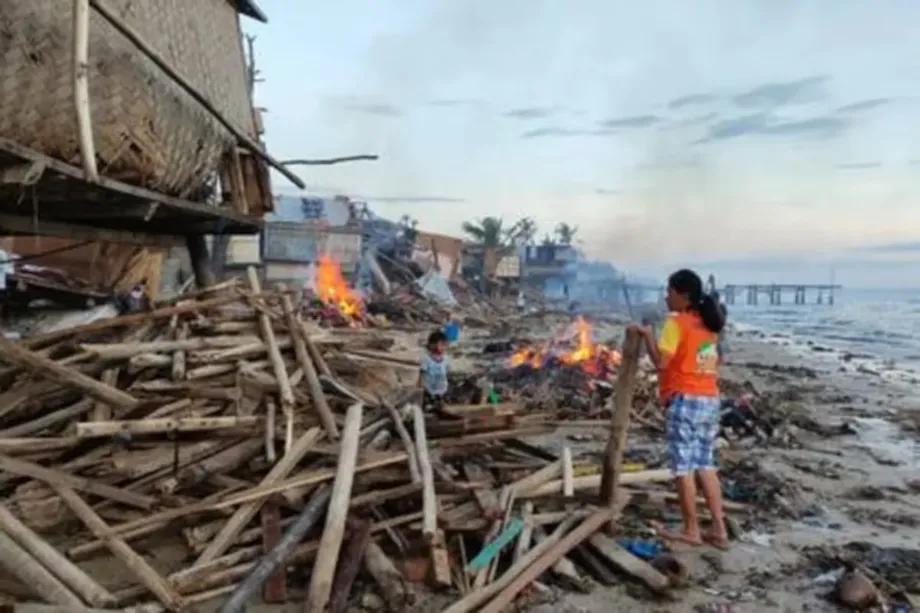
The pressure is already local and concrete. Oriental Mindoro reports water shortages affecting 11,097 families in Puerto Galera. Metro Manila's allocation from Angat Dam has been reduced. In Davao Region, agriculture officials are checking damage to rice, bananas and other crops while directing most of their response budget toward sustaining production in less vulnerable areas.
How the drought forecast is changing
PAGASA counted five provinces under meteorological drought as of October 31, alongside 11 provinces and highly urbanized cities experiencing dry spells and another 10 provinces experiencing dry conditions. Meteorological drought means rainfall has stayed substantially below its usual level for a prolonged period.
CARE Philippines' Situation and Action Report, dated October 12, had listed seven provinces in drought and 41 provinces and areas with rainfall deficits. Its drought list included Albay, Camarines Norte, Camarines Sur, Catanduanes, Negros Oriental, Samar and Siquijor.
Solis gave lawmakers the following forecast for the spread of meteorological drought:
- December 2026: 26 provinces.
- January 2027: 48 provinces.
- February 2027: 68 provinces.
- March 2027: a reported 87 provinces.
PAGASA's stated March count exceeds the Philippines' 82 provinces; the hearing account gave no explanation of its geographic coverage. The agency is preparing El Niño Advisory No. 6 with updated assessments and impact forecasts.
PAGASA defines a dry spell as three consecutive months with rainfall between 21% and 60% below average. Agricultural drought develops when crops lack sufficient moisture, while hydrological drought affects rivers, reservoirs and groundwater. Rainfall shortages can therefore reach farms and water systems at different times.
Rain can still fall, and flooding remains possible
PAGASA Administrator Nathaniel Servando said monthly rainfall could fall by 60% or more from average in affected areas. A place normally receiving 100 units of rain would receive 40 or fewer under that reduction. Some rain can still fall while the accumulated shortage grows.
PAGASA's November 2026 to April 2027 outlook points to below normal to much below normal rainfall across much of the country. Earlier outlooks included December rainfall above normal in parts of Luzon and Western Visayas, followed by widespread shortages in January and February.
Servando explained that December normally brings relatively little rain in some places, so an increase above that month's average can still leave limited water available. Local rainfall patterns and the timing of rain matter for both crops and reservoirs.
John Glenn Ocaña, regional director of the Department of Science and Technology in Eastern Visayas, warned that monsoon rains and tropical cyclones could still produce flooding, including in western areas. PAGASA also projected that one or two tropical cyclones could enter or cross the Philippine landmass in November and December.
CARE reported that the 2026 monsoon and four tropical cyclones affected 2.78 million families. Six affected regions are forecast to face drought, leaving communities to prepare for water shortages while recovering from earlier destructive weather.
Corn losses lead, while rice production weakens
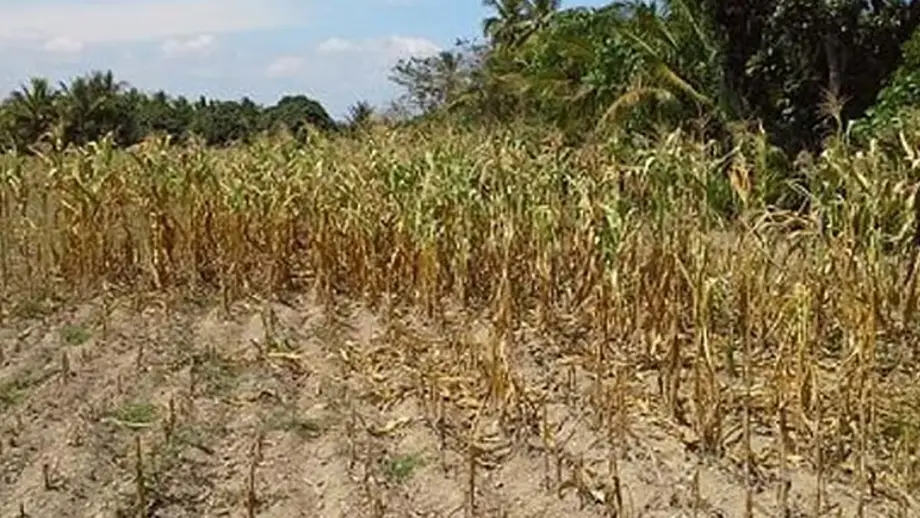
Agriculture Assistant Secretary U-Nichols A. Manalo told the House hearing that corn accounted for almost P5 billion of the P8.5 billion in recorded damage, followed by rice. Corn therefore represented roughly three fifths of the losses. The Department of Agriculture said it had provided P11.34 billion in assistance, including insurance payments to affected farmers.
Rice production was already falling. Philippine Statistics Authority figures cited by agriculture officials put third quarter palay output at 3.08 million metric tons, down from 3.75 million a year earlier, a decline of almost 18%. Palay is rice before its husk is removed.
The department projects output of 18.67 million metric tons in 2027, about 5% below the 19.67 million recorded in 2025. It also warned that 2026 production could fall below 18 million metric tons. An earlier warning put the potential reduction from a strong El Niño at up to 700,000 metric tons.
Agriculture Undersecretary Christopher Morales identified several pressures on harvests: expensive fertilizer and fuel, delayed planting, irrigation constraints, farmers choosing to avoid financial risk, and heavy southwest monsoon rains. Drought is reaching a farming sector already managing higher costs and disrupted crop schedules.
Historical loss totals also vary substantially. Government figures cited for the 2023 to 2024 El Niño put agricultural losses at P57.78 billion, while CARE described P6.87 billion in damage by September 26, 2026 as about 45% of the previous event's final total, implying roughly P15.3 billion. The published totals use different apparent baselines, with no explanation of the gap.
Davao directs resources toward keeping farms productive
The Philippine Information Agency's Davao farm assessment, published November 4, records Department of Agriculture Region XI figures of 6,205 farmers affected and P584 million in damage as of June 2026.
The regional department separately recorded moisture stress affecting 4,447 farmers and 4,790 hectares, with P444 million in damage. Moisture stress occurs when plants lose more water than they absorb. Regional Executive Director Macario Gonzaga described those farmers as additional to the 6,205 in the El Niño count.
Monitoring covers Davao del Sur, Davao del Norte, Davao de Oro and Davao City. Matanao and Bansalan were among the areas reporting severe water shortages, with bananas and other fruit crops also damaged.
DA Region XI announced P729 million for its action plan, including P678 million to support production in less vulnerable areas, P40 million for preparations and P9.9 million to save production in heavily affected areas. The largest allocation seeks to keep food growing where water conditions remain workable.
Gonzaga said reports are updated every 15 days. He urged farmers to contact municipal agriculture offices promptly when conditions deteriorate, allowing technicians to verify crop conditions, affected hectares and estimated losses before plants die or wilt.
Reservoir pressure reaches farms and Metro Manila
CARE's February forecasts point to extremely weak replenishment at Magat and Pantabangan, both important irrigation sources. Its report also projects flows in Mindanao river basins at between 8% and 26% of normal. Inflows are the water entering a reservoir; prolonged low inflows leave less available to replace water released for use.
Metro Manila depends heavily on the Umiray-Angat-Ipo River System, which supplies approximately 91% of the combined requirements of the East and West Concession Areas. Angat also supplies irrigation and supports electricity generation.
The National Water Resources Board reduced the capital's raw water allocation from Angat to 44 cubic meters per second in October, compared with the usual 50 to 53. That is a reduction of about 12% to 17%. Supply remained sufficient when the adjustment was introduced.
Angat stood at 208.70 meters at 8 a.m. on November 3, below its normal high water level of 210 meters. Maynilad said service conditions depend on raw water availability and quality, treatment capacity and the distribution network. It will issue separate advisories if service changes become necessary.
EcoWaste Coalition program manager Jove Benosa urged local governments to map water sources, match available supplies with demand and prepare delivery schedules and allocation rules before shortages become critical.
Local plans prioritize drinking water and essential services
Oriental Mindoro's water security plan makes October 2026 to April 2027 its priority monitoring period. The province enters that period with the Puerto Galera shortages and a record of P703.8 million in agricultural losses during 2024, when the previous El Niño affected 7,993 farmers.
Executive Order No. 29, Series of 2026 adopts the framework of Executive Order No. 53, Series of 2024, which established the provincial El Niño task force. Six operational clusters cover water, agriculture, food assistance, health, disaster preparedness and public information.
Current measures include water distribution support in Baco, fuel assistance in Puerto Galera and a drilling machine initially deployed in Bulalacao. Four response scenarios allow the province to expand interventions according to verified impacts, PAGASA advisories and response capacity.
Cebu Governor Pamela Baricuatro created a provincial Super El Niño Task Force through Executive Order No. 57, Series of 2026. Its responsibilities include emergency water delivery, alternative sources and priority allocation for drinking, sanitation and health facilities. Situation and action reports are required at least every two weeks during heightened monitoring.
Irrigation and local forecasts guide planting decisions
In Bohol, the P833.37 million Mabini-Cayacay Small Reservoir Irrigation Project is expected to provide water throughout the year to 530 hectares and benefit 717 farmers in Mabini and Alicia. Its infrastructure includes a dam 32.20 meters high and an 11.31 kilometer main canal.
Officials expect the project to allow three crop cycles annually instead of two, an increase of 50% in planting frequency. The Department of Agriculture is also promoting improved rice varieties, irrigation pumps powered by solar energy and planting calendars based on local weather and water availability.
DOST is promoting Smarter Approaches to Reinvigorate Agriculture as an Industry in the Philippines, or SARAI, and installing automated weather systems that generate local observations every 15 minutes. Its HANDA Pilipinas outreach in the Visayas brings preparedness technologies to communities and decision makers.
Manalo said the agriculture department was coordinating with local governments and farmer groups and seeking additional money for cloud seeding. CARE identified about November 30 as a preparation window for Mindanao communities to expand water storage, develop boreholes and plant seed suited to drought.
Rice stocks offer near term protection, with limits
National Food Authority officials said Central Visayas warehouses held 47,054 bags of rice, with fresh shipments received and more expected during the dry spell. Officials expected sufficient supplies and steady rice prices through December 31, 2026.
The region depends on rice from surplus areas, making continued shipments important. NFA officials were also pursuing local procurement with governments and legislators in Bohol.
Earlier concerns about the smaller emergency rice reserve highlighted a national problem: estimates of about 75 days of supplies included rice in homes and businesses, while NFA Administrator Larry Lacson reported seven days in government warehouses after releases and auctions. Rice available nationally and rice ready for public emergency distribution serve different needs.
Samahang Industriya ng Agrikultura Executive Director Jayson H. Cainglet warned lawmakers that imports could become harder to secure if exporting countries keep more grain for their own consumption and reserves. He urged stronger domestic production. DTI Region 7 also began surveying water container sizes, prices and stocks on October 19, while urging families to avoid panic buying.
Schools prepare for water shortages and food pressure
Senator Loren Legarda urged the Department of Education and local governments to install rainwater collection and storage systems in public schools. Stored rainwater would support cleaning and sanitation, especially where regular supplies are limited. In severely affected places, she proposed coordination with the Bureau of Fire Protection and water districts for deliveries.
Education Secretary Sonny Angara said DepEd was strengthening Gulayan sa Paaralan, its school gardening program, and promoting farm schools to help sustain food production. Priority crops include mung beans, okra, malunggay, saluyot, alugbati and sweet potatoes.
Proposed measures include drip irrigation, which delivers water close to plant roots, and organic ground cover to reduce moisture loss. Schools with limited space could use containers, vertical growing systems or hydroponics, which grows plants in nutrient solutions.
CARE's 2024 gender analysis in Kalinga and Negros Oriental found that women continued household and care work while also working on farms, sometimes starting at 3 or 4 a.m. to avoid heat. CARE leads the ACCESS Consortium of 14 humanitarian organizations, which is activating a drought protocol, and is developing the proposed AQUA water security project for Catanduanes and Negros Island.
Health officials warn about heat and unsafe water
Iloilo officially entered a dry spell on November 1, according to its Provincial Community Defense Action Center. Provincial Health Officer Dr. Rodney Labis warned on November 4 about dehydration, heat illness and infectious diseases as water supplies become strained.
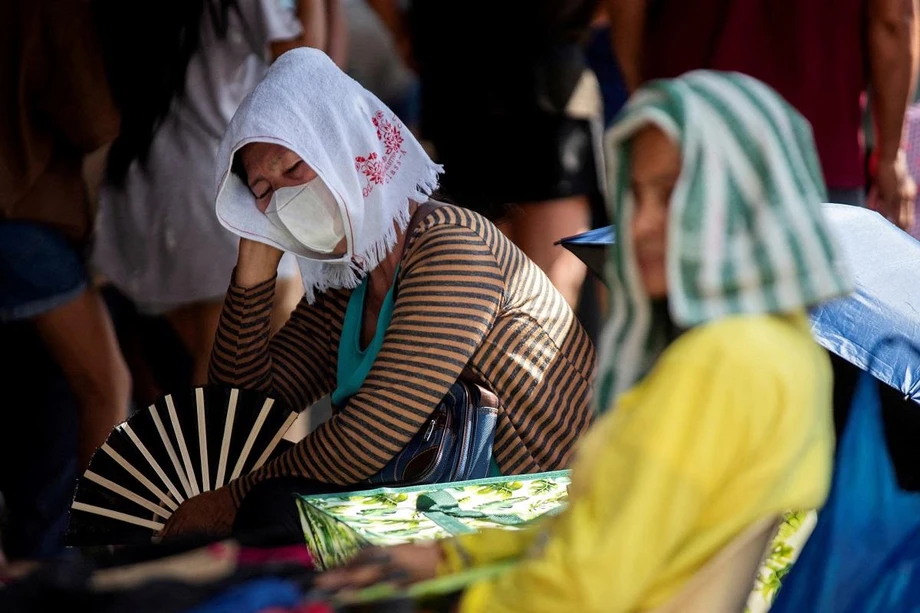
Labis advised residents to avoid prolonged direct sunlight, schedule outdoor work during cooler hours and take breaks in shade or ventilated spaces. Dizziness, nausea and vomiting require attention. Confusion or convulsions may signal heat stroke, a medical emergency.
Health officials urged households to keep stored water clean and covered, preserve safe supplies for drinking, cooking and hygiene, and remove mosquito breeding sites. Dengue prevention follows the Department of Health's 4S approach: destroy breeding sites, use personal protection, seek early consultation and support targeted fogging or spraying when warranted.
Children, older people, pregnant women and people with existing illnesses are priority groups. Water conservation must preserve essential hygiene and care, while local health services monitor disease trends and issue timely warnings.
Key Points
- PAGASA says a very strong El Niño is present, with a peak expected before the end of 2026 and persistence into early 2027.
- Agricultural damage reached P8.5 billion by October 21, with corn accounting for almost P5 billion.
- February forecasts cited by CARE put inflows at Magat and Pantabangan at 2% and 5.5% of normal.
- Metro Manila's Angat allocation was reduced to 44 cubic meters per second in October.
- Provincial plans prioritize drinking water, irrigation, food assistance, schools and health facilities.
- Tropical cyclones and flooding remain possible during the prolonged rainfall shortage.