Brazil seeks R$541 million for a share of flood damage
Brazilian federal prosecutors and Instituto Preservar have sued Shell Brasil Petróleo for R$541 million, about $108 million, seeking compensation for part of the damage from the April and May 2024 floods in Rio Grande do Sul. The case connects a specific disaster to the Shell group's historical carbon emissions through scientific estimates of how global warming intensified the rain.
Contents
- Brazil seeks R$541 million for a share of flood damage
- How far the Brazilian floods reached
- How the plaintiffs calculated the claim
- What the attribution study says
- Why Shell was chosen
- Where any compensation would go
- Philippine survivors bring a different argument
- What Shell knew and how it responded
- A timeline of the disasters and claims
- Courts are testing proportional responsibility
- Key Points
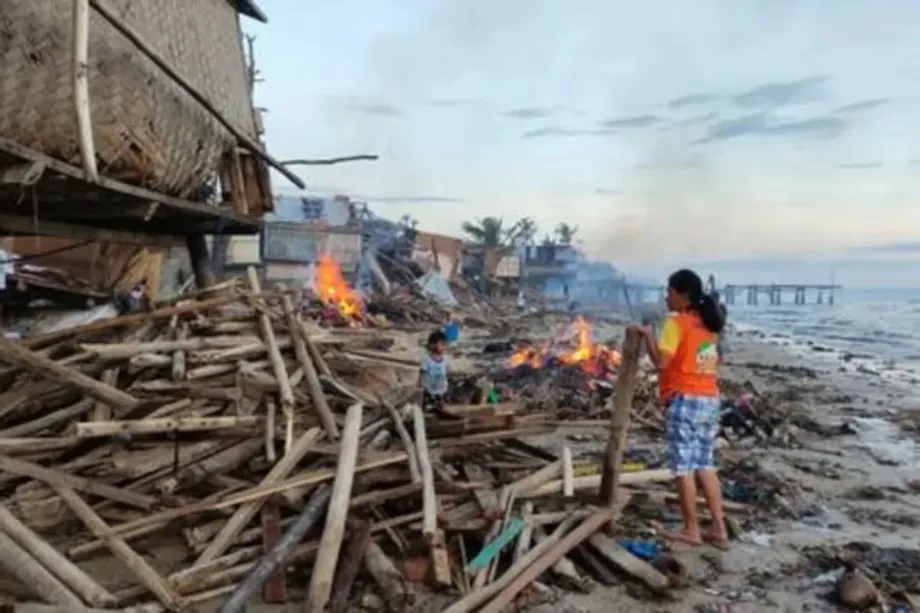
The lawsuit, filed on October 9, 2026, follows a claim brought in Britain in 2025 by around 100 survivors of Typhoon Rai, known in the Philippines as Odette. That storm struck in December 2021, killing more than 400 people and leaving hundreds of thousands without homes.
Both cases seek to make a major fossil fuel producer pay a proportion of disaster costs. Their legal arguments differ: the Brazilian plaintiffs rely on environmental liability and a calculation linking emissions to heavier rainfall, while the Philippine survivors also allege negligence involving Shell's knowledge and public communications about climate change.
Brazil's Federal Public Prosecutor's Office, known as the MPF, describes the claim in its October 10 statement. The action seeks roughly equal amounts for material losses and collective environmental and climate harm.
Shell said after the Brazilian filing that it had not been formally notified of the lawsuit. Following the Philippine claim, the company rejected the suggestion that it possessed unique knowledge about climate change.
For the affected communities, the central issue is who should help pay for destroyed homes, damaged infrastructure and protection against future disasters. The plaintiffs want some of that burden transferred from residents and public budgets to a company they say contributed to the warming that made the events worse.
How far the Brazilian floods reached
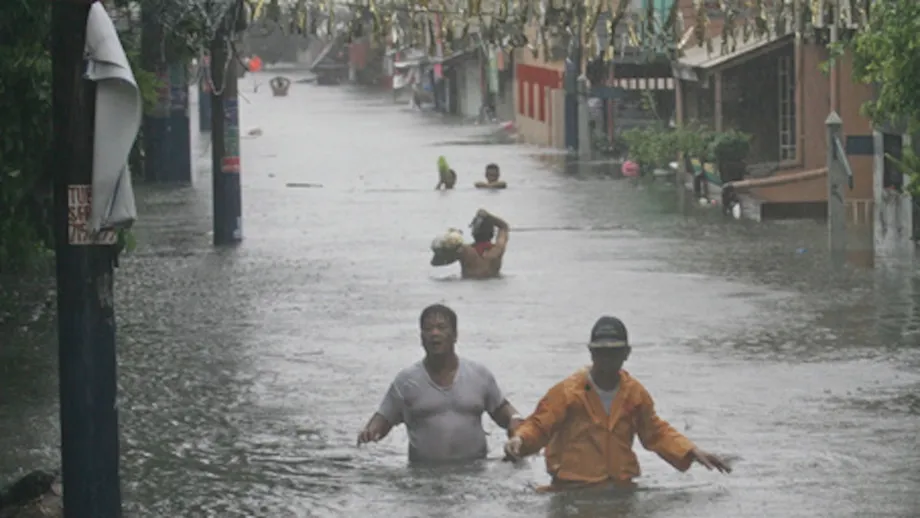
Rio Grande do Sul experienced persistent heavy rain from the final days of April through the first half of May 2024. According to the MPF, the floods reached 478 of the state's 497 municipalities, about 96%, and affected approximately 2.4 million people.
The documentation cited by prosecutors records 183 deaths. About 500,000 people were displaced, although another account of the case puts displacement at around 600,000. Homes, roads and essential services were destroyed or interrupted, disrupting livelihoods as well as daily life.
The World Meteorological Organization described the flooding as Brazil's worst recorded disaster associated with the climate, according to the MPF. The geographical reach helps explain why the lawsuit proposes a collective recovery mechanism covering reconstruction, disaster prevention and community protection.
How the plaintiffs calculated the claim
The Brazilian petition uses three figures to estimate material compensation: R$111.6 billion allocated by the federal government after the floods, a 12% increase in rainfall intensity attributed to human caused warming, and the Shell group's 2.02% share of historical emissions from fossil fuels and cement production.
Multiplying R$111.6 billion by 12% and then by 2.02% produces approximately R$270.5 million. The combined percentage is 0.2424% of the funding base. The plaintiffs seek the same amount for collective moral damages, bringing the total to about R$541 million.
Material damages concern financial losses and recovery costs. Collective moral damages concern harm to shared environmental interests and community life, beyond the price of replacing buildings or repairing roads.
The petition presents the multiplication as a proposed legal method for allocating costs. Rainfall and flood damage have a complicated relationship: the amount of destruction also depends on where water flows, what is built there and how protection systems perform. The court will assess how the scientific findings support the requested compensation.
What the attribution study says
A study by Clarke and colleagues, published in January 2026 in npj Natural Hazards, estimated that human caused global warming made an extreme rainfall event like the one studied approximately twice as likely and about 12% more intense. The analysis also considered El Niño, the natural climate pattern that influences weather across large regions.
Attribution science compares the climate people experience today with a simulated climate without warming caused by human emissions. Researchers use weather records and climate models to estimate how warming changes the likelihood or strength of a particular event.
The Brazilian case joins three links in that scientific chain. The first connects human emissions to global warming. The second estimates the historical contribution of particular fossil fuel producers. The third examines how warming changed the rainfall that caused the disaster.
The legal task is to connect that chain to the defendant and to a financial remedy. Shell Brasil is the company being sued, while the 2.02% emissions figure concerns the Shell group worldwide. Establishing the Brazilian subsidiary's responsibility for that global contribution is part of the plaintiffs' argument.
Why Shell was chosen
Carbon Majors, the database cited in the action, attributes 2.02% of historical global carbon dioxide emissions from fossil fuels and cement production to the Shell group over the period from 1854 to 2024. That places the group ninth in its historical ranking.
The calculation includes emissions from producing fuels and from burning the fuels sold. For an oil and gas producer, a large part of the associated carbon enters the atmosphere when customers use those products.
Shell Brasil is described in the petition as Brazil's second largest oil producer, behind Petrobras. Petrobras's historical share in the cited Carbon Majors table is 0.58%, compared with Shell's 2.02%, making Shell's share about 3.5 times as large.
Thales Miola, a lawyer for Instituto Preservar, explained why the organisation selected Shell as the defendant:
We chose Shell because it's an emblematic company. It meets all the criteria.
Miola also said choosing Shell leaves open the possibility of future actions against other companies.
Where any compensation would go
The Brazilian plaintiffs propose putting any court award into a dedicated financial mechanism under judicial supervision. Spending would be limited to repair, reconstruction, compensation, climate adaptation, disaster prevention and protection of affected populations in Rio Grande do Sul.
An independent technical adviser would help prepare the spending plan, which would require court approval and participation by affected communities. The MPF says the adviser should be selected through a public and transparent process, have no ties to Shell or its corporate group, and be paid by the company separately from compensation.
The action invokes Brazil's National Environmental Policy Act, Law 6,938/1981, which provides for strict liability for environmental damage. Under strict liability, a claimant can seek compensation without proving that the defendant intended the harm or acted carelessly, while still having to establish the required connection between the activity and the damage.
The plaintiffs also cite the Superior Court of Justice's integral risk approach to environmental liability. Under that approach, a defendant cannot escape responsibility by relying on an unavoidable event or another party's actions. The lawsuit requests compensation rather than an interim injunction, an urgent order issued before a final judgment.
Philippine survivors bring a different argument
Around 100 survivors of Typhoon Rai filed their lawsuit against Shell in the United Kingdom in 2025, supported by nongovernmental organisations. Britain is where Shell is based, while the claim alleges negligence under Philippine law.
The survivors' lawyers connect Shell's historical emissions to global warming and the intensification of tropical cyclones. They also argue that the company's communications about climate change are relevant to responsibility for the harm.
Greg Lascelles, a lawyer at Hausfeld, the firm handling the London case, identified an additional allegation against Shell:
history of misinformation regarding the causes and impacts of climate change
The Philippine claim therefore combines an argument about emissions with an argument about corporate conduct. The Brazilian case rests on strict environmental liability, although it also uses evidence of what Shell knew about climate risks.
What Shell knew and how it responded
The Brazilian lawsuit cites an internal Shell report from 1986 acknowledging the role of fossil fuels in increasing greenhouse gas emissions and global warming. The petition also refers to the company's 1991 film Climate of Concern as evidence of awareness of climate risks.
Madeleine Lynch, a campaigner supporting the Odette case, said evidence of Shell's knowledge reaches further back. She described evidence that the company knew as early as the 1960s that fossil fuels contributed to global warming.
Shell responded in December following the Philippine lawsuit by rejecting the claim that its knowledge was unique:
the suggestion that Shell had unique knowledge about climate change is simply not true.
After the Brazilian filing, Shell said it had not received formal notification. No hearing dates or final compensation decisions were given for either Shell case.
A timeline of the disasters and claims
The two lawsuits link events separated by several years, drawing on historical emissions records, company documents and newer research about extreme weather.
- December 2021: Typhoon Rai, locally called Odette, devastates several Philippine islands and kills more than 400 people.
- April and May 2024: Extreme rainfall causes widespread flooding across Rio Grande do Sul, with 183 deaths recorded in the Brazilian case documentation.
- 2025: Around 100 Philippine survivors file a lawsuit against Shell in Britain.
- January 2026: Clarke and colleagues publish the rainfall attribution study used in the Brazilian claim.
- October 9, 2026: Federal prosecutors and Instituto Preservar file the R$541 million action against Shell Brasil in Porto Alegre.
- October 10, 2026: The MPF publishes details of the claim and its proposed compensation mechanism.
The Brazilian action is registered as case 5069002-52.2026.4.04.7100 before a specialised federal court unit handling disputes associated with the 2024 catastrophe.
Courts are testing proportional responsibility
Earlier Brazilian litigation over the floods focused on public authorities and their preparation, protection systems and response. Those cases include an action against the federal government, the state and nine municipalities, as well as a claim against Porto Alegre concerning its flood protection system.
The Shell action adds a different route: seeking payment from a producer whose emissions allegedly contributed to the warming that intensified the event. Maria Antonia Tigre, director of global climate litigation at Columbia University's Sabin Center for Climate Change Law, described it as the first case in which a national public prosecutor sued an oil major over a climate disaster.
Related claims are proceeding elsewhere. Residents of Indonesia's Pari island are suing cement maker Holcim in Switzerland over rising seas. Pakistani farmers affected by the 2022 floods are pursuing RWE and Heidelberg Materials in Germany.
A German case brought by Peruvian farmer Saúl Luciano Lliuya against RWE ended without compensation in 2025, while accepting that proportional responsibility for climate damage could be legally possible. The Brazilian plaintiffs cite that reasoning in support of their approach.
Noah Walker-Crawford, a researcher at the Grantham Research Institute on Climate Change and the Environment at the London School of Economics, described the purpose of the emerging claims:
The cases we're seeing in the world are test cases, to see whether it is a viable legal strategy.
For Brazil's flood survivors and the Philippine typhoon claimants, the practical goal is compensation. For courts, the task is to decide how historical emissions, scientific attribution and national liability rules fit together in a claim over a particular disaster.
Key Points
- Brazilian prosecutors and Instituto Preservar seek R$541 million, about $108 million, from Shell Brasil over the 2024 floods.
- The case combines a 12% estimated increase in rainfall intensity with the Shell group's 2.02% historical emissions share.
- Any Brazilian award would go into a mechanism supervised by a court, with community participation in spending plans.
- Around 100 Philippine survivors sued Shell in Britain in 2025 over Typhoon Rai, alleging negligence under Philippine law.
- Shell said it had not been formally notified of the Brazilian case and rejected claims that its climate knowledge was unique.
- Both actions seek to assign companies a proportion of the costs of specific climate disasters.