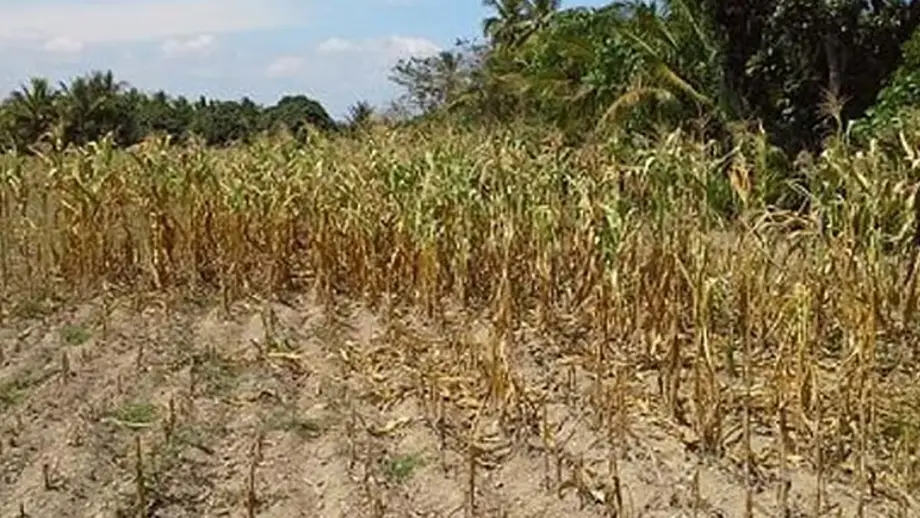
Rice supply faces pressure at home and abroad
The Philippines has raised its projected rice production losses from 700,000 to one million metric tons as El Niño threatens its strongest agricultural effects in the first half of 2027. Department of Agriculture spokesperson and Assistant Secretary Arnel V. de Mesa warned that losses could climb further if dry conditions persist or irrigation water runs short.
Contents
- Rice supply faces pressure at home and abroad
- Why the first half of 2027 matters
- Harvests are falling as planting becomes more costly
- Corn losses show the damage extends beyond rice
- Davao redirects production toward less vulnerable farms
- Water projects reach farms before planting begins
- Vietnam's outlook strengthens the case for early imports
- A weaker peso makes the same rice more expensive
- More storage and funding support the response
- Key Points
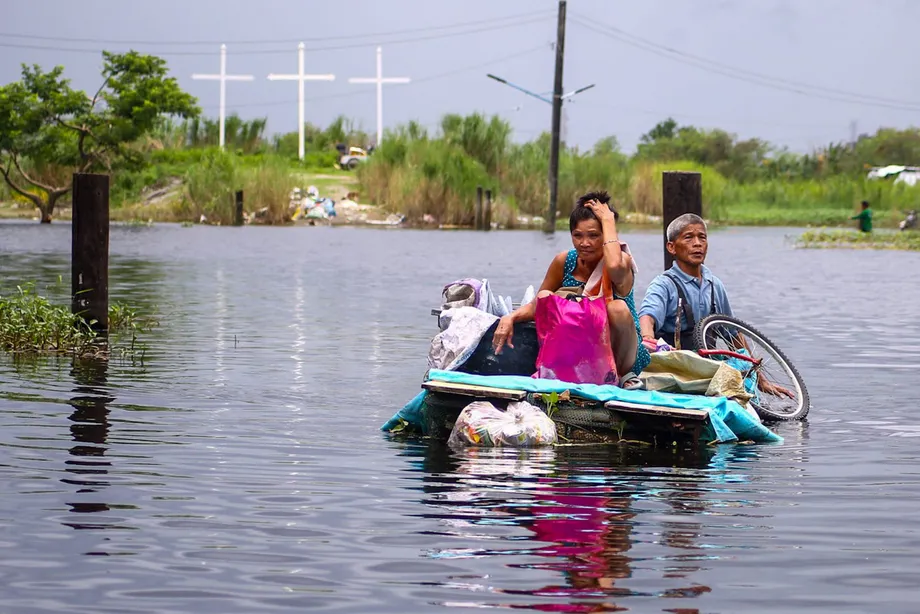
The warning comes as damage is already spreading. The DA's October 21 assessment recorded P8.57 billion in agricultural losses across 14 regions, affecting 288,058 farmers and 291,154 hectares. Corn accounted for the largest losses nationally, while rice was the hardest hit crop in the Davao Region.
Families face two connected pressures: smaller Philippine harvests and potentially more expensive rice from abroad. Vietnam, the country's largest supplier, is also preparing for hotter conditions and reduced rainfall in its main rice producing region. A weaker peso adds another cost because importers need more Philippine currency to pay bills priced in dollars.
The DA says current food supplies are sufficient and is encouraging imports before regional production suffers more serious disruption. Rice arrivals had reached about 4.8 million metric tons by October, with the agency expecting 5.5 million to 5.8 million metric tons by December.
The central task is to keep rice available without allowing the next harvest to shrink further. That means securing water, helping farmers afford planting, bringing supplies into the country and ensuring emergency stocks can reach communities when needed.
Why the first half of 2027 matters
PAGASA announced on November 5 that a very strong El Niño was present in the tropical Pacific. The weather agency said the event could peak before the end of 2026 and persist through the first half of 2027. The government is preparing for conditions lasting until April or May.
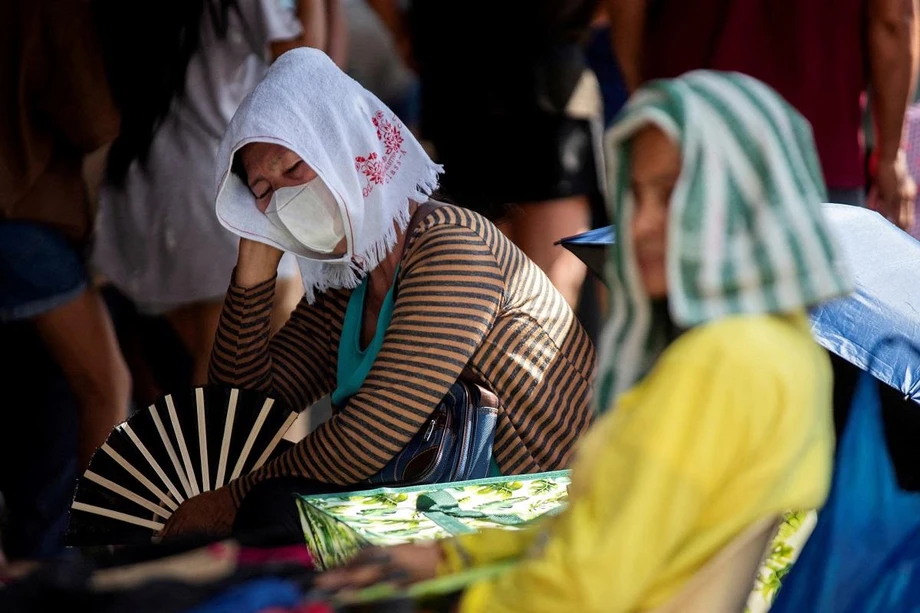
El Niño is a recurring warming of the equatorial Pacific that changes atmospheric circulation. In the Philippines, it commonly brings less rain and higher temperatures. PAGASA forecast rainfall below normal or far below normal across most of the country in November, with virtually the entire country potentially facing drought by March 2027.
PAGASA defines rainfall below normal as a reduction of 21 percent to 60 percent from a locality's average. Rainfall more than 60 percent below average falls into its lowest category. Drought develops when these shortages continue for several months, leaving farms, reservoirs and communities with less dependable water.
The dry cropping season is especially exposed because farmers must rely more heavily on stored water and irrigation. Farms dependent on rain may have to reduce planting areas or postpone planting altogether.
The main dates show how quickly the risk is approaching:
- October 4, 2026: The DA outlined preparations for El Niño lasting into the first half of 2027.
- October 21: Agricultural losses reached P8.57 billion.
- November 3: Six solar irrigation sites were activated in Leyte ahead of the next cropping season.
- November 5: PAGASA announced a very strong El Niño.
- December 2026 to February 2027: A draft regional climate consensus identified this period as a window for very strong El Niño conditions.
- March 2027: PAGASA projected drought across virtually the entire Philippines.
Harvests are falling as planting becomes more costly
Philippine Statistics Authority figures put third quarter palay production at 3.08 million metric tons, down from 3.75 million a year earlier. The reduction of 670,000 metric tons is almost 18 percent. Palay is rice still enclosed in its husk; milling removes the husk and other layers before the grain reaches consumers.
Agriculture Undersecretary Christopher Morales, who oversees the Rice Industry Development Program, said higher fertilizer and fuel costs had reduced investment in farms and affected planting decisions. Delayed planting, irrigation constraints, uncertain returns and heavy southwest monsoon rains also disrupted production.
Morales described the connection between costs and harvests:
We anticipated the decline for the third quarter production, mainly because of the reduction in harvested area. High fertilizer and fuel costs affected farmers' investment in inputs and, in some cases, their planting decisions.
The annual forecast needs clarification. A November 5 account put the DA's 2026 projection at 18.67 million metric tons, against 19.67 million in 2025; another account of the agency's announcement gave about 19.7 million against 20.7 million. Both imply a decline of roughly one million metric tons, but the different annual totals have not been reconciled.
The DA's October preparation statement had projected a loss of about 700,000 metric tons of palay during the main harvest in the second half of 2026. De Mesa's subsequent warning raised the projected loss to one million metric tons, with further damage possible as the drought continues into 2027.
The agency recalled that palay output fell by about 1.9 million metric tons during the 1997–1998 El Niño. Officials say expanded irrigation, improved seeds and better monitoring now give farmers more ways to manage dry conditions.
Corn losses show the damage extends beyond rice
Corn accounted for 132,290 metric tons of the 220,307 metric tons in production losses recorded by October 21. Its financial losses reached P5 billion, compared with P2.95 billion for 71,408 metric tons of rice.
Together, corn and rice accounted for P7.95 billion, or about 93 percent of the P8.57 billion in recorded agricultural damage. Corn alone represented about 60 percent of the lost production volume. Pressure on corn matters beyond the crop itself because it is also used to feed livestock and poultry.
Vegetable losses reached 16,450 metric tons, valued at P571.28 million. Livestock and poultry losses involved 6,690 animals worth P37.75 million. Fisheries also face risks as the weather event continues.
The DA's worst case planning suggests about 4.6 million of the country's 10.4 million farmers and fisherfolk could be affected, roughly 44 percent. That potential reach makes support for rural incomes part of the food supply response: farmers need the means to plant again after losing a crop.
Davao redirects production toward less vulnerable farms
Davao's experience shows how the national picture can vary by region. DA regional disaster management focal person Joedel Leliza presented losses of P584.68 million on October 28, affecting 6,205 farmers and 6,634 hectares.
Rice accounted for P390.24 million, about two thirds of the regional total, across 5,362 hectares and 3,793 farmers. High value crops lost P126.9 million, including P96.22 million in fruit losses. Livestock and poultry losses reached P35.22 million, while corn losses totaled P32.32 million.
The regional action plan totals P729.11 million. Most of it, P678.73 million, is directed toward raising production in places considered less vulnerable to dry conditions. Davao del Norte and Davao Occidental were identified for that approach, although Davao del Norte is expected to become vulnerable by February.
DA-Davao was procuring P66.34 million in seeds, fertilizers and plastic drums and seeking another P274.09 million in quick response funds. An assistance batch was intended to cover about 12,416 farmers. Leliza also urged farmers to collect rainwater while rain remained available.
Local measures include preparing pumps, rotating irrigation releases if water levels fall and advising farmers in areas facing water shortages to consider crops such as mung beans and watermelon. The aim is to match planting to the water a locality can realistically supply.
Water projects reach farms before planting begins
The National Irrigation Administration activated six solar irrigation sites in Leyte on November 3. Together, they serve 84.7893 hectares and 73 farmers in Tolosa, San Miguel and Alangalang, ahead of the first cropping season of 2027, scheduled to begin in November.
The Opong project in Tolosa serves 15 hectares and 16 farmers. Five sites under the Mainit project supply another 69.7893 hectares and 57 farmers in San Miguel and Alangalang. The facilities supplement existing irrigation, particularly for farms near the ends of distribution networks where water delivery can be irregular.
NIA Eastern Visayas regional manager Jaime de Jesus led the inauguration as part of efforts to modernize irrigation and improve water management. Solar pumps use energy from the sun to move water, helping address delivery gaps without the same dependence on purchased fuel.
Nationally, the DA reported installing 338 water pumps across seven regions. It also conducted cloud seeding with PAGASA and the Philippine Air Force in Cagayan Valley and Western Visayas, including operations in Isabela and Negros. Cloud seeding requires suitable clouds containing enough moisture to produce rain.
Recent monsoon rains replenished major dams, giving some irrigated areas a better starting position for the next planting season. Pantabangan Dam, however, remained below its target water level. PAGASA also forecast two to six tropical cyclones within or entering the Philippine Area of Responsibility from November through April, so rainfall and water availability will vary by place.
Vietnam's outlook strengthens the case for early imports
Vietnam had supplied 2.78 million metric tons of rice to the Philippines by October 22, according to the Bureau of Plant Industry. Forecasts of reduced rainfall in southern Vietnam therefore matter directly to Philippine food planning.
The Mekong River Delta produces about 50 percent of Vietnam's rice, according to the International Rice Research Institute. Regional forecasts point to rainfall below normal there, while temperatures could exceed normal levels across much of Southeast Asia.
Le Mai Huong of Vietnam's Institute of Meteorology, Hydrology, Environment and Marine Sciences identified higher temperatures, dry spells and crop stress as risks to rice productivity. The DA wants Philippine purchases completed before those pressures potentially reduce export availability.
De Mesa, explaining the government's approach to imports, put the concern in practical terms:
It's difficult if we have the money but we don't have anything to buy. It's better that the rice is already here and other food goods as well.
The Agricultural Market Information System projected global rice production at 552.47 million tonnes in the 2026–2027 season, a decline of 2.4 percent. The US Department of Agriculture forecast Indian production at 147 million tonnes, down 4.6 percent, and Thai output at 20.3 million tonnes, down 1.9 percent.
Export offers had increased since July by about $20 per tonne from India and Pakistan and $30 from Thailand and Vietnam. BMI also recorded a sharp rise in rice futures, contracts for later delivery, while assessing physical rice markets as more stable than the trading surge suggested. Philippine buyers must manage both actual purchase prices and the risk of tighter supplies later.
A weaker peso makes the same rice more expensive
The peso reached P64.17 per dollar on October 27. De Mesa said exchange rate effects on imported rice prices could be felt as early as November. Imported fertilizer and other farm supplies face the same pressure, raising costs for both consumers and domestic producers.
The DA is favoring rice with 25 percent broken grains, priced at about $370 to $380 per metric ton, compared with around $500 for rice with 5 percent broken grains. The percentages describe the share of grains broken during milling.
At P64.17 per dollar, those quoted prices translate to roughly P23.74 to P24.38 per kilogram for the cheaper grade and P32.09 for the more expensive grade. These calculations cover the quoted rice cost before freight, insurance, taxes, handling and retail expenses. The difference is approximately P7.70 to P8.34 per kilogram.
JC Punongbayan of the University of the Philippines School of Economics warned that higher import costs would work through transport fares, production costs and retail prices, reducing what household budgets can buy. Meanwhile, the DA's proposed 2027 budget was 8 percent below the previous year's allocation, adding pressure to target assistance carefully.
More storage and funding support the response
The DA presented a P61.99 billion El Niño action plan, including P6.2 billion already released for assistance. The additional funding covers fuel subsidies and other support for farmers, fisherfolk and agricultural transport workers facing higher fuel costs and emerging drought effects.
The agency reported initial interventions of P11.34 billion. It listed P10.81 billion in production support, including seeds, fertilizers and soil conditioners, alongside P569.95 million allocated for crop insurance indemnities based on claims from 68,980 farmers. Animal distribution programs also supplied 95,841 animals to 92 farmer groups and 306 individual farmers.
Some proposed work still lacked financing. The DA identified P371 million in unfunded interventions, including cloud seeding and controls for red-striped soft scale insect infestations affecting sugarcane.
Storage is another part of preparation. Agriculture Secretary Francisco P. Tiu Laurel Jr. said the National Food Authority had 365 active warehouses, up from around 300, after renting 165 additional facilities. New cold storage facilities are also intended to extend the shelf life of meat and vegetables.
The earlier emergency rice reserve gap showed why storage and public ownership both matter. An October 14 assessment described about 75 days of supplies across households, businesses and mills, while NFA Administrator Larry Lacson reported seven days in government warehouses, below the statutory minimum of 15 days. Emergency distribution depends on rice the government controls or can purchase and move quickly.
The next cropping season will test how effectively those preparations fit together. Farmers need timely water and affordable inputs; consumers need dependable supplies; emergency agencies need accessible stocks. The severity and duration of dry conditions will determine how far current measures can protect the harvest.
Key Points
- The DA raised projected rice production losses to one million metric tons and warned that damage could exceed that level.
- PAGASA expects El Niño to persist into the first half of 2027, with widespread drought possible by March.
- Agricultural damage reached P8.57 billion by October 21, affecting 288,058 farmers.
- Third quarter palay output fell almost 18 percent to 3.08 million metric tons.
- Early imports aim to secure supplies before drought puts more pressure on Vietnam and other exporters.
- A weaker peso raises the cost of imported rice, fertilizer and other farm supplies.
- Irrigation projects, production assistance, insurance and expanded storage form the core of the response.