Chip exports push September surplus above $60 billion
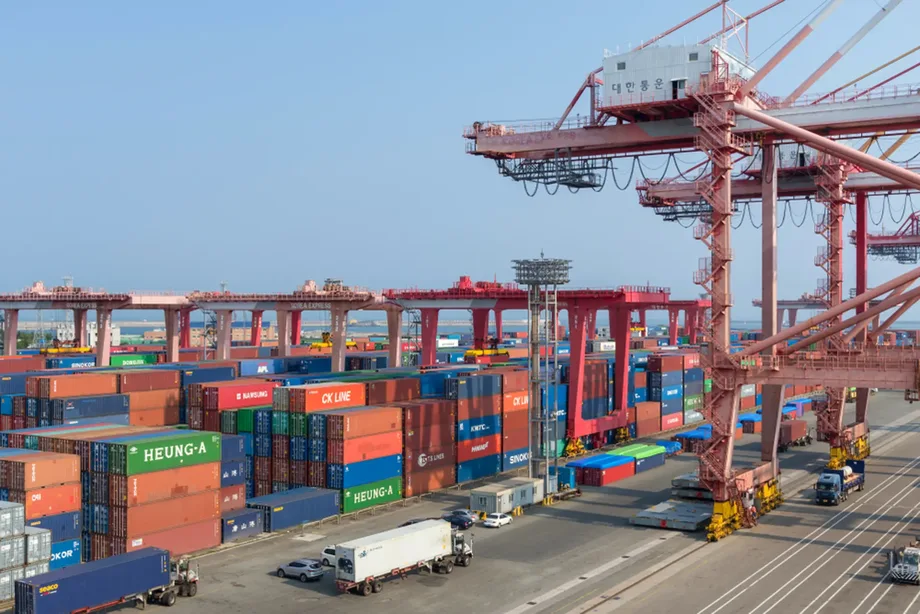
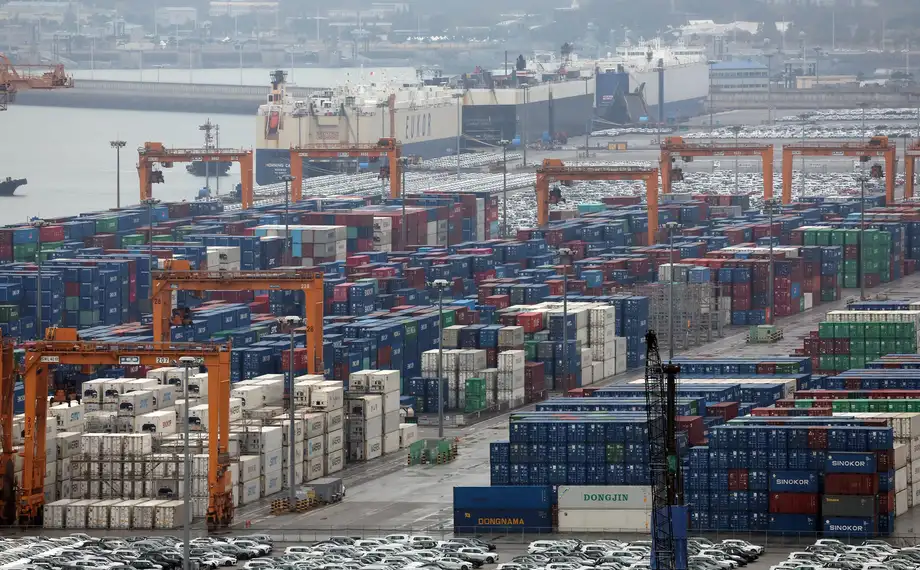
South Korea recorded a current account surplus of $61.46 billion in September 2026, breaking June's record of $49.73 billion as semiconductor exports surged 260.3% from a year earlier to $60.5 billion on a customs basis. The Bank of Korea's preliminary balance of payments figures show a widening gap between the country's booming technology exports and its more modest gains in other industries.
Contents
- Chip exports push September surplus above $60 billion
- How the record developed
- Why chips and storage devices dominate
- The export boom reaches some industries more than others
- Imports rise alongside export earnings
- Services remain a source of payments abroad
- Dividends add to income from overseas
- Investors send more money into overseas assets
- What the annual forecast requires
- Key Points
The September surplus increased from $46.11 billion in August and $14.22 billion a year earlier. Goods exports reached $130.72 billion, while imports totaled $67.97 billion, producing a record goods surplus of $62.75 billion.
South Korea's surplus for July through September reached $149.65 billion. That was $26.60 billion more than the entire 2025 surplus of $123.05 billion, itself an annual record. In three months, the country earned a surplus about 22% larger than it had accumulated during the previous year.
A current account measures money received from abroad and paid overseas for goods, services, investment income and transfers. A surplus means receipts exceed payments. September's result came mainly from selling goods, especially chips and computer storage devices used in the infrastructure supporting artificial intelligence.
The technology boom also brought substantial purchases from abroad. Imports of equipment and other capital goods rose 42.3%, including chips and machinery used to manufacture semiconductors. South Korea was both earning more from technology exports and spending more on products used in production.
How the record developed
September extended a run of goods exports exceeding $100 billion for four consecutive months. The current account surplus was $11.73 billion above its previous monthly peak, an increase of about 23.6% from June.
The main milestones show how quickly the external balance expanded:
- May 2023: South Korea began an uninterrupted run of monthly current account surpluses.
- June 2026: The current account surplus reached a then record $49.73 billion, while the goods surplus reached $47.89 billion.
- August 2026: The current account surplus stood at $46.11 billion, and the Bank of Korea's economic outlook projected a $450 billion surplus for the year.
- September 2026: The current account surplus reached $61.46 billion and the goods surplus rose to $62.75 billion.
- January through September 2026: The cumulative current account surplus reached $340.66 billion.
Bank of Korea Economic Statistics Department Director General Kim Young-hwan attributed the September goods result to strong exports combined with the timing of transactions near the end of the quarter.
The September goods balance posted its largest-ever surplus as robust exports were combined with quarter-end effects,
The quarterly comparison follows South Korea's surplus exceeding Germany and Japan combined in April through June. South Korea recorded $116.63 billion in that quarter, compared with Germany's $52.28 billion and Japan's $50.62 billion. The third quarter's $149.65 billion was another $33.02 billion above South Korea's second quarter result.
Why chips and storage devices dominate
Information technology exports rose 195.8% from September a year earlier. Semiconductor shipments increased 260.3%, while exports of solid state drives, known as SSDs, rose 392.3%. SSDs store data electronically and are used in computers and the large computing facilities that run artificial intelligence systems.
Demand for advanced memory chips and storage used in AI infrastructure helped drive the expansion. Memory chips hold information that processors need to work on, while storage devices retain the larger collections of data used by those systems.
The figures show growth in export value. A rise of 260.3% means the dollar value of semiconductor shipments was about 3.6 times its level a year earlier. SSD export value was almost five times its earlier level.
The $60.5 billion semiconductor figure comes from customs statistics, while the $130.72 billion goods export total comes from balance of payments accounting. Customs records follow goods crossing borders; balance of payments figures use adjustments to track transactions between residents and overseas parties. The two sets of figures describe closely related activity using different accounting rules.
The export boom reaches some industries more than others
Exports outside information technology increased 13.4% from a year earlier. That was substantial growth, but far below the 195.8% increase in IT products. The gap between the two growth rates was 182.4 percentage points.
Petroleum product exports rose 73.3%, steel products increased 6.7%, and machinery and precision equipment grew 6.3%. Passenger car exports fell 5.6%, leaving an important manufacturing industry moving in the opposite direction from semiconductors.
Export growth also varied by destination. Shipments to the United States rose 136.9%, those to China increased 123.1%, and exports to Southeast Asia grew 113.2%. Each was more than double its level a year earlier.
Japan and the European Union recorded smaller increases of 25.2% and 21.2%, respectively. Exports to the Middle East declined 14.1%, while those to Latin America fell 3.6%. For businesses and workers, the national record therefore describes very different conditions depending on what they sell and where their customers are.
Imports rise alongside export earnings
Goods imports increased 29.4% from a year earlier to $67.97 billion, up from $57.99 billion in August. Exports grew much faster, rising 92.4% from a year earlier and increasing from $104.80 billion in August to $130.72 billion in September.
The monthly arithmetic explains the larger goods surplus. Exports increased by $25.92 billion between August and September, while imports rose by $9.98 billion. The difference widened the goods surplus by $15.94 billion, from $46.81 billion to $62.75 billion.
Capital goods led import growth. Semiconductor imports rose 92.8%, imports of semiconductor manufacturing equipment increased 49.2%, and information and communications equipment rose 37.3%. Capital goods are products businesses use to make other goods or provide services, rather than products bought mainly for household use.
Raw material imports increased 21.3%, including gains of 42.5% for gas, 38.4% for crude oil and 24.2% for coal. The crude oil import price reached $98 a barrel, up 34.5% from a year earlier. Consumer goods imports rose a much smaller 2.0%.
Services remain a source of payments abroad
South Korea's services deficit widened to $3.35 billion from $1.68 billion in August, an increase of $1.67 billion. Services include transport, travel, consulting and payments for the use of intellectual property, such as patents and licensed technology.
The transport surplus narrowed from $520 million to $130 million as payments for chartering ships increased. The deficit on intellectual property payments widened from $390 million to $770 million. Other business services, including research and consulting, also recorded a larger shortfall.
Travel produced a deficit of $770 million, roughly unchanged from August. Both arrivals and departures declined as the summer travel season ended. The detailed travel figures place the main monthly deterioration elsewhere in the services account.
The $62.75 billion goods surplus was larger than the $61.46 billion current account surplus because services and other transactions reduced the final balance. Selling physical products generated enough net receipts to outweigh the services deficit and the remaining payments abroad.
Dividends add to income from overseas
The primary income surplus rose to $2.65 billion from $1.92 billion in August. Primary income includes investment earnings, such as dividends and interest, as well as compensation earned across borders.
Within that total, the dividend income surplus increased from $1.18 billion to $2.24 billion. The $2.24 billion figure refers to dividends, while $2.65 billion is the broader primary income balance. Dividend receipts and payments supplied most of September's income surplus.
The Bank of Korea attributed the improvement partly to the passing of a seasonal concentration of quarterly dividend payments on securities. Those payments tend to be concentrated in May, August and November, affecting the monthly balance between income received and paid abroad.
The secondary income account, which covers transfers rather than payments for goods, services or investment returns, recorded a deficit of $590 million. That narrowed from $940 million in August. Using the published rounded components, the $62.75 billion goods surplus, $3.35 billion services deficit, $2.65 billion primary income surplus and $590 million transfer deficit add up to the $61.46 billion current account surplus.
Investors send more money into overseas assets
Net assets in the financial account increased by a record $54.34 billion, exceeding June's previous high of $46.71 billion. The financial account tracks transactions in assets and liabilities, including direct investment, shares, bonds and lending.
South Korean residents increased direct investment abroad by $11.43 billion, while foreign direct investment in South Korea rose by $6.52 billion. Direct investment generally involves a lasting stake in a business, rather than simply buying securities for a portfolio.
Residents also increased overseas portfolio investment by $16.63 billion, the second largest monthly increase after $17.29 billion in October 2025. September purchases comprised $9.91 billion in shares and $6.72 billion in bonds. Overseas bond investment set a record for the second consecutive month.
Foreign portfolio investment in South Korea fell by $13.81 billion. Foreign investors reduced holdings of Korean shares by $13.74 billion, with selling concentrated in large semiconductor companies, and reduced bond holdings by $70 million.
The financial account records another part of South Korea's dealings with the world. Residents buying foreign assets increase overseas holdings; foreign investors selling Korean assets reduce liabilities to overseas investors. Both movements can raise net financial assets, even while foreign money is leaving the domestic stock market.
What the annual forecast requires
The Bank of Korea expected the 2026 current account surplus to exceed its August forecast of $450 billion. The $340.66 billion accumulated through September was already about 75.7% of that forecast.
Reaching exactly $450 billion would require another $109.34 billion in October through December, an average of about $36.45 billion a month. The third quarter's $149.65 billion total was well above that amount.
The principal comparison for January through September puts the previous year's total at $83.89 billion, making the 2026 result about 4.1 times as large. The earlier total is also reported as $89.39 billion; using that figure gives about 3.8 times. The September year earlier comparison, $61.46 billion against $14.22 billion, also shows a more than fourfold increase.
Kim Young-hwan, the Bank of Korea's Economic Statistics Department director general, said seasonal effects could produce another peak before the year ended.
With year-end effects expected in December as well, we may see another record monthly surplus within the year,
The bank also expected October to produce the second largest monthly surplus on record. Those expectations were forecasts; final October and December balances were still pending, and September's figures remained preliminary.
The next monetary policy decision was scheduled for November 26. The Bank of Korea had paused interest rate increases in October after two consecutive increases. Policymakers were therefore approaching that meeting with exceptional export earnings alongside weaker results in passenger cars, a larger services deficit and continued foreign selling of Korean shares.
Key Points
- South Korea's September 2026 current account surplus reached a record $61.46 billion, up from $46.11 billion in August.
- Goods exports totaled $130.72 billion and imports $67.97 billion, producing a record $62.75 billion goods surplus.
- Customs figures showed semiconductor exports rising 260.3% to $60.5 billion, while SSD exports increased 392.3%.
- Non IT exports grew 13.4%, but passenger car exports declined 5.6%.
- The services deficit widened to $3.35 billion, while the primary income surplus rose to $2.65 billion.
- Residents bought $16.63 billion in overseas securities as foreign portfolio investment in Korea fell $13.81 billion.
- The nine month current account surplus reached $340.66 billion, and the Bank of Korea expected the annual total to exceed $450 billion.