Chips account for nearly half of October exports
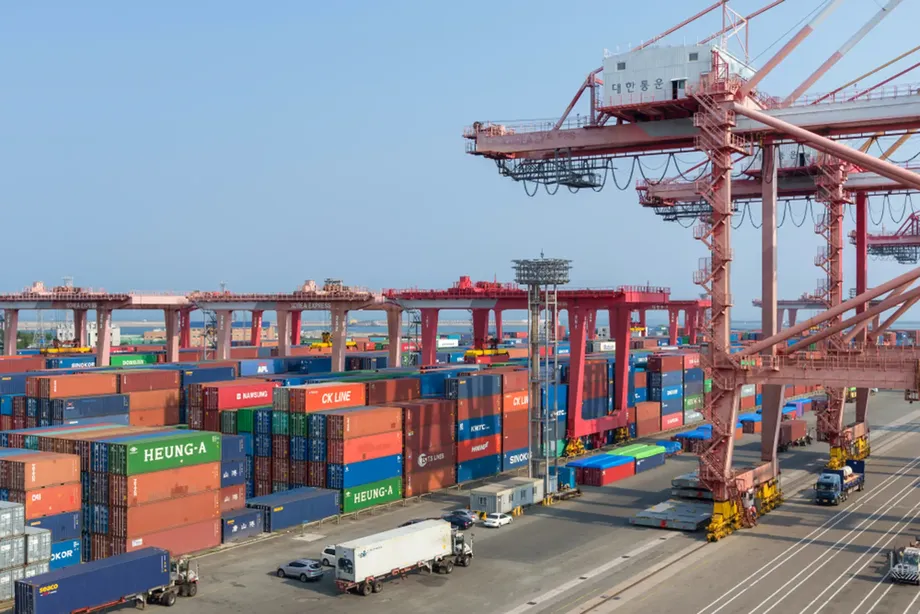
South Korea exported $115.28 billion worth of goods in October 2026, a 93.7% increase from a year earlier and its fastest annual growth since January 1974. Semiconductor shipments reached $56.44 billion, accounting for nearly half of the total as global technology companies continued spending on artificial intelligence infrastructure.
Contents
- Chips account for nearly half of October exports
- How much did the holiday calendar matter?
- Why AI investment is lifting semiconductor sales
- Servers and power equipment share the gains
- Cars, cosmetics and food also advance
- China, the United States and Southeast Asia lead demand
- Higher import bills narrow the monthly surplus
- November brings the next export milestone
- Strong earnings leave smaller businesses facing pressures
- Key Points
The figures, released on November 1 by the Ministry of Trade, Industry and Resources, brought exports for January through October to $930 billion. That left $70 billion to reach $1 trillion, a milestone Industry Minister Kim Jung-kwan expected the country to cross during November.
October was the second consecutive month with exports above $110 billion. Despite initial descriptions of a monthly record, the detailed comparisons place October second behind September. September's peak was reported at $120.94 billion and $121.1 billion, both above October's total.
Imports rose 36% to $72.78 billion, leaving a trade surplus of $42.5 billion. South Korea therefore earned substantially more from selling goods abroad than it spent buying goods from other countries, although that gap narrowed from September.
AI demand reached beyond chips. Computer exports increased 496.6%, while sales of electrical equipment used to supply power to data centers climbed 74%. Cars, cosmetics and agricultural products also gained, giving the expansion a wider base even as semiconductors remained its largest driver.
How much did the holiday calendar matter?
October's export growth exceeded September's 83.7% annual increase and came slightly above economists' median forecast of 93.2%. The ministry attributed part of the jump to more working days because the Chuseok holiday fell at a different time than a year earlier.
Factories, customs offices and shipping operations have more time to process goods when a month contains more working days. A comparison with a month interrupted by holidays can therefore produce a particularly large increase.
Average daily exports provide another view. After allowing for the number of working days, they rose 76% to $5.24 billion, staying above $5 billion for a second consecutive month. That increase shows strong growth in the value shipped each working day, alongside the extra contribution from the calendar.
Export values also depend on prices. October's figures combined changes in quantities shipped, the prices buyers paid and the time available to move goods. The semiconductor and petroleum figures show why those parts need to be considered together.
Why AI investment is lifting semiconductor sales
Semiconductor exports increased 259.4% to $56.44 billion, more than three and a half times their value a year earlier. They exceeded $50 billion for a second consecutive month, although they were below September's $60.3 billion.
The ministry linked the performance to continued investment by major technology companies competing to expand their AI businesses. AI services run on servers, powerful computers housed in data centers. Those machines need chips to process information and memory to hold data while calculations take place.
Chip prices and shipment volumes both remained high. The fixed contract price for DDR5 16Gb memory rose from $40 in June to $50 in October, an increase of 25%. DDR5 is a type of memory used in computers and servers, and 16Gb describes its storage capacity.
The price of 128Gb NAND flash rose from $28.8 to $30.6 over the same period, an increase of 6.25%. NAND flash stores information even when a device is switched off and is used in solid state drives.
At $56.44 billion out of $115.28 billion, semiconductors represented about 49% of October exports. Put simply, almost one dollar in every two earned from goods sold abroad came from chips. Samsung Electronics and SK Hynix also posted surging profits as semiconductor exports and investment helped South Korea's economy grow faster than expected in the third quarter.
Servers and power equipment share the gains
Computer exports rose 496.6% to $5.85 billion, nearly six times their value a year earlier. Growing demand for servers used in AI services, including the solid state drives that store their data, supported the increase.
Electrical equipment exports reached a monthly record of $1.99 billion, up 74%. Transformers, wires and cables benefited from demand linked to AI data centers. Transformers change voltage so electricity can be delivered at levels that equipment can use.
Computers, electrical equipment and semiconductors together generated $64.28 billion in export revenue. That was about 56% of October's total, showing how spending on computing facilities supported several South Korean industries at once.
Wireless communication device exports increased 6.7%, extending their run of annual gains to 12 consecutive months. New Apple product launches and strong Samsung Electronics smartphone sales supported shipments, adding another source of electronics demand beyond servers.
Cars, cosmetics and food also advance
Exports rose in 18 of South Korea's 20 leading product categories. Ships and household goods were the two categories that declined, while several consumer and industrial sectors recorded their strongest October performances.
Automobile exports increased 18.1% to $6.55 billion, the highest total for any October. Strong overseas demand for gasoline hybrid models and the additional working days supported the increase. Hybrids combine a gasoline engine with an electric motor.
Cosmetics exports climbed 57.5% to $1.44 billion as demand increased in China, the United States and the European Union. Agricultural and fisheries exports rose 11.6% to $1.11 billion, while exports in the bio-health category increased 30.2% to $1.53 billion. All three categories set October records.
Petroleum product exports rose 80% to $6.92 billion, and petrochemical exports increased 27.5% to $4 billion. Their higher earnings came mainly from rising prices: petroleum export volumes fell 7.5%, while petrochemical volumes declined 6.8%.
For producers in those sectors, October meant earning more money from selling a smaller quantity. Chip exporters experienced a different combination, with both prices and shipment volumes remaining high. The national export total brings these different business conditions together in one dollar figure.
China, the United States and Southeast Asia lead demand
Exports increased in seven of South Korea's nine major markets. China remained a major destination, taking $26.98 billion in goods, up 133.6% from a year earlier. Semiconductors, wireless communication equipment, petrochemicals and general machinery supported the gains.
Shipments to China exceeded $20 billion for a fifth consecutive month. Exports to the United States rose even faster, increasing 185.8% to $24.9 billion as demand grew for semiconductors, computers and electrical equipment used in AI infrastructure, alongside automobiles and steel.
China and the United States together bought $51.88 billion in South Korean goods, approximately 45% of October's exports. Their combined share shows how strongly demand in the two economies shaped the month's earnings.
Exports to the Association of Southeast Asian Nations rose 128% to $21.33 billion, exceeding $20 billion for a second consecutive month. Shipments to the European Union increased 56.4% to $8.1 billion. Chips and automobiles helped drive growth in both markets.
The expansion across destinations gave South Korean companies several growing markets at once. Within that geographic spread, however, many of the strongest gains still came from the same products, especially semiconductors and other equipment linked to computing investment.
Higher import bills narrow the monthly surplus
Imports increased 36% to $72.78 billion, accelerating from September's 26% annual rise. October recorded the largest annual increase in imports since January 2022, with higher crude oil prices and demand for semiconductor manufacturing equipment and automobiles contributing.
Energy imports rose 63.1% to $16.49 billion. Crude oil illustrates the pressure from prices: the quantity imported fell 6.3%, but prices increased 62%, lifting the value of crude imports by 51.9%.
South Korea therefore paid substantially more for crude while bringing in less of it. Higher oil prices also helped lift the value of exported petroleum products, so the same price movement affected both sides of the trade accounts.
The monthly trade surplus fell to $42.5 billion from September's record $49.97 billion, a decrease of $7.47 billion. Exports remained far above imports, but export earnings were below their September peak.
For January through October, the surplus reached $294.9 billion, up $239.1 billion from the same period a year earlier. Those figures put the earlier surplus at $55.8 billion, making this year's cumulative balance more than five times as large.
November brings the next export milestone
Exports for January through October increased 60.6% to $930 billion, exceeding $900 billion for that period for the first time. The remaining $70 billion needed to reach $1 trillion was about 61% of October's export total.
Industry Minister Kim Jung-kwan said the continued strength made the milestone likely during November:
With exports continuing solid growth of more than $110 billion in October, it is becoming certain that annual exports of $1 trillion will be reached within November,
The ministry projected that exports could reach the threshold in November if the trend continued, with more detailed projections pointing to the middle of the month. An exact crossing date had not been announced.
The recent sequence shows how quickly export earnings accumulated:
- June 2026: The fixed contract price for DDR5 16Gb memory stood at $40, before rising to $50 in October.
- September 2026: Monthly exports reached their highest recorded level, and the trade surplus hit $49.97 billion.
- October 2026: Exports reached $115.28 billion, bringing the January through October total to $930 billion.
- November 1, 2026: The ministry released the October figures and projected that exports would pass $1 trillion during November.
Strong earnings leave smaller businesses facing pressures
Kim paired the export outlook with a warning about conditions facing businesses, particularly smaller companies. He identified trade restrictions, changes in production networks and tensions in the Middle East as continuing difficulties.
The industry minister described those concerns in his statement:
The global trade environment remains uncertain, with many small and medium-sized enterprises facing difficulties amid rising protectionism in major economies, shifts in global supply chains and geopolitical tensions in the Middle East,
The government said it would strengthen trade cooperation with major export partners and work to remove export barriers. For smaller businesses, such measures concern their ability to reach customers abroad even while national export earnings are rising rapidly.
October's figures also show where much of South Korea's growth is concentrated. Semiconductors supplied almost half of export revenue, and AI investment supported additional sales of computers and power equipment. Continued spending by major technology companies and the direction of memory prices therefore carry considerable weight for exporters.
Cars, cosmetics, agricultural products and bio-health goods provided growth beyond that technology cycle. Their October records widened the gains across industries, while the scale of semiconductor sales kept chips at the center of the national result.
Key Points
- October 2026 exports rose 93.7% to $115.28 billion, the fastest annual increase since January 1974 and the second highest monthly total.
- Semiconductor exports reached $56.44 billion, about 49% of all goods exports.
- Average daily exports increased 76%, while additional working days also lifted the monthly comparison.
- Computer exports surged 496.6%, and electrical equipment exports rose 74% to a monthly record.
- Imports reached $72.78 billion, leaving a $42.5 billion surplus, below September's $49.97 billion.
- Exports for January through October totaled $930 billion, with the government expecting the $1 trillion threshold during November.