Free permits will become part of visa-free travel
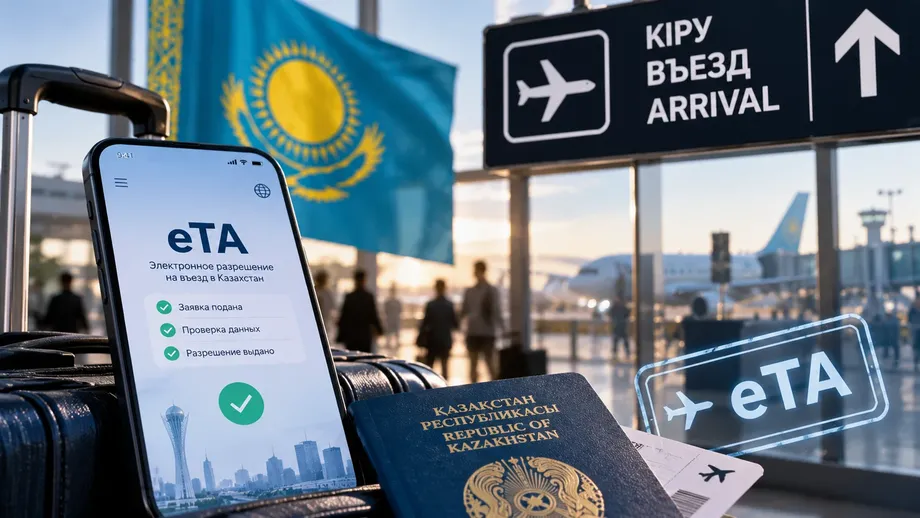
Kazakhstan will begin introducing electronic travel authorizations on November 1, 2026, at Aktau International Airport and four road border crossings, before making the permits compulsory for eligible travelers on July 1, 2027. The authorization will be free, valid for 180 calendar days and requested through the state QazETA platform at least 72 hours before arrival.
Contents
- Free permits will become part of visa-free travel
- Four dates determine when the rules apply
- Who needs an authorization?
- How the application works
- A permit lasting 180 days does not mean a stay of 180 days
- Which travelers are exempt?
- Border decisions and host duties remain
- QazETA brings several services together
- What changes for upcoming journeys?
- Key Points
The changes are set out in government resolution No. 890, dated October 10, 2026, which updates the rules governing foreign nationals entering and staying in Kazakhstan and the procedures for migration control. The rollout will reach Astana and Almaty international airports on January 1, 2027, and all remaining border crossings on March 1.
Travelers without an authorization will receive information about the requirement during the transition, which ends on June 30, 2027. From July 1, lacking the permit may become grounds for refusing entry for people covered by the requirement.
Kazakhstan's Foreign Ministry says the system is intended to cover citizens of 85 countries eligible for visa-free entry, including members of the Eurasian Economic Union (EAEU). Russian citizens, citizens of European Union countries and Americans are among those affected, subject to exemptions.
For visitors, the practical change is an extra task before departure. Visa-free travel will continue, but eligible passengers will need electronic approval alongside the passport they use to cross the border. Travelers who already need a Kazakhstan visa will continue to follow their existing entry procedures.
Four dates determine when the rules apply
The rollout separates the introduction of checks from the start of compulsory authorization. A traveler arriving at Almaty in February 2027, for example, will encounter the system during the transition, when the missing permit alone will not cause refusal of entry.
The implementation schedule is:
- November 1, 2026: Checks begin at Aktau International Airport and the Urlyutobe, Aukhatty, Atameken and Nurly Zhol road checkpoints.
- January 1, 2027: The system expands to Astana and Almaty international airports.
- March 1, 2027: All remaining border crossings join the system.
- July 1, 2027: Authorization becomes compulsory for travelers covered by the rules, and its absence may lead to refusal of entry.
The first road checkpoints cover several regions: Urlyutobe in Pavlodar Region on the Russian border, Aukhatty in Zhambyl Region, Atameken in Turkistan Region on the Uzbekistan border, and Nurly Zhol in Zhetysu Region. Together with Aktau airport, they make up the five initial entry points.
The transition lasts eight months, from November 2026 through June 2027. Border officers will use that period to explain the requirement to travelers arriving without authorization.
Who needs an authorization?
Citizenship and immigration status determine whether a traveler needs QazETA authorization. The requirement targets eligible visitors using Kazakhstan's visa-free arrangements, rather than everyone crossing the border.
The inclusion of EAEU nationals means that travelers from countries with close regional ties to Kazakhstan must also check their position. Russian citizens traveling through Urlyutobe will be among those encountering the first phase.
Travel agencies, hotels and organizations inviting foreign specialists will also need to account for the new procedure when arranging journeys. A booking made months in advance could involve travel after July 1, 2027, when the authorization requirement becomes compulsory.
Kazakhstan's Foreign Ministry says it has informed all 85 affected countries through diplomatic channels. Application guidance is also due to appear on Kazakh embassy and consulate websites, giving travelers another place to check requirements for their nationality.
How the application works
Travelers can apply through the QazETA portal or mobile app. The process requires registration, online identity verification and an application submitted at least 72 hours before the planned arrival in Kazakhstan.
The application is free. Once approved, the authorization lasts for 180 calendar days and permits multiple entries, subject to the visitor's existing immigration conditions. It is linked to the passport used in the application, so the traveler must present that same valid passport at the border.
The 72 hours is the minimum advance application period stated in the rules. No guaranteed processing time is specified. Travelers should therefore build the application into their plans before departure, especially once approval becomes compulsory.
Passport details matter throughout the process. Someone preparing an application needs to use the document they will actually carry, rather than another passport they own. The electronic record and the document presented to border officers must match.
A permit lasting 180 days does not mean a stay of 180 days
QazETA's validity period and the permitted length of a visit are separate clocks. The authorization can remain usable for 180 days, while the number of days a visitor may spend in Kazakhstan continues to depend on nationality and existing migration rules.
Most visa-free visitors may stay for up to 30 days on each visit, with a maximum total of 90 days within any period of 180 days. Leaving and returning still counts toward that total.
EAEU citizens may stay for up to 90 days within a period of 180 days. Citizens of Türkiye may stay for up to 90 days, while visitors from India and Iran have limits of 14 days per visit and 42 days within a period of 180 days.
For a visitor subject to the common 30-day limit, an authorization valid for 180 days may support several trips, but each visit must fit within the applicable limit and the combined time must stay within the permitted total. The new permit leaves those limits in place.
Which travelers are exempt?
The rules identify 29 categories of people who can enter without electronic authorization if they have documents supporting their exemption. These include children under 16, holders of valid Kazakhstan visas and people with qualifying temporary or permanent residence permits.
The detailed descriptions place the older age exemption at 65 and above, while some notices describe it as applying to people over 65. Travelers aged exactly 65 should confirm how the exemption applies before departure.
Other exempt groups include refugees and asylum seekers, members of official government delegations, eligible diplomats and personnel of international organizations. Certain air, sea and train crews, international truck and bus drivers, and people carrying out humanitarian, rescue or emergency medical missions also qualify.
Passengers who remain inside an international airport transit area without crossing Kazakhstan's border are exempt. A passenger planning to leave that area and enter the country needs to check the entry requirements that apply to their nationality and status.
Families and groups may therefore have different requirements within the same booking. A child under 16 may qualify for an exemption while an accompanying adult needs authorization. Each person's age, passport and immigration documents determine the applicable procedure.
Border decisions and host duties remain
Kazakhstan's border authorities retain responsibility for deciding whether a traveler may enter. Approval through QazETA is one part of the entry process, alongside the checks required under migration law.
Previous deportations or false information submitted by a traveler can still lead to refusal of entry. During the transition, the protection against refusal solely for lacking QazETA operates alongside those existing border powers.
Hosts also retain an obligation after arrival. Individuals and organizations accommodating a foreign visitor must notify the authorities within three business days. Hotels, employers and private hosts need to account for that deadline even when the visitor has obtained electronic authorization.
The two procedures happen at different stages: the traveler applies before arriving, while the host submits the arrival notification afterward. Completing the first leaves the second obligation in place.
QazETA brings several services together
The QazETA platform also provides electronic visas, electronic residency services and certificates confirming border crossings. These services have different eligibility rules and purposes, even though travelers access them through the same digital system.
The electronic visa service is available to citizens of 104 countries in eligible categories, including tourism, business, medical treatment and private visits. It requires an electronic invitation issued by the territorial police bodies of Kazakhstan's Interior Ministry.
Those visas allow a single entry, apply only to the named recipient and do not cover accompanying travelers. Entry and exit using the electronic visa are through Kazakhstan's international airports. The electronic visa route therefore has different conditions from the free authorization for eligible visa-free visitors.
The electronic residency service operates within the jurisdiction of the Astana International Financial Centre and is intended for foreign nationals and stateless people outside Kazakhstan. Its listed functions include remotely obtaining an individual identification number, opening bank accounts and payment cards, obtaining an eSIM and registering companies.
Border crossing certificates provide an electronic record that can be used for purposes including verification of mobile device identification numbers, known as IMEIs. Planned additions to QazETA include medical insurance and expedited border control for authorization holders, although no launch dates are specified for those services.
What changes for upcoming journeys?
Travelers planning visits before July 2027 have time to become familiar with the application process while the system expands. Those arriving from July 1 need to check eligibility, any exemption and the passport attached to their authorization before beginning their journey.
The practical preparation is straightforward: establish which entry route applies, submit an authorization application at least 72 hours before arrival where required, and keep the permitted length of stay separate from the permit's validity. Hosts must then meet the arrival notification deadline.
Kazakhstan's approach keeps visa-free access while adding an electronic step before travel. The change will be felt most directly by eligible visitors who previously needed only their passport and other existing entry documents, and by the businesses and households organizing their visits.
Key Points
- QazETA checks begin at five entry points on November 1, 2026.
- Astana and Almaty airports join on January 1, 2027; remaining crossings follow on March 1.
- Eligible travelers may be refused entry without authorization from July 1, 2027.
- Applications are free and must be submitted at least 72 hours before arrival.
- Approved authorizations last 180 calendar days, allow multiple entries and are linked to the applicant's passport.
- Existing limits on the length of visa-free stays continue to apply.
- The rules provide 29 exemption categories, with supporting documents required.
- Hosts must notify authorities of a foreign visitor's arrival within three business days.