Free Travel Authorization Becomes Mandatory in July 2027
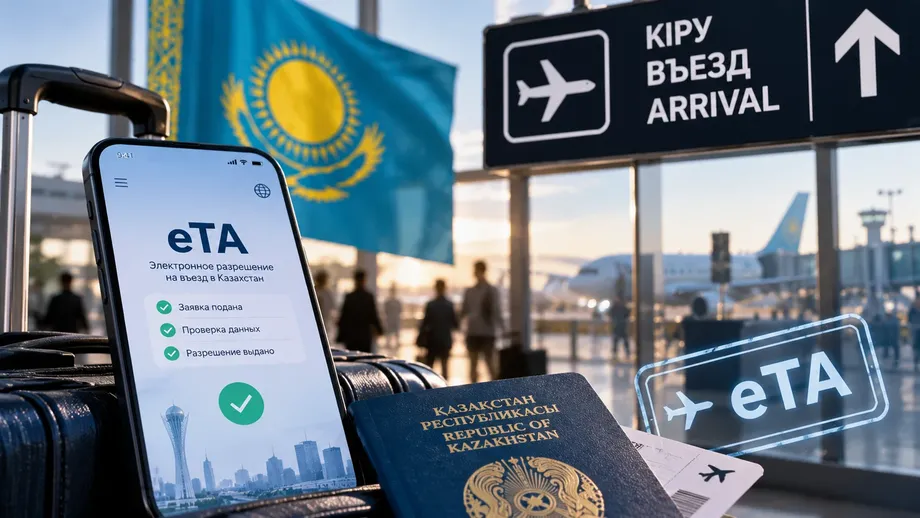
Kazakhstan will require eligible visitors from 85 countries, including Russia, to obtain electronic travel authorization before entering the country from July 1, 2027. Applications through QazETA will be free, must be submitted at least 72 hours before travel and will provide permission valid for multiple entries over 180 days.
Contents
- Free Travel Authorization Becomes Mandatory in July 2027
- Which Border Crossings Start First?
- How to Apply and What It Costs
- Who Is Exempt?
- Why Russia Asked for Clarification
- What the 180 Days Actually Allow
- How the Rules Developed Since June
- What Happens at the Border?
- What Travelers Need to Check Next
- Key Points
The requirement targets citizens who can currently visit Kazakhstan without a visa, unless they qualify for an exemption. Its introduction begins on November 1, 2026, at Aktau International Airport and selected road crossings, followed by the airports in Astana and Almaty on January 1, 2027, and the remaining border checkpoints on March 1.
Travelers will have an introductory period through June 30, 2027. During that period, officials will explain the requirement rather than refuse entry solely because someone lacks authorization. From July 1, its absence can become grounds for refusing admission.
Kazakhstan's Foreign Ministry says it has sent information through diplomatic channels to all affected countries. In a statement explaining the scope of the system, the ministry said:
As is known, the QazETA electronic travel authorization system will apply to citizens of 85 countries, including the Russian Federation, who have the right to visa-free entry to Kazakhstan. Currently, detailed information on the QazETA system has been conveyed via diplomatic channels to all mentioned states.
The announcement adds a clearer nationality count and a diplomatic response to the July 2027 authorization deadline set out earlier. For affected passengers, the practical change is an advance application step before a journey that previously required no visa application.
Which Border Crossings Start First?
Government Resolution No. 890, dated October 10, 2026, sets out a gradual introduction rather than an immediate requirement at every checkpoint. The resolution takes effect 10 calendar days after its first official publication, while the operational timetable stretches into July 2027.
The US Embassy in Kazakhstan's QazETA entry guidance confirms the October 10 adoption date and the four main stages:
- November 1, 2026: introduction at Aktau International Airport and selected road border crossings.
- January 1, 2027: expansion to the international airports in Astana and Almaty.
- March 1, 2027: expansion to all remaining state border checkpoints.
- July 1, 2027: authorization becomes mandatory for travelers covered by the rules, and its absence becomes grounds for refusal.
The embassy names three initial road crossings: Urlyutobe in Pavlodar region, Atameken in Turkestan region and Nurly Zhol in Zhetysu region. The published rollout details also include a fourth, Aukhatty in Zhambyl region.
Travelers using those routes face the earliest introduction of checks and explanations. Those arriving through Astana or Almaty join the next stage two months later. By March, the system is scheduled to cover the entire border network, while the period without refusal solely for missing authorization continues until the end of June.
How to Apply and What It Costs
Applicants can use the QazETA portal at qazeta.kz or the QazETA mobile application. They must submit their application no later than 72 hours before their planned journey, equivalent to three full days in advance.
The process includes digital identification or authentication, meaning applicants must establish or verify their identity electronically. Internal affairs authorities issue the authorization in agreement with Kazakhstan's National Security Committee.
Registration is free. The US Embassy's guidance explicitly states that QazETA registration carries no charge for travelers. Earlier proposals described a paid system, with revenue intended for digital infrastructure, technical support and personal data protection. The adopted arrangements set the processing fee at zero tenge.
Earlier circulating figures of about 3,900 tenge for standard processing and 7,800 tenge for obtaining authorization at the border therefore differ from the free procedure now described by the authorities. Travelers should plan around the advance application deadline rather than assume they can obtain authorization on arrival.
Who Is Exempt?
The exemption list includes children under 16, people aged 65 and over, and foreign nationals holding a valid Kazakhstan visa, a temporary residence permit or a permanent residence permit. Passengers remaining in an international airport transit area without crossing the state border are also exempt.
The US Embassy confirms exemptions for people traveling on diplomatic or service passports, diplomats accredited in Kazakhstan, members of official delegations, and valid visa or residence permit holders.
The wider rules also provide exceptions for refugees and asylum seekers, certain diplomatic and international organization personnel, and specified transport workers. Those transport categories include aircraft and vessel crews, train crews, and truck and bus drivers engaged in international transport. Some humanitarian, rescue, emergency medical and disaster relief personnel are covered under specified conditions.
Supporting documents matter for exemptions tied to a person's work, immigration status or official mission. A traveler claiming one of those categories may need documentation showing why the exemption applies.
Canada's Kazakhstan travel advice, updated October 15, 2026, gives different age thresholds: it lists travelers under 18 and those over 65 as exempt, while the Kazakh rules described in the rollout specify under 16 and age 65 or older. Anyone aged 16 or 17, or exactly 65, should seek confirmation from a Kazakhstan diplomatic mission before relying on an age exemption.
Why Russia Asked for Clarification
Russia's inclusion matters because QazETA will also cover citizens of the Eurasian Economic Union, or EAEU, who travel under arrangements allowing entry without a visa. Membership of that bloc will not itself provide an exemption from the new authorization process.
Russian Foreign Ministry spokesperson Maria Zakharova said Moscow respects Kazakhstan's right to change its migration legislation. Russia nevertheless requested explanations about how the requirement will apply to EAEU citizens and how it will work alongside existing international agreements.
The request concerns practical arrangements for travel, employment, business and humanitarian contacts. People who regularly cross the border for those purposes will need to know whether they must apply or qualify for an exemption based on their particular status.
Kazakhstan's Foreign Ministry says application instructions will appear on the websites and other information platforms of its diplomatic missions abroad. Authorities also plan a briefing for foreign diplomatic missions in Astana. No date has been announced for that briefing.
What the 180 Days Actually Allow
An approved QazETA lasts for 180 calendar days from its issue date and allows multiple entries during that period. A visitor can therefore use the authorization for more than one journey while it remains valid, subject to the rules governing each visit.
The permitted length of a stay is a separate limit. For many visitors traveling without a visa, the rules described alongside the resolution allow up to 30 days per visit and a total of 90 days within a 180 day period. EAEU citizens may have stays of up to 90 days. Nationals of Iran and India have shorter limits of 14 days per visit and 42 days within 180 days.
A traveler subject to a 30 day visit limit must still leave within that limit even if the QazETA remains valid for several more months. The authorization's validity determines when it can be used to seek entry; nationality and immigration status determine how long the person may remain.
The US Embassy states that QazETA does not replace a visa or extend the permitted stay. Travelers who need a visa must continue to obtain one, and Kazakhstan's border authorities retain the final decision on admission.
How the Rules Developed Since June
President Kassym-Jomart Tokayev signed Law No. 326-VIII on June 24, 2026. The law covers digitalization, personal data protection, road traffic and advanced transport technologies, while also creating the legal framework for electronic travel authorization.
EY partner Vladimir Fesenko's August 24 legal alert states that the ETA provisions took effect on August 25, 2026. It describes authorization as an electronic document containing the competent authorities' decision granting a foreign national or stateless person the right to enter and transit through Kazakhstan.
The alert also records preliminary Ministry of Internal Affairs expectations for a launch from August 25 and an initial informational phase. At that point, amendments to the implementation rules under Government Resolution No. 148 of January 21, 2012, were still being finalized.
Earlier planning described public consultation through August 17 and a gradual introduction between August and December 2026. The October resolution subsequently established the more detailed checkpoint schedule ending with mandatory authorization in July 2027. The legal start of the framework, the testing of the platform and the date when missing authorization can lead to refusal are separate milestones.
What Happens at the Border?
Travelers will present their passport or accepted identity document at the border, where authorization is checked through the unified digital system known as Berkut. The process connects an advance electronic application with the identity document used for entry.
Kazakhstan's Ministry of Internal Affairs says the system is intended to make migration control faster and more transparent and to speed up data processing. The June law also introduces concepts including a digital immigrant profile, a digital platform for foreign nationals and stateless people, a centralized immigrant database and digital registration mechanisms.
Existing migration obligations continue alongside QazETA. Canada's travel advice specifically states that registration requirements remain in force for travelers entering with an authorization. Inviting parties are required to notify internal affairs agencies of a foreign national's arrival within three working days.
Visitors and their hosts therefore have separate tasks: arrange the authorization before travel where required, complete the border check on arrival, and meet the applicable notification and stay requirements afterward. An electronic approval leaves those other responsibilities in place.
What Travelers Need to Check Next
Visitors planning a journey before July 2027 should distinguish the checkpoint rollout from the enforcement deadline. The initial stages introduce the system and explain the application process; July 1 is the date when eligible travelers can be refused entry for lacking authorization.
Families should confirm the applicable age exemptions, while people traveling for work, official duties or humanitarian activities should check whether their documents establish a specific exemption. Residence permits, valid visas and qualifying official travel categories have their own rules.
Frequent visitors should also track two separate calendars: the 180 day validity of their QazETA and the permitted duration of their visits. Checking both before booking helps avoid a situation in which the authorization is still valid but the traveler has already used the allowed time in Kazakhstan.
Key Points
- QazETA will cover eligible visitors from 85 countries, including Russia and other EAEU states.
- The phased introduction begins November 1, 2026, with nationwide checkpoint coverage planned from March 1, 2027.
- Missing authorization can become grounds for refusal from July 1, 2027.
- Applications are free and must be submitted at least 72 hours before travel through the QazETA portal or application.
- Authorization permits multiple entries over 180 days, while existing limits on the length of each stay continue.
- Exemptions include qualifying visa and residence permit holders, specified age groups, diplomatic categories and passengers remaining in airport transit areas.
- Border admission and migration notification requirements remain separate from electronic authorization.