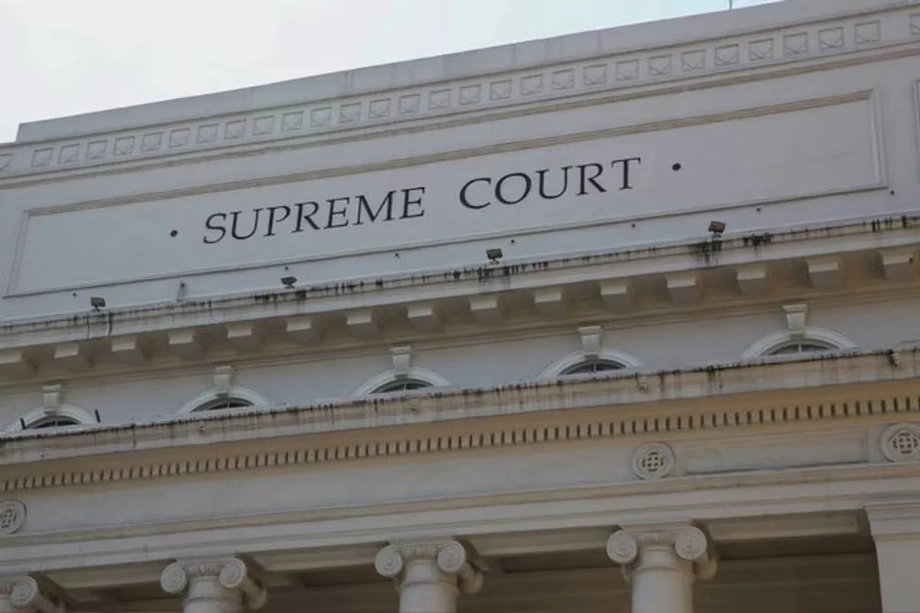
Zalameda chosen to lead the Supreme Court until 2033
President Ferdinand Marcos Jr. has appointed Rodil V. Zalameda as the Philippines' 28th chief justice, choosing the author of the ruling that acquitted his mother, Imelda Marcos, of seven graft counts over two more senior Supreme Court justices. The appointment was announced on November 5, 2026, a day before Chief Justice Alexander Gesmundo's mandatory retirement.
Contents
- Zalameda chosen to lead the Supreme Court until 2033
- Why the Palace chose him
- The Imelda Marcos ruling and questions of independence
- A record spanning rights, budgets and political power
- What the chief justice can do
- Courthouses, technology and the wait for justice
- The candidates Marcos passed over
- How the selection unfolded
- Another retirement will reshape the bench
- Key Points
Zalameda, 63, is expected to serve until August 2033, when he reaches the compulsory retirement age of 70. His tenure would extend beyond the current presidency, giving him several years to guide a judiciary confronting lengthy proceedings, demands for better access to justice and cases involving the country's most powerful political figures.
The Philippine Information Agency's appointment announcement confirmed Marcos's choice and identified experience across several administrations as a reason for the decision. Presidential Communications Office Acting Secretary Lino Edgardo Cayetano announced the appointment at a Palace briefing.
Zalameda was selected from five nominees submitted by the Judicial and Bar Council, or JBC, on October 29. Marcos passed over Senior Associate Justice Marvic Leonen and Associate Justice Alfredo Benjamin Caguioa, both appointed to the court by former President Benigno Aquino III. The other nominees were Associate Justices Japar Dimaampao and Jose Midas Marquez.
Former President Rodrigo Duterte appointed Zalameda, Dimaampao and Marquez to the Supreme Court. Zalameda now takes charge of a court whose membership remains dominated by Duterte appointees, while retaining the same single vote as each of its other members.
Why the Palace chose him
Cayetano pointed to Zalameda's work as a court official, prosecutor, appellate magistrate and Supreme Court justice. Explaining the President's choice, the acting communications secretary described a career spent across several levels of the justice system.
"Justice Zalameda brings more than three decades of distinguished service to our judicial system. From his early years as a court official and public prosecutor, to his service in the Court of Appeals, and ultimately, the Supreme Court. He devoted his professional life to the administration of justice," Cayetano said.
Zalameda earned his law degree from Ateneo de Manila University in 1987 under an academic scholarship and passed the 1988 Bar examinations. He worked as a branch clerk at the Regional Trial Court in Makati before entering private practice from 1990 to 1995.
He returned to government service as a prosecutor in 1995 and became Mandaluyong City prosecutor in 2002. His appointment to the Court of Appeals followed on September 5, 2008. He spent almost 11 years there and chaired its 17th Division before joining the Supreme Court in August 2019.
Cayetano said service across multiple presidencies factored into Marcos's decision. The Palace presented that range of experience as preparation for leading the judiciary with integrity, impartiality and respect for the rule of law.
The Imelda Marcos ruling and questions of independence
Zalameda's judicial record includes the June 2026 decision acquitting former first lady Imelda Marcos of seven graft counts involving Swiss foundations. He wrote the Supreme Court First Division's ruling, which overturned her November 2018 conviction by the Sandiganbayan, the court that hears corruption cases involving public officials.
The decision ran to 50 pages and had the concurrence of the division's other members, including Marquez. It cited failures to properly authenticate key documents and establish guilt beyond reasonable doubt. Authentication means showing that a document is genuine and can be relied upon as evidence.
Marcos's selection of the justice who wrote his mother's acquittal has placed judicial independence at the center of scrutiny surrounding the appointment. Asked about independence concerns, Cayetano referred to the collective nature of the ruling and expressed confidence in the court's impartiality.
"The decision you're talking about is the decision of a division. We believe in the impartiality, and we look forward to working with the new Chief Justice," he said.
Supreme Court divisions decide cases through the votes of several justices. The author, also called the ponente, writes the court's reasoning on behalf of the majority. Zalameda's authorship and his colleagues' votes are both part of the record of the acquittal.
A record spanning rights, budgets and political power
Zalameda also authored Deduro v. Vinoya, a ruling recognizing that red-tagging can threaten a person's rights to life, liberty and security. Red-tagging means publicly labeling someone as connected to communist rebels, potentially exposing that person to threats or attacks.
The decision recognized the danger such labeling can create and its relevance to the writ of amparo. That legal remedy allows people facing threats to life, liberty or security to seek protection from a court. For activists and others accused of insurgent links, the ruling created a route to ask judges for protection.
On government spending, Zalameda dissented when the court struck down a P449.5 billion increase in unprogrammed appropriations in the 2024 national budget. These appropriations are spending authority that can be activated when specified funding conditions are met. Disputes over them concern both the handling of public money and the constitutional limits on budget decisions.
His voting record also includes agreement with rulings on Philippine cooperation with the International Criminal Court and the decision declaring Vice President Sara Duterte's 2025 impeachment complaint unconstitutional. In litigation involving a P60 billion transfer of Philippine Health Insurance Corporation funds, he described the transfer as unconstitutional while allowing that the government could have acted in good faith.
Those cases place Zalameda's leadership at the intersection of public finances, individual rights and political accountability. The court will continue deciding such disputes collectively, with its chief justice participating alongside 14 associate justices.
What the chief justice can do
Zalameda will lead the judiciary and help set its administrative direction. The office carries responsibility for the functioning of courts across the country, alongside the Supreme Court's work interpreting laws and the Constitution.
The chief justice is often described as first among equals. On a court with 15 members, the chief justice has one vote, just like every associate justice. Major constitutional disputes are decided by the court sitting together, while divisions handle other cases.
The position also includes chairing the JBC by virtue of holding office and presiding over an impeachment trial of a president. The council screens applicants for judicial vacancies and submits nominees to the President, connecting the chief justice's leadership role with the process of selecting future judges.
Zalameda told the JBC that he would lead through respect for colleagues and acceptance of disagreement. That approach matters on a bench whose members can reach sharply different conclusions about the same law, evidence or constitutional provision.
Courthouses, technology and the wait for justice
Zalameda identified more courthouses, greater investment in technology and better benefits for judiciary employees as priorities during his JBC interview. He also pledged to confront delays that leave litigants waiting for decisions.
Explaining his approach to court workloads, the incoming chief justice said cases should be assessed according to their demands rather than treated as if they all required the same effort.
"The judiciary must also confront delays that continue to burden litigants. I recognize that not all cases require the same amount of time and effort. We must consider their nature and complexity, the number of parties and witnesses, the volume of evidence, the length of proceedings, and the issues that must be resolved," said Zalameda.
For people using the courts, those priorities concern practical needs: a place for hearings, reliable records, available staff and a decision within a reasonable period. A case involving many witnesses and large volumes of evidence places different demands on a court from a dispute turning on a narrow legal question.
No detailed implementation timetable or funding package accompanied the appointment announcement. The proposals now form an agenda for Zalameda to pursue with his fellow justices and the institutions responsible for public funding.
The candidates Marcos passed over
Leonen, appointed in November 2012, entered the selection as the most senior nominee. A former University of the Philippines law dean, he also led government peace negotiations with the Moro Islamic Liberation Front that produced the 2012 framework agreement on the Bangsamoro.
During his JBC interview, Leonen proposed an independent study of major corruption cases since the 1986 People Power Revolution. He wanted to examine accountability and the reasons litigation had taken so long. His recent judicial work included decisions on unprogrammed appropriations and Sara Duterte's impeachment proceedings.
Caguioa, appointed in January 2016, previously served as Aquino's chief presidential legal counsel and justice secretary. He wrote a ruling invalidating warrantless vehicle searches for drugs based solely on unverified anonymous information. In seeking the chief justice post, he called for stronger integrity mechanisms and greater investigative authority for the Judicial Integrity Office.
Leonen and Caguioa both dissented from the 2016 decision allowing Ferdinand Marcos Sr. to be buried at the Libingan ng mga Bayani. Their judicial approaches have also been visible in oral arguments in Baluyot v. Antonio-Baluyot, concerning recognition of foreign divorces involving Filipinos: Leonen pressed the human consequences of legal rules, while Caguioa examined how a proposed interpretation fitted existing law.
Dimaampao, another Duterte appointee, advocated a more humane judiciary that treats people equally. He joined a ruling lifting tax assessments against contractors in the Malampaya gas project after the court found that the government's share of project profits had covered the taxes at issue from 2002 to 2009.
Marquez offered extensive experience administering lower courts. He began at the Supreme Court as an apprentice in 1991, served nearly 12 years as court administrator and became an associate justice in November 2021. His proposed Strategic Plan for Judicial Innovations 2.0 covered 2028 to 2032 and targeted eliminating overburdened courts by 2032 through measures including electronic filing, digitized records and staffing reviews.
How the selection unfolded
The JBC opened applications for chief justice on August 28 ahead of Gesmundo's retirement. Associate Justices Ramon Paul Hernando and Henri Inting withdrew their nominations, leaving the five candidates ultimately submitted to Marcos.
Support for individual candidates emerged before the decision. The National Capital Region Chief Prosecutors Association endorsed Zalameda through Resolution No. 03, Series of 2026, adopted on September 2. Retired Chief Justice Reynato Puno endorsed Marquez in an October 14 letter, citing his decades of service and experience coordinating with other branches of government.
The main dates in the selection were:
- August 28, 2026: The JBC opened applications for chief justice.
- September 2: The prosecutors association adopted its endorsement of Zalameda.
- October 14: Puno wrote to Marcos supporting Marquez.
- October 29: The JBC submitted its five nominees to the President.
- November 5: The Palace announced Zalameda's appointment.
- November 6: Gesmundo reaches mandatory retirement.
- August 2033: Zalameda is expected to reach the mandatory retirement age of 70.
Supreme Court members must be natural born Filipino citizens, at least 40 years old, with at least 15 years of experience as a lower court judge or practicing lawyer in the Philippines. A candidate needed at least four affirmative votes from JBC members to enter the shortlist. The Constitution gives the President 90 days from a Supreme Court vacancy to fill it; Marcos announced his choice before Gesmundo's retirement.
Another retirement will reshape the bench
Associate Justice Amy Lazaro-Javier is scheduled to retire on November 16, creating another opening on the Supreme Court. The JBC shortlisted 11 candidates for her seat.
The nominees include Court of Appeals Presiding Justice Fernanda Peralta, other appellate justices, Solicitor General Darlene Berberabe, Commission on Audit Chair Gamaliel Cordoba and Commission on Elections Commissioner Ernesto Maceda Jr.
Zalameda's elevation also moves a sitting associate justice into the chief justice position, making the selection of court members part of the wider leadership transition. His appointment determines who will lead the institution; the choices for associate justice posts will help determine the votes available when future cases reach the bench.
For citizens, the immediate tests are concrete: how quickly cases move, whether courts protect people facing threats and how judges apply constitutional limits to public spending and political power. Zalameda enters office with rulings on each of those subjects already part of his record.
Key Points
- Marcos selected Rodil Zalameda as the Philippines' 28th chief justice, with the appointment announced on November 5, 2026.
- Zalameda succeeds Alexander Gesmundo and is expected to serve until August 2033.
- The President passed over more senior justices Marvic Leonen and Alfredo Benjamin Caguioa.
- Zalameda authored the decision acquitting Imelda Marcos of seven graft counts and the Deduro v. Vinoya ruling recognizing the dangers of red-tagging.
- His stated priorities include more courthouses, technology, employee benefits and reducing case delays.
- Amy Lazaro-Javier's scheduled November 16 retirement creates another Supreme Court vacancy.