295 projects face removal as a wider budget review continues
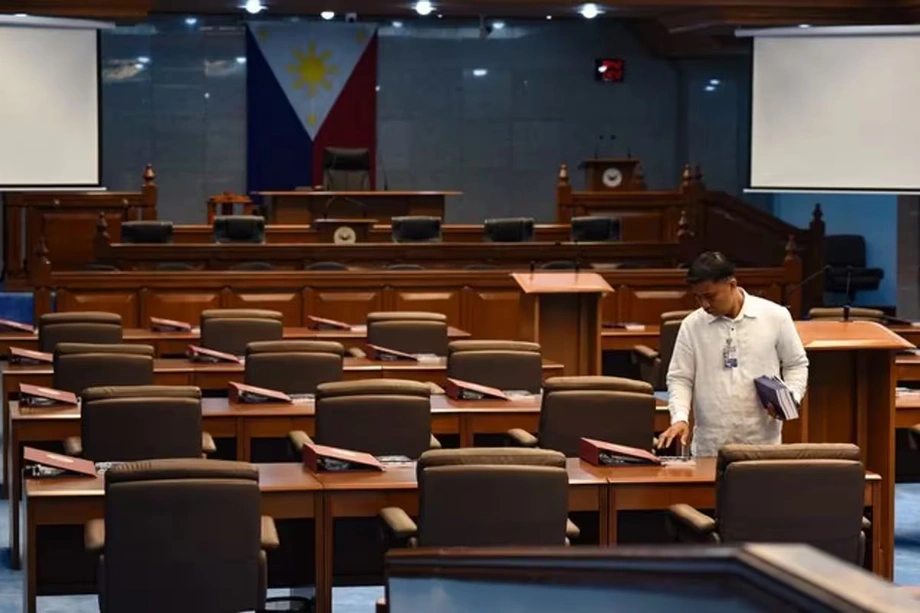
The Philippine Senate will remove 295 infrastructure projects worth about P8.8 billion from the proposed 2027 national budget because they lack the required supporting documents, Senate President Sherwin Gatchalian announced on November 3, 2026. The planned cut comes as senators examine thousands of other public works allocations before budget debates scheduled to begin on November 23.
Contents
- 295 projects face removal as a wider budget review continues
- How the first review identified 7,107 flagged projects
- What the documents tell taxpayers
- House additions bring a second, larger review
- The same test for executive and congressional proposals
- Multipurpose buildings and roads draw watchdog scrutiny
- Major transport projects face a different funding concern
- What happens before the budget becomes law
- Public scrutiny could continue through the final negotiations
- Key Points
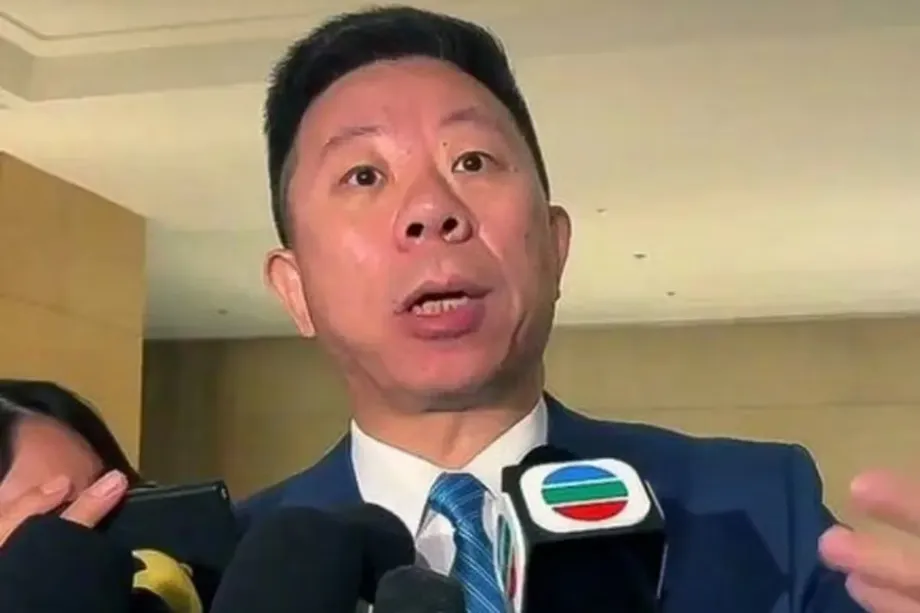
Former Department of Public Works and Highways (DPWH) Acting Secretary Vince Dizon identified the 295 projects as noncompliant in a letter to the Senate. Their removal forms part of a broader review covering both the executive branch's original spending proposal and projects subsequently added by the House of Representatives.
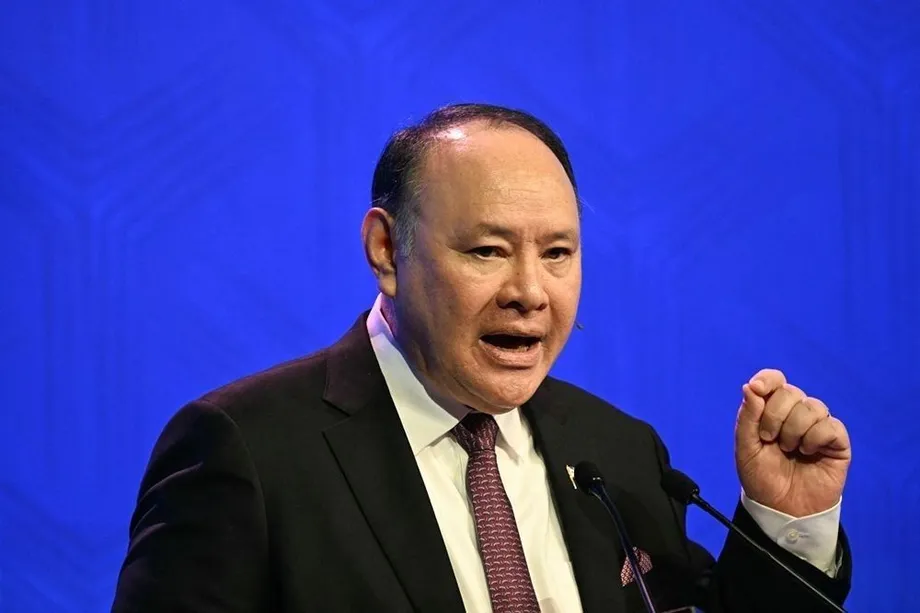
Gatchalian said the Senate would demand concrete technical evidence before approving funding. He described the standard in a statement announcing the decision:
The Senate is committed unequivocally in weeding out unsubstantiated line items, including those lacking concrete and verifiable technical support, to ensure that every item in the final version is shovel-ready. Unverifiable line items will not receive a single peso of public funding,
For communities awaiting roads, bridges and flood protection, the review will help determine which proposed projects receive money in 2027. Senators are asking agencies to show exactly where construction would happen, what work is planned and whether the project can proceed.
The announcement is a commitment to remove the allocations during budget deliberations. Senate Finance Committee Chairman Joseph Victor "JV" Ejercito had yet to confirm the specific cut when it was announced, while Senate President Pro Tempore Tito Sotto described the majority's decision as collective.
How the first review identified 7,107 flagged projects
Gatchalian's office flagged 7,107 of 11,395 infrastructure projects during a September 25 DPWH budget briefing before the Senate finance subcommittee. That represented about 62.4 percent of the projects examined. His office placed the value of roughly 7,000 flagged projects at P251 billion.
The review covered items in the National Expenditure Program, or NEP, the executive branch's proposed national budget submitted to Congress. Its findings included missing project identifiers, repeated allocations and descriptions that did not clearly explain the intended construction.
- Missing station limits, bridge identification numbers or geographic coordinates.
- Duplicate projects and projects appearing in both the 2026 enacted budget and the 2027 proposal.
- Large allocations without a detailed breakdown into identifiable projects.
- Projects with overlapping locations or work divided into fragments.
- Unspecified work scopes and conflicting descriptions of the type of work.
Dizon said supporting documents submitted by district engineers and regional offices contained station limits, bridge identification numbers and coordinates for 6,113 projects. Another 647 projects still required validation.
The published figures leave a small gap: 6,113 projects with supporting location details, 647 awaiting validation and 295 marked noncompliant total 7,055, or 52 fewer than the 7,107 initially flagged. No explanation was given for those 52 items.
What the documents tell taxpayers
A road project needs more than a place name and a price. Station limits identify the points where work starts and ends along a road. A bridge identification number connects an allocation to a particular structure, while geographic coordinates locate the proposed work on a map.
Ejercito said the Senate would also require a certificate of implementability, a program of works, development council approval, geotagging and other supporting papers. A program of works sets out the construction tasks and their costs. Geotagged photographs attach location information to images so reviewers can check where they were taken.
Ejercito had previously identified 155 flood control projects worth P8.2 billion that lacked a certificate of implementability, a program of works and geotagged photographs. Those documentary checks were part of stricter requirements introduced while the 2027 executive proposal was being prepared.
People's Budget Coalition co-convener AJ Montesa urged senators to remove projects without the required papers and apply the same documentary standards to lawmakers as to implementing agencies. For residents, those details make it possible to connect a budget entry to an actual road, bridge or flood defense in their community.
House additions bring a second, larger review
Senate finance staff counted 16,244 DPWH projects in the House version of the budget, compared with 11,420 in the executive proposal. The increase was 4,824 projects, or about 42 percent. Staff identified 6,271 projects in the House bill that were absent from the NEP.
The count of newly introduced projects is larger than the net increase, so the two figures describe different measures: how many new entries appeared and how much the total list grew. The Senate did not provide a full reconciliation of the changes. Its comparison also used an executive baseline of 11,420 projects, while Gatchalian's September briefing covered 11,395.
At an October 26 Senate consultation, Ejercito said supporting documents had been submitted for only 1,418 of the 16,244 DPWH operations projects. That was 8.73 percent of the total at that point. The department was given until November 3 to provide project lists, supporting documents and reasons for the additions.
Ejercito said additional staff had been hired to review projects individually. DPWH Secretary Giovanni Lopez and Dizon committed to cooperating with the checks.
People's Budget Coalition and BetterGovPH identified nearly 7,000 projects worth P190 billion without published supporting attachments. That assessment concerned what citizens could inspect publicly, while the Senate's submission count concerned documents delivered to the chamber.
The same test for executive and congressional proposals
Ejercito said projects should be judged on their merits, regardless of whether they originated with the DPWH, the House or subsequent Senate amendments. Speaking about the review, the finance chairman explained the proposed approach:
So we will just apply it to everyone, regardless of who proposed it,
House leaders defended their budget changes as amendments and attributed some disputed entries to typographical errors. Ejercito said each project would still need proper documentation and justification.
Bicol Saro Party-list Representative Terry Ridon supported requiring complete documentation for infrastructure funding. He also said he did not object to lawmakers disclosing proposed projects for their districts or to the Senate requiring papers for items added to the House bill.
Ridon cautioned against concentrating scrutiny only on congressional additions. He said some corrupt flood control projects in Bulacan had originated in the NEP itself. His concern covered every stage of the budget: projects could be left unbuilt or constructed below standard whether they began in the executive proposal or were added later in Congress.
That approach would extend scrutiny beyond the origin of an allocation to its location, technical plan and eventual construction. A project included early in the budget process would face the same requirements as one proposed during congressional deliberations.
Multipurpose buildings and roads draw watchdog scrutiny
Multipurpose building allocations rose from P41 billion in the executive proposal to P83.7 billion in the House version, according to the People's Budget Coalition. The P42.7 billion increase amounted to about 104 percent, more than doubling the proposed funding.
Coalition co-convener Zy-za Nadine Suzara said only 2,000 of about 6,000 added multipurpose building projects could be verified using publicly available data. The group questioned how citizens could assess the need for such buildings, including whether facilities intended as evacuation centers were situated in areas exposed to disasters.
Suzara connected the demand for published documents to the earlier flood control scandal:
We called this out because there were no published supporting documents for the 7,000 insertions that are worth P190 billion. This is how the flood control scandal started,
The coalition also identified 355 new farm roads worth nearly P6 billion that it said were absent from both the NEP and the Department of Agriculture's proposal. Farm roads are intended to connect agricultural communities with markets, making their recorded locations a basic part of checking their usefulness.
Several entries allegedly carried coordinates in the sea. The coalition cited a P23 million road listed for Nueva Ecija with coordinates near Benham Rise, a P30 million Cebu road pointing to the Celebes Sea near Indonesia, and a P55 million Quezon road pointing near Brunei.
The coalition's broader budget review flagged approximately P1 trillion in potential patronage allocations: P210 billion in assistance spending, P695 billion in infrastructure and P112 billion in unprogrammed appropriations. Unprogrammed appropriations are spending authorizations that become available when specified funding conditions are met. Those figures covered a much wider review than the 295 DPWH projects facing removal.
Major transport projects face a different funding concern
Ejercito was also examining whether funding should be restored for major infrastructure projects after reductions in the House budget. He said he met with Public Works Secretary Lopez and Transportation Secretary Dizon to determine their financing requirements.
The projects discussed included the North-South Commuter Railway, Metro Manila Subway, Bataan-Cavite bridge and Laguna Lake coastal road. Ejercito stressed the need to protect major national projects, particularly those supported by foreign assistance, and to honor financing commitments.
The Senate's task therefore involves both removing unsupported allocations and checking whether established projects have sufficient funding. The proposed P7.2 trillion national budget must accommodate those decisions before Congress agrees on a final spending bill.
Ejercito also filed Senate Bill 2, the Masterplan for Infrastructure and National Development Act. The proposal seeks a comprehensive infrastructure plan extending beyond changes of administration, with project selection guided by public need. It is a proposed longer term change alongside the immediate review of the 2027 budget.
What happens before the budget becomes law
The Senate review is moving through several deadlines, from the first identification of questionable entries to the full chamber's scheduled budget debates:
- September 25: Gatchalian flagged 7,107 infrastructure projects during the DPWH budget briefing.
- October 26: A Senate consultation heard that documents had been submitted for 1,418 of 16,244 DPWH operations projects, while watchdogs presented their findings.
- November 3: The DPWH deadline for project lists and supporting documents coincided with Gatchalian's announcement that 295 projects would be removed.
- November 9: Senate sessions were scheduled to resume, with the budget bill due for consideration.
- November 23: Plenary budget deliberations were scheduled to begin.
Senator Panfilo "Ping" Lacson said the majority supported Ejercito's effort to remove unwarranted and corruption prone allocations. The next major public test will come as senators examine the proposed spending in plenary, where the full chamber debates budget provisions.
Public scrutiny could continue through the final negotiations
Congress must eventually reconcile the House and Senate versions through a bicameral conference committee, commonly called the bicam. That committee settles differences between the two chambers before they approve a common bill.
Ejercito planned to invite civil society organizations to observe those discussions, with proceedings to be livestreamed. He said their participation would require agreement with House leaders and suggested an observer role. Ridon also welcomed watchdog involvement continuing through the bicameral stage.
Budget advocates asked the House Appropriations Committee to publish a complete list of changes, showing previous and revised amounts, reasons, origins and approvals. They also sought the documents explaining why each project was needed.
Publication would allow residents to follow a specific project as its funding changes between the executive proposal, House bill, Senate amendments and final agreement. The immediate decision concerns P8.8 billion in proposed removals, but the wider review will determine how thousands of other infrastructure entries survive that process.
Key Points
- The Senate plans to remove 295 infrastructure projects worth about P8.8 billion from the proposed 2027 budget because required documents were missing.
- Gatchalian's September review flagged 7,107 projects, while the DPWH still had 647 to validate.
- Senate staff identified 6,271 House projects absent from the executive proposal.
- Only 1,418 of 16,244 DPWH operations projects had supporting documents submitted at the October 26 consultation.
- Watchdogs questioned nearly P190 billion in infrastructure additions without published attachments, including multipurpose buildings and farm roads.
- Senate budget debates were scheduled to begin November 23, with civil society observation proposed for the later bicameral negotiations.