Defense channels remain suspended, but relations continue
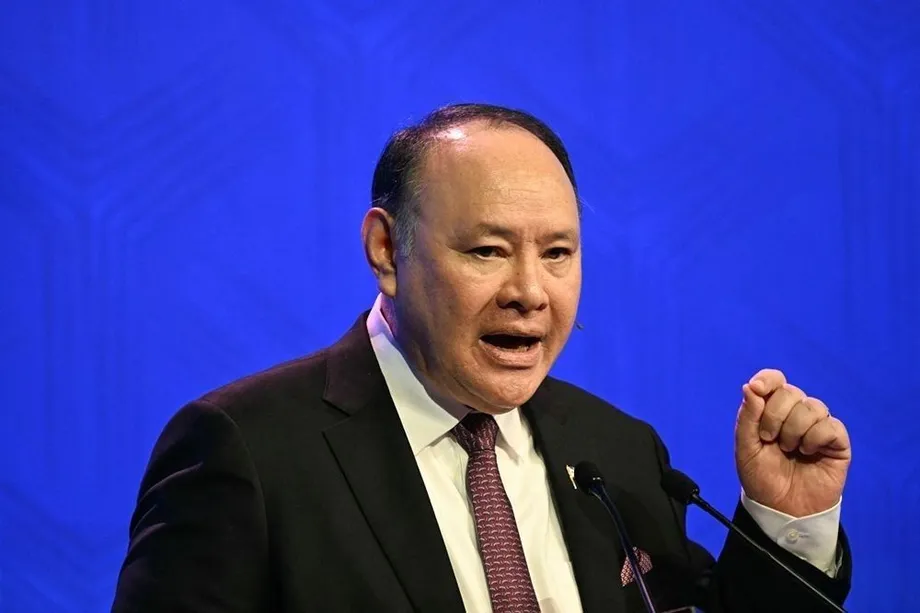
The Armed Forces of the Philippines has backed Defense Secretary Gilberto Teodoro Jr.'s indefinite suspension of direct military communications with China, while the presidential palace says diplomatic relations, trade and investment engagement with Beijing will continue. The military also pledged to maintain patrols and supply missions to Philippine personnel at Ayungin Shoal.
Contents
- Defense channels remain suspended, but relations continue
- Why the AFP says dialogue failed
- China warns of confrontation risks
- How the suspension developed
- Patrols and Ayungin supply missions will continue
- The palace keeps diplomacy and trade open
- A dispute about rights and trust
- What has not been decided
- The Essentials
The statements followed an October 12, 2026, Chinese Embassy warning that closing military communication channels could increase mistrust and bring personnel closer to confrontation. Teodoro responded on October 13, saying the suspension was already longstanding. At a briefing at Camp Aguinaldo, retired Rear Admiral Roy Vincent Trinidad, the AFP spokesperson for the West Philippine Sea, said the military firmly supported the defense chief.
The dispute is therefore not an announcement that Manila is ending all contact with Beijing. It concerns direct defense communications, which Philippine officials say failed to produce meaningful results while Chinese activities continued in waters where Manila asserts maritime rights. The palace has separately reaffirmed that economic and diplomatic engagement remains government policy.
That distinction matters for troops operating at sea. The AFP says its missions will continue without a reduction in activity, including the rotation of personnel and delivery of supplies. China argues that keeping military channels open is necessary to prevent mistakes from becoming confrontations. Manila's defense leadership argues that communication cannot work without trust and conduct consistent with international law.
Why the AFP says dialogue failed
Trinidad framed the suspension as a response to a gap between diplomatic messages and behavior. He said a functioning communication mechanism requires mutual trust, sincerity and support for international law, and that conversations alone do not establish those conditions.
Explaining the AFP's position, Trinidad said that messages exchanged between the two countries must be reflected in their conduct:
Bilateral dialogue will be effective if the messages match the actions on sea, air, and ground.
The AFP accused China's People's Liberation Army and Coast Guard of provocative and irresponsible actions despite earlier diplomatic and military communication efforts. Those are Philippine allegations, which form the stated basis for its support of the suspension.
Trinidad also accused the Chinese Communist Party of using direct communication channels as a "smokescreen" for what he described as an illegal presence, coercive and aggressive actions, and deceptive messaging in the Philippine maritime domain and on land. His argument was that maintaining a channel is not useful if the exchanges conceal, rather than restrain, the conduct driving the dispute.
The military's position sets a test for effective dialogue: words must match actions. It does not, however, establish a published procedure for reopening the channels. No specific benchmarks, review date or agreed process for restoring direct defense communications were announced in the statements described.
China warns of confrontation risks
The Chinese Embassy's October 12 statement accused Teodoro of suspending military communications for political self interest. It argued that channels should remain open even when bilateral relations are difficult, so that the countries can avoid miscalculation and prevent tensions from escalating.
The embassy described the consequences it believed would follow from Teodoro's decision:
His move fuels mistrust, narrows the space for crisis management, and pushes frontline personnel closer to confrontation.
Military communication mechanisms can allow officials to clarify intentions or discuss an incident before either side acts on an incorrect assumption. That is the purpose China invoked. The embassy's warning concerned the risk of future confrontation; it did not establish that the suspension had caused a particular encounter or that new combat deployments had been ordered.
Teodoro rejected the criticism in an October 13 Facebook response. He described it as a "desperate move" and referred to China's "kalokohan," meaning foolishness. He also said military communications had already been suspended for nearly three years.
The disagreement is therefore about more than whether a telephone or other direct channel should remain available. Beijing presents continued contact as protection against escalation. Philippine defense officials contend that earlier contact failed to constrain the actions that made encounters dangerous.
How the suspension developed
The Department of National Defense said the channels were discontinued shortly after Teodoro took office in July 2023. Trinidad said the order applied to all DND agencies and extended through the chain of command, indicating a broader defense policy rather than a restriction confined to the secretary's personal contact with the embassy.
A separate dispute over a courtesy call by then Chinese Ambassador Huang Xilian helps explain the breakdown in trust. The Chinese Embassy claimed that the meeting included discussion or a briefing about a "gentleman's agreement" or a "new model." Teodoro denied that account, calling it a blatant lie and a form of betrayal.
The DND subsequently reshared a statement from 2024 in which Teodoro rejected the Chinese account. Describing why he was making his denial public, the defense secretary said:
I am issuing this statement to generate awareness on this clear attempt by China to advance another falsehood in order to divide our people and distract us from their unlawful presence and actions in our EEZ.
EEZ means exclusive economic zone, an area generally extending up to 200 nautical miles from a coastal state's baselines. Within it, the coastal state has rights over resources and certain economic activities. Those rights are distinct from full sovereignty over the sea, a distinction that matters when describing the competing claims.
The chronology also needs care. Reports differ in how they describe the relationship between the initial suspension and the later public statement. The DND places discontinuation shortly after July 2023, while the statement reshared during the current dispute dates from 2024. Teodoro's description of "nearly three years" does not precisely match the interval from July 2023 to October 2026, which is about three years and three months. An exact implementation date has not been specified.
- July 2023: The DND says direct military channels were discontinued shortly after Teodoro took office.
- 2024: Teodoro issued the statement rejecting China's account of the courtesy call with Huang Xilian.
- October 12, 2026: The Chinese Embassy criticized the suspension and warned about confrontation risks.
- October 13, 2026: Teodoro responded, and the AFP reaffirmed its support for the suspension.
Patrols and Ayungin supply missions will continue
The AFP paired its support for the communications freeze with assurances that operational activity would continue. Trinidad listed maritime patrols, aerial operations, surveillance and maritime domain awareness activities, along with rotation and resupply missions.
Maritime domain awareness means monitoring vessels and activity at sea so authorities understand what is happening and can respond. Rotation and resupply missions replace deployed personnel and deliver the provisions and equipment needed to sustain their posts.
Trinidad said there would be no letup in those missions. He also reaffirmed that BRP Sierra Madre would remain a commissioned Philippine Navy vessel at Ayungin Shoal, also known as Second Thomas Shoal. A commissioned vessel remains formally in naval service; the statement signals that the AFP is not treating the ship as an abandoned asset.
The assurance is important because personnel aboard Sierra Madre depend on continuing access and deliveries. The suspension of defense communications does not mean Philippine forces are withdrawing from the shoal or pausing the missions that sustain their presence.
Ayungin was already the focus of cyanide allegations near Ayungin in April 2026. Philippine officials then said laboratory testing had detected the chemical in seized bottles and alleged that its use threatened marine life and personnel near the outpost. Those allegations are separate from the communications dispute, but concern the same location and the conditions under which troops remain there.
The palace keeps diplomacy and trade open
Presidential Communications Office Undersecretary Claire Castro said the Marcos administration had no intention of severing relations with China. Asked about the military communications suspension, she referred questions about its specific details to Teodoro while stating that wider engagement would continue.
In its account of the October 13, 2026, Palace briefing, the Philippine Information Agency quoted Castro on continued economic and diplomatic engagement:
"There is no prohibition in dealing with China in relation to trade and investment. Alam naman natin iyan. And we are also dealing with China in a very diplomatic manner," Castro said.
Castro, speaking as the palace press officer, distinguished the defense issue from the government's broader relationship with Beijing:
Perhaps it would be best to ask Secretary Gibo for specific details regarding that matter. But we are definitely not closing the door on our relationship with China. That's not what the President wants.
She said there was no prohibition on dealings with China involving trade and investment, and that the Philippines continued to engage Beijing diplomatically. The palace also maintained that bilateral relations are separate from the country's responsibility to defend its sovereignty and territorial rights in the West Philippine Sea.
This leaves two policies operating at the same time: direct defense channels remain suspended, while diplomatic and economic dealings continue. Castro's statements do not announce a replacement military mechanism or explain how an urgent operational incident would be handled.
The separation is consistent with the tensions surrounding proposed joint oil exploration earlier in 2026. President Ferdinand Marcos Jr. considered energy cooperation with China, while Philippine lawmakers raised concerns about sovereignty, transparency and trust. That debate also placed potential economic cooperation alongside unresolved maritime disagreements, without establishing that a final exploration agreement had been reached.
A dispute about rights and trust
The current exchange sits alongside Manila's use of legal and diplomatic channels to advance its maritime claims. In July 2026, the Philippines presented a partial submission to the United Nations Commission on the Limits of the Continental Shelf concerning seabed and subsoil rights beyond its standard EEZ off western Palawan.
That continental shelf submission concerns rights beneath the sea, not sovereignty over the water surface. China and Malaysia objected to aspects of the claim. The process illustrates another channel that continues independently of direct military communications: technical and legal examination of maritime entitlements.
Trust also features in the argument over the alleged "gentleman's agreement" or "new model." The existence and content of such an understanding are contested. The Chinese Embassy claimed the matter had been discussed or briefed during Huang's courtesy call; Teodoro denied that account. No mutually accepted record of the meeting or agreed text was presented in this exchange.
For the AFP, the claimed failure of past communications and the dispute over what was said both support its refusal to treat dialogue as sufficient evidence of cooperation. For Beijing, the continued absence of military channels is itself a risk. Neither position resolves how the two sides should manage an encounter when personnel are operating close to one another.
What has not been decided
No reopening date has been announced for direct military communications. The suspension is described as indefinite, and the AFP has not set out a formal list of conditions that would trigger its reversal, beyond Trinidad's call for trust, sincerity, respect for international law and consistency between messages and actions.
The public statements also do not identify an alternative dedicated channel for urgent contact between military personnel. Continued diplomatic engagement establishes that Manila and Beijing have not ended relations, but it does not demonstrate that a specific operational arrangement has replaced the suspended defense channels.
For now, the concrete commitments are that Philippine patrols, aerial activity, surveillance and resupply missions will continue, Sierra Madre will remain in naval service at Ayungin, and the palace will maintain diplomatic and economic engagement with China. No next meeting, review deadline or restoration timetable was announced.
The Essentials
- The AFP supports Teodoro's indefinite suspension of direct military communications with China.
- The DND dates discontinuation to shortly after July 2023; the statement reshared during the dispute was issued in 2024.
- China's embassy warned on October 12, 2026, that the suspension increases mistrust and confrontation risks.
- The AFP says dialogue must be matched by actions consistent with international law.
- Patrols, aerial operations, surveillance and rotation and resupply missions will continue.
- BRP Sierra Madre will remain a commissioned Philippine Navy vessel at Ayungin Shoal.
- The palace says diplomatic relations, trade and investment engagement with Beijing remain open.
- No date or formal process for restoring direct military channels has been announced.