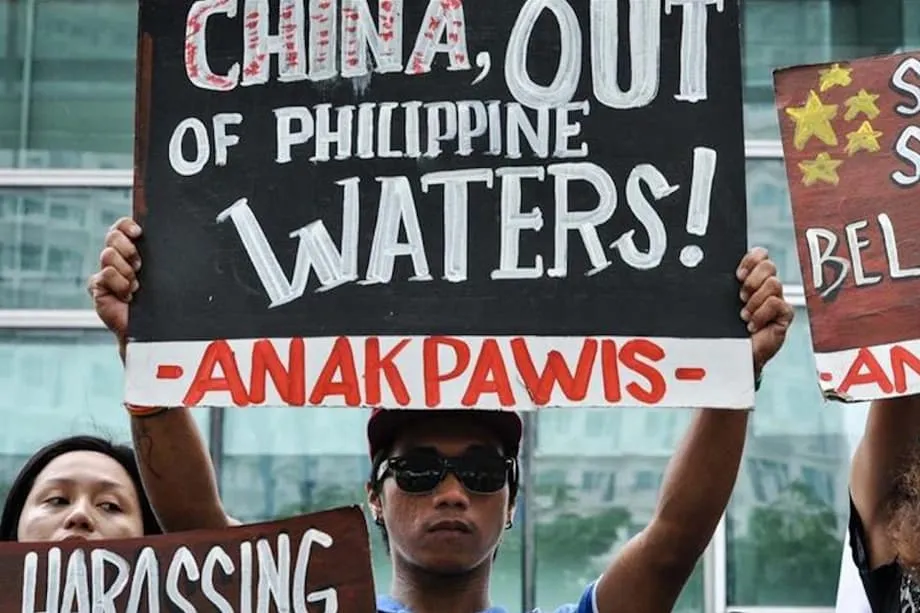
Marcos Faces Pressure Over Energy Talks With Beijing
President Ferdinand Marcos Jr. is considering joint oil exploration with China as the Philippines confronts a national energy emergency, a PHP238 billion recovery programme and warnings that an agreement could weaken its position in the South China Sea. The country imports more than 90 percent of its petroleum needs, while the Malampaya gas field, an important source of energy for Luzon, is nearing depletion.
Contents
- Marcos Faces Pressure Over Energy Talks With Beijing
- Why the Energy Emergency Has Changed the Calculation
- What Marcos and Diplomats Have Said
- Lawmakers Demand Scrutiny Before Any Agreement
- Earlier Agreements Explain Today's Legal Concerns
- What the Constitution and Arbitration Ruling Mean
- Confrontations at Sea Weigh on Confidence
- Manila's Assurances Face a Test of Transparency
- Regional Disputes Complicate Manila's Choices
- Alternatives and the Decisions Still Ahead
- Key Points
As of April 14, 2026, the government has not issued a formal directive to restart negotiations, according to Foreign Secretary Theresa Lazaro. The prospect has nevertheless drawn demands for legislative scrutiny because China continues to challenge Philippine vessels and resource activities in waters where Manila asserts sovereign rights.
The latest opening emerged from the 11th Bilateral Consultation Mechanism, held in March. Both countries acknowledged the importance of energy cooperation as the Middle East conflict disrupted global supplies. Marcos has suggested that the crisis could give the two governments a reason to overcome obstacles that have defeated earlier efforts.
Opposition lawmakers argue that the immediate need for fuel must be weighed against a longer history: failed agreements, constitutional restrictions, confrontations at sea and China's rejection of the 2016 international arbitration ruling against its expansive maritime claims. The Department of Foreign Affairs says any arrangement would remain subject to the Philippine Constitution and existing laws.
The central decision is about how to develop resources while preserving Philippine authority over them. A partnership would need to meet domestic legal requirements and address concerns about whether Beijing would respect its terms while continuing to contest Manila's rights at sea.
Why the Energy Emergency Has Changed the Calculation
Marcos declared a national energy emergency after oil prices rose sharply between February and March. The Philippines recorded the highest petrol price increase of any country worldwide during that period, putting pressure on households, transport services and businesses.
The government's UPLIFT recovery plan provides PHP238 billion in subsidies for transport workers, farmers and households with low incomes. Those measures address the immediate strain of higher prices. The administration is also looking at untapped resources in the West Philippine Sea as a possible source of energy that would reduce the country's dependence on imports.
Malampaya's approaching depletion adds urgency. The gas field supplies a substantial portion of the energy used by Luzon, the country's most populous island. Reed Bank, within the Philippine exclusive economic zone but claimed by China, holds commercially viable natural gas reserves that could help offset that decline.
An exclusive economic zone, or EEZ, gives a coastal country rights over natural resources in the surrounding sea. The dispute over who can explore and develop those resources has discouraged international conglomerates from operating at Reed Bank because of concerns about offending China. That leaves Manila with fewer practical development options despite the presence of gas.
What Marcos and Diplomats Have Said
Marcos told Bloomberg Television that the Middle East war could create momentum for an agreement on joint development. He described territorial disagreements as the obstacle that has repeatedly interrupted discussions.
The president explained the difficulty in these words:
this is something we have been talking about for a great deal, but territorial disputes are getting in the way of that.
Lazaro subsequently said there had been no formal instruction to restart talks, although such a move might be forthcoming. No completed agreement or date for renewed negotiations has been announced.
Marcos also connected the possible energy partnership to a wider change in relations with Beijing. He said a reset was "certainly going to happen", citing a "very serious restructuring of global alliances". That prospect comes after his administration strengthened security relations with the United States and adopted a transparency policy that publicises Chinese actions against Philippine vessels.
Lawmakers Demand Scrutiny Before Any Agreement
House member Chel Diokno has questioned the secrecy surrounding the discussions. He argues that transparency should guide foreign and energy policy and plans to lead oversight hearings to examine whether an agreement would comply with the Constitution.
Fellow House member Perci Cendana says the proposed partnership risks rewarding Chinese pressure. He points to increasing aggression by the China Coast Guard against Philippine patrols in the West Philippine Sea, the name Manila uses for portions of the South China Sea within its EEZ.
Cendana described the message he believes an agreement would send:
We are sending the wrong message and encouraging more powerful countries to escalate disputes to extract concessions. Instead of demanding compliance with international law, we are adjusting to China's violations.
Senator J.V. Ejercito has raised the same concern in terms of trust. He questioned how the Philippines could pursue joint exploration with a government whose conduct, in his view, conflicts with the basic conditions for a partnership.
Ejercito described the proposed counterpart as someone:
who is trying to disrespect your sovereignty, undermine your sovereignty, and trying to annex your territory.
The senator added:
Trust is the very foundation of any relationship. I'm sorry, but I'm really consistent in saying that I don't trust the Chinese government.
The lawmakers' objections focus on both the process and the substance of a deal. Diokno wants the terms examined publicly for constitutional compliance. Cendana and Ejercito question whether cooperation would encourage further pressure by giving Beijing an economic partnership while confrontations continue.
Earlier Agreements Explain Today's Legal Concerns
Attempts to cooperate on energy exploration extend across several Philippine administrations. Each has left issues that the current government would have to address before turning discussions into a workable agreement.
- In 2004, during the Arroyo administration, the Philippine National Oil Company signed an agreement with China National Offshore Oil Corporation for seismic surveys in disputed waters.
- In 2005, Vietnam joined a tripartite arrangement known as the Joint Marine Seismic Undertaking. It later collapsed amid corruption allegations and constitutional challenges.
- In 2016, an international arbitral tribunal rejected the legal basis for China's claimed historic rights within its nine-dash line.
- In 2018, President Rodrigo Duterte and Chinese President Xi Jinping signed a memorandum of understanding on joint oil and gas development, drawing accusations that it weakened the arbitration victory.
- During Marcos's state visit to Beijing in 2023, he and Xi agreed to keep communication open on joint exploration. Discussions stalled as tensions grew in 2024 and 2025.
- In March 2026, the 11th Bilateral Consultation Mechanism brought energy cooperation back into discussion amid the Middle East supply crisis.
The Supreme Court added a major legal constraint in 2023 when it voided the 2005 seismic agreement because it involved wholly foreign owned companies. Seismic surveys are used to examine structures beneath the seabed when looking for possible oil and gas deposits, making the terms governing that work part of the resource dispute.
What the Constitution and Arbitration Ruling Mean
The constitutional challenges to the earlier undertaking centred on the 60/40 rule. The requirements described in that dispute call for Philippine entities to own at least 60 percent of the capital in natural resource projects and for the government to retain 60 percent of net profits. The Supreme Court's rejection of the 2005 agreement creates a substantial barrier for any new arrangement involving foreign companies.
A future deal would therefore have to address ownership, control and the distribution of returns. Agreement between the two governments would still require a structure compatible with Philippine constitutional restrictions.
The 2016 arbitral ruling creates a second issue. The tribunal found no legal basis for China's historic rights claim within the nine-dash line, the boundary Beijing uses to assert sweeping claims across the South China Sea.
The ruling means there are no overlapping maritime entitlements between the Philippines and China in the West Philippine Sea. That complicates the use of a joint development framework under the United Nations Convention on the Law of the Sea: Manila would be negotiating over resources to which it already holds sovereign rights, while Beijing continues to dispute its authority.
Critics of Duterte's 2018 memorandum raised that concern, arguing that cooperation could undermine the arbitration ruling. Any new proposal would face scrutiny over whether its wording and operation preserve the Philippine position or give China concessions inconsistent with it.
Confrontations at Sea Weigh on Confidence
China's conduct around Philippine vessels is central to the opposition to a resource partnership. Academic research from Harvard University's Belfer Center identifies recurring patterns of coercion, including the expulsion of Philippine vessels exploring for oil around Reed Bank in 2011 and the blockade of Philippine naval vessels at Scarborough Shoal in 2012.
More recent incidents have reinforced those concerns. On August 25, Chinese vessels surrounded and rammed the Bureau of Fisheries and Aquatic Resources vessel BRP Datu Sanday during a humanitarian mission near Sabina Shoal. The following day, China deployed roughly 40 vessels to block a mission carrying supplies to personnel at Second Thomas Shoal.
In April 2026, Philippine authorities accused Chinese boats of carrying cyanide near Second Thomas Shoal. They warned that the substance could be used to sabotage local fish populations and the reef supporting the grounded warship BRP Sierra Madre. The allegation added an environmental concern to the confrontation around the Philippine outpost.
The Philippine Coast Guard has documented 189 protests against China in recent years, covering water cannon attacks, dangerous manoeuvres and obstruction of navigation. Those incidents form the background against which lawmakers are assessing Beijing's reliability as a commercial and diplomatic partner.
The Manila based Stratbase Institute described China as neither a reliable partner nor a responsible actor. In a statement urging the government to reject the proposed deal, the institute said:
A state that persistently disregards international law and violates Philippine sovereign rights cannot be expected to honor any agreement.
Stratbase urged Manila to develop energy resources with states that share its approach to international law. Its objection is that a partnership with China would expose the Philippines to unnecessary risk while the same government continues to challenge Philippine operations at sea.
Manila's Assurances Face a Test of Transparency
The Department of Foreign Affairs says any possible joint oil and gas exploration would comply with the Constitution and existing laws. It has also stressed that the Philippines retains sovereign rights over natural resources within its EEZ and that an arrangement would be anchored in the primacy of Philippine sovereignty.
China's Foreign Ministry has expressed willingness to work with Philippine scientific research institutions on practical maritime cooperation. Beijing, however, consistently rejects a framework that would imply recognition of Philippine sovereignty in disputed areas. The two governments therefore approach cooperation from conflicting positions on authority over the waters concerned.
Critics also point to the 2024 provisional understanding on resupply missions to Second Thomas Shoal, negotiated by Lazaro. They argue that its secrecy set a troubling precedent and sidelined the 2016 arbitral award. That criticism helps explain why lawmakers are seeking access to the terms of any energy proposal before it advances.
The Coast Guard has meanwhile unveiled its first dedicated command centre in the Spratly Islands to monitor contested waters. The move represents a unilateral assertion of Philippine authority alongside the government's consideration of bilateral energy cooperation.
Regional Disputes Complicate Manila's Choices
Marcos's interest in a reset with China comes within a wider regional dispute involving other claimants and Philippine security partners. Cooperation over oil and gas would sit alongside Manila's stronger ties with Washington and its continued public exposure of Chinese actions at sea.
Malaysia has expressed concerns about Philippine maritime laws, particularly legislation restating historical claims over the Malaysian state of Sabah. Overlapping claims among Southeast Asian countries complicate efforts to present a united response to Chinese expansion.
Malaysia often responds quietly to Chinese incursions while protecting economic relations worth nearly $100 billion in annual trade. That approach illustrates the competing pressures facing governments that have both maritime disagreements and substantial economic ties with Beijing.
China also regards the South China Sea as important for military positioning as well as resources. Control of the waters could allow it to obstruct United States assistance to Taiwan in a conflict, making an energy agreement politically sensitive for both Manila and Washington.
The United States Energy Information Administration estimates that the South China Sea contains 190 trillion cubic feet of natural gas and 11 billion barrels of oil. Those regional estimates show the scale of the resources involved, while Manila's immediate concern is finding a workable way to develop reserves such as those at Reed Bank.
Alternatives and the Decisions Still Ahead
Japan, South Korea and Western energy companies have been suggested as alternative partners willing to operate within Philippine constitutional constraints. Cooperation with those partners could give Manila another route to developing its resources, although the history of companies avoiding Reed Bank shows how China's objections have limited commercial interest.
The government faces two linked pressures. It needs to cushion the effects of expensive imported fuel now, through measures such as UPLIFT, while securing energy supplies to help replace declining production at Malampaya. Developing resources in the West Philippine Sea is part of that longer term calculation.
Marcos sees the international energy crisis as a possible opening for negotiations that territorial disputes have repeatedly blocked. His critics see the same urgency as a reason for stronger oversight, so that immediate economic pressure does not determine the terms of an agreement involving Philippine resource rights.
The next steps rest with the administration's decision on whether to formally restart talks and with the oversight hearings Diokno plans to pursue. No hearing date has been given. Any proposal that emerges would have to address constitutional ownership requirements, the 2023 Supreme Court decision, the 2016 arbitral ruling and the practical question of operating where Chinese vessels continue to challenge Philippine activity.
The choice is therefore broader than whether the Philippines and China can agree to search for oil and gas. Manila must decide what terms it can accept, how those terms would be enforced and whether cooperation would help meet its energy needs while preserving the rights the government says it will protect.
Key Points
- Marcos is considering joint oil exploration with China amid an energy emergency, dependence on imports for more than 90 percent of petroleum needs and declining supplies from Malampaya.
- The PHP238 billion UPLIFT recovery plan provides subsidies for transport workers, farmers and households with low incomes.
- Lazaro says no formal directive has been issued to restart negotiations. Diokno plans oversight hearings on constitutional compliance.
- The Supreme Court voided the 2005 seismic undertaking in 2023, while the 2016 arbitration ruling rejected the legal basis for China's historic rights claim within the nine-dash line.
- Cendana, Ejercito and Stratbase warn that a partnership could reward Chinese pressure and expose Philippine resource rights to further risk.
- The foreign affairs department says any agreement must respect Philippine law and sovereign rights. Suggested alternatives include cooperation with Japan, South Korea and Western energy firms.