Two Dubai Launches Put Chinese Robotaxis in Direct Competition
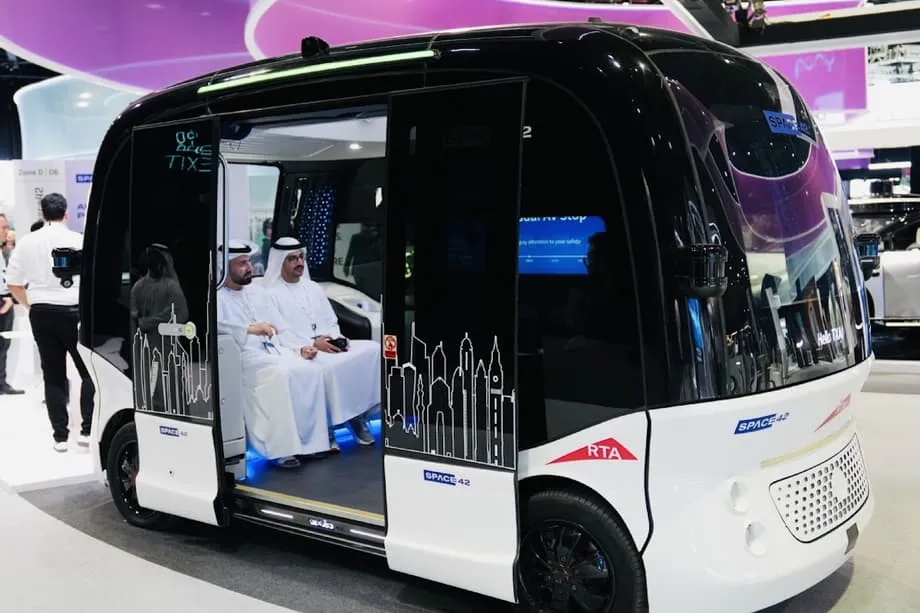
Dubai opened a new chapter in driverless transport on March 30 and April 1, 2026, when two Chinese companies launched commercial robotaxi services just days apart. WeRide and Uber began fully driverless operations on March 30, allowing passengers to request cars through Uber without a human operator inside. On April 1, Baidu's Apollo Go opened bookings through its own app, marking the first international deployment of its autonomous ride booking platform.
Contents
- Two Dubai Launches Put Chinese Robotaxis in Direct Competition
- China's Price Wars Push Companies Abroad
- Governments Set Targets for Autonomous Travel
- WeRide Builds on Its Early UAE Entry
- Baidu and Pony.ai Pursue Different Routes to Scale
- How the Expansion Developed
- American Companies Have a Smaller Gulf Presence
- Road Conditions and Staffing Needs Support the Business
- Local Partners Carry Much of the Operating Work
- Conflict, Public Trust and Expansion Beyond the Gulf
- The Bottom Line
The launches made Dubai the first city outside China where multiple Chinese companies operate fully driverless commercial robotaxi services in parallel. For passengers, the choice is between competing services. For the companies, Dubai is a place to turn technology developed amid fierce competition in China into a business that can earn money abroad.
Apollo Go uses the RT6, its sixth generation autonomous vehicle, developed entirely within Baidu. WeRide and Uber use the Robotaxi GXR, built on the Farizon vehicle platform from Geely and equipped with WeRide's Level 4 autonomous driving software.
Level 4 means a vehicle can perform all driving tasks without human intervention within specified conditions. Those conditions, known as its operational design domain, can restrict where it travels. A fully driverless service therefore operates within defined limits rather than automatically covering every road.
WeRide, founded in Guangzhou in 2017, operates more than 200 robotaxis across the Middle East and achieved operational profitability there during 2025, a milestone it has yet to reach in China. Baidu, which runs China's largest robotaxi fleet, has only recently reached the point where revenue covers costs at the unit level in its flagship market of Wuhan.
China's Price Wars Push Companies Abroad
China's electric vehicle industry has been caught in a price war since late 2022, with no sign of an end. More than 130 brands compete in electric vehicles and plug in hybrids, and almost none earn positive returns. The consolidation that analysts expected, with weaker competitors leaving and prices settling, has failed to arrive.
Robotaxi companies are entering the Gulf against that backdrop. Intense competition at home has helped produce businesses with advanced technology and aggressive pricing, while making profitability difficult. Overseas markets offer another place to put those capabilities to work.
Meituan faces a similar squeeze in food delivery. Competition from JD.com and Douyin has pushed down commission rates and delivery fees across the industry. Meituan's international brand, Keeta, launched in Saudi Arabia in September 2024 and became the kingdom's third largest food delivery platform within four months.
Keeta Drone received the first commercial license for drone deliveries beyond the operator's visual line of sight from the Dubai Civil Aviation Authority in December 2024. That permission allows deliveries beyond the distance at which an operator can directly see the aircraft. Within a year, the business moved from having no Gulf presence to running drone deliveries in Dubai and holding a substantial share of the Riyadh delivery market.
Keeta's strategy resembles that of Chinese electric vehicle makers: attract customers with large vouchers and waived delivery fees, accepting low or negative margins to gain market share. In China, consumers already face abundant choices and heavy discounts. In less crowded overseas markets, the same approach can still help a newcomer establish itself.
Governments Set Targets for Autonomous Travel
Dubai's Roads and Transport Authority has set a target for 25 percent of journeys to be autonomous by 2030. The Gulf's appeal extends beyond permission to test vehicles: governments are willing to invest alongside companies in smart city infrastructure, while American and European competitors have been slower to enter.
Abu Dhabi launched its Smart and Autonomous Vehicles Industry cluster, known as SAVI, in 2023. The initiative projects that autonomous vehicles could contribute up to AED 120 billion, or US$32.67 billion, to the economy and create nearly 50,000 jobs. The emirate aims for 36 percent of all trips to be driverless by 2040.
Saudi Arabia's Vision 2030 makes technological modernization a national priority and calls for 15 percent of public transport vehicles to be autonomous by 2030. The kingdom has also created the Future Mobility Sandbox, an autonomous vehicle testing area at King Abdullah University of Science and Technology.
These targets measure different things. Dubai and Abu Dhabi set goals for the share of journeys, while Saudi Arabia's figure concerns public transport vehicles. Together, they give companies specific government ambitions around which to plan trials, partnerships and commercial services.
Zhang Liang, a general manager in Baidu's Apollo autonomous driving unit responsible for European and Middle Eastern markets, described the UAE's regulatory environment as relatively open, while careful and pragmatic about details. Speaking at the World New Energy Vehicle Congress in Abu Dhabi, he said Chinese companies welcome positive and active competition in the region.
Thaha Muhammed Abdul Kareem, an independent consultant based in Qatar, explained why autonomous vehicle companies are gathering in the Gulf:
The Middle East and this kind of market, they already have the infrastructure, they have the capital, they have the ambition, which is very important. So that is why everybody is queuing up here.
His assessment brings together the region's main attractions: existing infrastructure, access to funding and governments with explicit automation targets. That combination gives Chinese companies room to expand that would be harder to secure in the United States or Europe.
WeRide Builds on Its Early UAE Entry
WeRide holds the strongest current position among the three major Chinese robotaxi companies competing in the Gulf. In July 2023, it received what was described as the world's first autonomous driving license in the UAE covering all types of vehicles that drive themselves.
In November 2025, WeRide began fully driverless commercial operations through TXAI, its Abu Dhabi robotaxi service on Yas Island. It became the first Level 4 autonomous service available through Uber outside the United States. Dubai's March 2026 launch added another commercial market to that regional presence.
WeRide expanded into Saudi Arabia in May 2025, launching tests in Riyadh and Al Ula. At that stage, commercial services were expected by late 2025. That expectation was part of its expansion plan, alongside its established UAE operations.
Ras Al Khaimah, the UAE's northernmost emirate, has also signed an exclusive partnership with WeRide to build its transport system around driverless cars. The city is preparing for a tourism boom linked to the UAE's first casino, scheduled to open in 2027.
WeRide's regional profitability in 2025 gives its expansion particular weight. More than 200 robotaxis are already operating across the Middle East, making the region a working commercial market for the company as well as a destination for further investment.
Baidu and Pony.ai Pursue Different Routes to Scale
Baidu plans to introduce 100 fully autonomous RT6 robotaxis in Dubai by the end of 2026 and increase that fleet to at least 1,000 by 2028. The later target is at least ten times the planned fleet for the end of 2026, showing how quickly the company intends to grow after its April launch.
Apollo Go has also partnered with Autogo in Abu Dhabi, aiming to build the city's largest fully driverless fleet by 2026. Baidu brings experience from China, where its vehicles had completed 10 million trips as of March without serious traffic accidents.
The RT6 costs approximately 204,600 yuan, or $28,800, making it much more affordable than Western alternatives. That price gives Baidu an advantage when purchasing vehicles for a large fleet, alongside the experience gained from operating at scale in China.
Pony.ai, backed by Toyota, is the third major Chinese competitor. Its agreement with Dubai's Roads and Transport Authority set out supervised robotaxi trials in late 2025, followed by fully driverless operations scheduled for 2026. The company hopes to connect its services with Dubai's metro and tram routes.
Pony.ai aims to increase its global fleet to thousands of vehicles within two years. It recently began mass production of autonomous robotaxis with Toyota. Its production plan called for 1,000 units in the initial year and 3,000 by 2026 across China, Europe and the Gulf Cooperation Council region.
The three companies bring different strengths. WeRide has an established regional operating presence and partnerships, Baidu combines its own vehicle design with substantial experience in China, and Pony.ai is pursuing production with Toyota and connections to existing public transport.
How the Expansion Developed
The Dubai launches followed several years of licenses, investment and testing. Government programs and commercial partnerships developed alongside the vehicles themselves.
- July 2023: WeRide received the UAE autonomous driving license covering all types of vehicles that drive themselves.
- 2023: Abu Dhabi launched the SAVI cluster, and Saudi Arabia's NEOM project invested $100 million in Pony.ai.
- September 2024: Keeta launched in Saudi Arabia, becoming its third largest food delivery platform within four months.
- December 2024: Keeta Drone obtained Dubai's first commercial license for deliveries beyond visual line of sight.
- May 2025: WeRide began testing in Riyadh and Al Ula, with commercial services then expected by late 2025.
- November 2025: WeRide began fully driverless commercial operations through TXAI on Yas Island in Abu Dhabi.
- March 30, 2026: WeRide and Uber launched fully driverless commercial robotaxis in Dubai.
- April 1, 2026: Apollo Go opened Dubai bookings through its own app.
The next fleet targets include Baidu's 100 Dubai vehicles by the end of 2026 and at least 1,000 by 2028. Ras Al Khaimah's tourism plans look toward the casino opening in 2027, while the larger transport goals extend to 2030 in Dubai and Saudi Arabia and 2040 in Abu Dhabi.
American Companies Have a Smaller Gulf Presence
Waymo, owned by Alphabet, operates fully driverless cars in Phoenix, San Francisco, Los Angeles and Austin. Its international activity remains limited to testing in Tokyo and a planned launch in London, while Chinese companies expand commercially in the Gulf.
General Motors paused almost all driverless operations at Cruise in late 2023 after safety incidents and regulatory pressure in California. Since then, the focus has been on rebuilding safety systems rather than expanding abroad.
Josep Laborda, founder and chief executive of the Barcelona transportation consultancy Factual, identified the 2023 Cruise incident in San Francisco, in which an autonomous vehicle struck a pedestrian, as a turning point. He said it put US regulators on high alert and restricted innovation.
Chinese companies have benefited from government support and a more relaxed regulatory environment at home, allowing them to refine their technology before taking it abroad. Different rules, liability exposure and litigation risks help explain why companies are expanding at different speeds.
Elon Musk, Tesla's chief executive, announced during a Gulf tour with US President Donald Trump that he would bring Cybercab robotaxis to Saudi Arabia. He gave no specific timeframe for deployment in the kingdom.
Tesla's announcement was accompanied by a plan to begin a trial in Austin, Texas, by the end of June 2025 and increase the fleet to about 1,000 vehicles within a few months. Those were announced plans; Gulf deployment remained speculative as of April 14, 2026.
Road Conditions and Staffing Needs Support the Business
The Middle East offers favorable conditions for developing autonomous driving systems. Predictable weather, little rain and no snow allow testing throughout the year. Well maintained roads and strict traffic enforcement provide the orderly environment in which autonomous systems can operate.
Shoaib Mohamed, managing director of Dubai automotive safety solutions provider Resolute Dynamics, said roads and infrastructure governed by consistent rules are mandatory for autonomous vehicles. He suggested that the region may be the best equipped place for the technology to thrive.
For an autonomous vehicle, consistency matters because its software must interpret road conditions and decide how to respond. The Gulf's combination of infrastructure and traffic enforcement provides a setting suited to that task.
Saudi Arabia and the UAE also face practical staffing pressures in transport. The Gulf relies heavily on migrant workers for taxi and ride booking services, while high labor costs and driver shortages make automation economically attractive.
Robotaxis offer governments and operators a way to ease those shortages while pursuing smart city and green transport goals. The commercial case therefore rests on both the ability to drive without a person inside and the demand for reliable transport capacity.
Local Partners Carry Much of the Operating Work
Chinese companies are using partnerships to expand without owning and managing every part of a foreign fleet. WeRide, for example, supplies autonomous driving technology and software, while local partners handle operations, maintenance and customer interfaces.
Uber is a central platform in this model, giving Chinese robotaxi companies access to 171 million monthly active users across more than 500 cities. Passengers can request a driverless vehicle through an interface they already know, while the technology company works with partners on the service behind it.
The model also allows companies to guarantee data sovereignty to host governments. In simple terms, governments want control over data generated within their countries, an increasingly important concern as states seek greater authority over digital activity.
Chinese firms offer financing through joint ventures rather than requiring payment upfront, and they adapt operations extensively to local markets. NEOM, Saudi Arabia's futuristic city project, invested $100 million in Pony.ai in 2023. Dubai awarded WeRide $900,000 for winning the 2025 World Challenge for Self Driving.
Ryan Zhan, WeRide's regional general manager for the Middle East and Africa, said close work with local and federal governments is vital to revise laws and policies and determine pilot locations. The company continues to seek global markets that make business sense, aiming to bring its technology to places where it can deliver the greatest social value.
These arrangements divide responsibilities among technology developers, fleet operators, platforms and governments. They also connect commercial expansion to local investment and regulation, rather than leaving the foreign company to build an entire transport business alone.
Conflict, Public Trust and Expansion Beyond the Gulf
Regional conflict presents a risk to the infrastructure and operating continuity on which these companies depend. The effective closure of the Strait of Hormuz has already disrupted operations and increased raw material prices. Sustained instability could threaten further investment and reliable service.
Public acceptance is another challenge. Early rider adoption has been encouraging, but daily use by a wider population depends on consistent safety records and transparent operations. Technical challenges also remain as companies move beyond their initial fleets.
Expansion from hundreds of vehicles to the tens of thousands projected by 2030 requires substantial continued investment. The spending must support a much larger operation while companies seek durable profits in markets that are attracting more competitors.
Chinese companies are also looking beyond the Gulf. Baidu has announced plans to bring autonomous ride booking services to London, where vehicles drive on the left and use right hand drive layouts.
Pony.ai is expanding through its European division, headquartered in Luxembourg. It has signed a nonbinding memorandum of understanding with Stellantis to accelerate robotaxi development using the European manufacturer's platform for vans of medium size.
Dubai's competing launches show how far the Gulf market has progressed by April 14, 2026. The next stage is to turn fleet targets, partnerships and government ambitions into larger services that can operate reliably and earn money.
The Bottom Line
- WeRide and Uber launched fully driverless Dubai services on March 30, 2026; Baidu's Apollo Go opened app bookings on April 1.
- Dubai became the first city outside China with multiple Chinese companies operating fully driverless commercial robotaxi services in parallel.
- WeRide operates more than 200 robotaxis in the Middle East and achieved regional operational profitability in 2025.
- Baidu plans 100 fully autonomous RT6 vehicles in Dubai by the end of 2026 and at least 1,000 by 2028.
- Pony.ai is pursuing Dubai operations, Toyota production and expansion across China, Europe and the Gulf.
- Dubai targets 25 percent autonomous journeys by 2030; Abu Dhabi targets 36 percent driverless trips by 2040.
- China's price wars, Gulf investment, supportive regulation and transport staffing needs are driving expansion.
- Local partnerships share operating responsibilities, while conflict, public trust and the cost of scaling remain challenges.