What AITO Put on Stage in Guangzhou
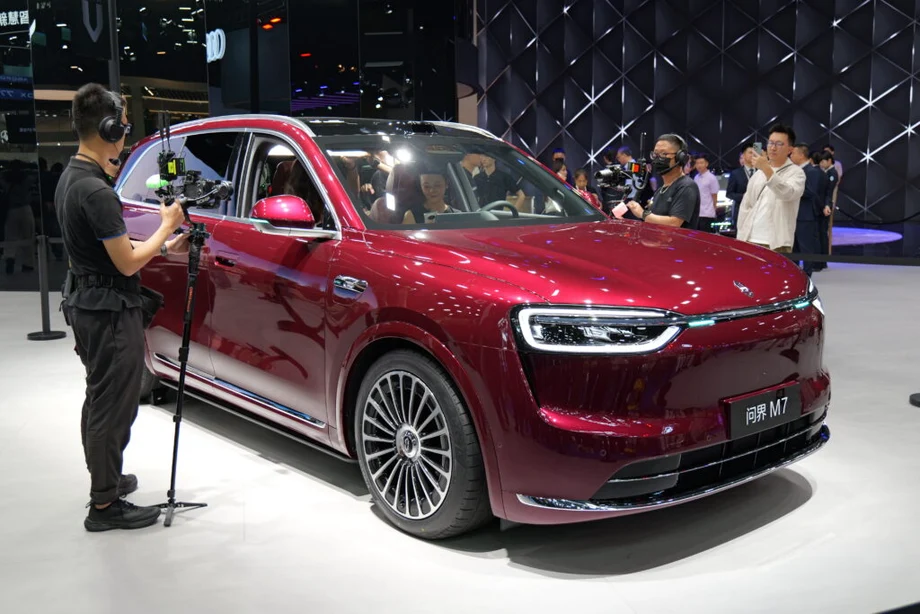
The 2026 Guangzhou International Automobile Exhibition opened on November 27 at the China Import and Export Fair Complex, running through December 6. AITO used the show for the public debut of the new M7, a large family SUV whose reservations opened on November 26. The timing matters: the car is already accepting deposits, but its final on sale date is December 15.
Contents
- What AITO Put on Stage in Guangzhou
- How Much Does the New M7 Cost?
- Why the L3 Label Matters, and Where It Stops
- What the ADS 5 Hardware Adds
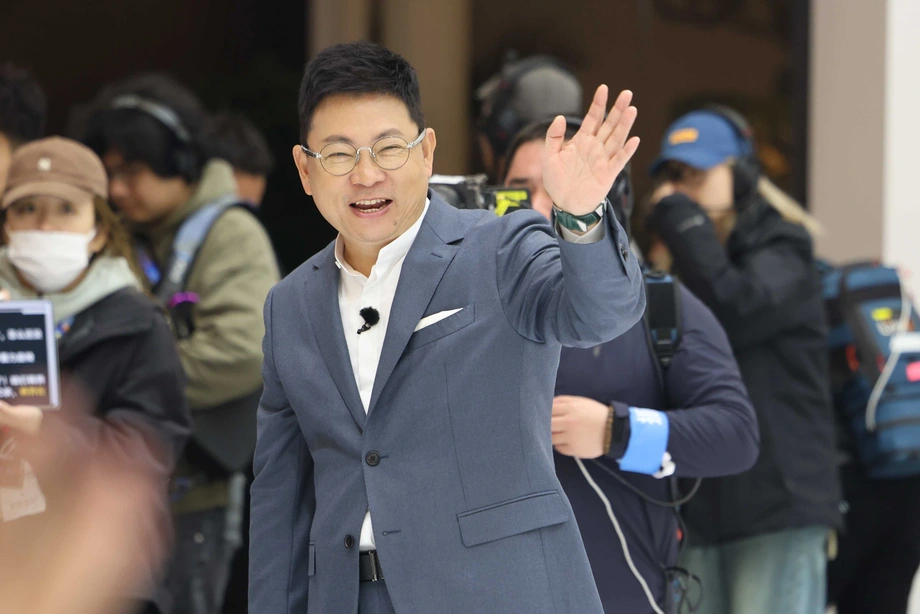
- What Yu Chengdong Highlighted
- Which Version Gets Which Feature?
- How Far Can It Go and How Fast Can It Charge?
- What Changes Inside for Families?
- How the Chassis and Body Were Reworked
- What It Means for Existing M7 Owners
- Where AITO Fits in China's Premium Electric Market
- Key Points
- November 23: Yu Chengdong announced the L3 oriented redundancy architecture and Huawei ADS 5.
- November 26: Reservations opened, with a 2,000 yuan deposit offer.
- November 27 to December 6: The Guangzhou auto show runs at the China Import and Export Fair Complex.
- December 15: AITO says the new M7 will go on sale.
AITO is the brand created by Seres and Huawei, and the new M7 is the third major model in its line up to carry a design built around conditional automation hardware. The new M7 was displayed alongside the M9, the new M8, the M6 and the M5, showing a brand trying to cover several rungs of China's premium electric vehicle market at once.
The headline changes are easy to list and harder to digest: prices start at 309,800 yuan, Huawei's ADS 5 driver assistance system arrives, the car uses an 800V electrical platform, the cabin gains more screens and softer seats, and the safety structure gets more backups. This article breaks down what each change means for buyers, existing owners and the wider market.
How Much Does the New M7 Cost?
AITO set the advance order price at 309,800 yuan for the Max version and 349,800 yuan for the Ultra version. A customer who pays a 2,000 yuan deposit during the reservation period can deduct 5,000 yuan from the final payment. The company said the official launch will be on December 15, when the final price and full specification sheets are expected to be clear.
The starting figure puts the new M7 above the entry point of the current M7 range, which sells from 279,800 yuan to 389,800 yuan with more trim levels. The previous full redesign, launched on September 23, 2025, started below its reservation price by almost 10,000 yuan. Buyers considering a reservation now should treat 309,800 yuan as a guide rather than the last word.
AITO's official M7 page lists Pro+, Max and Ultra labels, with ADS 5 Enhanced on Pro+ and ADS 5 High End on Max and Ultra. The advance sale announcement shown at Guangzhou focused on Max and Ultra. That difference will matter at the December 15 launch, especially for shoppers who want to know which hardware is standard and which item is optional.
Why the L3 Label Matters, and Where It Stops
AITO and Huawei repeatedly use the phrase 'oriented toward L3.' L3, or Level 3, means conditional automation. In the right conditions, the vehicle can manage driving and the driver may be allowed to take hands off the wheel and eyes off the road, while staying ready to take control. That is a step beyond the Level 2 assistance common today, where the driver must keep watching and steering.
Zhou Lin, Seres Group vice president and AITO chief technology officer, explained the architecture at the Guangzhou show. He said it links the chassis, power, body, cabin and intelligent driving domains, using coordinated decisions and sensing across the whole vehicle. The idea is not one clever driving feature, but a car wired so that braking, steering, computing, power supply, communication, positioning and driver alerts all have backups.
That hardware plan is ahead of the rules. Huawei executive Yu Chengdong announced the L3 oriented redundancy and ADS 5 on November 23, then corrected public wording to say the functions offered to customers remain Level 2 assistance. The official page also says ADS 5 is designed as driver assistance, not autonomous driving, and cannot replace the driver's attention and judgement. Some functions need over the air updates or paid activation. No date was given for opening L3 use to customers.
What the ADS 5 Hardware Adds
The new M7 uses Huawei Qiankun ADS 5, the successor to the ADS 4 system on the previous M7. AITO's documentation gives a detailed sensor list: one 896 line dual optical path image grade lidar, three distributed 4D millimetre wave radar units in a forward matrix, two 4D millimetre wave corner radars, one high precision solid state lidar, 12 ultrasonic radars, 11 high definition cameras and six exterior microphones. Lidar is a remote sensing method that uses laser pulses to measure distance, helping the car see shape and depth even when light is poor.
The 896 line lidar can spot an obstacle 14 centimetres tall from 120 metres away, with better recognition of weak reflecting objects in dim light. A high camera near the C pillar covers the side and rear blind spots. The rear solid state lidar and corner radars help the car notice unusual roadblocks, low steps, drainage ditches, objects hanging above the road and an open door on a neighbouring vehicle when reversing.
ADS 5 also uses the WEWA 2.0 architecture. In simple terms, Huawei is training the system in the cloud with multiple road users acting in games and with online reinforcement learning, then using a safety risk field in the car to decide what to do next. The company says this helps the system predict what pedestrians and vehicles may do. The full dimensional collision avoidance system, called CAS 5.0, adds a time dimension and can trigger emergency braking or emergency steering help for unusual obstacles.
The system also carries a parking feature that takes a car from one parking space to another. Huawei says that feature has been used more than 100 million times and covers 1.2 million parking sites. These numbers show how often drivers have used the feature, while the current driver assistance still needs a fully attentive driver.
What Yu Chengdong Highlighted
Yu Chengdong, a Huawei executive, posted on Weibo on November 26 after reservations opened. He said the M7 was adding hardware and battery changes on top of the earlier announcements about the L3 oriented architecture and ADS 5. In an English translation of his post, he wrote:
The new AITO M7 has officially opened reservations! I previously shared with everyone the full domain redundancy architecture oriented toward L3 and Huawei Qiankun ADS 5. Today I am bringing several more upgrades: a four lidar matrix for fuller sensing; the 800V Huawei Giant Whale battery platform across the range for longer range and faster charging; and further upgrades to the cabin and interior. Welcome to experience it in stores!
His emphasis matches the sales pitch at the stand. The four lidar matrix, the 800V battery platform and the cabin are the pieces AITO expects buyers to notice in a showroom. The official page, however, marks the 896 line lidar as optional and says installed hardware can vary by configuration, while the advance sale material described four lidars as part of a 38 sensor suite. The exact count for each order will be settled by the final configuration table on December 15.
Which Version Gets Which Feature?
The 40,000 yuan gap between Max and Ultra buys a package aimed at buyers who want the fullest driver assistance and comfort specification. AITO's material lists L3 oriented architecture design, a four lidar matrix, Huawei's premium sound system, a rear entertainment screen package, smart electric doors and a reclining passenger seat as Ultra additions. The Max version starts with 56 kWh in range extended form or 100 kWh in electric form, plus the 800V platform and air suspension with two chambers.
There is also a Pro+ version on the official page. It carries ADS 5 Enhanced rather than ADS 5 High End and introduces a cabin laser vision system that blends laser and camera sensing inside the vehicle. AITO says that setup can recognise difficult light and unusual obstacles, improve white list recognition for road users such as bicycles and pedestrians, and strengthen forward automatic emergency braking.
Using the word L3 needs care. It describes the design target and hardware reserve; the usable service on public roads remains Level 2 assistance for now. The company says the driver remains responsible for steering, speed and attention.
How Far Can It Go and How Fast Can It Charge?
Range figures need a decoder because AITO and launch material use several trims. The official page gives 1,690 km of CLTC combined range for the 2026 range extended Max version with five seats and the long range specification, measured with a full tank and a full battery. It gives 710 km of CLTC electric range for the electric Max long range version, using wheels designed to lower drag and no options that add weight or energy use.
The Guangzhou advance sale material gave different figures: up to 1,405 km combined and 330 km electric for the five seat version with power sent to all wheels, 1,230 km combined and 330 km electric for the six seat version with power sent to all wheels, and up to 715 km for a rear driven electric model. Other launch material gave 1,475 km combined and 350 km electric for range extended versions. All of these are CLTC figures, a Chinese test cycle used for comparison. Drivers will see different results as temperature, roads, driving style and battery age change.
The range extended versions use a 56 kWh battery and Huawei's new range extender system. The electric versions use a 100 kWh ternary lithium battery pack on the Giant Whale platform. Ternary lithium refers to a battery chemistry built around three main metals, often valued for energy density. AITO says 30% to 80% charging takes 15 minutes. An 800V system uses higher voltage than many older platforms, which allows faster charging when the charger can deliver enough power.
Performance claims focus on the range extended Ultra with power sent to all wheels: 0 to 100 km/h in 5.1 seconds, braking from 100 km/h to rest in 34.5 metres, and 76.6 km/h in the moose test, an evasive manoeuvre used to judge stability. The electric body has a drag coefficient of 0.249, a measure of how easily it moves through air.
What Changes Inside for Families?
The new M7 keeps a large body, measuring 5,080 mm long, 1,999 mm wide and 1,780 mm tall, with a 3,030 mm wheelbase. The dimensions match the current model, so this is a deep update rather than a new shell. AITO added two paint choices at the preorder stage, named Feicuicui and Warm Sun Gold, plus three wheel designs. The official page also lists Night Purple, Gilded Black, Warm Cloud White, Island Blue, Coral Red and an Obsidian package, with some colours sold separately.
The official page lists a 16.1 inch central screen, a 10.25 inch passenger screen, a 17.3 inch rear screen, a 26 inch windshield head up display on Pro+ and Max, and a 68 inch Huawei head up display on Ultra. The advance sale material used at Guangzhou highlighted a 12.3 inch instrument panel and a 16 inch passenger screen, with the instrument panel described as showing 20% more area. Screens are not the only change: a 3D vehicle control desktop, directional voice commands for the second row, and hand gesture or voice control for the electric doors are meant to make the car easier for children, older passengers and people using it for the first time.
Seat comfort is central to the family pitch. Front seats can recline into a mode known as zero gravity; the version with five seats gives the second row ventilation, heating and massage, with a backrest that tilts 13 degrees and a leg rest extending 100 mm. The version with six seats lets the third row recline electrically and fold or return with one button. A sound system with 25 speakers from HUAWEI SOUND, a quiet electric fridge and a front storage compartment of 206 litres round out the comfort package.
AITO calls the changes 17 luxury detail upgrades. They include truffle brown, gravel brown and moon white interior combinations, door panels with tiny perforations shaped like mountain shadows, and metal finishes around controls. An ultra wideband life detection system covers the cabin and luggage area, warning the phone and switching on air conditioning if a child or pet is left behind. The company also lists an open door guard that shows rear traffic on the front screen and a fuel payment function that reads the pump number through the car system.
How the Chassis and Body Were Reworked
The new M7 sits on Huawei's Tuling platform. It uses an aluminium front suspension with double wishbones, a rear suspension with five links, air suspension with two chambers and five height settings, and continuously variable dampers. Road Preview 2.0 uses lidar and cameras to read the road ahead, share torque between axles and adjust the suspension before the wheels reach a bump. Motion Sickness Relief 2.0 coordinates the motor, brakes and suspension to reduce pitching and rolling.
At the show, AITO displayed an integrated die casting body described as version 2.0. It uses a 9,800 tonne casting process, a structure with 13 horizontal and 11 vertical members, ten areas of steel formed at high temperature rated at 2,200 MPa, and aluminium making up 81% of the body. Die casting melts metal into a large single piece, reducing some joints and parts. The company says this helps weight and strength at the same time.
Safety claims extend to the battery and cabin. The official page lists 12 areas using steel rated at 2,000 MPa, 15 layers of battery protection, emergency wading depth of 700 mm, antibacterial cabin filters and interior materials tested to a mother and baby health standard. It also says versions with six seats carry ten airbags and a cage structure whose passenger cell uses steel formed at high temperature throughout. Eight backup paths cover sensing, computing, braking, steering, power supply, communication, positioning and driver interaction.
What It Means for Existing M7 Owners
M7 owners have reason to look closely at the small print. The current model on sale already uses the same body size, and a March 23 update gave it the 896 line lidar. Max versions already had air suspension with two chambers. The new car's shell is unchanged, while the main shifts are the cabin, the software stack and the starting point of the trim ladder.
Owners may also be watching a business change. On September 15, AITO's product, marketing, channel and service work moved under Seres leadership, with Huawei taking a technology supplier role. Existing orders were to be settled under the old arrangement and new orders under Seres, while promised owner benefits were said to remain. From 2027, dealers must choose whether to focus only on AITO or sell other Harmony Intelligent Mobility Alliance brands.
Two practical questions remain open. AITO has not said whether current M7 cars can receive ADS 5 through over the air updates or whether a hardware upgrade path will be offered. There is also no special package for people trading in a current car in the published reservation benefits, only the deposit deduction. The December 15 launch may answer both.
Where AITO Fits in China's Premium Electric Market
The M7 is AITO's volume anchor. The company says the model has delivered more than 470,000 units since launch more than four years ago, ranking first in accumulated sales among Chinese brand SUVs in the 300,000 yuan class. AITO says the model has more than 16 safety certifications and topped J.D. Power's appeal index for range extended SUVs of medium size.
Its siblings show how the brand has moved upward. AITO says cumulative deliveries have passed 1.23 million across the M5, M6, M7, M8 and M9 series. The M6 has passed 70,000 deliveries. The M8 has delivered more than 190,000 units in 19 months, and AITO says it took 11,000 orders in 11 hours after launch, while launch material put the same order mark at 72 minutes. The new M9 has led China's market for vehicles above 500,000 yuan for five straight months, while the M9 Ultimate extended version has an average transaction price above 700,000 yuan.
Industry numbers explain the setting. Data from the China Association of Automobile Manufacturers shows new energy vehicles passed 60% of monthly new car sales in China for the first time in July 2026. In the market above 300,000 yuan, Chinese brands now hold more than half. The new M7 is trying to defend AITO's position in that crowded band by offering hardware associated with flagship models at a price below its M8 and far below its M9.
Key Points
- The new AITO M7 made its public debut at the Guangzhou auto show on November 27 after reservations opened on November 26.
- Max starts at 309,800 yuan and Ultra at 349,800 yuan; a 2,000 yuan deposit can offset 5,000 yuan, with launch set for December 15.
- Huawei ADS 5 brings a sensor suite of 38 sensors, an L3 oriented architecture and collision avoidance upgrades, but functions available to customers remain Level 2 assistance.
- Range claims vary by version and material, with the official page citing 1,690 km for one range extended long range version and 710 km for one electric version under CLTC.
- Updates for families add new screens, reclining seats, a sound system with 25 speakers, a front storage compartment of 206 litres and more body and battery safety protection.
- AITO says the M7 has delivered more than 470,000 units, giving the model a major role in the brand's push into higher price bands.