The face returns in an advertisement
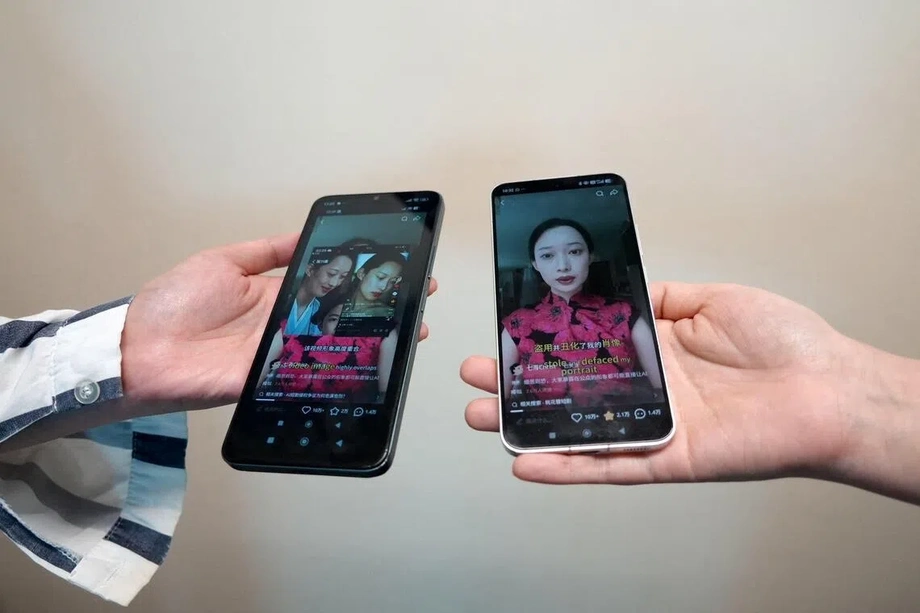
Late in March, model Qihai (七海) received a message from a fan: an AI short drama called Peach Blossom Hairpin (桃花簪) had a character with her face. In the video, the character had bruises, blood at the lips and harsh dialogue. Qihai had not acted in the drama. She said the role damaged her image and left her without work offers for three months.
Contents
- The face returns in an advertisement
- A short timeline of the dispute
- How AI merging differs from a face swap
- Why short dramas magnify the risk
- The recognition test at the center of the law
- Courts are deciding who must answer
- From Peng Yuchang to the Red Chamber actors
- Platforms and regulators tighten the gates
- Why careful studios can still drift into a celebrity face
- A market grows around permission slips for faces
- What remains unsettled for rights holders
- Key Points
In late November, the face appeared again in advertisements for AI short dramas across different platforms. This time, the nose, mole placement and proportions were close to her own face but not a direct copy. Qihai, who works as a model in China and Japan, said the change made the infringement harder to name and harder to prove.
Qihai described the shift in a social media post. She said the older version was a direct copy, while the newer images used a hidden form of face theft built from scraped data.
The faces this time are no longer a one to one complete copy, a direct theft of my portrait, as in Peach Blossom Hairpin. They are a more concealed and harder to define new kind of infringement: AI data scraping face theft. The proportions of the features, even the moles on the face, match me closely. At first glance they look like me, but when you look carefully, they are not exactly the same as me.
Qihai said keywords such as a model with a mole on the face or an ancient costume female villain could keep producing similar figures if her facial data remained inside a model. She called the repeated figures cyber Qihai. Her lawsuit over Peach Blossom Hairpin had not been decided by late November, and no date was given for a ruling.
A short timeline of the dispute
The controversy grew over several months, moving from one model's complaint to court rulings, platform action and a wider debate over celebrities and classic television faces.
- Late March: Qihai and other bloggers, including Bai Cai, said Peach Blossom Hairpin used their faces without permission. Hongguo later removed the drama and banned the producer from uploading new content for 15 days.
- March: An AI fantasy short drama with more than 23 million views was taken down after a model surnamed Ma and a photographer complained about the use of her likeness and makeup design. The two sides later settled over portrait rights and copyright.
- March 23: The Beijing Internet Court disclosed a ruling in favor of an actress whose face had been mapped onto a 90 minute drama.
- April to October: Hongguo said it had blocked, removed or corrected 43,992 works suspected of portrait infringement.
- November: Peng Yuchang's studio, Qihai and other performers drew attention to AI merging, while an AI Dream of the Red Chamber work drew complaints from actors connected to the 1987 series.
The dates show how quickly the issue moved from individual complaints to platform rules. Qihai said she kept receiving notices of new similar faces every few days. Bai Cai reached a settlement before her case went to trial.
How AI merging differs from a face swap
A face swap starts with a source face and a target face. Software lays the texture of one face over another. A viewer can usually trace the result back to a photograph or video, which gives a rights holder something to compare.
AI merging, or ronglian (融脸), works in a different way. A generative model takes face shape, eyes, nose, skin tone, expression and other features from many images, turns them into sets of numbers and recombines them. Those number sets are often called high dimensional feature vectors. For a child, the simplest picture is a recipe: not one cake copied from another, but a new cake made from measured amounts of several recipes.
Li Tao, an executive at a short drama production company, said two production modes are common. In one, producers describe the age, look and face shape they want. The model returns still images, the team chooses one and then generates video from it. In the other, a real actor authorizes the use of an image, and the company creates a digital version of that actor.
We tell the AI model what age, what image and what face shape we want. After we describe it, the model gives us character stills. We choose one we think is acceptable, then use that picture to generate the video.
Zheng Wenjie, a pseudonym used by the head of an AI production department at a film and culture company, said the mixed output creates a proof problem. A platform may collect faces by saying they can be used for film production. If only one facial feature looks familiar, the person may have no way to identify the source.
If only one of the five features resembles you, there really is no way. How can you determine that your face was used, or that your eye or your nose was used? It is a fusion, and without standards there is no way to define it.
Why short dramas magnify the risk
Short dramas, or micro dramas, are vertical videos with episodes that usually last one to three minutes. Smartphone audiences in China made them a huge business. QuestMobile put the industry at 718 million monthly active users by February 2026, and more than 3,200 new short dramas were released nationwide during the Spring Festival holiday.
Generative AI made the production model faster and cheaper. Li Tao said AI dramas make up 90 percent of his company's output, a company figure. DataEye said AI animated shorts took 38 percent of the top 100 comic style dramas in January, up from 7 percent a year earlier. Industry figures put the cost per episode down from 50,000 yuan to 5,000 yuan, and production time down from two to four weeks to three to seven days.
The scale helps explain the computing pressure described in AI short dramas took 55% of China's token use. A token is a small unit an AI system uses when it processes information, similar to a piece of a word in a text model. Video generation consumes many tokens because each second of footage may need several attempts before a usable shot appears. Chinese Online said photorealistic 1080p dramas usually consume two to three times as many tokens as 720p animated dramas.
The same earlier assessment put China's microdrama market above $14 billion in 2025, within a global market approaching $18 billion. DataEye counted 698 active AI short drama production companies in the first quarter of 2026, down from 1,216, a fall of about 43 percent. Studios were making more with less money, while competing for attention in a very short window.
The recognition test at the center of the law
Chinese portrait rights protect a person's control over the making, use and public display of a recognizable image. A full photograph is not required. A cartoon, a stylized figure or an AI generated face can still infringe if ordinary viewers can connect it to a specific person.
Huang Yinxi, an associate professor at Renmin University's law school, said recognizability is the key test. Traditional face swapping usually keeps enough original features to make the comparison clear. Merged faces are harder because the level of blending can vary.
Traditionally, what we protect in a portrait is a portrait that can be identified as a specific person, even in cartoon creation. Traditional face swapping basically retains the features of the original portrait holder, so infringement is less disputed. With AI merging, if the merge is not so high and the image can still be seen as mainly generated from a specific person's portrait, it can still be infringement. If the merge is so extensive that it is hard to identify the person, it may not be recognized as infringement.
The Supreme People's Court addressed AI personality rights in a September opinion, the Opinion on Legally Trying Cases Involving Artificial Intelligence (关于依法审理涉人工智能纠纷案件的意见). It said that using AI to process a person's name, portrait or similar personality elements into a recognizable virtual image, then using or publishing it without permission, infringes personality rights. It also said that using a person's voice as training material to create a recognizable synthetic voice infringes voice rights.
Lawyer Xiao Sa of Beijing Dacheng Law Offices said the same point in the debate over Peng Yuchang: the test is whether the merged image can be recognized as a specific person. A label saying AI generated explains how an image was made. It does not cancel a lack of permission. The Civil Code also draws a line between private use and public distribution, because public release can harm a person's reputation, work and income.
Courts are deciding who must answer
The hard question in AI merging is who in the production chain must carry the responsibility: the model provider, the producer, the streaming platform or a person who supplied reference images.
Zhao Zhanling, a researcher at the Intellectual Property Center of China University of Political Science and Law, said no judicial precedent had squarely settled the tool provider question. He said responsibility should not be assigned simply because one party provided the tool.
We cannot simply decide that whoever provided the tool, or whichever tool generated the image, is the infringer. If the service is used to generate an image that can identify a specific person and there are no basic risk control or labeling measures, the tool provider may also be at fault.
Zhao pointed to a 2026 Beijing Internet Court case in which a short video producer argued that a generated face was a coincidence. The court asked the parties to replay the generation process and show the prompts. They could not reproduce it. The court inferred intent and held the producer responsible. That case did not decide the role of the AI tool provider.
Judge Zhao Qi of the Beijing Internet Court disclosed the details of that March 23 ruling. An actress found her likeness on a character in a 90 minute drama, and viewers thought she had acted in it. The production company said it used prompts such as pretty journalist and that the resemblance was statistically probable. The streaming company said it had distribution rights.
Even if an AI generated face differs slightly from the original, it is still infringement if the public can recognize the person and no permission was given.
Zhao Qi said the companies could not show their production process in court because of technical and account problems. The court ordered them to apologize on their platforms and pay compensation. It also held the streaming company responsible for failing to review the content.
From Peng Yuchang to the Red Chamber actors
Actors have become the most visible complainants because their faces and voices are closely tied to their work. Peng Yuchang's studio said a short AI film showed an intern character whose face, manner and voice were highly similar to the actor. The topic entered Weibo's hot search list, and the studio said it had commissioned lawyers to preserve evidence and demand deletion.
Peng's studio issued a statement that named both portrait rights and facial biometric information. Biometric information means data drawn from body features, such as face contours, that can identify a person.
Peng Yuchang has never taken part in the creation, production or filming of any of the AI content mentioned above, and has never authorized any institution or individual to extract or use his portrait and facial biometric information for AI model training, face merging, secondary generation or content dissemination.
Song Weilong and Zhao Liying had issued similar statements. Zhao Liying's side had filed a lawsuit over AI merging. Yi Yangqianxi, Yang Zi and Deng Wei were among actors who said AI works used images or voices without permission. Dilraba won a lawsuit over an AI face swapping short drama in the Hangzhou Internet Court.
Classic television faces created a second wave of anger. An AI short video called Dream Back to the Red Chamber was accused of making characters resemble 17 actors from the 1987 television series Dream of the Red Chamber. Zhang Li, who played Xue Baochai, said she had never authorized the use. A micro drama described as Daiyu Reborn drew the same complaint about 17 actors and added sharp plot changes, including Lin Daiyu slapping Xue Baochai in public and Jia Mu bowing to Daiyu.
The objection was not limited to portrait rights. The actors' expressions in a classic series come from performances created decades ago. When AI copies the look and places it in a new revenge plot, it can use both a person's face and the value built into an older work.
Platforms and regulators tighten the gates
Hongguo, a major micro drama platform, removed Peach Blossom Hairpin after complaints and suspended the producer's uploading rights for 15 days. In Qihai's case, the platform's operator argued in court that it was a network service provider handling huge amounts of content. It also argued that Qihai was not widely known and that the image had limited recognizability, so the platform could not have known of the infringement.
Hongguo announced a special campaign on portrait infringement on November 17. The campaign covers platform self review, production pre checks and infringement complaints. The platform said it had launched a free pre check tool for creators in August and had blocked more than 90,000 noncompliant materials with it.
The same platform said that from April to October it had handled 43,992 works suspected of portrait infringement by blocking, removing or correcting them. Its first quarter figures were narrower: 1,718 policy violating animated short dramas were removed, including 670 suspected of using facial information without consent.
Regulators also moved. The National Radio and Television Administration included AI face theft and voice theft in a micro drama special campaign and had earlier run a campaign against AI modified videos. The Central Cyberspace Administration's Clear and Bright campaign against AI application disorder targeted AI rewriting of classics, low quality generated videos and impersonation.
The 2023 Interim Measures for the Management of Generative Artificial Intelligence Services require respect for intellectual property and forbid infringement of portrait rights. Huang Yinxi said training data must have lawful sources, and personal information requires consent or another legal basis. He said complete prohibition would hold back the industry, while arbitrary use would harm personal rights. If face data is used, he said, appropriate payment could let ordinary people share in the benefits of AI.
Why careful studios can still drift into a celebrity face
Ziming, an industry practitioner, said a mid quality realistic AI drama costs about 30,000 to 50,000 yuan, while a premium work can reach 100,000 yuan. Much of the budget goes to computing power. Chinese Online put computing costs for a drama with 12 episodes at nearly 200,000 yuan in some productions. Market figures also cite a drop from 50,000 yuan to 5,000 yuan per episode, a different measure based on per episode output.
Character consistency is a technical problem. If a creator relies only on text prompts, the model recalculates the face in each frame, so features may shift within seconds. The usual method is to create a visual anchor, often a three view image showing front, side and back, then use it to generate motion.
Ziming's team buys licensed human faces for some character assets because real facial structure gives more stable eyes and micro expressions. Smaller teams sometimes photograph staff from multiple angles to avoid purchases. He still sees accidents. Complex movement, strong expressions, lighting changes or a hand covering the face can weaken the reference image.
The industry calls this character ID drift. Volcengine's Doubao Seedance 2.0 prompt guide lists a face changing mid video as a typical failure and points to mixed reference images or a face that occupies too little of the image. Ziming said a character can suddenly look like Xiao Zhan even when the prompt and asset are acceptable. His team receives risk warnings, checks the frame and either seeks clearance or changes the shot.
A test of four generation tools, with seven well known actors used as simple prompts, found uneven limits. Jimeng allowed many Chinese celebrity faces but blocked the tested Hollywood actor. Kling, ChatGPT and Gemini had restrictions that were not complete. Model providers still have gaps at the generation entrance.
A market grows around permission slips for faces
Licensing has become a small but active business. An ordinary person's face for one AI short drama is commonly priced at about 100 yuan. A professional actor's face can bring 500 to 1,000 yuan. Some platforms open face listings to everyone, with a minimum price of 500 yuan and a single project term that does not extend automatically to sequels, spin offs or derivative works.
Zhang Xiaoming, a supporting actor, described a collection session that took about half an hour. The photographer shot a front view, two 45 degree views and two 90 degree side views. The AI system then matched the face to clothing and roles.
Actor Qi Wei said face and voice are personal wealth. Before signing, a person should set the term, the exact use and whether the material can train a model. New projects, new uses and new partners should require fresh permission. A finished video should have a fixed distribution period.
Zheng Wenjie wants written records for every generated work. Producers should save prompts, reference images and contracts. If a company creates its own copyrighted character, another maker may borrow a distinctive feature, and proof is hard without records.
What evidence was generated? What prompts were used? Were any people mentioned? If an image was used, what image was it? These practices are still voluntary.
For buyers, a cheap face license is useful only if the contract keeps the image out of training data and limits where it can appear. The boundary between a lawful license and face theft is drawn by those terms, not by the price paid.
What remains unsettled for rights holders
Several questions remain open. Qihai's case had no verdict by late November. The court's March 23 decision held a producer and platform responsible, but it did not decide the duties of an AI tool provider in every setting.
Zhao Zhanling said rules should define what model providers must do to prevent merged images that identify real people. He also said short video platforms need clearer duties, possibly through judicial interpretation, and should explore checking authorization before publication.
Zheng Ning, head of the law department at the Communication University of China's Cultural Industries Management School, said generative AI now touches scripts, characters, scenes, voices, music, editing and promotion. Traditional film and television uses content filing, review and approval before release. AI production can skip those steps, which makes after the fact complaints the main route for many victims. She said the entry barriers have been removed, so amateurs and tool providers can also take part in creation.
Chen Peng, an industry professional, said AI video changed from rough clips a year ago to complete dramas with scenes, background music and voice overs. Character consistency, long text understanding and creator fine tuning made faces, movement and details much closer to real footage.
Powered by next generation large generative models, it can now produce complete short dramas with visuals, scenes, background music and voice overs.
For viewers, the practical change is that a familiar face in a short drama may no longer mean the person acted in it. For actors and ordinary people, the practical change is that a face can be used as a raw material without a shoot, while proof may require prompts, source images, platform records and a court order to reproduce the process.
Key Points
- Model Qihai said AI short dramas and ads repeatedly used faces closely matching her own, including after a lawsuit over Peach Blossom Hairpin.
- AI merging blends many facial features into a new face, which makes source tracing harder than ordinary face swapping.
- Industry data showed 718 million short drama users by February 2026 and 38 percent of the top 100 comic style dramas using AI in January.
- A September Supreme People's Court opinion says recognizable AI virtual images made from a person's portrait without permission can infringe personality rights.
- Hongguo said it handled 43,992 suspected portrait infringement works from April to October and blocked more than 90,000 noncompliant materials with its pre check tool.
- Licensing contracts now set price, term, use and model training limits, but rights holders still face hard proof problems when faces are merged.