What the Pilot Changes
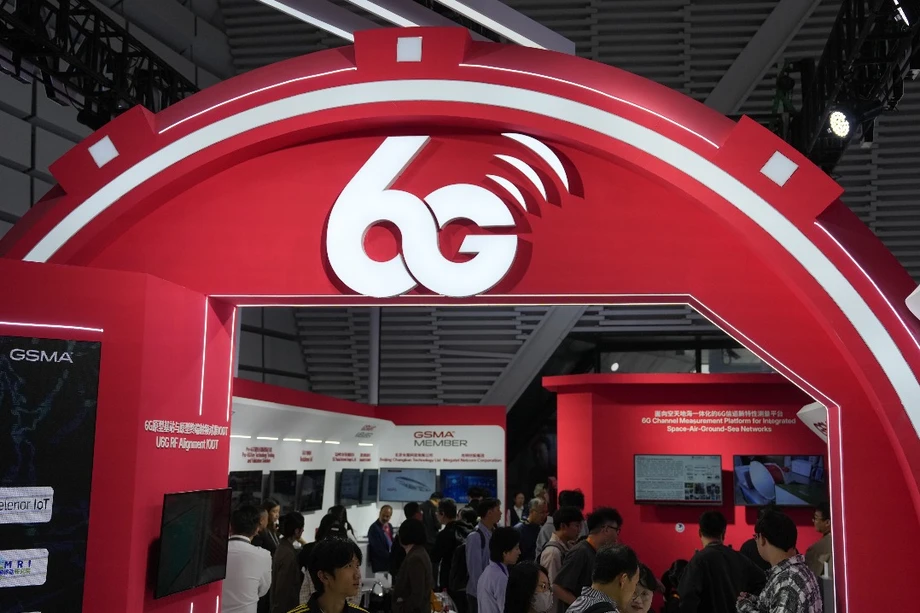
China has moved 6G from lab talk into eight named regions. The Ministry of Industry and Information Technology formally launched the joint ministry and provincial pilot at the 2026 Global 6G Development Conference in Shanghai on Nov. 24, after publishing the eight region list on Nov. 18. The ministry had set out the pilot action plan on June 4.
Contents
- What the Pilot Changes
- Who Is in the Pilot and Why These Places
- What 6G Is, in Plain Language
- Why the Standards Clock Is Ticking
- How Tests Move From Ideas to Evidence
- What Each Region Is Being Asked to Build
- Which 6G Capabilities Are Already Visible
- Why Satellites and the Sea Matter
- What Shanghai Brings to the National Map
- Who Pays, and What Could Earn Money
- How China's Plan Fits a Global Race
- Key Dates From Research to Rollout
- Key Points
The program is a rehearsal for the next mobile generation. Regions will test equipment, radio signals, software and uses before global rules are locked in. Each place is asked to pick a strength, not copy its neighbours, so the country can avoid repeated building and wasted money.
For users, this is not yet a new service. It is where engineers learn whether 6G can connect people, machines, drones, ships and satellites in ways 5G cannot, and which uses can pay for the network.
Who Is in the Pilot and Why These Places
The pilot regions are Beijing, Hebei, Shanghai, Jiangsu, Zhejiang, Anhui, Hubei and Guangdong. The management measures for the pilot required active innovation, a strong industrial base, clear application scenarios and support guarantees. A region needed at least one domestic leader or internationally influential company in fields linked to 6G, plus at least three bodies that had handled major national science and technology projects.
Regions were chosen after self application, document review, on site assessment and consultation. The ministry said it will guide work, run regular evaluations and prioritize major 6G industry conferences in pilot regions. It will also organize experts to check local plans and approve those that fit the national layout. This keeps local projects tied to one national map.
All eight have large 5G or 5G-A networks, giving them a base for 6G scenario research, technology checks and application incubation. The ministry called this a way to build a national game plan and develop new quality productive forces, a policy phrase for growth driven by advanced technology.
What 6G Is, in Plain Language
6G means sixth generation mobile communications. It is expected to be more than a faster version of 5G. A 6G network is designed to combine communication, sensing, computing and artificial intelligence, so it can carry data, detect movement and position, share computing work and adjust to demand.
The ministry says 6G can improve speed, latency and reliability by 10 to 100 times over 5G, with coverage across air, space, land and sea. Latency is the delay before data arrives. A simple picture is a network that follows a phone, a factory robot, a drone and a ship without losing the link.
Standards, spectrum, devices and base stations still have to be settled. The pilot is where those pieces are tried together.
Why the Standards Clock Is Ticking
The 3rd Generation Partnership Project, known as 3GPP, issued a 6G timetable in June 2026. Basic research for 6G standards is due in the first half of 2027, the first global standard is expected in the first half of 2029, and commercial deployment is targeted around 2030. Standards are the rulebook that lets phones, towers and satellites speak the same language.
China says its technical standard research has entered a sprint. Its proposed 6G architecture, built around communication, sensing, intelligence and computing, has taken initial shape and is in the standard research framework of global mobile communications bodies. As of June 2025, China held about 40.3 percent of global 6G patent applications, according to data from a national research institute linked to the Cyberspace Administration of China.
Wen Ku, chairman of the China Communications Standards Association, said years of 5G operation gave 6G a foundation and that global cooperation helped create it. He put it this way:
Our 5G networks have been operating for years, laying a solid foundation for 6G evolution, and this foundation has also benefited from cooperation across the global industry.
The IMT-2030 (6G) Promotion Group set up in June 2019 now has about 170 Chinese and foreign companies and released 18 technical documents this year on topics including AI native network architecture and sensing assisted communication.
How Tests Move From Ideas to Evidence
China launched the second phase of 6G trials in January 2026 after the first phase produced a reserve of more than 300 key 6G technologies. The work now tests which ideas can survive closer to real conditions.
This year's tests cover immersive communication, wireless intelligence, integrated sensing and communication, integration of space and ground networks, and network architecture. Fifteen domestic and international organizations are taking part, including ground operators, satellite operators and equipment makers. Early work centers on millimeter wave and intelligent reflecting surfaces; final 6G frequencies and terminal forms have not been fixed.
Integrated sensing and communication means a radio signal both carries data and helps locate objects. The tests follow scenarios and indicators set by the International Telecommunication Union, the United Nations agency that coordinates telecom rules and radio spectrum.
Wang Zhiqin, head of the IMT-2030 (6G) Promotion Group and vice president of the China Academy of Information and Communications Technology, warned that separate standards would make companies repeat work. He said:
By contrast, fragmented standards could force companies to duplicate R&D, customization and network deployment, weaken economies of scale and lengthen the period needed to achieve commercial returns.
What Each Region Is Being Asked to Build
The program covers new terminals, key components, chips, instruments, operating systems and satellite internet. Application areas include immersive communication, industrial manufacturing, embodied intelligence, drone and air taxi services, and smart maritime operations. Embodied intelligence means AI in a physical body, such as a robot or vehicle, that can sense and act.
Xiang Ligang, chairman of the Zhongguancun Information Consumption Alliance, said the approval shows 6G moving from the lab toward commercial use. He pointed to chips, new materials, satellite manufacturing and marine ranching as fields with new opportunities. Pan Helin, a member of the Ministry of Industry and Information Technology's Information and Communication Economy Expert Committee, pointed to telecom equipment, satellite internet, commercial space and computing and network convergence.
Business registry data showed 44,159 active market entities with mobile communications equipment manufacturing in their scope, and about 58 percent were set up in the past three years, many in industrial parks in pilot regions. Test instruments and simulation tools have long relied on imports, so domestic replacements will shape how fast tests move.
On June 1, Minister Li Lecheng said in an article that the ministry had made plans in humanoid robots, 6G and quantum technology, while about 20 localities had issued policies for future industries and pilot zones existed in Beijing, Shanghai and Zhejiang.
Which 6G Capabilities Are Already Visible
A 6G prototype can support 400 MHz of bandwidth, the width of the channel that carries data. A wider channel is like a wider road. The prototype also uses AI models to improve wireless performance, can sense position with accuracy of about one meter, and can support several intelligent agents working together.
An intelligent agent is software that takes a goal and carries out steps toward it. One agent might manage a factory robot, another a delivery drone and another the link between them. China's proposed system turns the network into a tool for machines as well as people.
Airui Wireless works on physical layer software for 5G, 5G-A and 6G. The physical layer turns radio waves into usable bits. Its non terrestrial network baseband protocol has been verified in orbit by satellite internet companies, and it is working with domestic GPU makers to combine AI with radio access networks. Jiang Xinglong, a company official at Zhongke Tiansuan, described satellites carrying both links and computing power for homes, mines, ports, transport and public dispatch.
Why Satellites and the Sea Matter
Ground towers do not reach far oceans, deserts, mountains or aircraft routes well. 6G planners want to link ground networks with satellites so a ship, drone or remote machine can stay connected.
Gao Yue, founder of space based computing company Sky Intelligence Computing, said ground base stations cannot work in deserts, sea areas and emergency situations, which is why non terrestrial network technology matters. NTN, or non terrestrial network, uses satellites or high altitude platforms instead of relying only on towers.
Shanghai will study satellite and ground integration, communication and intelligence integration, and whole area sensing. It plans more than 100 application scenarios, with model cases in industrial manufacturing and long distance shipping. Zhang Wenjun, an academician of the Chinese Academy of Engineering and a chair professor at Shanghai Jiao Tong University, said 6G's biggest change is wider space and stronger ability, but new services are what make people want to use it.
What Shanghai Brings to the National Map
The conference opened in Shanghai's Songjiang district on Nov. 24. Representatives from the International Telecommunication Union, 3GPP and the Global System for Mobile Communications Association joined Chinese academics and industry figures. The conference was hosted by the China Academy of Information and Communications Technology and the IMT-2030 (6G) Promotion Group.
Shanghai's 6G Future Industry Cultivation Zone was unveiled in Songjiang in March. It focuses on 6G, AI, satellite internet and space based computing. The city has 144 companies in its 6G related mobile communications chain. Songjiang has brought in 41 ecosystem companies over two years, and the cultivation zone has 97 key companies. Local 6G industry reached 28 billion yuan in 2025.
The chain includes Quectel communication modules, Chuangyuan instruments and channel simulators, Zhongke Tiansuan and Xingshu Tiansuan space computing projects, and Qianfan low Earth orbit coverage. The Shanghai Institute of Intelligent Connectivity Information Technology was also unveiled, focusing on wireless communication and AI. Its president, Cai Liyu, said delay and certainty are challenges for agents moving into physical work.
Who Pays, and What Could Earn Money
6G needs heavy investment, and the pilot is partly a search for uses that justify it. Pan Helin said applications will decide whether a new round of investment follows. He said:
Whether 6G requires a new round of investment depends entirely on the richness of its application scenarios. Without the support of demand from application scenarios, there is no need to undertake a new round of investment in communication infrastructure upgrades.
Ministry figures released in January put China at more than 4.8 million 5G base stations and over 1.2 billion 5G users. By the end of August, base stations were about 5.19 million. More than 23,000 industrial Internet projects had started, including unmanned mines, smart ports and highly automated factories. One home appliance company said a 5G and AI vision inspection system lifted per worker efficiency by 275 percent. Vice Minister Zhang Yunming said telecom service volume grew 9.1 percent year on year and industrial and information sectors contributed over 40 percent to economic growth.
Wu Hequan, an academician of the Chinese Academy of Engineering, said consumer services remain a revenue pillar, with phones becoming hubs for personal agents and anchors for identity, payment and data. He said industry applications hold greater potential. Zhang Wenjun suggested charging for network capability rather than data volume, with interactive video generated as a user acts reaching scale around 2030.
How China's Plan Fits a Global Race
China is not alone in targeting 2030. The White House issued a presidential memorandum named Winning the 6G Race in December 2025. It called 6G foundational to national security, foreign policy and economic prosperity, and directed studies of the 7.125 to 7.4 GHz band and possible federal moves to 7.4 to 8.4 GHz. The 2028 Los Angeles Olympic and Paralympic Games are seen as a chance to show next generation wireless.
China's wider roadmap was issued by the Ministry of Industry and Information Technology, the Cyberspace Administration of China and the National Development and Reform Commission. It covers 5G-A, 6G, 10 gigabit optical networks and satellite internet, with goals for AI computing clusters of more than 10,000 cards and a low Earth orbit satellite internet system largely complete by 2030.
Mark Vena, chief executive and principal analyst at SmartTech Research, said spectrum shifts and equipment upgrades can cost carriers before they earn revenue. Chris Hills, vice president of carrier and operations at Holafly, said operators need applications that justify investment while handling spectrum, energy, security and interoperability. He said:
One of the greatest challenges facing the industry is not necessarily developing the technology itself, but establishing a sustainable commercial model around it.
The IMT-2030 (6G) Promotion Group and more than 30 international organizations and companies released the Global 6G Development Concept Declaration in Shanghai. It backs unified standards, global spectrum agreement, green development, security across all domains and open cooperation.
Key Dates From Research to Rollout
The schedule shows a technology moving from ideas to trials, standards and commercial plans.
- June 2019: The Ministry of Industry and Information Technology established the IMT-2030 (6G) Promotion Group.
- January 2026: China started the second 6G trial phase after more than 300 key technologies were collected.
- Early May 2026: Trial spectrum in the 6 GHz band was approved for promotion group tests in selected regions.
- June 4, 2026: The pilot action plan set a 2029 goal of independently developed solutions, new business scenarios and new terminal products.
- Nov. 24, 2026: The eight region pilot was launched in Shanghai.
- First half of 2027: Basic research for 6G standards is due to be completed.
- First half of 2029: The first global 6G standard is expected.
- Around 2030: 6G is expected to be ready for commercial deployment.
The next firm dates are the 2027 and 2029 standards milestones. China has not announced a commercial launch date.
Key Points
- China named Beijing, Hebei, Shanghai, Jiangsu, Zhejiang, Anhui, Hubei and Guangdong as the first 6G pilot regions.
- The pilot links local testing to national standards work, with basic research due in the first half of 2027 and a first global standard expected in the first half of 2029.
- Tests cover immersive communication, wireless intelligence, integrated sensing and communication, space and ground integration, and network architecture.
- China aims to form independently developed 6G solutions, new business scenarios and new terminal products by 2029.
- 6G is expected to improve speed, latency and reliability by 10 to 100 times over 5G and extend coverage across air, space, land and sea.
- Commercial use is targeted around 2030, but no China launch date has been announced.