A pickup leads BYD into local production
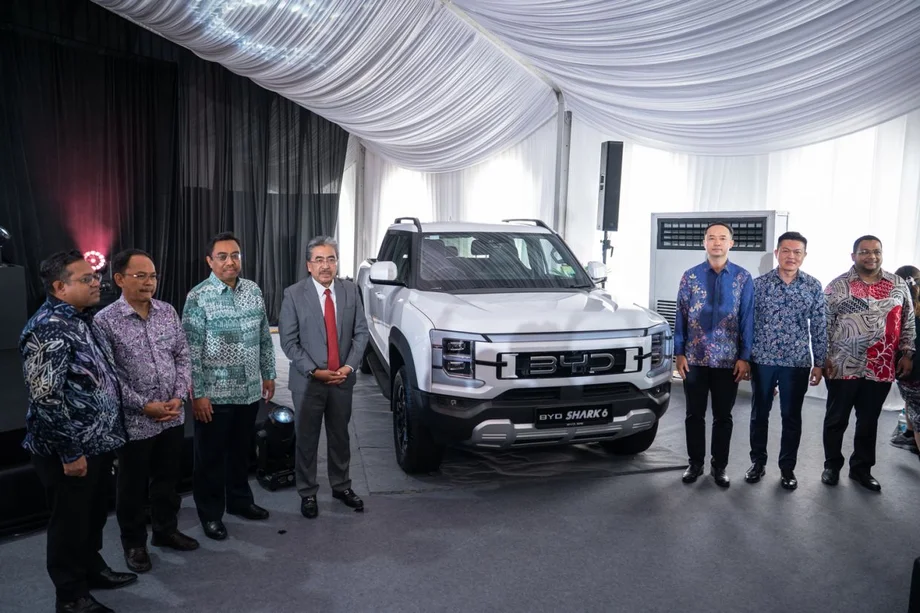
BYD Malaysia and Sime Motors began their local assembly push on 26 November 2026 at a ceremony at Matrade in Kuala Lumpur, naming the Shark 6 pickup as the first model to be built at Sime Motors' Inokom facility in Kulim, Kedah. The first locally assembled units are targeted for early 2027, with the first quarter of 2027 as the latest target and March 2027 named as the expected rollout month.
Contents
- A pickup leads BYD into local production
- What the ceremony confirmed
- Why the Shark 6 came first
- How the project moved from preview to production
- What kind of truck is the Shark 6?
- Why Inokom's Kulim plant matters
- What Malaysia wants from CKD assembly
- What buyers can expect, and what is still open
- Key Points
CKD stands for completely knocked down. In plain words, vehicle kits arrive as parts and are put together in Malaysia. BYD said the move reflects confidence in Malaysia as a growing new energy vehicle market and as an automotive manufacturing base. New energy vehicles, or NEVs, is a Chinese industry term covering vehicles such as battery electric and plug in hybrid models.
The choice is striking because BYD did not start with Atto 3, its better known electric car in Malaysia. It chose a 4WD plug in hybrid pickup, a type of vehicle used for work, towing and rough roads. BYD has shown the Shark 6 in Malaysia since 2025 and said local feedback has been encouraging.
A government article published by RTM Niaga, the RTM Niaga article, says the SHARK 6 launch is expected in the first quarter of 2027. It also says a special assembly line is close to completion, quality testing is under way, and other BYD models are being considered for Malaysia.
What the ceremony confirmed
The ceremony brought together Datuk Seri Johari Abdul Ghani, minister of investment, trade and industry; Jacob Ma, managing director of BYD Malaysia; Jeffrey Gan, managing director of Sime Motors Southeast Asia; Syed Ahmad Muzri Syed Faiz, Sime Motors assembly and strategic businesses managing director; and Datuk Sikh Shamsul Ibrahim Sikh Abdul Majid, chief executive of the Malaysian Investment Development Authority. The event marked the start of assembly plans, not a finished showroom launch. BYD said more details on local assembly would be announced later.
Datuk Seri Johari Abdul Ghani, minister of investment, trade and industry, said global automakers bring more than cars to Malaysia. He said their investments create competition and push local companies to raise their standards, which matters in an industry where safety, software, batteries and supplier quality all have to work together.
They create healthy competition, encourage innovation and push the industry to continuously raise its standards.
The minister also tied the project to a wider ecosystem. He pointed to local manufacturing, talent development and infrastructure such as ultra fast EV charging facilities, including BYD Flash Charging, which he said can give Malaysians greater confidence in electric mobility.
Why the Shark 6 came first
Jacob Ma, managing director of BYD Malaysia, said Malaysia has potential for BYD as a new energy vehicle market and as a country with automotive capability, skilled workers and room to grow. He said local assembly had always been part of BYD's plans for Malaysia. BYD also said entry into the 4WD pickup segment gives it access to a new customer base and a chance to bring electrification to a different kind of vehicle.
Jacob Ma said the model has drawn attention beyond China. He made the remarks at a press conference after the ceremony, describing customer reaction to a truck that combines a petrol engine with electric motors.
I think this is one model that is very well received outside of China. Globally, Shark 6 has gained a lot of good attention and also good acceptance by the market.
BYD Malaysia gave two reasons for picking the pickup ahead of a passenger EV. The Shark 6 is the brand's first locally presented plug in hybrid and first pickup in Malaysia, while models such as Atto 3 still had sizable stock in the existing version. Camouflaged Shark 6 units were also seen earlier in November 2026 at Sime Darby Motors City in Ara Damansara, before the formal announcement.
How the project moved from preview to production
The Shark 6 has taken an unusual route from display stand to factory plan. At the time of its Malaysia preview, there was no clear launch date, and Eagle Zhao, who was managing director of BYD Malaysia at the time, said the model was under a feasibility study in Malaysia.
The main dates are:
- 14 to 16 November 2025: BYD previewed the Shark 6 at BYD Tech Discovery 2025 at Carpark 3, Plaza Arkadia, Desa ParkCity. The display units were Australian specification cars.
- October 2026: BYD and Sime Motors signed a memorandum of understanding at BYD's global headquarters in Shenzhen, China.
- Earlier in November 2026: Camouflaged units appeared at Sime Darby Motors City in Ara Damansara.
- 26 November 2026: BYD Malaysia and Sime Motors held the local assembly launch ceremony at Matrade in Kuala Lumpur. A 27 November date also appears for the ceremony.
- Early 2027: The first CKD Shark 6 units are expected to roll out, with the first quarter of 2027 as the latest target and March 2027 given as the expected month.
An earlier preview had pointed to a BYD CKD plant in Tanjong Malim and a second half of 2026 start. The ceremony named Inokom in Kulim and a first quarter 2027 rollout instead.
What kind of truck is the Shark 6?
A plug in hybrid, or PHEV, uses a rechargeable battery and electric motors alongside a petrol engine. For short trips, the battery can power the wheels. On longer journeys, the petrol engine adds range and, in the Shark 6, can also drive the wheels directly at speeds above 70 km/h. That matters for a pickup because owners may need both quiet city driving and the ability to travel far between charges.
The DMO Super Hybrid system pairs a turbocharged 1.5 litre four cylinder petrol engine producing 184 PS (135 kW) and 260 Nm with two electric motors. The front motor makes 231 PS (170 kW) and 310 Nm. The rear motor makes 204 PS (150 kW) and 340 Nm. Combined output is 436 PS (321 kW) and 650 Nm, enough for 0 to 100 km/h in 5.7 seconds and a top speed of 160 km/h.
The battery is a 29.58 kWh BYD Blade LFP unit. LFP stands for lithium iron phosphate, a battery chemistry known for durability and for using no nickel or cobalt. BYD's Malaysian preview put electric range at 100 km under NEDC, a laboratory driving cycle used for official range claims, and total range at 840 km with a full battery and fuel tank. Global specification summaries give 800 km for total range, while keeping the same 100 km electric figure.
Charging is listed at 7 kW AC and 55 kW DC. A 30% to 80% charge takes about two hours on AC and about 25 minutes on DC. A 6 kW vehicle to load function lets the truck power devices or tools, useful on a worksite or during a power cut. BYD lists the truck as 5,457 mm long, 1,917 mm wide and 1,925 mm high, with a 3,260 mm wheelbase. The standard version has a 2,500 kg towing figure, and other specifications list fuel consumption as low as 2 litres per 100 km with a full battery.
The truck uses a ladder frame, the body on frame layout common in pickups, and independent double wishbone suspension at the front and rear. A separate global Performance version has a 180 kW 2.0 litre engine, a 200 kW front motor, combined 380 kW and 700 Nm, 0 to 100 km/h in 5.5 seconds, 80 km electric range, 640 km total range and 3,500 kg towing. Figures here describe the truck shown globally.
Why Inokom's Kulim plant matters
Inokom Corporation's plant in Kulim is an established vehicle assembly site owned by Sime Motors. It covers 200 acres, has been in production since 1997 and assembles passenger cars, multi utility vehicles and commercial vehicles. Its workforce is listed at 2,381 people, all Malaysian and drawn largely from the local community.
The site has a production capacity of 200,000 units a year, but that figure covers the whole plant, not a published target for BYD. In August 2026, Inokom added a third paint facility known as PS3, with an investment of RM300 million. The facility runs two shifts and can paint 50,000 vehicle bodies a year at 15 bodies an hour, lifting the plant's total paint capacity to 100,000 bodies a year.
Jeffrey Gan, managing director of Sime Motors Southeast Asia, said Sime Motors' manufacturing base, skilled workforce and local supplier network form the platform for BYD's assembly work. When asked how many BYD vehicles would be assembled there, he said the number was being held back and that the plant build out would leave enough room for Malaysia's market.
We cannot disclose that number of units now. As we are building, the capacity will be more than sufficient to cater to the Malaysian market.
Gan also said the facility would serve the broader Malaysian market. Jacob Ma said Malaysian customers come first, while BYD is open to exporting CKD models built in Kulim if demand and regulations allow it.
What Malaysia wants from CKD assembly
Malaysia's National Automotive Policy 2020, or NAP 2020, aims to strengthen the automotive industry. One part of that policy is the Next Generation Vehicles ecosystem, or NxGV, which covers newer vehicle technologies such as electrification. BYD and Sime Motors said the project supports local manufacturing capability and greater participation by Malaysian businesses in the automotive value chain.
Datuk Seri Johari Abdul Ghani, minister of investment, trade and industry, said CKD assembly keeps more economic activity in Malaysia. He explained the value in plain terms: when parts are brought in and assembled locally, wages, factory work, supplier orders and skills stay in the domestic economy to a greater extent than when a finished vehicle is imported.
Through completely knocked-down assembly, we are able to retain a greater share of the economic value associated with each vehicle within our domestic economy.
The minister also said the government wants automakers in Malaysia to bring local vendors into their supply chains over time and give those vendors chances to build higher value capabilities. He said Malaysia remains open to foreign investment and welcomes international automakers that bring advanced technology, global scale production methods and engineering skills.
The same policy goal has a cost problem behind it. The automotive component trade deficit rose to RM33.8 billion in 2025 from about RM13 billion in 2020, an increase of RM20.8 billion and more than 2.6 times the 2020 figure. Johari said the CKD incentive approach will be reviewed so rewards go first to real component production in Malaysia. The current system has three levels, and he said past monitoring was weak. Manufacturers at Level 1, where companies genuinely make components locally, may receive larger incentives.
What buyers can expect, and what is still open
For Malaysian buyers, the local assembly plan may make the Shark 6 more accessible if pricing is kept competitive. Jeffrey Gan, managing director of Sime Motors Southeast Asia, said the company was still studying the market and would not yet give a price.
We are still deliberating on the price point and studying the market. Rest assured, we will ensure that the price is positioned very competitively.
Several details remain open. BYD and Sime Motors have not given a production target for the BYD line, the ringgit investment in the BYD line, a final Malaysian price, or the exact local specification. The next dated milestone is the first quarter of 2027, with March 2027 given as the expected rollout month. Further details on the local assembly programme will be announced later.
For suppliers and workers, the project is a test of how much of the EV shift can be built in Malaysia rather than simply sold in Malaysia. The Shark 6 brings a battery system, power electronics, motors, software and pickup hardware into the same local programme. If component makers, technology providers and engineering teams take part, the project could widen Malaysia's role from assembly to higher value manufacturing.
Key Points
- BYD Malaysia and Sime Motors began local assembly plans on 26 November 2026, with the Shark 6 pickup chosen as the first CKD model.
- Assembly will take place at Sime Motors' Inokom facility in Kulim, Kedah, with the first units expected in early 2027 and Q1 2027 as the latest target.
- The Shark 6 is a 4WD plug in hybrid with 436 PS, 650 Nm, a 29.58 kWh Blade LFP battery and a 100 km electric range figure.
- Malaysia linked the project to NAP 2020, the NxGV ecosystem, local manufacturing, skills and wider supplier participation.
- Price, exact local specifications and a production target for the BYD line have not been announced.