A tenfold freight goal meets a border bottleneck
On 25 November 2026, Kazakhstan set out a bold transport target: raise freight transportation volumes with China tenfold. The plan was discussed in Astana during a meeting between Assel Zhanassova, Deputy Prime Minister and Minister of Transport, and a delegation from Chinese company Guo JingAn led by Cheng Xi, according to Kazakhstan's Transport Ministry. The meeting put roads, railways, border crossings and warehouses into one package.
Contents
- A tenfold freight goal meets a border bottleneck
- What the meeting puts in motion
- Why the checkpoints matter for truckers
- The railway proposal and the problem of different gauges
- Why Kazakhstan wants to be a hub, not a passageway
- How large is the China and Central Asia freight trade?
- The numbers behind the two existing rail crossings
- A timeline of the expansion
- New railway lines could change the map
- The wider corridors Kazakhstan is courting
- Money, warehouses and the risk of bottlenecks
- What changes for ordinary users of the corridor
- Key Points
The ministry said the two sides looked at expanding rail freight between Kazakhstan and China, building a broad gauge railway line on Chinese territory and carrying out the Centre West highway project. They also discussed cooperation with CITIC Group on that highway, plus ways to move Chinese goods into markets beyond Central Asia.
The most immediate number concerns trucks. Upgrading the checkpoint on the Chinese side linked to Nur Zholy would lift capacity from 800 to 1,500 trucks per day. That is 700 more trucks daily, an 87.5 percent increase. The Chinese side also said it was considering extending operating hours at the Khorgos checkpoint by three hours through the end of December.
Kazakhstan wants more than movement across a border. Zhanassova proposed a distribution hub based in Khorgos and the city of Alatau, so Chinese goods could reach Central Asia, the South Caucasus, Türkiye, Iran and Pakistan faster. She also proposed Chinese laboratories in Kazakhstan to certify agricultural products. The two sides agreed to set up rapid response working groups and continue developing concrete proposals.
What the meeting puts in motion
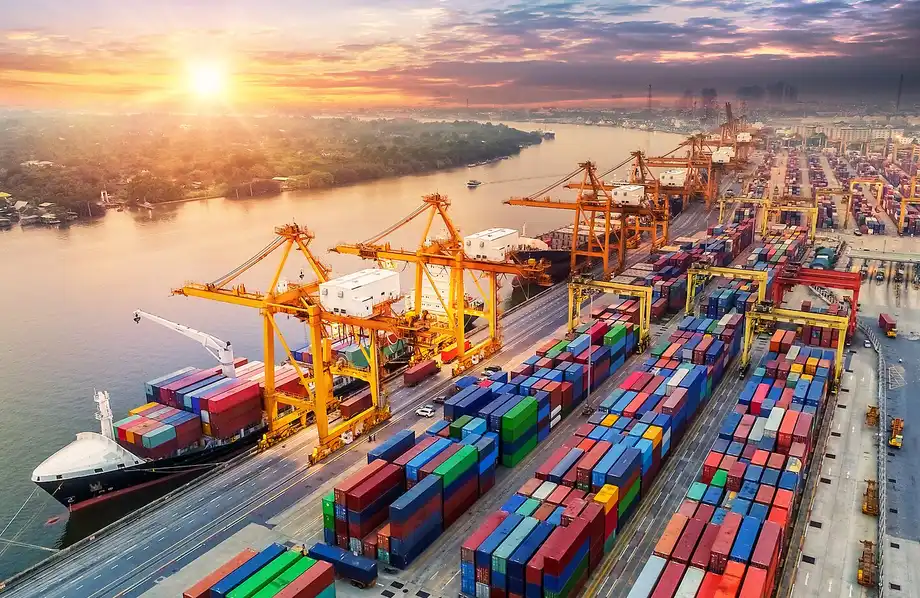
The Khorgos and Alatau idea is a distribution hub, a place where goods can be stored, sorted and forwarded. In simple terms, a container arriving from China could be split into smaller shipments, held in a warehouse and sent onward by rail or road. That would let Kazakhstan earn from logistics services, not only from transit fees.
The agricultural proposal works in the opposite direction. Chinese laboratories inside Kazakhstan would test and certify farm products closer to producers. Certification is the official check that a product meets the rules of the buyer country. If that check happens inside Kazakhstan, exporters may face fewer delays when sending goods to China.
The statement gave no specific date for reaching the tenfold freight goal. The next practical step is the working group process, where broad ideas are meant to become project proposals.
Why the checkpoints matter for truckers
Nur Zholy is the Kazakh name for a crossing that connects with Khorgos on the Chinese side. Khorgos is one of the main road gateways between the countries. When a crossing can process more trucks each day, carriers spend less time waiting and goods reach markets sooner.
The planned increase from 800 to 1,500 trucks a day is close to doubling the crossing capacity. For a trucking company, that can mean fewer queues. For a factory expecting parts, it can mean a delivery that arrives on schedule instead of a day late. Fresh food and medicines are especially sensitive to delays because long waits can damage goods or disrupt supply.
The three hour extension at Khorgos was described as under consideration, not as a final decision. It is meant to apply until the end of December, which suggests a short term test rather than a permanent change.
The railway proposal and the problem of different gauges
Rail freight between Kazakhstan and China runs mainly through two border routes: Dostyk and Alashankou, and Altynkol and Khorgos. Kazakhstan has proposed building a broad gauge railway line on Chinese territory so that wagons can move farther without an immediate change of track width.
Rail gauge means the distance between the two rails. Kazakhstan uses a wider gauge common in the former Soviet rail network, while China uses the standard gauge found in much of the world. When trains cross from one system to the other, goods often have to be moved from one set of wagons to another. That process is called transloading. It takes time, equipment and labour, and it adds cost to every shipment.
A broad gauge line inside China would not remove all border procedures, but it could reduce one technical obstacle. No route, cost or construction schedule for that line was given in the ministry statement. That leaves it as a proposal for the working groups to examine.
Why Kazakhstan wants to be a hub, not a passageway
A transit country earns money by letting goods pass through. A hub earns more kinds of income because goods are stored, sorted, repacked, insured and shipped onward from its territory. Zhanassova's Khorgos and Alatau proposal aims to move Kazakhstan into that second role.
The list of target markets shows the scale of the ambition. Central Asia is the nearest market. The South Caucasus, Türkiye, Iran and Pakistan would require onward connections through roads, railways or sea routes. The Middle Corridor, which runs from China and Central Asia through Kazakhstan and across the Caspian Sea toward Azerbaijan, Georgia and Türkiye, gives the plan a route into Europe.
Kazakhstan and Uzbekistan also opened an upgraded Zhibek Zholy checkpoint designed to handle 100,000 people a day. That project concerns passengers rather than freight, yet it points to the same policy: border points are being rebuilt to handle larger flows.
How large is the China and Central Asia freight trade?
An analytical brief published on 19 November by the Eurasian Development Bank puts Kazakhstan at the centre of regional freight. It says Kazakhstan handles about 84 percent of freight transported between China and Central Asia. All rail freight between China and Central Asia passes through Kazakhstan, mainly at Dostyk and Altynkol.
Trade has grown quickly. Commerce between China and the five Central Asian countries rose from $23.5 billion in 2020 to almost $70 billion in 2025. China's share of the region's merchandise trade reached nearly 30 percent in 2025, up from 17 to 18 percent in 2020 and 2021. Kazakhstan alone accounts for nearly half of the region's trade with China.
Physical volumes match that growth. About 51 million metric tons moved between China and Central Asia by rail and road in 2025, with rail carrying 35.6 million tons and road carrying 15.4 million tons. In the first 10 months of 2026, rail traffic reached 31.8 million tons, 8 percent higher than in the same period of 2025.
The Eurasian Development Bank estimates untapped trade potential of about $39.3 billion. If even part of that trade becomes real shipments, demand for border capacity, warehouses and rail slots will rise.
The numbers behind the two existing rail crossings
Kazakhstan and China currently use two rail gateways. Dostyk connects with Alashankou, while Altynkol connects with Khorgos. Together they carried 31.8 million tons in January to October 2026, up from 29.4 million tons in the same period of 2025.
Shipments from China to Kazakhstan reached 12.1 million tons in the first 10 months of 2026, an increase of 9 percent. Dostyk handled 5 million tons of that traffic, up 13 percent, and Altynkol handled 7.1 million tons, up 6 percent. Shipments from Kazakhstan to China were larger at 19.7 million tons, up 8 percent. Dostyk carried 13.1 million tons of those exports, up 12 percent, while Altynkol carried 6.6 million tons, up just 1 percent.
The direction of trade is clear in those figures. Kazakhstan sent 19.7 million tons to China, compared with 12.1 million tons moving the other way. Dostyk handled about two thirds of Kazakhstan to China rail freight. The launch of the second Dostyk and Moyynty railway line on 30 September 2025 helps explain why traffic on that route has grown faster.
Kazakhstan's bilateral trade with China also rose. It exceeded $26.9 billion in January to September 2026, up 8.9 percent from $24.7 billion a year earlier. Plans for driverless freight transportation with China sit in the same wider policy, aimed at making long distance road movements more efficient.
A timeline of the expansion
Several dated projects sit behind the meeting. Some are already running, some are under consideration and some have target dates. The sequence helps show why the tenfold ambition is about infrastructure as much as diplomacy.
- 2020 to 2025: trade between China and the five Central Asian countries rises from $23.5 billion to almost $70 billion.
- 30 September 2025: the second Dostyk and Moyynty railway line opens, adding capacity on a busy route.
- January to October 2026: Kazakhstan and China rail freight reaches 31.8 million tons, up 8 percent year on year.
- 12 November 2026: the heads of Samruk-Kazyna and Kazakhstan Temir Zholy are detained in a corruption investigation.
- 19 November 2026: the Eurasian Development Bank publishes its brief on regional freight growth.
- 25 November 2026: Zhanassova and the Guo JingAn delegation discuss the tenfold target, border upgrades and new hubs.
- By the end of December 2026: the Chinese side is considering three extra operating hours at Khorgos.
- By the end of 2026: the Mointy and Kyzylzhar railway is scheduled for completion.
- By 2027: the Bakhty and Ayagoz railway is scheduled for commissioning.
- By 2032: the Bakhty terminal target is 700,000 containers a year.
New railway lines could change the map
The proposed third rail crossing is tied to the Bakhty and Ayagoz railway in eastern Kazakhstan. Construction began in 2023, and commissioning is scheduled for 2027. Bakhty sits in the Abai Region on the border with China's Xinjiang Uyghur Autonomous Region, while Ayagoz lies farther west.
Length figures attached to the project differ by scope. The Eurasian Development Bank gives 272 kilometres for Ayagoz and Bakhty, with an initial design capacity of 20 million metric tons a year. The description of the third crossing gives 303 kilometres for Bakhty and Ayagoz. Both point to the same change: a third rail gateway alongside Dostyk and Altynkol.
In July 2026, construction began on a multimodal dry port and logistics park at Bakhty. A dry port is an inland facility that handles customs and container work like a seaport. The hub is expected to add 20 to 25 million tons of annual cargo handling capacity at the Kazakhstan and China border. Its terminal is designed for up to 1 million containers a year, with a target of 700,000 containers by 2032.
The complex will include container and grain terminals, warehouses, customs and logistics infrastructure, a road terminal, service facilities and bonded warehouses of up to 50,000 square metres. Bonded warehouses allow goods to be stored before customs duties are paid, which can help traders wait for the right buyer.
Another line, Mointy and Kyzylzhar, is scheduled for completion by the end of 2026. The 323 kilometre project is expected to shorten transport distances on the Middle Corridor and the Central Eurasian Corridor by 149 kilometres while easing pressure on existing sections.
Beyond Kazakhstan, the China Kyrgyzstan Uzbekistan railway would link Kashgar with Andijan through Kyrgyzstan. The 523 kilometre route has an initial design capacity of 7 million tons a year and could reach 20 million tons after a second phase. Kyrgyzstan would gain better links between north and south, while Uzbekistan would gain a more direct connection to China.
The wider corridors Kazakhstan is courting
The Centre West highway and the new rail crossings fit into a wider Eurasian network. The Middle Corridor runs from China and Central Asia through Kazakhstan, across the Caspian Sea to Azerbaijan and Georgia, and onward to Türkiye and Europe. The Central Eurasian Corridor offers another overland route through China, Russia, Belarus and Europe.
Kazakhstan's Transport Ministry says freight traffic along the Trans Caspian International Transport Route rose 30 percent in January to September 2026, while transit container traffic on the China West route rose 64 percent. In October, Kazakhstan and Azerbaijan signed an intergovernmental agreement to develop the route, including commitments on capacity and stable tariffs.
In November, the two countries signed agreements under the Caspian Bridge project. The concept provides for at least 8 million tons of cargo a year, with potential capacity of 10 to 12 million tons. They also agreed terms for a joint intermodal freight terminal at the Port of Alat in Baku.
European interest is growing as well. On 17 November, Foreign Minister Mukhtar Tleuberdi discussed Middle Corridor projects with Belgium's Deputy Prime Minister and Minister of Foreign Affairs Maxime Prévot during a visit to Brussels. Belgium expressed interest in participation by Belgian companies. Kazakhstan also wants to connect the Middle Corridor with TRIPP, the Trump Route for International Peace and Prosperity, a goal President Kassym Jomart Tokayev has raised repeatedly.
There is room to grow. In 2025, overland railway routes through Central Asia carried just 2.4 percent of the total number of containers shipped from China to European countries. That figure shows how small the route still is compared with the total China Europe container market.
Money, warehouses and the risk of bottlenecks
China is financing much of the regional transport build out. The Eurasian Development Bank counts more than 20 projects involving Chinese companies in Central Asia, with combined investment above $12 billion. Chinese banks and commercial companies have provided more than $7 billion through loans, grants and foreign direct investment. Many projects are linked to the Belt and Road Initiative, China's programme for building trade and infrastructure links across Eurasia.
Railways alone will not solve the problem. The brief identifies a shortage of modern Class A warehouses as a constraint on road freight. Class A warehouses are modern storage buildings that meet higher standards for loading, safety and handling. Demand in the region is nearly 2 million square metres.
Road freight is becoming more important because small and medium sized businesses often need flexible shipments in smaller lots. Customs improvements, international transport agreements and digital systems have made road freight easier. Rail still suits large volumes over long distances, while road can serve time sensitive and high value goods.
Kazakhstan also faces a governance test. Nurlan Zhakupov, head of the Samruk-Kazyna Fund, and Elzhas Otynshiev, head of Kazakhstan Temir Zholy, were detained on 12 November on suspicion of corruption offences, and a court later authorised their arrests.
Aibek Smadiyarov, Adviser and Press Secretary to the President of Kazakhstan, said the case against the two state company heads was rooted in corruption and pointed to their conduct during investigative procedures.
the corrupt nature of the case involving the heads of the Samruk-Kazyna Fund and Kazakhstan Temir Zholy is beyond doubt.
What changes for ordinary users of the corridor
For shippers, the changes are practical. More trucks per day at Nur Zholy means a better chance that a consignment crosses without waiting several extra days. Longer hours at Khorgos, if adopted, would add three hours of processing time each day until the end of December.
For manufacturers, broad gauge track inside China could reduce the need to unload and reload goods at the border. For farmers, Chinese laboratories in Kazakhstan could shorten the route to certification. For warehouses near Khorgos and Alatau, sorting and forwarding could become a larger business than simple storage.
For Kazakhstan as a country, the goal is to keep its position as the main land bridge between China and Central Asia while adding services that create jobs and revenue. The scale of that ambition is visible in the contrast between 84 percent of regional China freight handled by Kazakhstan and just 2.4 percent of China to Europe containers moving overland through Central Asia in 2025.
Key Points
- Kazakhstan aims to increase freight transportation volumes with China tenfold, with no deadline announced.
- Nur Zholy checkpoint capacity on the Chinese side would rise from 800 to 1,500 trucks per day.
- Khorgos operating hours could be extended by three hours through the end of December.
- Kazakhstan proposed distribution hubs in Khorgos and Alatau and Chinese laboratories for farm product certification.
- Rail freight between Kazakhstan and China reached 31.8 million tons in January to October 2026, up 8 percent.
- New rail and logistics projects aim to add capacity, while warehouses, border procedures and governance remain issues to watch.