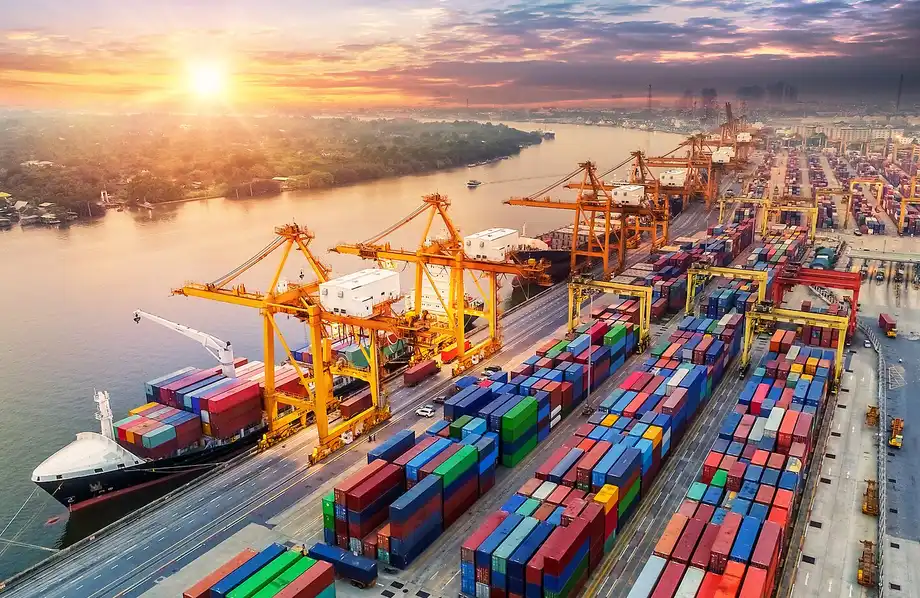
Trade Links Expand Across Central Asia
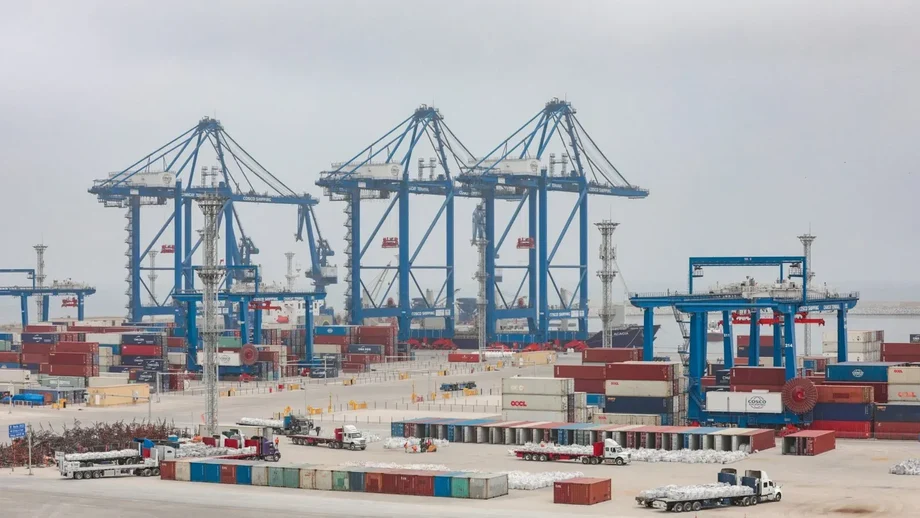
Kazakhstan currently handles roughly 84 percent of all freight transported between China and Central Asia, positioning itself at the very core of a fast-growing regional trade network. According to an analytical brief published on November 19, 2026, by the Eurasian Development Bank, total trade between China and the five Central Asian nations nearly tripled between 2020 and 2025, climbing from 23.5 billion dollars to almost 70 billion dollars. China has established itself as the region's leading commercial partner, responsible for nearly 30 percent of total merchandise trade in 2025, up significantly from 17 to 18 percent in the 2020 to 2021 period.
Contents
All rail cargo moving between China and Central Asia must pass through Kazakhstan, primarily entering via the Dostyk and Altynkol border crossings. Alongside its transit role, Kazakhstan accounts for nearly half of the entire region's bilateral trade with Beijing, linking major Chinese manufacturing centers directly with Central Asian consumers and export markets further west. National statistical data highlights significant individual trading volumes across the region. Uzbekistan recorded a trade turnover of 17.5 billion dollars with China in 2025, Kyrgyzstan approached 5 billion dollars, and Tajikistan reached approximately 2.9 billion dollars.
Infrastructure Strains and New Rail Projects
Surging freight volumes are placing heavy demands on existing transit infrastructure across the region, making modernization vital for continued economic growth. In 2025, a combined 51 million metric tons of cargo moved between China and Central Asia using rail and road networks, with railways carrying 35.6 million tons and road transport handling 15.4 million tons. Freight flows maintained an upward trajectory into 2026, with rail traffic alone reaching 31.8 million tons during the first ten months, marking an 8 percent increase compared to the same timeframe in 2025.
Several major construction initiatives are underway to relieve congestion and expand capacity. Kazakhstan is currently building the 303-kilometer Bakhty-Ayagoz railway to open a third rail crossing on the Chinese border, complementing Dostyk and Altynkol. Additionally, construction started in July 2026 on a multimodal dry port and logistics park in Bakhty, which is expected to add up to 25 million tons of annual cargo handling capacity and process up to one million containers annually by the early 2030s.
The China-Kyrgyzstan-Uzbekistan Railway Initiative
Beyond Kazakhstan, the region's largest transport undertaking is the 523-kilometer China-Kyrgyzstan-Uzbekistan railway, a mountain route designed to link Kashgar in western China directly to Andijan in Uzbekistan. The project involves building 27 tunnels spanning a combined 103 kilometers and 48 bridges totaling 16 kilometers across difficult terrain. This monumental engineering effort follows a series of formal milestones, beginning with a cooperation agreement signed in Beijing on June 6, 2024, and the ceremonial launch of construction in Kyrgyzstan on December 27, 2024.
This mountain railway is estimated to cost 4.7 billion dollars and will feature an initial single-track capacity of 7 million tons annually, which can later be expanded to 20 million tons with the addition of a second track. For Kyrgyzstan, the railway promises vital transit revenue and improved market access for domestic minerals and manufactured goods. Uzbekistan views the corridor as a strategic opportunity to strengthen its position as a regional manufacturing and distribution center, while container volumes associated with Uzbek trade are projected to multiply significantly by the end of the decade.
The economic success of the route depends heavily on efficient border procedures and smooth cargo transfers between different national track gauges. Kyrgyz officials have emphasized the importance of using local labor, adhering to strict environmental safeguards, and maintaining transparent procurement standards throughout the construction phases. Cooperation agreements and financing packages were finalized in late 2025, keeping work on schedule for the targeted operational timeline.
Growth of Road Freight and Multimodal Routes
Road transport is expanding rapidly alongside rail, driven largely by small and medium-sized enterprises requiring flexible logistics for smaller consignments. Bilateral agreements on international road transport, alongside China joining key United Nations transport conventions and adopting electronic customs transit permits, have allowed commercial carriers to cross borders without mandatory cargo transfers at the frontier. A prime example is the multimodal route through Kyrgyzstan, which carried 1.8 million tons of freight between China and Uzbekistan in 2025, representing a fifty-fold increase compared to just 33,700 tons in 2020.
Road freight is particularly essential for high-value, perishable, and time-sensitive merchandise that requires specialized temperature control and secure handling. However, the Eurasian Development Bank has noted that a severe shortage of modern Class A warehousing across Central Asia currently constrains the full potential of road-based logistics. Meeting this demand will require millions of square meters of new storage facilities alongside digitalized border systems.
Expanding Horizons Along the Middle Corridor
Central Asian transport networks are increasingly integrated into broader continental trade routes connecting Asia with Europe, the South Caucasus, and the Middle East. The Middle Corridor, formally known as the Trans-Caspian International Transport Route, runs from China through Kazakhstan, across the Caspian Sea, and onward through Azerbaijan, Georgia, and Türkiye. Container traffic along this trans-Caspian route reached a record 77,000 twenty-foot equivalent units in 2025, nearly four times the volume recorded in 2020.
Partnerships are strengthening to ensure stable transport tariffs and predictable shipping schedules across the Caspian basin. In October 2026, Kazakhstan and Azerbaijan signed an intergovernmental agreement aimed at boosting freight efficiency and transit potential. European governments are also showing keen interest in participating in these infrastructure developments, as demonstrated by diplomatic talks in Brussels between Kazakh and Belgian officials regarding investments in the Middle Corridor.
Corruption Investigations Impact State-Owned Enterprises
Large-scale infrastructure development requires rigorous oversight and transparent management by state-owned enterprises to ensure public funds are effectively utilized. These governance demands gained urgent attention following the detention on November 12, 2026, of high-ranking officials including Samruk-Kazyna Fund head Nurlan Zhakupov and Kazakhstan Temir Zholy head Elzhas Otynshiev on suspicion of corruption-related offenses.
Aibek Smadiyarov, Adviser and Press Secretary to the President of Kazakhstan, addressed the gravity of the detentions during official briefings:
The corrupt nature of the case involving the heads of the Samruk-Kazyna Fund and Kazakhstan Temir Zholy is beyond doubt.
Prime Minister Olzhas Bektenov and other senior government leaders have emphasized that clean administration and strict accountability remain mandatory as the nation executes billions of dollars in foreign-backed transport projects. Maintaining public trust and operational integrity is viewed as just as critical to the nation's economic strategy as laying new steel tracks.
At a Glance
- Trade between China and Central Asia grew from 23.5 billion dollars in 2020 to nearly 70 billion dollars in 2025.
- Kazakhstan handles approximately 84 percent of all land freight moving between China and Central Asia.
- Total rail and road freight reached 51 million metric tons in 2025, with rail accounting for 35.6 million tons.
- The 523-kilometer China-Kyrgyzstan-Uzbekistan railway features 27 tunnels and 48 bridges, costing 4.7 billion dollars.
- Middle Corridor container traffic reached 77,000 twenty-foot equivalent units in 2025, marking substantial growth since 2020.