A New Trade Era Between South America and Southeast Asia
Peru and Thailand formally signed a bilateral free trade agreement on Thursday, November 19, 2026, in Shenzhen, China. The signing ceremony took place on the sidelines of the 33rd Asia-Pacific Economic Cooperation Economic Leaders' Meeting, converting years of stop-and-start negotiations into a legally binding pact designed to reshape commercial ties across the Pacific Ocean. Peruvian President Keiko Sofía Fujimori Higuchi and Thai Prime Minister Anutin Charnvirakul witnessed the ceremony as Peruvian Foreign Trade and Tourism Minister Rogers Martín Valencia Espinoza and Thai Deputy Prime Minister and Commerce Minister Suphajee Suthumpun signed the treaty. The milestone follows a decade of intermittent talks that originally launched in 2013 before stalling and sitting dormant for over a decade. Both governments resumed discussions in mid-2024, completed two rounds of negotiations, and declared a substantial conclusion on December 22, 2025, leading directly to the formal signing in Shenzhen.
Contents
The newly signed trade pact builds upon a partial trade protocol that has governed bilateral commerce since 2011. Under that older framework, 66 percent of Thai tariff lines already carried preferential rates for Peruvian goods. The new agreement expands that preferential access to 94 percent of the bilateral tariff universe. Once the treaty enters into force, most Peruvian products, ranging from agro-industrial commodities to minerals, will enter Thailand under significantly reduced customs duties. Customs duties are taxes charged by governments on goods brought in from other countries, which make imported items more expensive for local buyers. In addition to cutting tariffs on physical goods, the agreement introduces entirely new chapters covering trade in services, intellectual property rights, competition policy, trade remedies, and the temporary entry of business personnel. These service sectors were completely excluded from the original 2011 protocol, opening official commercial pathways for professional and financial services.
Expanding Export Markets and Trade Volumes
Bilateral trade between Thailand and Peru reached US$555.24 million during the first nine months of 2026, representing a robust 33.66 percent increase compared to the same period in the previous year. For the full year 2025, total bilateral trade registered at a record US$739 million. Peru currently ranks as Thailand's fourth-largest trading partner in South America, following Brazil, Argentina, and Chile, and stands as its 60th-largest trading partner globally. Peru's export profile toward Thailand has historically been narrow but is steadily diversifying. Peruvian shipments to Thailand totaled US$120 million in 2025, marking an 8.8 percent increase over the preceding year. Frozen giant squid, known locally in Peru as pota, served as the country's leading export, accounting for US$67 million or roughly 56 percent of all Peruvian exports to the Southeast Asian nation. Other prominent export items include fresh blueberries at US$12.5 million, alongside grapes, avocados, zinc, quinoa, fishmeal, wooden furniture, fruit juices, honey, and pet food.
Thai officials have identified Peru as one of the Latin American economies with the strongest growth potential, possessing robust demand for products where Thai industries maintain a competitive advantage. Major Thai exports to Peru include motor vehicles and automotive components, tires, canned and processed seafood, washing machines, dry-cleaning machinery, industrial machinery, rubber products, dietary supplements, catfish and tilapia meat, pineapples, papayas, and processed fruit. While the overall bilateral trade balance has historically favored Thailand, which exports significantly more manufactured goods and electronics than it imports from Peru, the expanded trade agreement provides both nations with a formal framework to address that gap. Thai Commerce Minister Suphajee Suthumpun noted that the agreement forms a crucial part of Thailand's broader strategy to navigate global economic volatility by securing established markets while aggressively seeking new trade opportunities across Latin America, a regional market encompassing nearly 670 million consumers.
The Strategic Advantage of the Chancay Megaport
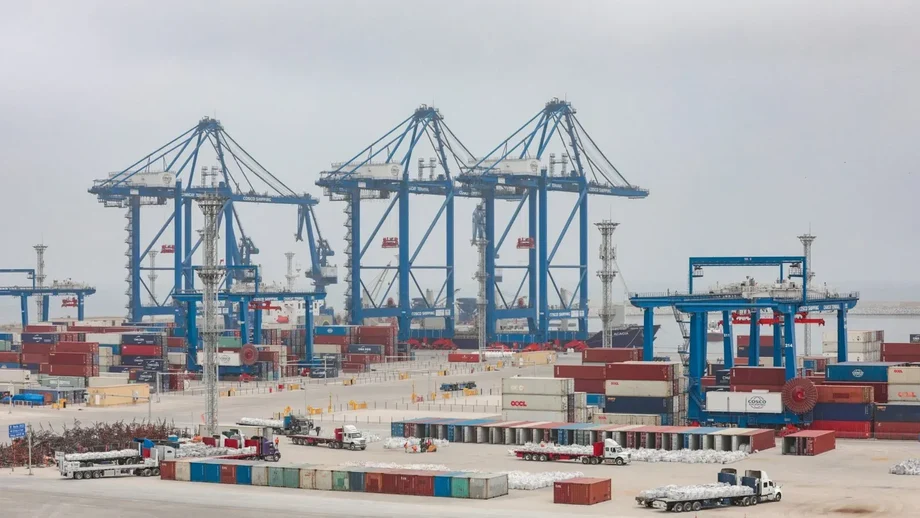
Physical logistics and maritime shipping routes play a decisive role in determining the commercial viability of perishable goods traded across oceans. The rapid finalization of the trade agreement was heavily influenced by the opening of the Port of Chancay in late 2024. Located on Peru's Pacific coast north of Lima, the deepwater maritime hub is engineered to handle massive container vessels and streamline cargo transport directly across the Pacific Ocean. The port trims Asia-bound transit times by approximately ten days compared to traditional shipping routes that pass through the Panama Canal. For highly perishable agricultural products such as fresh blueberries, avocados, and grapes, whose market value depends critically on maintaining freshness and shelf life upon arrival, that reduction in transit time is a major competitive advantage rather than a minor logistical convenience. Thai trade officials have emphasized that the Chancay megaport will improve shipping capacity, lower freight costs, and strengthen trade routes connecting Asian suppliers directly to the broader South American and Caribbean marketplace.
Ratification Timelines and Domestic Approval Procedures
Thursday's ceremony in Shenzhen did not put the trade agreement into immediate effect. Constitutional requirements in both countries mandate that legislative bodies review and approve the legal text before its terms become operational. In Thailand, the Ministry of Commerce will formally submit the agreement to Parliament for review and ratification, followed by the completion of domestic administrative procedures. Thai trade authorities and exporters do not expect the comprehensive agreement to enter into force before 2027, a legislative calendar that matches Peru's own domestic parliamentary timeline. For exporters on both sides of the Pacific, the immediate task shifts from diplomatic negotiations to commercial preparation. Peruvian businesses must develop active marketing strategies to establish brand presence in Thailand, a market of more than 72 million consumers where Peruvian commercial brands remain largely unknown. Meanwhile, both governments are looking beyond the trade pact itself, highlighted by Thai Prime Minister Anutin Charnvirakul extending a formal invitation for Peruvian President Keiko Fujimori to visit Bangkok following the resolution of the El Niño weather phenomenon in South America.
Broader Diplomatic and Regional Context
The signing of the Peru-Thailand free trade agreement occurred within a much wider diplomatic push by Lima during the APEC leaders week in Shenzhen. President Fujimori's administration utilized the multilateral summit to conduct bilateral meetings with representatives from China, Vietnam, Singapore, and the Philippines. These diplomatic engagements coincide with the implementation of the upgraded China-Peru Free Trade Agreement optimization protocol, which officially entered into force on November 1, 2026. Peru also maintains established trade agreements with major Asian economies including China, Japan, and South Korea, steadily building out a comprehensive trans-Pacific commercial network. For US readers observing these international developments, the new pact leaves Peru's existing bilateral trade agreement with the United States, in force since 2009, completely untouched. However, by providing Peruvian agricultural exporters of blueberries, avocados, and grapes with tariff-free or preferential access to another massive Asian buyer, the treaty offers vital commercial diversification at a time when global tariff policies and trade dynamics continue to shift rapidly.
At a Glance
- Peru and Thailand officially signed a bilateral free trade agreement on November 19, 2026, in Shenzhen, China, during the APEC Economic Leaders Week.
- The agreement expands preferential tariff coverage for Peruvian exports to Thailand from 66 percent to 94 percent of the tariff universe.
- Bilateral trade reached US$555.24 million in the first nine months of 2026, representing a 33.66 percent increase compared to the previous year.
- New chapters incorporated into the treaty cover trade in services, intellectual property rights, competition policy, and temporary business traveler mobility.
- The deepwater Port of Chancay, inaugurated in late 2024, reduces Asia-bound maritime transit times by roughly ten days, boosting perishable export logistics.
- Both legislatures must ratify the treaty before it enters into force, with Thai officials expecting full implementation and commercial benefits to begin in 2027.